

Note: This article is written for web publication in standard American English, with no external source links inserted in the body copy as requested.
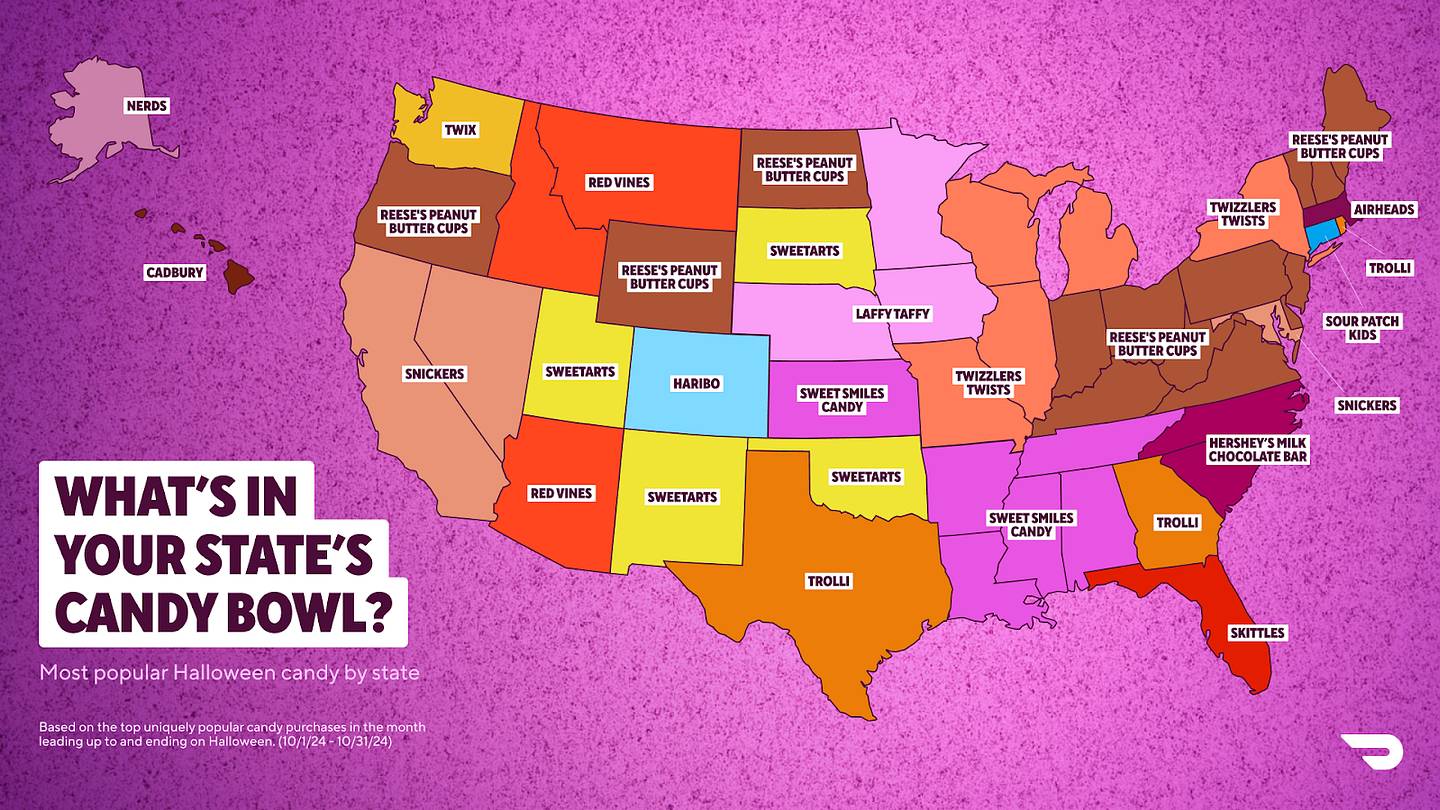
Halloween candy is not just candy. It is diplomacy in a plastic pumpkin bucket. It is neighborhood branding. It is the difference between being remembered as “the cool house with Reese’s” and “the place that gave out raisins and somehow expected applause.” DoorDash’s latest Halloween candy map gives America a deliciously detailed look at what people are actually ordering when spooky season rolls in, and the results are part predictable, part surprising, and part “wait, who ordered that much Laffy Taffy?”
The headline is simple: Reese’s Peanut Butter Cups still rule the national candy bowl. But the map gets more interesting when you zoom in. Some states lean chocolate-heavy. Others prefer sour, chewy, fruity, or licorice-style treats. The central United States shows a stronger taste for non-chocolate candies, while many states along the East and West Coasts continue to reach for chocolate classics. In other words, America may be united by Halloween, but it is deeply divided by snack strategy.
DoorDash’s candy map is especially useful because it is based on ordering behavior rather than casual opinion. People can claim they love a certain candy in a survey, but when Halloween is coming and the porch light is about to turn on, their real preferences show up in the cart. That is where the fun begins.
DoorDash’s Halloween Candy Map: A Sweet Snapshot of America
According to DoorDash’s Halloween order trends, the company analyzed candy orders from October 2024 to understand which treats rose to the top nationally and which candies over-indexed by state. The result is a map that turns America into one giant candy bowl, with each state showing its own trick-or-treat personality.
Reese’s Peanut Butter Cups came out as the national favorite and also ranked as the top candy in 14 states. That is not just a win; that is a chocolate-and-peanut-butter landslide. Reese’s performed especially well across parts of the Northeast, Mid-Atlantic, Midwest, and beyond, proving that the classic cup remains one of the safest bets for Halloween shoppers.
The national top 10 list also included M&M’s, Hershey’s Milk Chocolate Bars, Snickers, Skittles, Nerds, Sour Patch Kids, Twix, Kit Kat, and Airheads. It is a lineup that tells a clear story: chocolate still has enormous power, but fruity and sour candy are no longer just backup singers. They are moving closer to center stage, wearing neon colors and refusing to be ignored.
The National Winner: Reese’s Peanut Butter Cups Still Wear the Candy Crown
Reese’s dominance is not hard to understand. The candy hits several Halloween sweet spots at once. It is individually wrapped, easy to hand out, familiar across generations, and rich enough to feel like a “good” candy without being so fancy that you feel financially haunted after buying three bags.
There is also the flavor factor. Peanut butter and chocolate have the kind of chemistry usually reserved for buddy-cop movies. Sweet, salty, creamy, and snackable, Reese’s manages to please kids, teens, parents, and the adult who “accidentally” opens the Halloween bag two weeks early. Nobody is judging. Well, maybe the empty wrappers are.
DoorDash’s data also suggests that Reese’s is not merely popular; it is durable. Candy trends change every year, especially as new gummy clusters, sour strips, and seasonal shapes appear on shelves. Yet Reese’s continues to hold its ground. In a world of novelty snacks, the peanut butter cup is the reliable friend who shows up on time, brings snacks, and does not need a TikTok campaign to be loved.
America’s Top Halloween Candies, According to DoorDash
DoorDash’s national ranking shows a mix of chocolate classics and colorful chewy favorites. The top 10 candies are:
- Reese’s Peanut Butter Cups
- M&M’s
- Hershey’s Milk Chocolate Bar
- Snickers
- Skittles
- Nerds
- Sour Patch Kids
- Twix
- Kit Kat
- Airheads
This list is useful for anyone shopping for trick-or-treaters because it balances risk and reward. A bag with Reese’s, M&M’s, Snickers, Twix, and Kit Kat will satisfy chocolate lovers. Add Skittles, Sour Patch Kids, Nerds, and Airheads, and suddenly the fruit-candy crowd stops glaring at you from behind their vampire makeup.
The smartest Halloween candy bowl is not a one-candy dictatorship. It is a tiny democracy with chocolate, gummies, sour candy, and chewy options all represented. If the bowl has variety, everyone winsexcept the person trying not to eat three pieces before the doorbell rings.
State-by-State Candy Favorites: The Map Gets Weird in the Best Way
The most entertaining part of DoorDash’s candy map is the state-by-state breakdown. Reese’s led in states including Delaware, Indiana, Kentucky, Maine, New Hampshire, New Jersey, North Dakota, Ohio, Oregon, Pennsylvania, Vermont, Virginia, West Virginia, and Wyoming. That is a serious stretch of peanut-butter loyalty.
Sweet Smiles Candy, a value-friendly brand often associated with bulk Halloween buying, stood out across Alabama, Arkansas, Kansas, Louisiana, Mississippi, and Tennessee. That pattern makes sense. In areas where families may expect lots of trick-or-treaters, affordability matters. A generous bowl can be just as important as a premium brand, especially if your neighborhood has children arriving in waves like a very polite candy tornado.
Twizzlers Twists claimed a strong regional lane in Illinois, Michigan, Missouri, New York, and Wisconsin. Red Vines, meanwhile, showed up in Arizona, Idaho, and Montana. This licorice-style rivalry is one of the map’s most charming divisions. It is not exactly a constitutional crisis, but people have argued passionately over less.
Other state favorites add personality. California, Maryland, and Nevada leaned toward Snickers. Georgia, Rhode Island, and Texas favored Trolli. Iowa, Minnesota, and Nebraska went with Laffy Taffy. New Mexico, Oklahoma, South Dakota, and Utah showed love for SweetTARTS. Florida picked Skittles, Connecticut went Sour Patch Kids, Massachusetts chose Airheads, Colorado favored Haribo, Hawaii selected Cadbury, Alaska preferred Nerds, and Washington went with Twix.
Chocolate vs. Fruity Candy: The Real Halloween Debate
The DoorDash map shows that chocolate still has a powerful grip on Halloween, but fruity candy has become much more than filler. Skittles, Nerds, Sour Patch Kids, Airheads, Trolli, Haribo, Laffy Taffy, and SweetTARTS all appear in important places across the map. That tells us American candy preferences are widening.
Chocolate tends to feel classic, rich, and nostalgic. Fruity candy feels colorful, playful, and often more shareable for younger snackers. Sour candy adds a little drama. It is candy with a jump scare. Sour Patch Kids, Warheads, Lemonheads, and similar treats give Halloween shoppers a way to add personality to the bowl without spending premium chocolate money.
There is also a practical reason non-chocolate candy is gaining attention: price. Chocolate has faced pressure from higher cocoa costs, and shoppers have noticed. Gummies, sour candy, hard candy, and taffy often offer more pieces per bag at a friendlier price. For households that get hundreds of trick-or-treaters, that matters. Nobody wants to run out of candy at 7:42 p.m. and start handing out cough drops from the kitchen drawer.
Nostalgia Is Back, and It Brought Baby Bottle Pop
One of DoorDash’s most interesting findings is the rise of nostalgic candy. Baby Bottle Pop orders spiked dramatically, while Dum-Dums, Lemonheads, Warheads, Bit-O-Honey, Necco Wafers, and Strawberry Bon Bons also gained attention. These are not all new candies. In fact, some of them feel like they were discovered in a grandmother’s purse next to a tissue and a mysterious peppermint.
That is exactly the point. Halloween candy is emotional. For millennial parents, a candy like Baby Bottle Pop may bring back school buses, sleepovers, and the kind of lunchbox trading economy that felt more intense than the stock market. For Gen Z and Gen Alpha, retro candy can feel fresh again because it is colorful, quirky, and different from the usual chocolate-bar lineup.
In this way, Halloween is not just about what tastes best. It is about memory. A candy can become popular because it reminds parents of childhood, makes kids laugh, or looks fun in a social media photo. Nostalgia has become a flavor category of its own, and apparently it tastes like powdered sugar, sour dust, and mild chaos.
What the DoorDash Candy Map Means for Halloween Shoppers
If you are buying Halloween candy for your house, the DoorDash map offers a practical lesson: do not overthink it, but do not under-plan either. Reese’s, M&M’s, Snickers, Hershey’s, Kit Kat, Twix, and Skittles are reliable choices. They are popular nationally and easy to recognize. But if you want your candy bowl to stand out, add one or two regional or nostalgic surprises.
For example, a household in Florida might make Skittles the bright star of the bowl. In Connecticut, Sour Patch Kids make sense. In the Midwest, a mix of Reese’s, Twizzlers, Laffy Taffy, and SweetTARTS could match local preferences. In the South, a value-sized mix with Sweet Smiles-style variety may be more useful than a small bag of premium chocolate that disappears after twelve doorbells.
The best approach is to build a balanced bowl: chocolate for tradition, fruity candy for color, sour candy for excitement, and a few allergy-aware or non-food options for inclusivity. That way, every ghost, princess, dinosaur, superhero, and suspiciously tall “teenager in a hoodie” has something to choose from.
Retailers Should Pay Attention Too
DoorDash’s Halloween candy map is not just fun for consumers. It is valuable for grocery stores, convenience stores, discount retailers, and local merchants. Candy demand is highly seasonal, but it is not random. Stores that understand regional preferences can stock smarter and promote better.
A retailer in a Reese’s-heavy state should make sure the peanut butter cups are easy to find and available in multiple sizes. A store in a SweetTARTS or Laffy Taffy state may want to highlight fruity assortments earlier in the season. A retailer in a market where Sweet Smiles-style candy performs well should pay attention to value messaging, bulk bags, and last-minute shoppers.
Delivery platforms also change Halloween shopping behavior. In the past, running out of candy meant panic, a grocery-store sprint, or quietly turning off the porch light and pretending nobody was home. Now, many shoppers can order candy close to Halloween night. That convenience increases last-minute purchases and may explain why recognizable, available brands perform so well. The scariest Halloween monster is not a vampire. It is an empty candy bowl at 8:05 p.m.
Is DoorDash’s Map the Final Word on America’s Favorite Candy?
DoorDash’s map is helpful, but it should be understood correctly. It reflects ordering data from DoorDash customers, not every candy purchase in every store across America. That means availability, delivery habits, retailer partnerships, local promotions, and regional shopping behavior can all influence the results.
For example, a candy that is easy to order through a popular local store may perform better than a candy people buy in person elsewhere. A value brand may rise in states where shoppers prioritize bulk quantity. A premium chocolate may spike in areas where adults are buying “just a little treat” for themselves and then pretending it is for the children.
Still, the map is valuable because ordering data captures real purchase behavior. People voted with their carts. That makes the findings more grounded than a casual poll where everyone claims they hand out full-size bars while quietly buying the discount mixed bag.
Halloween Candy Experiences: What the Map Looks Like in Real Life
The DoorDash candy map feels especially accurate when you think about the real-life experience of Halloween night. Every neighborhood has its own candy culture. Some streets are famous for chocolate. Some are known for giant variety bowls. Some houses become legends because they hand out full-size bars, and those legends spread among children faster than any local news alert.
In many homes, candy shopping begins with good intentions. Someone says, “Let’s buy early this year.” Then the first bag gets opened “just to test freshness.” A week later, the Reese’s are gone, the Snickers are in danger, and the household is left with a lonely bag of hard candy nobody remembers purchasing. This is why early Halloween candy buying often turns into early Halloween candy re-buying.
DoorDash’s data reflects that reality. People do not always shop once. They restock. They panic-buy. They discover that their neighborhood has more trick-or-treaters than expected. They realize the variety pack is mostly the candy nobody wants. Then they grab their phone and order the crowd-pleasers.
The map also captures how personal candy preferences can be. A child who loves Sour Patch Kids may ignore a chocolate bar completely. A parent may quietly hope nobody picks the last Reese’s. A teenager may choose Nerds because the packaging feels fun. A younger child may pick candy based entirely on color, which is not scientific but somehow deeply respectable.
There is also the social side of Halloween candy. Kids compare. Siblings negotiate trades. One peanut butter cup might equal two lollipops and a mini pack of gummies, depending on household inflation. Skittles can become bargaining chips. Twix can start debates about left and right bars that nobody truly asked for but everyone participates in anyway.
For adults handing out candy, the experience is half generosity and half strategy. You want enough candy to last the night, but not so much that you are eating leftovers until Thanksgiving. You want popular treats, but you also want variety. You want to be allergy-aware, but you still want the bowl to feel festive. A smart setup might include chocolate in one bowl, fruity or sour candy in another, and a small separate bowl of non-food items like stickers, glow sticks, or small toys.
That last detail matters. Halloween should feel welcoming for children with food allergies, dietary restrictions, or other needs. Offering a non-food option does not ruin the candy fun; it expands it. A glow stick may not beat a Reese’s for every kid, but for the child who cannot safely eat most candy, it can make the house feel thoughtful rather than off-limits.
The DoorDash map, then, is more than a list of candy preferences. It is a reminder that Halloween is built from tiny choices: what people buy, what kids pick, what families remember, and what neighborhoods become known for. Candy may be small, but on Halloween night, it carries a surprising amount of joy, identity, and porch-light drama.
Conclusion: America’s Candy Bowl Has a Personality
DoorDash’s map of America’s favorite Halloween candies shows that Reese’s Peanut Butter Cups remain the national champion, but the real story is regional flavor. The country’s candy bowl is full of chocolate loyalists, sour-candy fans, fruity-chew enthusiasts, licorice defenders, and nostalgic snackers bringing old-school treats back from the candy graveyard.
For shoppers, the takeaway is simple: buy the classics, add variety, consider local preferences, and keep a few inclusive options available. For retailers, the message is even clearer: Halloween candy demand is regional, emotional, and increasingly shaped by convenience. America may not agree on everything, but when October arrives, we can at least agree that a well-stocked candy bowl is a beautiful thing.