

Note: This article is written as a fully original, publish-ready SEO blog post based on real workplace patterns, professional stereotypes, and common career-related frustrations reported across U.S. career, workplace, and professional sources.
Why One Simple Question Can Make Professionals Spiritually Clock Out
Everyone has a job. Everyone also has a tiny collection of phrases they would happily launch into the sun if given the proper equipment and a supportive supervisor. Ask a teacher if they “love having summers off,” and you may see a smile that belongs in a museum of emotional restraint. Tell a graphic designer to “make it pop,” and somewhere, a font silently cries. Tell a software developer, “You must be able to fix my printer,” and congratulationsyou have confused code with office sorcery.
The funny thing is, most people do not mean harm. They are making small talk. They hear a profession, grab the nearest stereotype from the mental junk drawer, and toss it into conversation like a party balloon. But for the person on the receiving end, that “harmless” comment can feel like the 400th replay of the same tired joke. It reduces years of training, deadlines, pressure, judgment, licensing, emotional labor, and actual expertise to one cartoonish line.
This list gathers 30 common answers to the question: What is the most annoying thing people say after learning your profession? The result is part comedy, part workplace anthropology, and part reminder that every job is more complicated than it looks from the outside.
30 Professions and the Comments They Are Tired of Hearing
1. Teacher: “Must be nice to have summers off.”
Teachers hear this so often it should come printed on a coffee mug with a tiny crack in it. The comment ignores lesson planning, grading, training days, classroom prep, second jobs, emotional support, parent emails, and the fact that many educators spend their own money on supplies. Summer is not a three-month beach montage. It is recovery, preparation, and sometimes professional development with fluorescent lighting.
2. Nurse: “So you’re basically a doctor’s assistant?”
Nurses do not simply “assist.” They assess, monitor, educate, advocate, coordinate, document, respond to emergencies, and often become the person patients remember most clearly. Reducing nursing to background support is like calling a pilot “the steering wheel helper.” Nurses are trained professionals, not medical furniture with comfortable shoes.
3. Doctor: “Can you look at this weird thing real quick?”
Doctors attend family cookouts like everyone else, except they are one suspicious mole away from becoming an unpaid urgent care kiosk. Many physicians are happy to encourage proper care, but casual diagnosis at a barbecue is risky, incomplete, and socially awkward. Also, nobody wants potato salad next to a medical mystery.
4. Lawyer: “You must be great at lying.”
Lawyers get hit with jokes about dishonesty, greed, and arguing for sport. The reality is that legal work depends on ethics, research, strategy, procedure, client service, and careful language. Most attorneys are not plotting courtroom theatrics in smoky rooms. They are reading documents, meeting deadlines, and wishing people understood that “legal advice” is not a party trick.
5. Software Developer: “Can you fix my Wi-Fi?”
Writing software and repairing a home router are not the same profession, though both may involve staring at blinking lights with suspicion. Developers build applications, systems, tools, and digital infrastructure. That does not automatically mean they know why your printer has chosen emotional independence.
6. Graphic Designer: “Can you make it pop?”
This phrase is the fog machine of design feedback: dramatic, vague, and not especially useful. Designers need specific directionmore contrast, stronger hierarchy, brighter colors, clearer call-to-actionnot a mysterious command to summon visual fireworks. “Make it pop” often means “I know something is wrong, but I packed no vocabulary for this trip.”
7. Accountant: “You must love doing taxes.”
Some accountants specialize in taxes. Many do not. Accounting includes auditing, financial analysis, compliance, advisory work, budgeting, forecasting, and business strategy. Assuming every accountant spends the year dreaming of W-2 forms is like assuming every chef only makes toast.
8. Librarian: “So you just read books all day?”
Librarians manage information systems, help with research, organize community programs, support digital literacy, handle public service challenges, and keep knowledge accessible. Reading is involved, yes, but “just reading books” misses the technology, education, outreach, and problem-solving behind modern library work.
9. Mechanic: “Can you check my car for free?”
Mechanics hear this from neighbors, relatives, friends of relatives, and people who suddenly become very friendly when their check engine light glows. Diagnostics take time, tools, training, and liability. Asking for free car work because someone knows engines is like asking a dentist to “just bring the drill to Thanksgiving.”
10. Chef: “What’s your favorite thing to cook?”
This sounds harmless, but chefs often hear it after a 12-hour shift spent cooking for everyone except themselves. Many professionals in food service love food deeply. They may also go home and eat cereal over the sink because their soul has been sautéed.
11. Server: “You should get a real job.”
Serving requires stamina, memory, conflict management, speed, math, charm, and the ability to remain polite while someone debates the emotional temperature of ranch dressing. It is real work. Anyone who doubts that should try carrying four hot plates while remembering who asked for lemon, no ice, extra napkins, and “the sauce from last time.”
12. Writer: “I’ve always wanted to write a book. I just don’t have time.”
Writers hear this as a subtle suggestion that writing is merely typing after inspiration knocks. Professional writing involves research, structure, revision, deadlines, editing, audience analysis, and the patience to delete sentences that once felt brilliant. Having an idea is the fun part. Turning it into readable work is where the keyboard starts charging rent.
13. Journalist: “So you just make things up?”
Journalists already work in a tense trust environment, so being casually accused of fabrication is not exactly delightful small talk. Good reporting involves verification, sourcing, context, editing, and accountability. A journalist is not a rumor blender with a press badge.
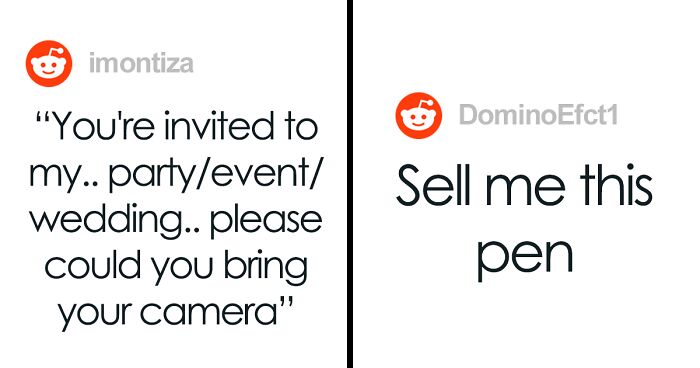
14. Photographer: “Your camera takes great pictures.”
That is like telling a chef, “Your oven makes great dinner.” Cameras matter, but photographers bring composition, timing, lighting, editing, patience, and people skills. The equipment captures the image; the professional creates it.
15. Veterinarian: “You must just play with puppies all day.”
Veterinarians love animals, but the job includes surgery, diagnostics, difficult conversations, emergencies, public health concerns, and emotionally heavy decisions. It is rewarding, but it is not a continuous puppy parade with stethoscopes.
16. Architect: “So you draw houses?”
Architecture includes design, safety codes, zoning, client needs, engineering coordination, sustainability, budgets, permits, materials, and endless revisions. Drawing is one visible part of a much larger process. The sketch is the tip of the drafting-table iceberg.
17. Therapist: “Are you analyzing me right now?”
Therapists are not secretly diagnosing everyone at brunch. Most are trying to eat their omelet in peace. The comment turns a trained helping profession into a spy movie. Therapy requires consent, context, boundaries, and clinical carenot reading your personality from how you butter toast.
18. Firefighter or Paramedic: “You must love adrenaline.”
Emergency responders are trained for crisis, but that does not mean they enjoy chaos. The work involves preparation, teamwork, calm judgment, physical risk, public service, and exposure to difficult situations. “Adrenaline junkie” makes the profession sound like a hobby instead of a serious responsibility.
19. Police Officer: “I didn’t do it!”
Many officers hear this joke the moment they mention their job. It may be intended as playful, but after the 10,000th time, it becomes the conversational equivalent of a squeaky shopping cart. Public safety work is complicated, and not every introduction needs a fake confession.
20. Pilot: “Isn’t the plane basically flying itself?”
Modern aviation uses advanced systems, but pilots manage planning, communication, weather, safety, navigation, procedures, emergencies, and decision-making. Autopilot is a tool, not a replacement for trained professionals. Your cruise control does not make you a passenger in your own car.
21. Dentist: “I hate dentists.”
Dentists hear this while trying to help people keep their teeth, gums, smiles, and overall oral health in decent shape. They understand dental anxiety, but opening with “I hate your profession” is not exactly minty fresh. A better line might be, “I get nervous at appointments, but I appreciate what you do.”
22. Pharmacist: “You just count pills, right?”
Pharmacists check interactions, verify prescriptions, counsel patients, coordinate with providers, administer vaccines in many settings, and help prevent medication errors. Counting pills is one visible task. The invisible work is safety, accuracy, and clinical judgment.
23. Engineer: “Can you build me an app/bridge/robot this weekend?”
Engineering is broad. A civil engineer may not design phone apps. A mechanical engineer may not build websites. An electrical engineer may not want to wire your basement for pizza. The title “engineer” does not mean “universal problem-solving vending machine.”
24. Electrician: “Can you take a quick look at this outlet?”
Electrical work is skilled, regulated, and potentially dangerous. “Quick look” often means “please diagnose a mystery behind my wall for free.” Electricians know that shortcuts can cause serious problems, so they tend to prefer proper inspections over casual favors between snacks.
25. Plumber: “That job must be gross.”
Plumbers hear plenty of jokes, most of them less fresh than the problems they solve. But plumbing protects sanitation, comfort, infrastructure, and public health. It is practical, technical, and essential. When the pipes fail, suddenly nobody is laughing.
26. HR Manager: “So you’re the fun police?”
Human resources professionals often get blamed for every policy, awkward meeting, and benefits form on Earth. Good HR work includes hiring support, compliance, employee relations, training, compensation, documentation, and problem-solving. They are not always the villain. Sometimes they are the person trying to stop the villain from creating a lawsuit with a birthday cake email.
27. Recruiter: “You just scroll LinkedIn all day?”
Recruiting involves sourcing, interviewing, screening, expectation management, compensation discussions, hiring manager coordination, and delivering disappointing news professionally. It is part sales, part psychology, part logistics, and part calendar wrestling championship.
28. Social Worker: “That must be depressing.”
Social workers support people through complex systems involving housing, healthcare, family needs, schools, crisis response, and public services. The work can be emotionally demanding, but calling it “depressing” overlooks its impact, skill, advocacy, and human dignity.
29. Makeup Artist: “Can you do mine for free?”
Makeup artistry requires sanitation knowledge, skin understanding, product skill, color theory, lighting awareness, and steady hands. Free “practice” is often requested from people who already have professional experience. Exposure does not pay for foundation, brushes, insurance, or rent.
30. Scientist: “So what have you discovered?”
Science is rarely one dramatic “Eureka!” moment followed by a Nobel Prize and a movie deal. It is experiments, failed experiments, data, peer review, funding, careful claims, and long timelines. Many scientists spend years answering one narrow question extremely well. That may not sound flashy, but it is how reliable knowledge gets built.
The Pattern Behind These Annoying Profession Comments
The most annoying comments usually fall into a few categories. First, there are the free labor requests: “Can you fix my laptop?” “Can you look at my contract?” “Can you take photos at my wedding?” These sound casual, but they treat professional skill as a party favor. Second, there are the stereotype jokes: teachers love vacation, accountants are boring, librarians shush people, lawyers lie, designers doodle, and servers are just waiting for a “real job.” These lines are easy because they are familiar, but familiarity is not the same as accuracy.
Third, there are the status comments. Some professions get praised in ways that feel uncomfortable, while others get dismissed even when they require training, endurance, judgment, and responsibility. People often rank jobs by income, prestige, or what they saw on television, not by the actual skill involved. That is why a pharmacist gets reduced to pill counting, a mechanic gets treated like free roadside assistance, and a social worker gets defined only by the hardest parts of the work.
The fourth category is false simplicity. Outsiders see the visible final producta clean design, a safe flight, a working sink, a published article, a calm classroomand assume the process was simple. Professionals know better. The smoother something looks, the more invisible labor probably went into it.
Why These Comments Bother People More Than You Think
A single joke may not matter. The problem is repetition. Hearing the same line for years can make people feel unseen. It suggests that the listener has not met a professional person; they have met a costume. The teacher becomes a vacation calendar. The nurse becomes a sidekick. The developer becomes tech support. The writer becomes someone who “just types.”
Work is a major part of identity for many Americans. People train for years, build confidence, survive bad managers, learn from mistakes, handle customers, solve problems, and develop judgment that cannot be summarized in a punchline. When someone immediately responds with a stereotype, it can feel like skipping the person and shaking hands with the cliché.
There is also a respect issue. Professionals do not always need applause, but they do appreciate curiosity. A better response than “Can you do this for free?” is “What part of your work do people usually misunderstand?” A better response than “I hate dentists” is “I get nervous at appointmentswhat do you wish patients knew?” A better response than “Must be nice to have summers off” is “What does your workload look like outside the classroom?”
Better Things to Say After Learning Someone’s Profession
If you want to make small talk without accidentally stepping on someone’s last nerve, ask questions that invite real answers. Try: “What surprised you most about that field?” “What does a typical day actually look like?” “What skill matters more than people realize?” “What part of the job do you enjoy most?” “What is one misconception people have about your work?”
These questions do two useful things. They show respect, and they let the professional define their own work. They also lead to far better conversations. Instead of hearing the same dusty joke, you may learn that librarians manage digital archives, chefs do more spreadsheets than expected, nurses coordinate complex care, and software developers spend as much time reading human confusion as writing machine instructions.
Extra Experiences: What These Profession Comments Reveal About Real Working Life
Behind every annoying comment is a small clash between public imagination and workplace reality. Most people build their idea of a job from television, family stories, school memories, viral videos, and the one person they once knew who did something vaguely similar. That is why so many professions become flattened into a single image. Teachers are imagined standing at a chalkboard. Nurses are imagined holding a clipboard. Writers are imagined sipping coffee beside a window while inspiration behaves politely. Mechanics are imagined under cars, electricians beside wires, and chefs beside flames. The truth is usually messier, more administrative, more emotionally demanding, and much less cinematic.
Many professionals say the most frustrating part is not the joke itself, but the assumption hiding inside it. When people ask a designer to “whip up a logo,” they imply that creative work is quick because the final file looks simple. When someone asks a lawyer for “just a quick opinion,” they ignore the responsibility that comes with legal advice. When a friend asks a photographer for free event coverage, they may not see the hours of editing, equipment costs, backups, contracts, and pressure to capture once-in-a-lifetime moments. The comment seems small, but it reveals a larger habit: people often value results more than expertise.
Another common experience is the burden of being “always on.” Doctors, therapists, tech workers, mechanics, accountants, and stylists all describe versions of this problem. The second their profession is known, the room produces a request. A doctor gets a symptom. A therapist gets a confession wrapped as a joke. A developer gets a broken laptop. An accountant gets a tax question in March, which is like asking a lifeguard for swimming lessons during a shark sighting. The professional may care, but they also deserve off-hours, boundaries, and the right to attend a birthday party as a guest rather than a service provider.
There is also emotional whiplash. Some jobs are romanticized until real workers feel trapped inside unrealistic praise. Firefighters and nurses may be called heroes, but hero language can sometimes hide the need for staffing, fair pay, rest, safety, and support. Teachers may be praised as “special people,” then dismissed when they talk about workload. Social workers may be admired for compassion while being underfunded in the systems where compassion is most needed. Compliments are nice, but practical respect is better.
The most useful lesson is simple: every profession has invisible labor. The server is reading moods while balancing timing. The journalist is verifying details while racing deadlines. The pharmacist is protecting patient safety in a system where one small mistake can matter. The plumber is preserving sanitation. The librarian is defending access to information. The pilot is managing risk long before passengers board. The more we understand the hidden parts of work, the less likely we are to reduce someone’s career to a joke they have already heard in three grocery store lines and one cousin’s wedding.
So the next time someone tells you what they do, resist the urge to grab the nearest stereotype. Ask a better question. You might get a better story, a deeper conversation, andmost importantlyyou will not become the person who tells a graphic designer to “make it pop” while they quietly reconsider civilization.
Conclusion: Respect the Job, Retire the Lazy Joke
The most annoying things people say after learning someone’s profession are usually not evil. They are just lazy, overused, and built on stereotypes that refuse to retire. But small talk can be better. A profession is not a punchline, a free service booth, or a one-sentence summary. It is training, pressure, problem-solving, patience, and pride.
Whether someone teaches children, fixes pipes, writes code, fills prescriptions, reports news, designs logos, serves tables, or studies data in a lab, their work deserves more than the first cliché that wanders into the conversation. Ask what the job is really like. Ask what people misunderstand. Ask what skill matters most. You may discover that the world of work is far more interesting than the stereotypesand far funnier when professionals get to tell the story themselves.