

Note: This article is written as a travel-photography narrative based on real information about Plitvice Lakes National Park, including its UNESCO status, lake system, boardwalk routes, visitor rules, and conservation guidance.
There are places you visit, places you remember, and places that quietly reorganize your entire idea of what the color blue is supposed to look like. Plitvice Lakes National Park in Croatia belongs firmly in the third category. Before I arrived, I thought I understood turquoise. I had seen swimming pools. I had seen tropical postcards. I had even seen the inside of a suspiciously bright sports drink. Then Plitvice Lakes looked at all of that and politely said, “Cute.”
Located in central Croatia, Plitvice Lakes National Park is Croatia’s oldest and largest national park, first protected in 1949 and later recognized as a UNESCO World Heritage Site in 1979 for its extraordinary natural beauty and ongoing tufa-forming geological processes. The park is famous for its chain of 16 terraced lakes, countless waterfalls, limestone canyons, lush forests, and wooden walkways that make photographers feel like they have wandered into a fantasy film set with excellent water management.
This photo journey through Plitvice Lakes is not just a gallery of pretty water, although, let’s be honest, there is a lot of pretty water. It is also a love letter to patient observation: the way mist softens a waterfall, the way sunlight changes a lake from emerald to sapphire in five minutes, and the way every boardwalk corner seems to whisper, “You should probably take one more picture.” So I did. Nineteen times. Okay, much more than nineteen times, but these are the best.
Why Plitvice Lakes Is A Dream Destination For Photographers
Plitvice Lakes National Park is a natural staircase of water. The Upper Lakes are broader, calmer, and wrapped in forest, while the Lower Lakes sit inside a dramatic limestone canyon with steep cliffs and some of the park’s most iconic viewpoints. Water moves constantly between the lakes, spilling over mossy barriers, tumbling through narrow channels, and forming waterfalls that range from delicate silver threads to full theatrical curtain drops.
The science behind the beauty is part of the magic. Over thousands of years, mineral-rich water has deposited travertine, also called tufa, creating natural barriers that shape the lakes and waterfalls. This process is still happening today, which means Plitvice is not a frozen museum piece. It is alive, changing, building itself slowly, one mineral layer at a time. That makes every photo feel temporary in the best possible way.
For photographers, the park offers rare variety in a compact area: reflections, long-exposure waterfalls, intimate woodland details, panoramic canyon views, wildlife possibilities, misty morning scenes, and close-ups of water so clear you may briefly question whether reality has upgraded to high definition. The official walking routes, electric boats on Lake Kozjak, and panoramic vehicles help visitors move through the lake zone without needing to be Olympic hikers. Your calves may still file a complaint, but it will be a polite one.
My Best 19 Pictures From Plitvice Lakes National Park
1. The First Look From Entrance 1
The first photo I took was from the classic viewpoint near Entrance 1, where the Lower Lakes open below like a living map of waterfalls, cliffs, and green-blue water. This is the moment Plitvice announces itself. No warm-up. No modest introduction. Just a full cinematic reveal. The Great Waterfall, known as Veliki Slap, appears in the distance, and the boardwalks below look tiny enough to remind you that nature is the main character here.
2. Veliki Slap In Morning Light
Veliki Slap is Croatia’s tallest waterfall and one of the most photographed places in Plitvice Lakes National Park. I photographed it early, before the busiest crowds arrived, when the morning light was still soft and the mist rose like steam from a giant forest kettle. A fast shutter captured the falling water as clean white ribbons, while a slower exposure turned it into silk. Both versions worked, which is photographer code for “I could not choose and now my memory card needs emotional support.”
3. The Boardwalk Over Glass-Clear Water
One of my favorite images shows the wooden boardwalk floating over impossibly clear water. You can see submerged branches, fish, stones, and shifting patterns of sunlight below your feet. The composition is simple: leading lines, transparent water, and a curve in the path pulling the viewer forward. It feels like an invitation to keep walking, preferably without dropping a lens cap into a UNESCO-protected lake.
4. Waterfalls Between The Lower Lakes
The Lower Lakes are compact but dramatic. In this photo, several small waterfalls cascade between limestone walls and green vegetation. What I love about the image is its layered movement: water in the foreground, a second cascade behind it, and a shadowed cliff in the background. Plitvice is generous that way. You frame one waterfall, and three more sneak into the shot like enthusiastic background actors.
5. Kaluđerovac Lake In Deep Blue
Kaluđerovac Lake gave me one of the richest blues of the day. Depending on sunlight, minerals, organisms, and viewing angle, the lakes at Plitvice can shift from turquoise to emerald, gray-blue, or deep sapphire. In this frame, the water looked almost unreal, but the camera did not exaggerate. If anything, it underperformed. The human eye still wins here, which is annoying for anyone who owns expensive camera gear.
6. The Misty Canyon Path
This picture focuses less on the lake and more on atmosphere. The canyon walls rise beside the path, mist hangs in the air, and the boardwalk disappears into greenery. It is the kind of scene that makes you lower your voice for no logical reason. The photograph works because it captures Plitvice as an experience, not just a postcard. You can almost hear the water before you see it.
7. Lake Kozjak From The Electric Boat
Lake Kozjak is the largest lake in the park and a key crossing point for many routes. Visitors with valid park tickets can use the electric boat, which is quiet enough to preserve the peaceful mood and slow enough to let photographers pretend they planned every shot. My favorite image from the boat shows the lake stretching toward forested hills, with ripples catching the light like brushed metal.
8. The Upper Lakes In Emerald Green
The Upper Lakes feel gentler and more spacious than the canyon-like Lower Lakes. This image captures a wide emerald pool surrounded by trees, with a small waterfall feeding it from one side. The mood is calm, almost meditative. It is the visual equivalent of taking a deep breath and remembering that email can wait.
9. Veliki Prštavac Waterfall
Veliki Prštavac is one of the most beautiful waterfalls in the Upper Lakes area. I framed it vertically to emphasize the height and flow, letting the surrounding greenery act as a natural border. The white water against moss and rock created a clean contrast. This is where a polarizing filter became my best friend, reducing glare and helping the colors stay rich without turning the scene into a neon smoothie.
10. A Close-Up Of Tufa And Moss
Not every great Plitvice photo needs a sweeping vista. One of my favorite shots is a close-up of moss-covered tufa with water trickling over it. It shows the tiny architecture behind the grand landscape. The park’s famous lakes and waterfalls exist because of these delicate natural processes, which is also why visitors are asked to stay on marked trails and avoid disturbing the environment.
11. Reflections After The Wind Paused
For about thirty seconds, the wind stopped. Photographers know this moment. It is when everyone suddenly becomes very still, like wildlife but with backpacks. I captured a reflection of trees mirrored in the lake, broken only by a few small ripples. The image feels quiet, and that quiet is part of Plitvice’s charm. Even in a popular national park, there are moments when the landscape seems to hold its breath.
12. The Waterfall Curtain
This photo shows several narrow streams pouring over a mossy ledge, forming a curtain of water. I used a slower shutter speed to soften the flow while keeping enough texture to show movement. The result feels delicate rather than powerful. Plitvice is full of these smaller scenes, and they are easy to miss if you only chase the famous viewpoints.
13. Autumn Color Around The Lakes
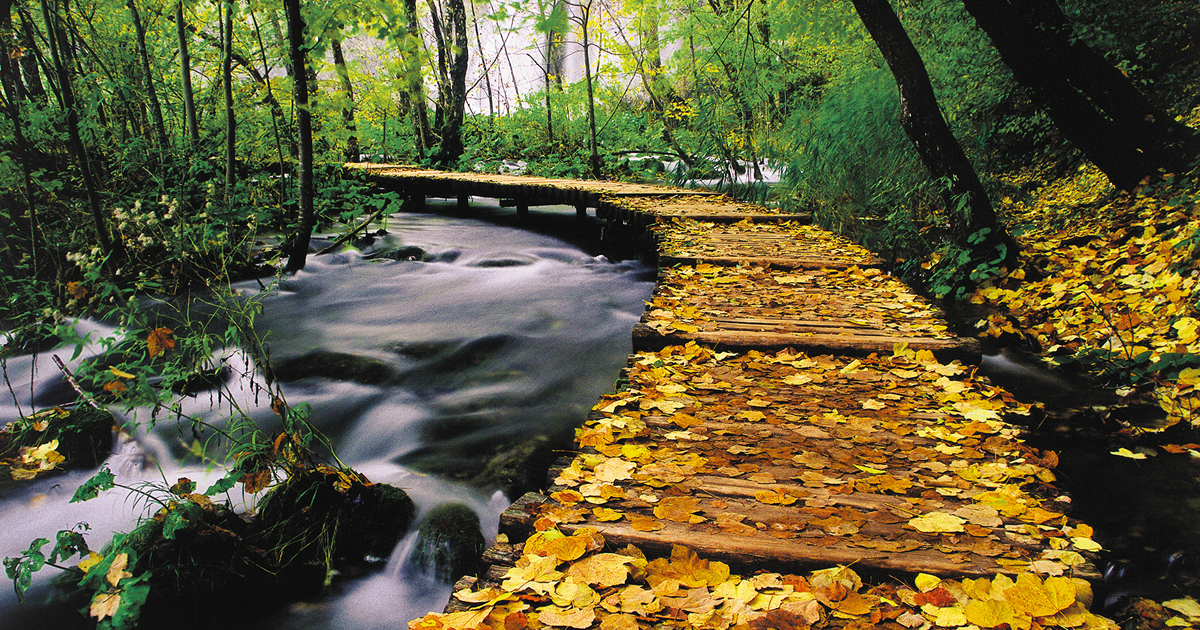
If summer gives Plitvice its bright postcard personality, autumn gives it drama. Copper, gold, and red leaves frame the blue-green lakes in a way that feels almost unfair to other seasons. My autumn image shows warm foliage reflected in cool water, creating a color contrast that needed very little editing. Nature had already opened Photoshop and handled the saturation slider responsibly.
14. A Quiet Turn In The Boardwalk
This photo is simple: a wooden path curving through reeds and low vegetation. But it captures something essential about visiting Plitvice Lakes. The boardwalks are not just transportation; they are part of the visual identity of the park. They guide your eye, slow your pace, and keep visitors away from fragile formations. Also, they make every traveler briefly believe they are starring in a thoughtful nature documentary.
15. Fish In Crystal Water
The water at Plitvice is so clear that fish seem to float in air. I photographed them from above, using the boardwalk as a stable shooting position and waiting until the surface glare softened. The result is a peaceful image that reminds viewers why swimming is prohibited. The lakes are not a giant natural pool; they are a protected ecosystem.
16. The High View Over The Lower Lakes
Some of the best compositions come after climbing out of the Lower Lakes canyon to the viewpoints above. From there, you can see the lakes stacked below, boardwalks crossing the water, and waterfalls connecting one level to the next. This photo gives context. It shows the park not as isolated scenes, but as one flowing system.
17. Rain On The Wooden Walkway
A light rain arrived in the afternoon, and instead of ruining the day, it gave the boardwalk a glossy texture and deepened the greens. I photographed footsteps, reflections, and tiny drops clinging to leaves. Plitvice in rain feels moodier and more intimate. The only downside is that wet wooden paths demand sensible shoes, not heroic fashion choices.
18. The Small Waterfall That Stole The Show
This was not the tallest waterfall, not the widest, and probably not the one most visitors came to see. But it was perfectly framed by ferns, rocks, and soft light. Sometimes the best travel photos are not the famous landmarks; they are the small scenes that feel like you discovered them, even though several thousand people probably discovered them before lunch.
19. The Last Look Back
My final favorite photo was taken as I was leaving. The light had lowered, the crowds had thinned, and the water had shifted into a darker shade of blue. I turned back for one last frame of waterfalls slipping through the trees. It is not the loudest image in the collection, but it feels like a goodbye. Plitvice does not really let you leave cleanly. It sends you away with one more view, one more sound of falling water, and one more reason to come back.
Photography Tips For Capturing Plitvice Lakes
Arrive Early Or Stay Nearby
Plitvice Lakes is one of Croatia’s most popular natural attractions, so timing matters. Early morning offers softer light, fewer people on the boardwalks, and a better chance of photographing the famous viewpoints without a parade of hats in the foreground. Staying near the park the night before makes an early start much easier and saves you from trying to become a sunrise person through sheer panic.
Bring A Polarizing Filter
A circular polarizing filter is extremely useful at Plitvice because so many compositions involve water, wet rocks, leaves, and reflections. It can reduce glare and help reveal the color beneath the lake surface. Use it carefully, though. Over-polarizing can make skies and water look uneven, and Plitvice does not need heavy-handed editing. It already has main-character energy.
Use A Mix Of Wide And Tight Shots
Wide shots capture the scale of the lakes and canyon, while tighter compositions show the personality of the place: moss, droplets, ripples, fish, steps, leaves, and miniature waterfalls. A good Plitvice photo story needs both. Otherwise, your gallery may become a beautiful but slightly confusing collection titled “Water Falling In Various Directions.”
Respect The Rules While Getting The Shot
The park asks visitors to stay on marked trails, avoid littering, refrain from feeding animals, and not swim in the lakes. Drones and cycling are also prohibited inside the national park zone. These rules are not there to ruin your creative genius. They protect the fragile tufa formations, wildlife, water quality, and visitor safety. A great photo is never worth damaging the place you came to admire.
Best Time To Visit Plitvice Lakes For Photography
Every season changes the personality of Plitvice Lakes. Spring often brings strong water flow and fresh greenery, making waterfalls especially lively. Summer offers bright colors and longer days, but it is also the busiest season, so early arrival becomes even more important. Autumn may be the most photogenic season, with golden forests reflecting in blue-green lakes. Winter can turn waterfalls into icy sculptures, although some trails and services may be limited depending on conditions.
For photographers who want color, comfort, and fewer crowds, late spring and autumn are especially rewarding. The light is softer, the temperatures are friendlier, and the park feels more spacious. Summer can still be wonderful, but the best strategy is to treat sunrise like a reservation you cannot miss.
How To Experience The Park Without Rushing
The official lake tour programs make it easy to plan a visit based on time and energy. Shorter routes focus on the Lower Lakes and the Great Waterfall, while longer routes combine the Upper and Lower Lakes with electric boat rides and panoramic vehicle sections. If photography is your priority, choose a route that gives you room to pause. Plitvice rewards slow looking.
Instead of trying to “complete” the park like a checklist, give yourself permission to linger. Watch how the water changes color when a cloud passes. Wait for people to clear a bridge. Step aside when the boardwalk narrows. Listen to the waterfalls before raising the camera. The best images often happen between the obvious viewpoints.
Extra Experiences From Photographing Plitvice Lakes
Photographing Plitvice Lakes taught me that travel photography is not just about arriving at beautiful places. It is about learning how to behave when beauty refuses to sit still. Water moves. Light shifts. Tour groups appear at the exact moment you have finally composed the perfect shot. A duck may enter the frame with more confidence than any professional model I have ever met. The job is not to control the scene. The job is to notice it properly.
One of my strongest memories is the sound. Before visiting, I expected Plitvice to be visually impressive, but I did not expect the soundtrack to be so layered. There is the heavy roar of Veliki Slap, the soft chatter of smaller cascades, the hollow knock of shoes on wooden walkways, the occasional birdcall from the forest, and the gentle electric hum of the boat across Lake Kozjak. When I review the photos, I remember those sounds as clearly as the colors.
I also learned to stop chasing only the famous images. At first, I moved like a photographer on a mission: viewpoint, waterfall, lake, repeat. But the park improved when I slowed down. I began noticing small scenes: a leaf caught on wet wood, bubbles gathering at the edge of a tufa barrier, a shaft of light landing on one patch of moss, fish turning together under the surface. Those images may not be the ones that scream “Croatia bucket list,” but they carry the feeling of being there.
Plitvice is also a place where patience pays rent. Sometimes I waited five or ten minutes for a boardwalk to clear, only for another visitor to step into the frame wearing a jacket brighter than a traffic cone. That is travel photography. You can sigh, or you can reframe. Sometimes the people add scale. Sometimes they ruin the shot. Sometimes they remind you that this landscape belongs to everyone, not just the person currently crouching beside a tripod and muttering about exposure compensation.
The weather changed several times during my visit, and each change created a new version of the park. Sun made the lakes glow. Cloud softened the contrast. Rain deepened the greens and made the waterfalls feel wilder. Mist turned the canyon into a dream sequence. Instead of waiting for “perfect” weather, I started treating every condition as a different assignment. Bright sun was for color. Overcast skies were for waterfalls. Rain was for mood. Windless moments were for reflections.
If I could give one piece of advice to anyone photographing Plitvice Lakes, it would be this: do not let the camera become a wall between you and the place. Take the shot, absolutely. Take several. Adjust your settings. Try the vertical frame. Try the wide frame. Then lower the camera. Look at the water without turning it into content for a minute. The park has survived for thousands of years without your Instagram carousel, and somehow, bravely, it will continue.
My favorite experience came near the end of the day, when I found a quiet section of path and stood there longer than planned. The crowds had moved on, the light was soft, and a small waterfall slipped over moss into a clear pool. It was not the grandest view in the park. It was not the image most likely to win awards. But it felt complete. That is what Plitvice does so well: it overwhelms you with scale, then wins you over with details.
By the time I left, my shoes were damp, my camera battery was nearly finished, and my memory card was dangerously full. I had taken far more than 19 photos, of course. Plitvice Lakes has a way of turning disciplined photographers into enthusiastic collectors of “just one more.” But the best images were not only the sharpest or most colorful. They were the ones that carried a little piece of the walk: the mist, the sound, the patience, the surprise, and the sense that water had spent thousands of years preparing this composition.
Conclusion
Plitvice Lakes National Park is one of those rare destinations that lives up to the photographs and then quietly exceeds them. Its 16 terraced lakes, waterfalls, forest paths, tufa formations, and wooden walkways create a landscape that feels both ancient and constantly new. For photographers, it offers endless opportunities: grand viewpoints, intimate details, reflections, color, movement, and atmosphere.
But the real lesson of photographing Plitvice is not simply where to stand or which lens to use. It is how to look. The park rewards people who slow down, respect the trails, protect the ecosystem, and notice the smaller scenes between the famous ones. My best 19 pictures are not just souvenirs from Croatia. They are reminders that nature does not need filters, gimmicks, or dramatic captions. Sometimes it only needs good light, clear water, and a photographer humble enough not to fall off the boardwalk while trying to get the shot.