

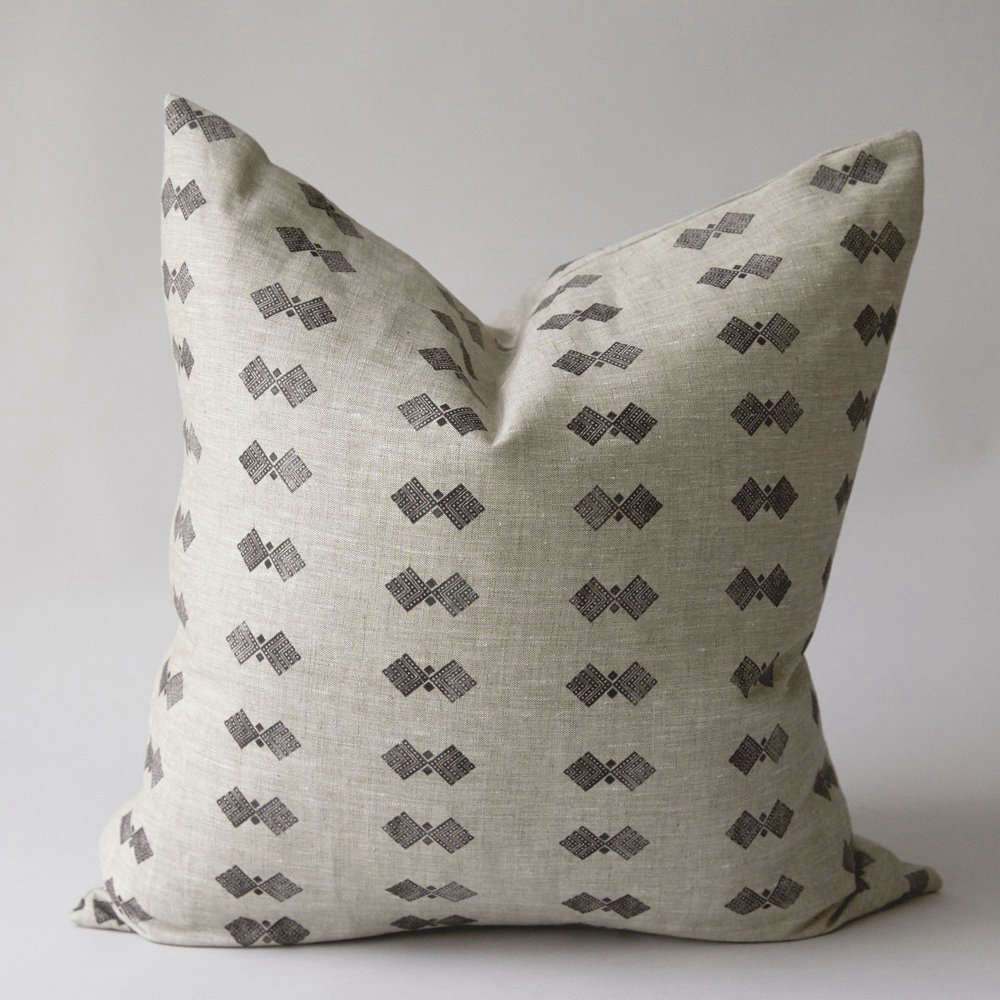
A decorative pillow can be a small object with an absurdly large job description. It must soften a sofa, introduce color, make a room look finished, survive being karate-chopped by enthusiastic stylists, and occasionally support someone through an entire season of television. The Prism Cushion – 22 x 22 earns attention because it approaches that job as a piece of textile design rather than a fluffy afterthought.
Originally associated with New York textile designer Susan Connor and once offered through The Interior in Sag Harbor, the Prism Cushion was described as a U.S.-made linen pillow inspired by Balinese jewelry and printed with the graphic spirit of African mudcloth. The archived version measured 22 inches square, included a down insert, and was listed at $189 in 2017. Those details place it firmly in the category of artisan home decor: substantial enough to anchor a seating arrangement, expressive enough to stand alone, and refined enough to keep a neutral room from looking like it has given up.
What Makes the Prism Cushion Distinctive?
A Pattern With Rhythm, Not Noise
The word “prism” suggests geometry, light, and repeated facets, which is a useful way to understand the cushion’s visual appeal. Its pattern is structured, but it does not feel mechanically perfect. That slight irregularity matters. Hand-drawn and block-print-inspired motifs tend to have movement, variation, and a human pulse that digitally flawless patterns often lack.
Susan Connor’s broader body of work is known for designs that begin with hand-drawn ideas and balance decorative traditions with relaxed modern simplicity. The Prism Cushion fits that language well. It can read as geometric from across the room, then reveal more texture and variation up close. In decorating terms, that is a very handy double life: the pillow creates order without becoming stiff.
Linen Gives the Design Breathing Room
Linen is especially well suited to a graphic pillow because its natural texture prevents a bold print from looking too slick. The tiny variations in the weave soften hard lines and add depth, while the fabric’s matte appearance works comfortably with wood, leather, cotton, wool, plaster, and other natural materials.
Linen also ages with character. It may develop gentle creasing and a more relaxed hand over time, which is usually part of the charm rather than a defect. This is not a fabric that wants to sit bolt upright and salute. It prefers to look collected, comfortable, and slightly lived in.
The 22-by-22-Inch Size Has Presence
Most common square throw pillows fall around 18 or 20 inches. At 22 by 22 inches, the Prism Cushion is noticeably more generous without becoming an oversized floor pillow. That extra scale makes it useful as an anchor piece on a deep sofa, a sectional, a lounge chair, or a layered bed.
The size also helps the pattern breathe. A detailed motif can feel cramped on a small cover, while a 22-inch square provides enough surface area for the design to read clearly. Think of it as the difference between viewing art on a postage stamp and giving it an actual wall.
Design Inspiration and Cultural Context
The archived product description connected the Prism pattern to Balinese jewelry and to the visual style of African mudcloth. Those references help explain the cushion’s mix of ornament, geometry, and earthy modernism, but they should not be flattened into one generic “global” label.
Authentic Malian bògòlanfini, often called mudcloth, is a culturally significant textile tradition. Traditional cloth is woven in strips and decorated through a complex process involving plant-based preparations and fermented mud. Its patterns may carry symbolic meaning, historical references, or social significance. A contemporary printed linen pillow inspired by that visual language is not the same thing as an authentic mud-dyed textile made in Mali.
That distinction is worth preserving because it makes the design story more interesting, not less. The Prism Cushion can be appreciated as a modern American textile that draws from multiple decorative references while remaining honest about its own material, production, and context.
How to Style a 22 x 22 Prism Cushion
Use It as the Largest Pillow on a Sofa
Place the Prism Cushion at one end of a standard sofa, then layer a 20-inch solid pillow and a smaller lumbar pillow in front. Starting with the largest pillow creates a clear visual hierarchy and keeps the arrangement from looking like a pile assembled during a mild earthquake.
On a long sectional, a pair of 22-inch Prism Cushions can establish balance at opposite ends. They do not need to be surrounded by matching pieces. In fact, a coordinated mix usually looks more natural than an army of identical squares.
Let It Wake Up a Neutral Room
Graphic linen works particularly well against solid upholstery. Try the cushion on cream, oatmeal, camel, charcoal, faded blue, olive, or warm gray seating. The pattern supplies detail while the natural linen ground keeps the overall effect calm.
In a minimalist room, use one Prism Cushion as the main patterned accent. Repeat one of its tones elsewhere through a ceramic vase, framed artwork, a woven basket, or the edge of a throw. Repetition makes the pillow feel integrated rather than dropped in by decorative helicopter.
Mix Patterns by Changing Scale
When pairing the Prism Cushion with other prints, avoid choosing several patterns with the same visual density. Combine its medium-scale geometry with a narrow stripe, a loose floral, a tiny check, or a mostly solid textured fabric. A shared color family will hold the mix together even when the motifs differ.
A useful formula is one leading pattern, one quieter pattern, and one solid or heavily textured pillow. For example, pair Prism with a washed indigo stripe and a nubby ivory bouclé. The arrangement feels layered, but the eye still knows where to land.
Bring It Into the Bedroom
On a queen or king bed, a 22-inch square cushion can sit in front of sleeping pillows or Euro shams. One centered pillow creates a clean, modern look. Two pillows make a fuller statement, especially when paired with simple linen bedding and a folded throw at the foot of the bed.
Because the Prism design already carries visual interest, the rest of the bed does not need to perform circus tricks. White, flax, pale gray, washed blue, or warm taupe bedding will give the pattern enough space to do its work.
Comfort, Fill, and the Importance of the Insert
The archived Prism Cushion included a down insert. Down-and-feather fills are popular in decorative pillows because they compress easily, regain shape after fluffing, and create the relaxed corners associated with designer styling. They also make a larger pillow feel soft rather than bulky.
For people with feather sensitivities or a preference for firmer support, a quality down-alternative insert can be substituted if the cover has a removable closure. Insert sizing affects the final look. A same-size insert produces a softer, more relaxed profile, while an insert one size larger can create a plumper, more tailored shape. Always confirm the cover construction and zipper strength before forcing an oversized insert inside; enthusiasm is not a substitute for seam allowance.
Care and Maintenance
Because the Prism Cushion is an archival design, owners should follow the care label attached to the specific piece rather than assume that every linen pillow can be treated the same way. Printed designer fabrics may require dry cleaning even when plain household linen is washable.
For routine upkeep, remove surface dust with a soft upholstery attachment, fluff the insert regularly, and rotate the pillow so one side does not receive all the sunlight and wear. Blot spills immediately with a clean, absorbent cloth. Do not scrub the printed surface, because aggressive rubbing can spread the stain or disturb the finish.
If the cover is confirmed washable, cool or lukewarm water, mild detergent, and low heat are generally gentler on linen than hot washing and high-temperature drying. Air drying or removing the cover while slightly damp can help reduce deep creasing. Again, the sewn-in label gets the final vote. It is the tiny fabric attorney attached to the seam.
What to Check When Buying an Archival Prism Cushion
The original retail listing is historical, so availability today may be limited to resale marketplaces, vintage design dealers, old store inventory, or private sellers. Buyers should request clear photos of the front, back, zipper, corners, seams, and label. Ask whether the down insert is included and whether the cushion has been stored in a smoke-free, dry environment.
Look for fading, water marks, pulled threads, discoloration around the zipper, odor, and compressed fill. Minor linen creasing is normal. Significant sun fading on only one side may affect how the pattern reads, while a flattened insert is usually easier to replace than a damaged cover.
Also verify the measurement. Decorative pillow sizes are generally based on the cover laid flat, and handmade construction can vary slightly. A seller’s casual “about 22 inches” is not quite the same as a measured 22-by-22-inch cover.
Who Will Appreciate the Prism Cushion?
This pillow is a strong fit for people who like neutral rooms but do not want bland rooms, collectors of artisan textiles, fans of relaxed modern interiors, and anyone who prefers pattern with a story. It can work in bohemian, coastal, contemporary, rustic, eclectic, or warm minimalist spaces because the geometry is versatile and the linen keeps it grounded.
It may be less suitable for a household that needs every textile to be machine washable, highly stain resistant, or suitable for outdoor exposure. A designer linen cushion is best treated as functional decor: comfortable enough to use, special enough not to hand over permanently to a muddy dog.
Realistic Experience: Living With a Prism Cushion – 22 x 22
First Impression
The first thing a 22-inch cushion changes is scale. Put it on an average sofa and the seating immediately looks more intentional. A smaller pillow can add color, but a larger one establishes structure. The Prism Cushion would likely feel less like an accessory and more like a compact textile artwork that happens to be excellent at supporting an elbow.
The linen surface would also make an immediate difference. Instead of reflecting light like a shiny synthetic fabric, it would absorb and soften it. During the day, the weave would become more visible; in evening light, the pattern would look quieter and moodier. That ability to change character across the day is one reason natural-fiber pillows tend to feel richer than their dimensions suggest.
Trying It on Different Furniture
On a pale sofa, the Prism Cushion would become the focal point quickly. The easiest successful arrangement would be one Prism pillow, one solid pillow in a related neutral, and a small lumbar cushion. Adding five more patterns might be fun for ten minutes, followed by the realization that the sofa has become a textile committee meeting.
On a dark leather chair, the experience would be different. Linen would provide contrast against the smooth leather, while the generous size would soften a deep seat. The cushion might need regular fluffing because down fill shifts with use, but that is part of its relaxed appeal. A quick squeeze at the sides and a pat across the top should restore the shape.
On a bed, one 22-inch Prism Cushion would probably be the most practical choice. It would make the bed look finished without creating a nightly obstacle course. The pattern could connect plain bedding to artwork or a rug elsewhere in the room, especially if those pieces share black, indigo, sand, ivory, or earthy brown tones.
Comfort Over Time
A down-filled 22-inch cushion tends to feel inviting rather than rigid. It can support the lower back, prop up an arm while reading, or soften the corner of a deep sofa. The trade-off is that it will not remain perfectly square without attention. Feather and down inserts compress, migrate, and develop personality. People who want showroom corners at every moment may find themselves fluffing often; people who like a casual, broken-in look will consider that a feature.
The linen cover should become more relaxed with handling. Small wrinkles and subtle shifts in texture would likely make the pillow feel more at home rather than worn out. The key is to distinguish graceful use from neglect. Rotating the cushion, keeping it away from harsh direct sunlight, and dealing with spills promptly would preserve the print while allowing the fabric to age naturally.
Styling Lessons Learned
The biggest lesson from living with a statement cushion is that it does not need much help. A distinctive pattern performs best when surrounding pieces support it instead of competing for attention. Solids, stripes, woven textures, and restrained colors would allow the Prism design to stay expressive without making the room busy.
The second lesson is that size matters more than pillow count. One substantial 22-inch cushion can create more impact than three small, unrelated pillows. It fills visual space, adds comfort, and reduces clutter. That is useful in apartments, reading corners, and bedrooms where every decorative object must earn its rent.
Long-Term Verdict
The likely pleasure of owning the Prism Cushion comes from the combination of artful pattern, tactile linen, generous scale, and soft fill. It is not merely a square object chosen to match the curtains. It can set the tone for an entire room, making simple furniture feel collected and giving neutral interiors a sense of movement.
Its limitations are straightforward: careful cleaning, possible feather maintenance, and the challenge of locating an authentic archival example. For the right owner, those are reasonable trade-offs. The Prism Cushion – 22 x 22 is the kind of home accessory that proves a room does not always need more furniture. Sometimes it simply needs one very good pillow with better stories than the coffee table.
Conclusion
The Prism Cushion – 22 x 22 stands out through proportion, material, and design intelligence. Its linen construction gives the printed motif warmth, the 22-inch scale provides real visual weight, and the down insert adds the soft, relaxed profile associated with thoughtfully layered interiors. Most importantly, it demonstrates how a decorative pillow can connect craft, cultural references, comfort, and everyday styling in one compact form.
Use it as an anchor on a sofa, a single statement on a bed, or a tactile counterpoint to leather and wood. Keep the surrounding palette coherent, vary the scale of nearby patterns, and let the linen look naturally relaxed. A cushion this expressive does not need to shout. It already knows it has the best seat in the house.
Note: The $189 price and product specifications discussed above refer to an archived 2017 retail listing. Current availability, condition, construction, and resale pricing may vary.
{

  "meta_title": "Prism Cushion 22 x 22: Design, Style & Care",

  "meta_description": "Explore the Prism Cushion 22 x 22, from its linen design and artisan inspiration to styling, sizing, care, and ownership tips.",

  "sapo": "The Prism Cushion - 22 x 22 is more than a decorative pillow. Originally linked to textile designer Susan Connor, this generous linen cushion combines a graphic, globally inspired pattern with the relaxed texture of natural fabric and the comfort of a down insert. Its 22-inch scale makes it an ideal anchor for sofas, sectionals, beds, and reading chairs, while its geometric rhythm works beautifully in neutral, bohemian, coastal, modern, and eclectic interiors. This guide explores the cushion's archived design story, cultural context, styling possibilities, care considerations, resale checks, and the realistic experience of living with a large artisan pillow. The result is a practical look at why one thoughtfully chosen cushion can bring more character to a room than a whole pile of forgettable accessories.",

  "keywords": [

    "Prism Cushion 22 x 22",

    "Susan Connor cushion",

    "linen throw pillow",

    "22 inch decorative pillow",

    "geometric cushion",

    "designer pillow styling",

    "artisan home decor"

  ]

}