

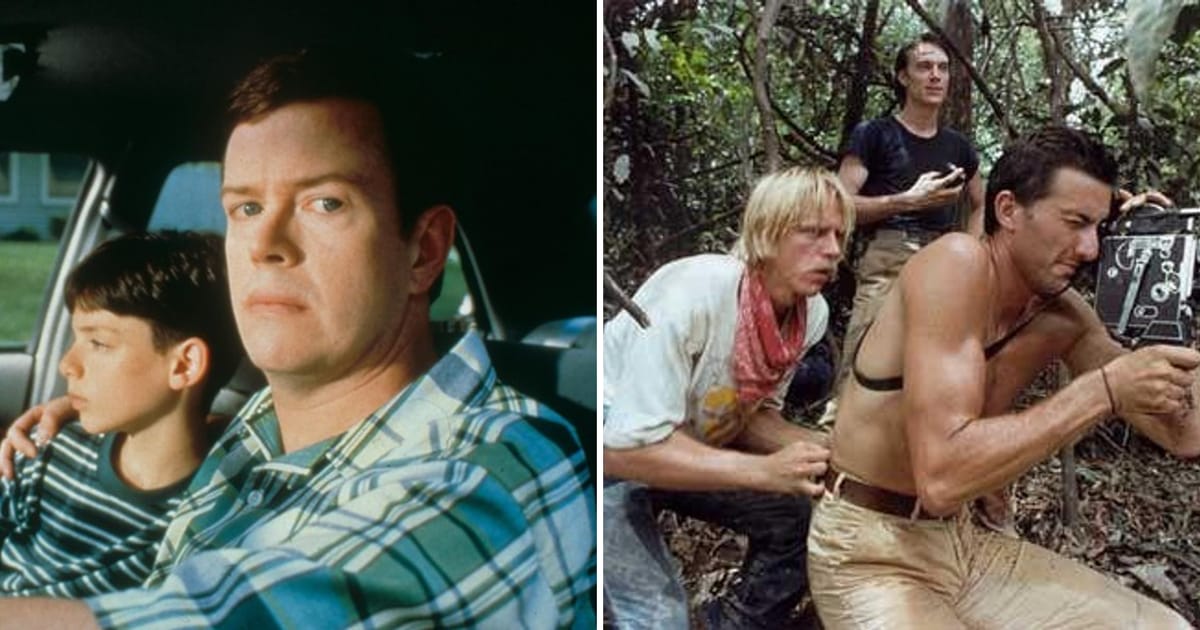
Some movies are made to entertain. Others are made to win awards. And then there are the films that
seem to exist purely to make people absolutely furious. From banned propaganda reels to
ultra-violent cult horrors and religious lightning rods, the most controversial movies of all time
didn’t just light up the box office – they sparked protests, boycotts, censorship battles, and
decades of think pieces.
This ranked list of 45 controversial movies pulls from film-history overviews, censorship roundups,
and “most controversial” lists by film scholars, critics, and movie sites in the U.S. and beyond.
We’re looking at how widely a movie was seen, how intense the backlash was, how long the outrage
lasted, and how much conversation it still sparks today.
One important note: listing a movie here is not an endorsement. Some of these films are
artistically brilliant. Some are ethically indefensible. Many are both. But all of them tell us
something about where the cultural “line” was – and how often cinema has crossed it on purpose.
How We Ranked These Controversial Movies
To rank the most controversial films of all time, we weighed several factors:
- Scale of backlash: Were there protests, bans, lawsuits, or calls for censorship?
- Cultural impact: Did the movie change laws, inspire copycat crimes, or reshape genres?
- Longevity of the debate: Are people still arguing about it decades later?
- Ethical concerns: Did the controversy involve on-set behavior, exploitation, or real-world harm?
With that in mind, let’s walk through 45 movies that pushed audiences, critics, and censors to
their limits – from early film history to the streaming era.
The 45 Most Controversial Movies of All Time, Ranked
#1. The Birth of a Nation (1915)
Technically groundbreaking and morally appalling, D.W. Griffith’s epic helped define narrative
filmmaking – and also glorified the Ku Klux Klan and reinforced racist myths. Its success helped
spread toxic stereotypes and even influenced real-world Klan recruitment.
Few films match its combination of cinematic innovation and damaging propaganda.
#2. Triumph of the Will (1935)
Leni Riefenstahl’s documentary of a Nazi rally is both a milestone in film technique and a chilling
piece of political propaganda. Its sweeping visuals and choreography of crowds changed how rallies
and political images were staged – which is exactly why it remains so disturbing.
#3. Salò, or the 120 Days of Sodom (1975)
Pier Paolo Pasolini’s last film relocates the Marquis de Sade to a fascist Italian setting, using
deliberately upsetting imagery to attack authoritarian power. It’s been banned, censored, and
fiercely debated as either necessary political provocation or unwatchable exploitation.
#4. A Serbian Film (2010)
This modern shocker became notorious for pushing every possible button, with many critics calling
it one of the most extreme films ever made. Supporters argue it’s a grim allegory about exploitation
and political trauma; detractors see only cruelty and sensationalism. It remains heavily cut or
restricted in many countries.
#5. Cannibal Holocaust (1980)
Shot in a “found footage” style long before The Blair Witch Project, this Italian horror
was so convincing that its director had to prove in court that the cast was still alive.
Real animal killings and extreme violence have made it one of the most frequently banned horror films.
#6. The Last Temptation of Christ (1988)
Martin Scorsese’s adaptation of Nikos Kazantzakis’ novel triggered global protests for its humanized,
conflicted portrayal of Jesus. Several countries banned or restricted it, and theaters were
picketed or attacked, even as critics praised its spiritual seriousness.
#7. The Passion of the Christ (2004)
Mel Gibson’s ultra-intense depiction of the crucifixion was a runaway hit and a lightning rod.
Some praised its religious devotion; others argued that its graphic violence and portrayals of
Jewish characters risked reinforcing harmful stereotypes. The film reignited long-standing debates
about religion, representation, and cinematic violence.
#8. A Clockwork Orange (1971)
Stanley Kubrick’s ultraviolent dystopia inspired moral panics, copycat-crime accusations, and
censorship campaigns. In the U.K., it was withdrawn from circulation for decades.
Critics still debate whether it glamorizes violence or condemns attempts to control human behavior.
#9. Last Tango in Paris (1972)
Bernardo Bertolucci’s sex-laden drama was banned, censored, and prosecuted in multiple countries.
In recent years, disturbing revelations about how a key scene was filmed have reframed the movie’s
legacy around issues of consent and on-set abuse.
#10. Deep Throat (1972)
The adult film that crossed into mainstream conversation, Deep Throat became the center of
obscenity trials and political battles over pornography. It’s both a symbol of the “sexual
revolution” and an example of how messy the reality behind adult productions can be.
#11. Pink Flamingos (1972)
John Waters’ cult classic proudly marketed itself as “an exercise in bad taste.” Featuring every
taboo the director could cram into 90 minutes, it inspired midnight-movie devotion and disgust in
equal measure, making Waters the patron saint of gleeful cinematic offensiveness.
#12. The Exorcist (1973)
People fainted, vomited, and fled theaters when this horror landmark opened. Some religious groups
condemned it; others saw it as a serious exploration of faith and evil. Its blend of shock value and
spiritual anxiety helped define modern horror and controversy alike.
#13. The Texas Chain Saw Massacre (1974)
Grainy, grimy, and deceptively restrained, this low-budget nightmare was banned or heavily cut in
multiple countries.
Its reputation as an ultra-gory video nasty often outstrips what’s actually on screen, proving how
much our imaginations can amplify controversy.
#14. Caligula (1979)
A big-budget historical epic that turned into a chaos of politics, explicit content, and clashing
visions, Caligula was disowned by many of its stars. The mix of respected actors, graphic
material, and production meddling made it infamous – and endlessly gossiped about.
#15. I Spit on Your Grave (1978)
Often cited in debates over “rape-revenge” narratives, this grindhouse film was condemned as
misogynistic exploitation by some and defended as a brutal tale of retribution by others. It
remains a go-to example in arguments about where the line should be drawn in depicting trauma.
#16. The Deer Hunter (1978)
This Oscar winner drew huge praise and strong criticism, especially for its portrayal of the
Vietnam War and its infamous “Russian roulette” sequences. Some veterans and activists accused it
of distorting history; others saw it as a raw exploration of psychological damage.
#17. Cannibal Holocaust (1980)
Yes, it’s so controversial it deserves a second mention in spirit. Beyond the trial over whether
its actors were alive, it sparked fierce criticism for animal cruelty and alleged exploitation of
Indigenous imagery. It’s a staple example in arguments about ethics in horror filmmaking.
#18. Henry: Portrait of a Serial Killer (1986)
This chilly, low-budget portrait of a murderer unsettled censors who struggled to rate it.
Without stylish fantasy or black humor to soften the blow, it felt disturbingly close to reality –
which is exactly what made it so controversial.
#19. The Last Temptation of Christ (1988)
Already high on this list, it also deserves special mention as a long-term flashpoint: it has been
banned, censored, and protested repeatedly as it cycles through re-releases and retrospectives.
#20. Basic Instinct (1992)
This glossy thriller sparked protests from LGBTQ+ activists concerned about its depiction of queer
characters, even as it became a pop-culture phenomenon. Scenes from the film are still referenced
and parodied, but its representational politics remain widely debated.
#21. Natural Born Killers (1994)
Oliver Stone’s hyper-stylized look at media, violence, and celebrity was accused of inspiring real
crimes and glamorizing killers. Lawsuits and op-eds flew, even as some critics argued the movie
was actually a critique of that very glamorization.
#22. Showgirls (1995)
Marketed as an edgy NC-17 drama and remembered as one of the most infamous flops ever, Showgirls
became a camp cult favorite. Its mix of exploitation, satire, and questionable gender politics
continues to fuel rewatches, reconsiderations, and “so bad it’s good” debates.
#23. Kids (1995)
Larry Clark’s film about aimless teens and risky behavior was slammed as exploitation and praised
as a brutally honest snapshot of youth culture. Its use of young-looking actors in explicit
situations made it a centerpiece in discussions of ethics and realism in independent film.
#24. Crash (1996)
David Cronenberg’s adaptation of J.G. Ballard’s novel, about people aroused by car crashes, was
banned from some theaters and attacked in the press. For some, it’s a serious work about obsession
and technology; for others, it’s a bridge too far.
#25. The Passion of the Christ (2004)
Another repeat-worthy title on this list, its extreme violence and religious sensitivity helped
revive arguments about whether films of faith should comfort, challenge, or shock.
#26. Fahrenheit 9/11 (2004)
Michael Moore’s documentary about the Bush administration and the Iraq War turned into an election-year
lightning rod. Supporters called it brave truth-telling; critics labeled it propaganda. Either way,
it proved documentaries could stir up almost as much outrage as blockbusters.
#27. Team America: World Police (2004)
From the creators of South Park, this puppet-driven satire offended just about everyone on
purpose – from Hollywood liberals to foreign leaders. Its gleefully offensive humor put free
speech, satire, and “punching up vs. punching down” back at the center of pop-culture debate.
#28. United 93 (2006)
Made only a few years after the 9/11 attacks, this sober, real-time depiction of one hijacked
flight raised painful questions about when it’s “too soon” to dramatize national trauma. Many
critics praised its restraint; some audiences found the idea itself unbearable.
#29. The Da Vinci Code (2006)
Based on Dan Brown’s mega-seller, this thriller drew protests and boycotts from religious groups
concerned about its fictional theories regarding Jesus, the church, and historical secrets. The
controversy arguably helped the movie’s marketing more than it hurt it.
#30. Antichrist (2009)
Lars von Trier’s horror drama premiered at Cannes to walkouts, gasps, and heated arguments.
Graphic imagery, disturbing themes, and gendered violence made it one of the most divisive art-house
releases of its decade.
#31. The Human Centipede (First Sequence) (2009)
Centered on a grotesque medical experiment, this low-budget horror film became a viral dare:
“You’ve seen it… right?” Critics questioned whether there was any point beyond shock, while fans
argued that its outrageous premise was a kind of grotesque cartoon.
#32. A Serbian Film (2010)
Listed earlier near the very top, it also sits here among modern shock cinema for the way it
reignited global conversations about censorship, ratings boards, and whether certain subjects
should ever be dramatized at all.
#33. The Wolf of Wall Street (2013)
Martin Scorsese’s three-hour roller coaster of wealth, fraud, and excess was accused of glorifying
its morally bankrupt protagonist. Supporters argued that the film’s excess is the critique. The
argument over “glorification vs. condemnation” has become a case study in media literacy.
#34. Nymphomaniac (2013)
Another von Trier entry, this two-part epic about a woman recounting her sexual history blurred
lines between art-house seriousness and explicit content. Questions about exploitation, gender,
and the boundaries of mainstream distribution followed it around the festival circuit.
#35. The Interview (2014)
A goofy comedy about assassinating a real-world dictator suddenly triggered a major geopolitical
incident, including hacking, threats against theaters, and debates about self-censorship.
It’s probably the only stoner comedy to ever cause an international crisis.
#36. Fifty Shades of Grey (2015)
Adapted from a bestselling novel, the film was criticized by some for romanticizing unhealthy
dynamics even as others argued it brought adult themes into the mainstream. It also sparked
widespread conversation about consent, kink, and representation.
#37. The Hunt (2012)
This Danish drama about a man falsely accused of harming a child sharply divided audiences. Its
portrayal of communal hysteria, trust, and justice turned it into a hot talking point among
critics, parents, and social commentators.
#38. Joker (2019)
Before it even opened, Joker was criticized as potentially inspiring real-world violence.
Heavy security and warnings followed early screenings. Once audiences finally saw it, the debate
shifted to questions about mental health representation and social resentment.
#39. Cuties (2020)
A French film about young girls navigating social media and pressure to grow up fast became the
center of an international controversy over marketing, misinterpretation, and exploitation. Its
defenders stressed its critical intent; its detractors saw the images themselves as crossing a line.
#40. Don’t Look Up (2021)
Adam McKay’s climate-change satire divided viewers between those who found it cathartic and those
who thought it was smug, obvious, or politically heavy-handed. The furious online arguments over
whether it was “good” became almost as loud as the movie itself.
#41. Blonde (2022)
This fictionalized take on Marilyn Monroe’s life was attacked for what many saw as exploitative
portrayals of trauma and misery. Admirers cited bold performances and style; critics questioned
whether the film stripped its subject of agency all over again.
#42. The Whale (2022)
Brendan Fraser’s performance drew acclaim, but the film’s depiction of a reclusive, fat protagonist
sparked intense debate about fatphobia, representation, and whether empathy was actually being
offered or just staged for awards season.
#43. Sound of Freedom (2023)
Positioned as a thriller about child trafficking, this independent hit ignited fierce partisan
debate. Some embraced it as a wake-up call; others criticized it for oversimplifying complex issues
and being embraced by conspiracy-minded movements.
#44. Saltburn (2023)
Emerald Fennell’s dark, class-conscious drama became the internet’s favorite “I cannot believe
they went there” movie. Its most shocking scenes split audiences between “brilliant satire” and
“absolutely not.” Either way, it dominated social feeds and think pieces.
#45. Freaks (1932)
Nearly a century later, Tod Browning’s carnival-set shocker is still debated. Some view it as
progressive for casting disabled performers and critiquing “normal” cruelty; others argue the
sensational marketing and title undercut that empathy. The controversy started in the 1930s and
never really stopped.
What These Movies Tell Us About Us
Looking across this list, a pattern emerges: movies become truly controversial not just because of
what’s on screen, but because of what we’re already worried about off screen. Racism, propaganda,
religion, sex, violence, war, terrorism, political polarization, and social media panics all show
up here, refracted through cinema.
Many of these films forced censors and audiences to confront uncomfortable questions: Where is the
line between depiction and endorsement? Does showing something ugly help us understand it, or just
normalize it? When does “pushing boundaries” become exploitation? There are no neat answers – which
is exactly why we’re still arguing about movies made in 1915 and 1935.
Whether you choose to watch any of these titles is deeply personal. But understanding why they
caused outrage can be a powerful crash course in film history, media ethics, and the way societies
negotiate their taboos.
Watching Controversial Movies: A Personal Viewing Guide (Experience & Tips)
Spending time with the “most controversial movies of all time” is not like queuing up a feel-good
rom-com. It’s closer to visiting a museum wing labeled “Viewer discretion advised.” You might not
love what you see – you might actively hate it – but you’ll probably learn something about yourself,
your values, and your thresholds.
The first thing you notice when you actually watch some of these films is how different they feel
from the headlines. A movie framed as “the most shocking thing ever made” can, decades later, play
like a strangely restrained drama with a few rough edges. Context changes everything. The
controversy around Bonnie and Clyde and Midnight Cowboy, for example, made sense
in an era when explicit violence and discussions of sexuality were new to mainstream audiences.
Today, those same films often feel relatively mild compared with what you can stream on a random
Tuesday.
The reverse can also be true. Some movies are more upsetting now precisely because we talk more
openly about ethics and consent. Knowing the behind-the-scenes stories of Last Tango in Paris
or the realities faced by performers in certain adult productions can make a rewatch deeply
uncomfortable – not because of the fictional narrative, but because of what those images represent
in real human terms. The controversy moves from “Is this okay to show?” to “What happened to the
people who made this?”
It’s also striking how much your own mood and life experience shape the viewing. Watch
The Exorcist as a teenager and it might just be the scariest movie you’ve ever seen. Watch
it as an adult who’s wrestled with faith, illness, or grief, and the scenes hit in a different,
heavier way. See Joker on a crowded opening night and it feels like a social event; watch
it alone at home and it becomes a more intimate, uncomfortable character study.
One practical approach when diving into controversial cinema is to treat it like you would
weightlifting: you don’t start with the heaviest plates. Ease in with movies whose subject matter
you’re prepared to deal with. Read a bit about context beforehand, especially for older films
dealing with propaganda, racism, or real-world atrocities. If you’re watching with friends, agree
that it’s okay to pause, talk, or even stop. Endurance is not a moral obligation.
Finally, the most rewarding part of watching these films isn’t just surviving the “shocking” bits –
it’s the conversations afterward. You may find that the movie itself is less interesting than the
debates it sparks: about censorship, about what art is “allowed” to do, about who gets to be
represented and how. You don’t have to like these movies (many are hard to recommend in good
conscience), but thinking critically about them can sharpen your understanding of both cinema and
culture.
In other words: controversial movies are rarely comfortable. But if you approach them with curiosity,
empathy, and a healthy sense of your own boundaries, they can be some of the most educational
viewing experiences you’ll ever have – even if you never, ever want to watch them again.