

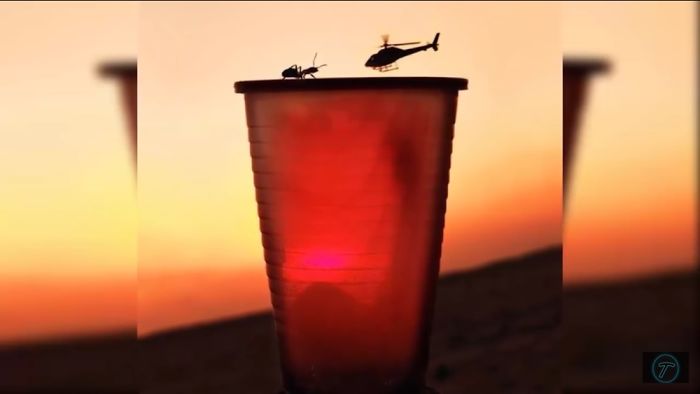
Sometimes the greatest photo adventure does not begin with a helicopter, a jungle permit, or a camera bag heavy enough to qualify as gym equipment. Sometimes it begins with someone kneeling in the yard, noticing a line of ants, and thinking, “Wait a second… what are these tiny overachievers doing?” That tiny pause can turn into a perfect shot.
The story behind A Photographer Gets The Perfect Shot While Just Looking At Ants is not just about insects. It is about attention. It is about slowing down long enough to see a world that has been running under our shoes the entire time. Ants are everywhere, yet most people only notice them when they invade a picnic, march across a kitchen counter, or make a dramatic appearance near a forgotten cookie crumb. A photographer, however, sees something else: motion, teamwork, personality, texture, and a scene so small it almost feels secret.
Macro photography has a wonderful way of turning ordinary backyard moments into cinematic events. A raindrop becomes a glass planet. A blade of grass becomes a green skyscraper. An ant carrying a seed looks like a worker hauling furniture up a mountain, which, frankly, is more productive than many of us before coffee. When the camera moves close enough, the tiny becomes enormous, and the familiar becomes strange again.
Why Ants Make Such Fascinating Photography Subjects
Ants are among the most common insects on Earth, but their everyday behavior is anything but boring. They live in colonies, communicate through chemical signals called pheromones, forage in organized lines, defend their nests, carry food, and work with a level of coordination that can make a corporate team-building seminar look like a confused group chat.
For a photographer, that means ants are not just subjects; they are storytellers. One ant might pause on a flower petal. Another might grip a crumb like it just won a heavyweight title. Several may gather around a food source, creating a natural composition full of movement and tension. The challenge is that ants are fast, tiny, shiny, restless, and not particularly interested in posing for anyone’s portfolio.
That is exactly why a perfect ant photograph feels so satisfying. It requires timing, patience, respect for the subject, and a little bit of luck. Unlike studio photography, where lights, props, and poses can be controlled, photographing ants often means adapting to their world. The photographer watches, waits, and works around the insect’s natural rhythm. In other words, the ant is the art director, and it refuses to answer emails.
The Magic of Macro Photography
Macro photography is the art of photographing small subjects at close range so that fine details become visible. In the case of ants, macro photography reveals body texture, antennae movement, mandibles, legs, reflective eyes, and the environment around them in a way the naked eye usually misses.
At normal viewing distance, an ant is just a moving dot with ambition. Through a macro lens, that dot becomes a creature with structure, purpose, and surprising visual character. The photographer can capture the curve of an antenna, the grip of tiny feet on a leaf, or the way morning light turns a drop of water into a glowing stage.
Macro work also changes the emotional tone of a scene. A simple ant on a stem can look heroic. An ant beside a raindrop can look curious. A group of ants moving food can look like a miniature construction crew that did not ask for a lunch break because it is apparently better than us.
The Perfect Shot Often Starts With Observation
The best ant photographs usually begin before the camera clicks. They begin with looking. A photographer who wants a strong image must first understand where ants travel, when they are active, and what kind of backgrounds make the scene visually clean.
Ant trails are useful because they reveal predictable movement. When ants find food, they often leave pheromone trails that guide other workers. To human eyes, it looks like a busy road. To a photographer, it is a natural stage. Instead of chasing random insects across the ground, the photographer can choose a point along the trail, compose the frame, and wait for the right ant to enter the scene.
This approach is important because chasing ants rarely works. Ants are quick, and macro photography has a very shallow depth of field. A tiny movement can turn a sharp image into a blurry mystery blob. Waiting at a good spot often produces better results than frantic camera movement. In photography, as in life, panic is usually not a focusing technique.
Why Patience Beats Control
One of the most appealing lessons from ant photography is that patience often beats control. Many respected macro photographers emphasize observing insects naturally rather than forcing them into artificial poses. This matters because the most convincing images show real behavior: foraging, carrying, climbing, communicating, exploring, and reacting to their environment.
When a photographer simply watches ants, unexpected scenes appear. An ant may stop under a flower and look as if it is sheltering from rain. Another may climb across a seed head at sunset. A third may pause near a water droplet, creating the illusion of a tiny traveler discovering a crystal cave. These moments are powerful because they are not manufactured. They are found.
That is the heart of the title: a photographer gets the perfect shot while just looking at ants. The word “just” is doing a lot of work here. Looking sounds simple, but serious looking is a skill. It means paying attention without rushing. It means seeing patterns. It means noticing when light, subject, and background are about to line up.
Technical Challenges Behind a Tiny Masterpiece
Ant photography may look cute, but technically it can be a tiny circus with six legs and no respect for your autofocus system. The closer the camera gets, the thinner the focus area becomes. At high magnification, only a very small slice of the ant may appear sharp. If the eyes are sharp but the body fades away softly, the photo may still work. If the background is sharp but the ant is not, congratulations: you have taken a portrait of a leaf with an ant-shaped rumor in front of it.
Depth of Field
Depth of field is one of the biggest issues in macro photography. A wider aperture may create creamy background blur, but it can make the subject difficult to keep sharp. A smaller aperture increases the focused area, but it may require more light and can introduce softness if pushed too far. Many insect photographers work in a middle range, adjusting based on available light, subject movement, and desired style.
Lighting
Light can make or break an ant photograph. Direct sunlight may create harsh reflections on an ant’s body, while soft morning or evening light can add warmth and dimension. Many macro photographers use diffused flash to freeze motion and reveal detail without blasting the subject like a celebrity caught leaving a restaurant at midnight.
Focus Stacking
For still subjects, focus stacking can help create a sharper final image. This technique involves taking multiple photos at different focus points and blending them into one image. With ants, focus stacking is more difficult because the subject may move between frames. Still, in early morning or cooler conditions, insects may slow down enough for careful shooting.
Composition
A perfect ant shot is not only about sharpness. Composition matters. The best images often have a clean background, a clear subject, and a sense of direction. A diagonal stem can lead the viewer’s eye. A water droplet can add scale. Empty space can make the ant feel small in a vast world. Even at ground level, storytelling rules still apply.
What Ant Behavior Adds to the Photo
Ants are social insects, and their behavior gives photographers plenty of natural drama. Workers forage for food, care for the queen and young, defend the colony, and interact through touch, vibration, and chemical signals. These details matter because behavior gives an image meaning.
A close-up portrait of an ant is interesting. An ant carrying food is better. Two ants touching antennae can suggest communication. A line of ants crossing a branch can show order and movement. A worker lifting something larger than itself creates instant visual tension. Viewers understand effort, even when the worker is the size of a comma.
This is why ant photography can feel surprisingly emotional. We recognize determination. We recognize cooperation. We recognize the comedy of a tiny creature hauling a giant object with the confidence of someone moving a couch alone.
From Backyard Moment to Viral Wonder
Images of ants often perform well online because they reveal a hidden world. People enjoy seeing familiar things from unfamiliar angles. A strong macro photo can make viewers stop scrolling because it changes the scale of reality. Suddenly the backyard becomes a wilderness, a flower becomes architecture, and an ant becomes a character.
Photographers such as Miki Asai and Joni Niemelä have shown how compelling insect and ant photography can be when patience meets curiosity. Their work demonstrates that beautiful nature photography does not always require distant travel. A garden, a patch of grass, or a quiet morning can provide enough material for an entire visual story.
That is encouraging for beginners. You do not need to board a plane to start exploring macro photography. You can begin with what is nearby. A dedicated macro lens helps, but even close-up filters, extension tubes, or modern smartphone macro modes can introduce you to the small-world mindset. The most important tool is attention. The second most important tool is probably knee protection, because the ground is less forgiving than photography tutorials suggest.
How to Photograph Ants Without Disturbing Them
Ethical nature photography matters, even with tiny subjects. Ants should not be harmed, trapped, chilled, glued, sprayed, or forced into unnatural situations for a photo. The best approach is to observe natural behavior and work around it.
Start by finding an active trail, nest entrance, flower, tree trunk, or patch of soil where ants are already moving. Keep your distance at first and study their route. Choose a background that is not too messy. Get low, stabilize the camera, and wait. If you use flash, diffuse it so the light appears soft and natural. Avoid blocking the ants’ path for too long, and do not damage the nest or surrounding plants.
Food can attract ants, but it should be used carefully, if at all. It is better to photograph natural foraging than to create a snack-based traffic jam. Besides, once ants discover food, the scene can quickly go from “beautiful macro moment” to “tiny Black Friday sale.”
Why the Perfect Shot Feels Bigger Than the Subject
A perfect ant photograph works because it combines science, art, and surprise. Scientifically, it shows real behavior and anatomy. Artistically, it uses light, composition, and timing. Emotionally, it reminds us that life is happening at every scale.
That is the deeper appeal of this kind of photography. It teaches viewers to pay attention. It suggests that beauty is not rare; it is often overlooked. The perfect shot was not hidden in some unreachable place. It was crawling through the grass, carrying something ten times its size, while the rest of us were busy checking notifications.
When a photographer looks at ants long enough, the scene stops being ordinary. Patterns emerge. Characters appear. The ground becomes a landscape. The ant becomes a traveler. The perfect shot is not only captured by the camera; it is discovered by the photographer’s willingness to notice.
Experiences Related to Photographing Ants and Finding the Perfect Shot
One of the most memorable experiences connected with ant photography is the realization that the first ten minutes may produce absolutely nothing. You kneel down, aim the camera, adjust the settings, and feel very professional. Then the ant walks out of frame. Another ant appears, turns around, and shows you its least flattering angle. A third ant climbs behind a leaf and vanishes like it has entered witness protection. This is normal. Ant photography teaches humility with impressive efficiency.
The next lesson is that the best photos often happen after you stop trying to force them. Instead of chasing every ant, choose one location with good light and wait. A small branch, a bright flower stem, or a mossy stone can become the stage. Once you have the frame ready, ants will eventually move through it. Not every visitor will be perfect, but the chances improve when the camera is already prepared.
Early morning is especially rewarding. The light is softer, the temperature is cooler, and many insects move more slowly. Dew may cling to grass or leaves, adding sparkle and atmosphere. An ant walking beside a dew drop can look like an explorer passing a glass boulder. The same scene at noon might look harsh and chaotic, but in morning light it becomes gentle and cinematic.
Another useful experience is learning to photograph at ant level. Shooting from above can be useful for identification, but eye-level images usually feel more personal. When the camera comes down to the ant’s world, the background stretches behind it, the foreground becomes dramatic, and the subject feels like it belongs in a story. It is not just an insect anymore; it is the main character in a tiny adventure film with no dialogue and excellent leg choreography.
Settings also become easier with practice. A faster shutter speed helps freeze movement. A moderate aperture can keep important details sharp while still softening the background. Diffused flash can help when natural light is weak. Manual focus is often useful because autofocus may struggle with tiny moving subjects and busy backgrounds. The key is to make small adjustments and review results often. Macro photography rewards experimentation more than perfectionism.
The most important experience, however, is learning respect. Ants are not props. They are living insects with complex behavior and important ecological roles. Watching them closely can change how you see the ground beneath you. A trail of ants becomes a transportation network. A nest entrance becomes a busy doorway. A worker carrying food becomes a scene of effort and survival. Once you notice these details, the backyard no longer feels ordinary.
The perfect shot may come from a lucky moment, but luck usually favors the photographer who is already paying attention. That is why looking at ants can become more than a casual activity. It becomes a practice in patience, observation, and curiosity. The camera records the image, but the photographer’s attention creates the opportunity.
Conclusion
A Photographer Gets The Perfect Shot While Just Looking At Ants is a reminder that extraordinary images do not always require extraordinary locations. Sometimes they require a quiet patch of ground, a patient eye, and the willingness to treat tiny lives as worthy of attention. Ants may be small, but through macro photography, they become bold, detailed, and surprisingly expressive subjects.
The perfect ant photo is built from many ingredients: natural behavior, careful timing, soft light, steady technique, ethical observation, and a sense of wonder. It captures more than an insect. It captures a shift in perspective. When we look closely, the world grows larger.
Note: This article synthesizes real information from reputable wildlife, museum, university extension, and photography education sources about ant behavior, macro photography, focus stacking, lighting, and ethical nature observation.