

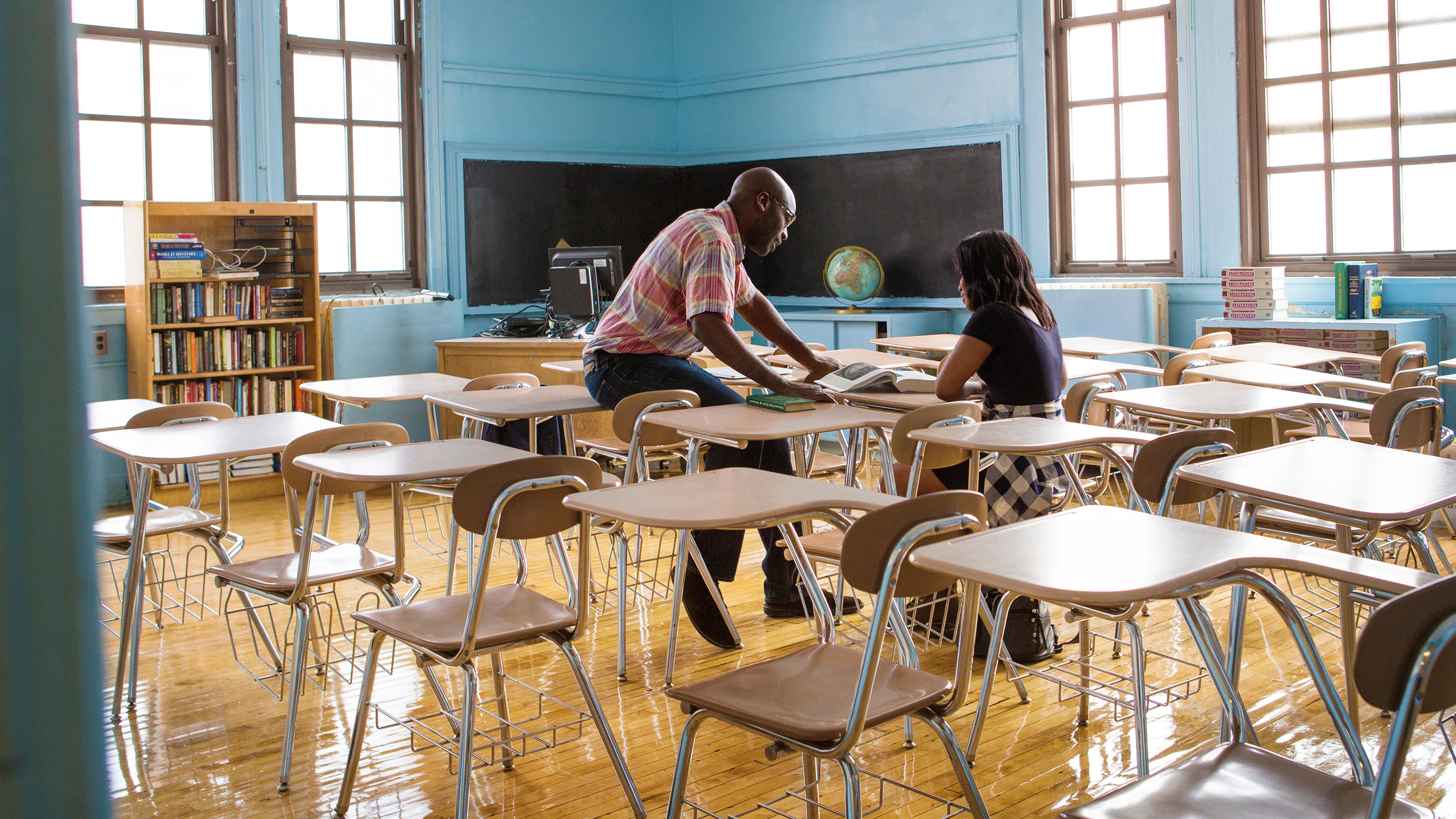
Every teacher knows the look. A student raises a hand, not because the task is impossible, but because the student has temporarily misplaced the courage to try. “What do I do now?” becomes the classroom soundtrack. It is not laziness. It is not rebellion. It is often a sign that students have learned to wait for the adult in the room to press the mental “start” button.
Increasing students’ independence in learning is not about abandoning them with a worksheet and calling it “student-centered.” That is not independence; that is educational hide-and-seek. True independent learning means students can set goals, choose strategies, monitor their progress, ask better questions, use feedback, and reflect on what to do next. In other words, they become active drivers of learning instead of polite passengers staring out the academic window.
One powerful way to increase student independence is to teach a simple repeatable learning cycle: plan, do, check, and reflect. This cycle helps students understand how learning works, not just what the assignment is. When combined with structured choice, clear routines, teacher modeling, and meaningful feedback, it gives students the tools to become more confident, self-directed learners.
What Student Independence in Learning Really Means
Student independence does not mean students never need help. Even professional adults ask for help, usually after clicking the same broken button eleven times. Independent learners are not isolated learners. They are students who know how to use resources, evaluate their own understanding, and make thoughtful decisions before immediately calling for rescue.
In a classroom, independent learning may look like a student checking the rubric before asking a question, revising an answer after feedback, choosing a reading strategy, organizing notes, setting a study goal, or explaining why one method worked better than another. These are not magical personality traits. They are teachable habits.
The heart of independence is ownership. When students understand the purpose of a task and see themselves as capable decision-makers, they are more likely to engage deeply. That does not happen by accident. It grows from classroom structures that make thinking visible, expectations clear, and mistakes safe enough to learn from.
The Plan-Do-Check-Reflect Cycle
The plan-do-check-reflect cycle is simple enough for elementary students and powerful enough for high school, college, and adult learners. It turns learning into a process students can manage. Instead of asking, “Did I finish?” students begin asking, “Did I understand, improve, and know what to try next?” That small shift is enormous.
1. Plan: Help Students Set a Clear Direction
Planning gives students a target before they begin. Without a plan, many students treat assignments like mystery boxes. They open the task, poke around, panic mildly, and hope the answer jumps out wearing a tiny graduation cap.
A good learning plan does not need to be complicated. Students can begin with three questions:
- What am I trying to learn?
- What strategy or resource will I use first?
- How will I know if I am successful?
For example, before writing a paragraph, students might identify the topic, choose evidence from a text, and review a success checklist. Before solving math problems, they might name the problem type, select a strategy, and predict where they may get stuck. Before studying for a science quiz, they might decide to use retrieval practice instead of rereading notes for the sixth time and pretending the highlighter is doing the learning.
Teachers can support planning by modeling it aloud. A teacher might say, “Before I answer this question, I’m going to look at the key words, decide what the question is asking, and check the example from yesterday.” This kind of teacher thinking is gold. It shows students that successful learners are not simply “smart”; they are strategic.
2. Do: Give Students Structured Choice
Choice is one of the most practical tools for building student agency, but it must be handled carefully. Too little choice makes students dependent. Too much choice can make them freeze like a laptop with 47 tabs open. The goal is structured choice: freedom inside a clear frame.
Instead of saying, “Do anything you want,” a teacher might offer three ways to show understanding: write a response, record a short explanation, or create a labeled diagram. In reading, students might choose between two note-taking formats. In project-based learning, they might choose a topic connected to the same standard. In vocabulary practice, they might choose whether to use flashcards, sentence writing, or a concept map.
Structured choice tells students, “You have a voice, and the learning goal still matters.” That balance is important. Independence grows when students practice making decisions that are connected to purpose, not when they are handed unlimited options and told to survive the buffet.
3. Check: Teach Students to Monitor Their Own Progress
Many students complete work without checking whether the work makes sense. This is understandable. Finishing feels good. Thinking feels heavier. But independent learners need the habit of monitoring while they work.
Teachers can build this habit with short check-in tools. A simple checklist can ask: “Did I answer all parts of the question? Did I use evidence? Did I explain my thinking? Did I check for errors?” A math student might use a “Does my answer make sense?” pause. A writer might compare a draft to a model paragraph. A group working on a project might stop halfway through and ask, “Are we still answering the main question?”
Self-checking is especially powerful because it moves responsibility from the teacher’s red pen to the student’s thinking. Feedback still matters, of course. But when students learn to notice gaps themselves, feedback becomes a conversation instead of a correction parade.
4. Reflect: Turn Experience Into Learning
Reflection is where independence becomes stronger. It asks students to look back and identify what worked, what did not, and what they will try next. Without reflection, students may repeat the same ineffective strategy forever, like rereading a textbook chapter while absorbing exactly one sentence and three snack crumbs.
Effective reflection is brief, specific, and connected to action. Teachers can use prompts such as:
- What strategy helped you most today?
- Where did you get stuck, and what did you do?
- What feedback will you use in your next attempt?
- What is one thing you understand better now?
Reflection journals, exit tickets, learning logs, and one-minute conferences all work well. The point is not to create more paperwork. The point is to help students notice their learning process. Once students can name how they learn, they can begin to improve how they learn.
Why Metacognition Is the Engine of Independent Learning
Metacognition is often described as thinking about thinking. In student-friendly language, it means knowing what is happening in your brain while you learn. That sounds fancy, but students practice it whenever they ask, “Do I really understand this?” or “Should I try a different strategy?”
Students with strong metacognitive habits are better prepared to plan, monitor, and adjust. They do not simply work harder; they work smarter. This matters because effort without strategy can become frustration. A student may spend an hour “studying” by staring at notes, only to discover later that staring is not a highly ranked Olympic learning event.
Teachers can develop metacognition by making learning strategies explicit. Instead of saying, “Study for the test,” explain and practice specific methods: retrieval practice, self-quizzing, summarizing from memory, teaching the concept to a partner, spacing practice over time, and checking errors. Students need to know not only what strategies exist, but when and why to use them.
The Teacher’s Role: Less Helicopter, More Flight Instructor
Independent learning does not remove the teacher’s importance. It actually makes teaching more intentional. The teacher becomes a flight instructor: modeling the controls, staying close during takeoff, gradually releasing responsibility, and resisting the urge to grab the wheel every three seconds.
This gradual release can follow a simple pattern: “I do, we do, you do with support, you do independently.” First, the teacher demonstrates the thinking process. Next, the class practices together. Then students try with tools such as checklists, sentence starters, examples, peer discussion, or guided questions. Finally, students complete similar tasks with greater independence.
The mistake is assuming students will become independent simply because adults want them to be. Independence must be taught, practiced, and reinforced. A classroom routine such as “Ask three before me” can help, but only if students know what useful resources are available and how to use them. Otherwise, they may ask three equally confused classmates and return with four new problems.
Practical Classroom Strategies That Build Independence
Create a Learning Toolbox
A learning toolbox is a set of resources students can use before asking the teacher. It may include anchor charts, vocabulary lists, worked examples, rubrics, checklists, sentence frames, tutorial videos, peer roles, and reflection prompts. The toolbox should be visible, simple, and used regularly.
For example, a writing toolbox might include a paragraph structure guide, transition word bank, evidence sentence starters, revision checklist, and sample paragraph. A math toolbox might include formula cards, problem-solving steps, common error examples, and a “what to try when stuck” chart.
Use Goal-Setting Conferences
Short student conferences can build ownership. A teacher might ask, “What is one skill you want to improve this week?” or “What evidence will show that you improved?” Students can track goals on a simple form. The key is to make goals specific and reachable. “Get better at reading” is too foggy. “Use text evidence in two reading responses this week” is clear enough to act on.
Teach Students How to Ask Better Questions
Some students ask for help because they do not know how to ask a precise question. Teach them to move from “I don’t get it” to “I understand the first step, but I’m stuck choosing evidence,” or “I solved it this way, but my answer seems too large.” Better questions lead to better support and stronger independence.
Make Feedback Usable
Feedback builds independence when students actually use it. Instead of only giving comments at the end of a unit, include time for revision. Ask students to highlight one piece of feedback and explain how they applied it. Let them resubmit a section, correct an error pattern, or write a short reflection about the next step. Feedback without action is just academic decoration.
Normalize Productive Struggle
Students should know that confusion is not failure. It is often the beginning of learning. However, productive struggle must be supported. Give students strategies for what to do when stuck: reread the directions, look at an example, underline key information, ask a partner, check the rubric, try a smaller step, or write a specific question.
Specific Example: Building Independence During a Reading Lesson
Imagine a seventh-grade class reading an informational article. Instead of beginning with teacher explanation, the teacher gives students a plan-do-check-reflect routine.
First, students plan by previewing headings and writing one question they expect the text to answer. Next, they read in sections and use a two-column note sheet: “Important idea” on one side and “My thinking” on the other. During the check stage, they compare notes with a partner and mark one place where their understanding is strong and one place where it is fuzzy. Finally, they reflect by answering, “Which strategy helped you understand the article, and what will you use next time?”
The teacher is still active. The teacher models how to write a useful note, listens to discussions, offers feedback, and pulls a small group when needed. But students are doing more of the cognitive lifting. They are not waiting for the teacher to pour understanding into their heads like syrup on pancakes. They are building it.
Common Mistakes to Avoid
Mistake 1: Giving Choice Without Teaching Strategy
Choice is helpful only when students have enough knowledge to choose wisely. If students do not understand the goal or available strategies, choice can become random. Teach the strategies first, then let students choose among them.
Mistake 2: Confusing Quiet Work With Independent Learning
A quiet classroom may look independent, but silence does not guarantee thinking. Students may be deeply engaged, or they may be mentally planning lunch. Independence should be measured by behaviors such as goal-setting, strategy use, self-checking, revision, and reflection.
Mistake 3: Rescuing Too Quickly
When teachers answer every question immediately, students may learn that the fastest strategy is asking the teacher. A better response is, “Show me what you tried first,” or “Which resource could help you?” This keeps support available while nudging students back into ownership.
How Families Can Support Independent Learning at Home
Families play a major role in building independent learners. The goal is not for parents to become unpaid homework employees. The goal is to help students practice responsibility with encouragement and structure.
At home, adults can ask process-based questions: “What is your plan?” “What part do you understand?” “What resource can you check?” “What will you do if you get stuck?” These questions are more useful than simply giving answers. They help students internalize the same plan-do-check-reflect cycle used in the classroom.
A consistent study space, a realistic schedule, and short reflection conversations can also help. Families should praise strategy, effort, persistence, and improvement, not just grades. When students hear that learning is a process they can manage, they become more willing to take responsibility for it.
Experiences Related to Increasing Students’ Independence in Learning
In many classrooms, the shift toward independent learning begins with a small moment of teacher restraint. A student asks, “Is this right?” The teacher, instead of answering instantly, replies, “How could you check?” At first, the student may look personally betrayed, as though the teacher has hidden the answer in a secret cave. But over time, this question becomes a habit. Students begin reaching for rubrics, examples, notes, and their own reasoning before seeking confirmation.
One common experience is that students initially resist independence because dependence feels efficient. If the teacher always explains the next step, students do not have to carry the mental weight of deciding. But after routines become familiar, many students begin to enjoy the control. They like choosing a strategy. They like seeing progress on a goal sheet. They like realizing, “I figured this out.” That sentence has more power than a dozen motivational posters featuring mountains.
Another classroom experience is the value of visible routines. In a writing class, for instance, students may struggle less when the revision process is posted clearly: reread the prompt, check the claim, underline evidence, add explanation, review transitions, and edit one sentence for clarity. At first, students may need reminders to use the routine. After several weeks, the room changes. Instead of twenty students asking, “What do I do now?” several begin saying, “I’m on the evidence step,” or “I need to fix my explanation.” The routine becomes a map, and students stop wandering around the assignment like tourists without phone service.
Independent learning also grows through peer support. In a productive classroom, students do not simply trade answers; they trade strategies. A student might say, “I used the example problem to find the first step,” or “I checked the rubric and noticed my paragraph needed analysis.” These peer conversations matter because students often believe classmates who explain things in everyday language. The teacher remains the expert, but the room becomes a learning community instead of a one-person help desk.
There are challenges, of course. Some students lack confidence. Some rush through reflection. Some use “choice” as an opportunity to choose the easiest path every time. That is why independence needs boundaries. Teachers can offer limited choices, require evidence of strategy use, and hold students accountable for reflection. Independence is not the same as doing whatever feels comfortable. It is learning how to make responsible decisions.
A powerful experience comes when students begin transferring independence across subjects. A student who learns to self-check in math may begin reviewing evidence in writing. A student who uses goal-setting in reading may apply it to science vocabulary. This transfer shows that independent learning is bigger than one assignment. It is a life skill.
The most encouraging part is that independence does not require a perfect classroom, expensive technology, or a dramatic speech delivered while standing on a desk. It grows through repeated routines, honest feedback, reflection, and trust. Students become independent when adults believe they can think, teach them how to think, and give them enough space to prove it.
Conclusion
A way to increase students’ independence in learning is to teach them a clear, repeatable process: plan, do, check, and reflect. This cycle turns learning from a teacher-controlled event into a student-owned process. It gives students the language, structure, and confidence to take action.
Independent learners are not born with a secret academic superpower. They are built through practice. They learn how to set goals, use strategies, monitor progress, ask better questions, revise work, and reflect on growth. With structured choice, visible routines, useful feedback, and supportive relationships, students become less dependent on constant direction and more capable of leading their own learning.
And yes, they will still ask questions. That is a good thing. The difference is that their questions become sharper, braver, and more thoughtful. Instead of “What do I do?” they begin to ask, “Is this the best strategy for my goal?” That is the sound of independence beginning to work.