

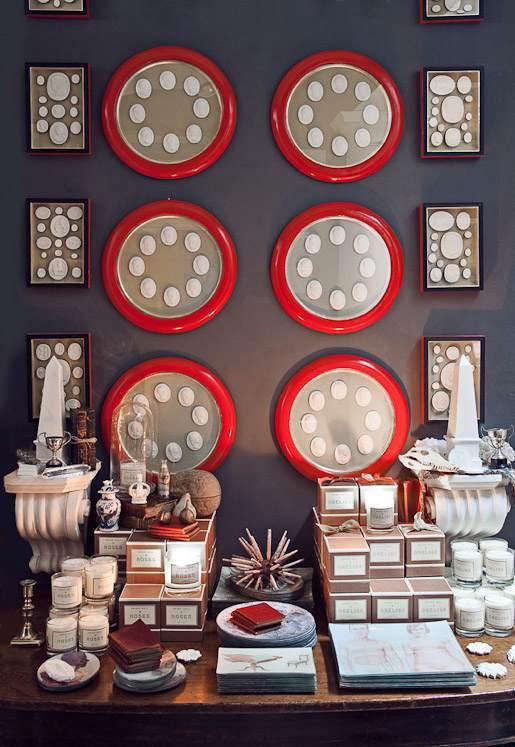
Some home accessories whisper. Some politely clear their throats. And then there are Bridie Hall accessories, which stroll into a room wearing a lacquered coat, carrying a classical bust, and asking whether anyone has seen the good matches. Bridie Hall at Home is not the sort of collection that disappears into the background. It is decorative, witty, historical, colorful, and just eccentric enough to make a side table feel as if it has read a few excellent books.
Created by Bridie Hall, a decorative artist, designer, maker, and co-owner of the beloved London shop Pentreath & Hall, the collection sits at the charming intersection of art, utility, and old-world curiosity. Think Alphabet brush pots, decoupage trays, scented candles, intaglio-inspired pieces, plaster casts, classical motifs, and objects that look as if they were rescued from a Grand Tour trunkexcept with better color and fewer shipping delays from 1827.
For American interiors lovers searching for decorative home accessories with personality, Bridie Hall at Home offers a refreshing alternative to mass-produced sameness. These are not anonymous objects designed by committee. They feel handled, considered, and slightly mischievous. In other words, they are accessories with a pulse.
Who Is Bridie Hall?
Bridie Hall is a New Zealand-born decorative artist and maker based in London. She is also one half of the creative partnership behind Pentreath & Hall, the Bloomsbury shop she co-owns with architect and interior designer Ben Pentreath. The shop is known for its colorful, curated mix of antiques, paper goods, homeware, decorative objects, and exclusive designs that celebrate British tradition without becoming trapped in it like a moth in a velvet curtain.
Hall’s work has a distinctive visual language. It borrows from classical architecture, museum collections, antique prints, country-house rooms, historic souvenirs, and the sort of grand decorative gestures that make minimalists quietly reach for a glass of water. Yet the results are never stiff. Her pieces are lively, funny, and surprisingly easy to live with. A brush pot may look formal at first glance, but place it on a desk full of pens, scissors, and one emotionally important receipt, and suddenly it becomes useful theater.
The Story Behind Bridie Hall at Home
The Bridie Hall at Home range began as a personal and imaginative homeware line. Hall has described making objects that are difficult to find or seem to come from another era. That idea explains much of the collection’s appeal. Her accessories feel familiar, but not predictable. They nod to antiques, yet they are not dusty reproductions. They appear decorative, but many also solve tiny domestic problems: where to put pencils, matches, guest soaps, candles, flowers, letters, or the general evidence that life is being lived indoors.
The early collection included decoupage trays, scented candles inspired by imagined rooms in a country house, lacquered cases of intaglios, faux coral, obelisks, plaster models, and other delightfully specific objects. That specificity matters. In a world where many home accessories are designed to offend nobody, Bridie Hall’s pieces are brave enough to have a point of view.
Why These Accessories Feel Different
The best accessories do not simply fill a gap on a shelf. They sharpen a room’s personality. A plain room with one excellent object can feel more alive than a fully furnished space where every piece seems to have been chosen by an algorithm wearing beige trousers. Bridie Hall accessories work because they bring story, color, scale, and humor into everyday corners.
They Combine Beauty and Usefulness
Many pieces in the collection are decorative but not useless. The Alphabet brush pots, for example, are designed as beautiful holders for brushes, pencils, flowers, or desktop bits and pieces. Their bold letters, lacquered backs, glossy finishes, and jewel-like colors make them feel more like small architectural monuments than ordinary containers.
Likewise, trays can gather objects on a coffee table, make a bedside table feel intentional, or rescue a chaotic entry console from becoming the Bermuda Triangle of keys. Candles bring scent and atmosphere. Soaps and small objects can make a guest bathroom feel cared for rather than merely supplied. These are small upgrades, yes, but small upgrades are how a house develops manners.
They Have a Museum-Like Imagination
Hall’s intaglio-inspired pieces and classical references suggest a love of collections, display, and historic memory. The Grand Tour influence gives the line a sense of travel and discovery. You do not need to know the full history of intaglios or plaster casts to enjoy the effect. The pieces simply make a room feel more layered, as if someone in the household has opinions about Rome, old libraries, and possibly the correct way to wrap a parcel.
They Bring Color Without Chaos
Color is one of the most important ingredients in the Bridie Hall universe. But this is not random color. It is controlled, lacquered, and balanced. A bright brush pot, a patterned tray, or a classical motif can give a neutral room a much-needed wink. In a maximalist interior, the same object can join the party without knocking over the punch bowl.
Signature Pieces in the Bridie Hall at Home World
Alphabet Brush Pots
The Alphabet brush pot may be the collection’s most recognizable accessory. These pieces use strong letters and color to turn a simple vessel into a personal statement. Choose an initial, spell out a word, or use one as a single graphic accent. On a desk, it can hold pencils. On a vanity, makeup brushes. On a mantel, a tiny bouquet in a hidden jar. It is the kind of object that makes organization look like style rather than punishment.
Decoupage Trays
Decoupage trays are another natural fit for Hall’s artistic approach. Decoupage has a long decorative history, and in Hall’s hands it becomes fresh, collectible, and practical. A tray can anchor a group of objects: a candle, a small vase, a matchbox, a bowl, and perhaps one mysterious item nobody admits buying. That is the secret of trays. They make clutter look curated.
Scented Candles
Bridie Hall scented candles often carry the romance of imagined interiors. Rather than smelling like generic “fresh linen” or “spa lobby pretending to be a forest,” these candles feel tied to rooms, rituals, and atmosphere. They suit people who believe a home should appeal to more than the eyes. A good candle changes the temperature of a room emotionally, which is impressive considering it is basically wax with ambition.
Intaglio-Inspired Objects and Soaps
Intaglio motifs add classical charm to the collection. Whether seen in decorative objects, soap forms, paperweights, or related designs, the look suggests cameos, ancient impressions, and collected fragments. These pieces are especially appealing in bathrooms, guest rooms, studies, and dressing tables, where small details can do a surprising amount of storytelling.
Plaster Casts, Obelisks, and Classical Details
Plaster casts and obelisks are not accessories for the timid, and that is precisely the fun. They bring height, silhouette, and a touch of scholarly drama to shelves and mantels. An obelisk on a table says, “Yes, I needed vertical interest,” but in a far more glamorous accent.
How to Style Bridie Hall Accessories at Home
The most successful way to use Bridie Hall accessories is to treat them as punctuation. You do not need a whole room full of statement pieces. One or two can change the tone. The goal is not to create a showroom. The goal is to make a room feel collected, personal, and lightly theatrical.
On a Desk
Place an Alphabet brush pot beside a stack of notebooks, a brass lamp, and a small tray for clips or stamps. The pot becomes both organizer and ornament. It gives even a work-from-home corner a sense of intention. Suddenly your unpaid bills are not clutter; they are part of a still life. This may not make them disappear, but it does improve morale.
On a Coffee Table
Use a decoupage tray to gather a candle, a small bowl, a book, and a vase. The tray creates a visual boundary, which helps a coffee table look styled rather than abandoned mid-thought. Choose colors that echo something already in the room, such as a pillow, artwork, lampshade, or rug.
In a Bathroom
A guest bathroom is an ideal place for small decorative luxuries. Intaglio soaps, a pretty dish, a little vase, or a scented candle can make the room feel memorable. Guests may not comment, but they will notice. Bathrooms are where good details quietly win awards.
On Shelves and Mantels
Shelves need rhythm. Combine books, framed art, ceramics, and one or two sculptural accessories such as an obelisk or plaster cast. Vary height and texture. Avoid lining everything up like a decorative police parade. A little asymmetry keeps the eye moving.
Why American Design Lovers Are Drawn to This Look
American interiors have become increasingly comfortable with personality. After years of gray walls, generic farmhouse signs, and rooms that looked allergic to surprise, many homeowners are rediscovering color, pattern, antiques, and handmade objects. Bridie Hall at Home fits beautifully into this shift.
The collection appeals to people who want their homes to look layered rather than newly unpacked. It also works well with several popular design directions: English country style, maximalist interiors, grandmillennial decor, classical revival, collected modern rooms, and eclectic apartments where every object has a backstory, even if the backstory is “I saw it and lost all financial discipline.”
What Makes Pentreath & Hall the Perfect Setting?
Pentreath & Hall is more than a shop. It is a point of view. The store mixes antiques, new designs, paper goods, tableware, textiles, and decorative accessories in a way that feels intelligent but never cold. That matters because Bridie Hall’s objects are best understood in conversation with other things: old furniture, patterned cushions, books, lamps, prints, and useful household pieces.
The shop’s appeal lies in its refusal to separate beauty from daily use. A home can be practical and still be joyful. A pencil pot can be glamorous. A tray can have opinions. A candle can feel like a tiny domestic opera. This philosophy runs through Bridie Hall at Home and explains why the collection has remained distinctive while many trend-based accessories have come and gone like embarrassed houseguests.
Buying Tips: How to Choose the Right Bridie Hall Accessory
Start with the room that needs the most help. If your desk is chaotic, choose a brush pot. If your coffee table looks flat, try a tray. If your shelves need height, consider an obelisk or plaster-inspired object. If your bathroom needs charm, look at soaps, dishes, or small decorative accents.
Next, think about color. Choose either a piece that matches an existing palette or one that deliberately contrasts with it. In a calm white room, a vivid brush pot can become a focal point. In a patterned room, select an accessory that shares at least one color with the surrounding textiles or artwork.
Finally, do not over-polish the arrangement. Bridie Hall pieces have humor and life. Let them mingle with books, postcards, flowers, shells, matches, and family oddities. The result should feel collected, not staged by a nervous catalog stylist.
Experience Notes: Living With Accessories Like Bridie Hall at Home
There is a particular pleasure in living with accessories that do more than behave. A well-chosen object changes how you use a room. Put a beautiful brush pot on a desk, and suddenly you may want to keep your pens upright instead of letting them migrate into drawers, bags, and alternate dimensions. Place a tray near the front door, and keys stop becoming a daily treasure hunt. Add a scented candle to a reading corner, and the chair begins to feel like a destination rather than spare seating.
The experience of decorating with Bridie Hall-style accessories is also about permission. These pieces give permission to enjoy color. They give permission to mix periods. They give permission to put something classical beside something silly, something handmade beside something inherited, something glossy beside something worn. That freedom is especially useful in real homes, where not everything arrives at once and not every object has a matching partner. Real homes are built in chapters, not installed in a single afternoon by people holding clipboards.
One of the best ways to enjoy this style is to create small domestic scenes. On a bedside table, combine a small tray, a candle, a book, and a vase with one stem. On a kitchen shelf, place a colorful pot beside cookbooks and a bowl of lemons. On a mantel, pair a classical object with a modern print and a slightly unruly branch. These arrangements do not need to be expensive. They need balance, personality, and a willingness to edit. The magic is in the relationship between objects.
Another important experience is how these accessories age with a room. Trend-led decor often looks tired the moment the trend changes. Characterful accessories tend to improve because they are not pretending to be invisible. A brush pot with a strong initial, a decoupage tray with antique imagery, or a candle vessel with architectural shape can remain relevant as furniture changes around it. These objects are not background actors; they are recurring characters.
There is also an emotional side to small accessories. People often remember homes through details: the tray where the host placed coffee cups, the candle burning during dinner, the colorful pot full of pencils on a writing desk, the guest soap that felt too pretty to use but was used anyway because life is short and soap is not a museum. Bridie Hall at Home captures that spirit. It reminds us that decoration is not frivolous when it makes ordinary rituals feel more generous.
The most useful lesson from this world of accessories is simple: do not wait for the perfect room before buying interesting things. A home becomes interesting because you choose objects that delight you. Start small. Choose one piece with color, history, shape, or humor. Put it somewhere you see every day. Let it improve the morning. Let it hold the pencils. Let it make the shelf less boring. That is the quiet power of accessories. They may be small, but they know exactly what they are doing.
Conclusion: Small Objects, Big Personality
Accessories: Bridie Hall at Home is more than a shopping idea. It is a decorating philosophy built on charm, usefulness, history, and wit. Bridie Hall’s accessories prove that small objects can carry a room’s mood. A brush pot can be graphic and practical. A tray can organize and decorate. A candle can suggest an entire imaginary country house. An intaglio-inspired soap can make a bathroom feel like it has joined a better social circle.
For anyone tired of bland interiors, Bridie Hall at Home offers a joyful reminder: a home should not look as if all the interesting thoughts were removed for safety. It should contain color, memory, texture, surprise, and a few pieces that make visitors lean closer. Good accessories do not merely decorate a room. They give it a voiceand in Bridie Hall’s case, that voice is clever, cultured, and probably carrying a very beautiful tray.