

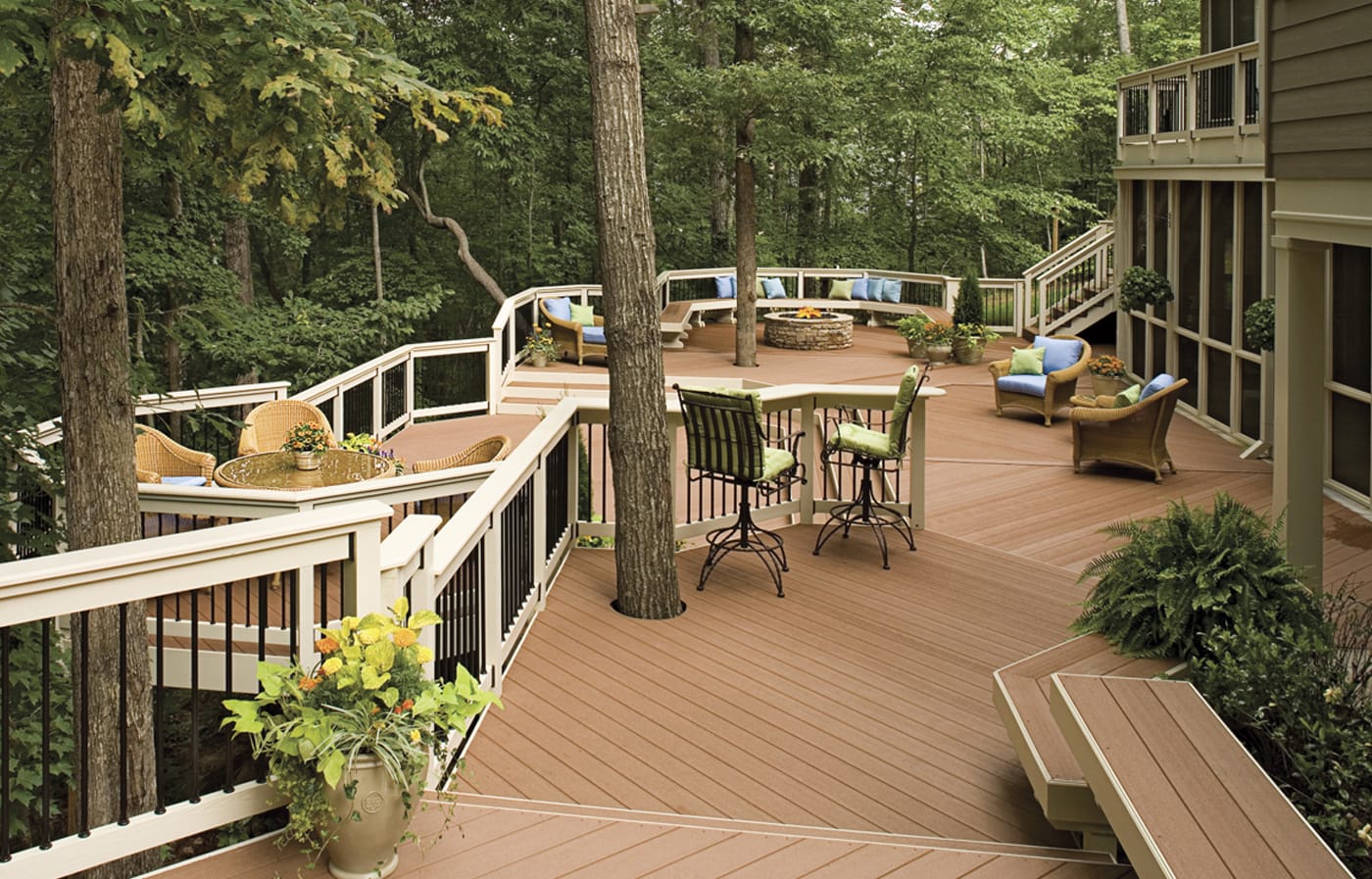
Composite decking promises the warm look of wood without the annual ritual of sanding, staining, sealing, and questioning every life choice that led you to owning a belt sander. That promise is mostly accurate, but modern composite decking is not one single material. It is a broad category that includes wood-plastic composites, capped boards, all-plastic PVC products, and newer mineral-based options.
Choosing the right product requires more than picking the prettiest brown plank at the home center. Climate, sun exposure, framing, slip resistance, warranty terms, installation details, and long-term maintenance all matter. This guide explains what composite decking is, how it compares with wood, what it costs, and how to avoid expensive mistakes.
What Is Composite Decking?
Traditional composite decking is an engineered material made by combining wood fibers or wood flour with plastic polymers. Manufacturers add pigments, stabilizers, and bonding agents before forming the mixture into deck boards. Many current products also have a protective outer shell, commonly called a cap, that helps resist moisture, fading, and stains.
Composite boards are designed mainly as a walking surface. They usually do not replace the pressure-treated lumber, steel, concrete footings, beams, joists, and hardware supporting the deck. The attractive board is the stage; the framing underneath is the crew making sure the show does not collapse during the barbecue.
The Main Types of Low-Maintenance Decking
Wood-plastic composite, or WPC: This familiar option blends wood fibers with polyethylene or another plastic. It often delivers a convincing wood-grain appearance, substantial weight, and good resistance to rot and insects.
Capped composite: A WPC core is covered on one or more sides by a tougher polymer shell. The cap generally improves resistance to staining, moisture, fading, and everyday wear.
PVC decking: PVC boards contain no wood fiber. They are highly resistant to moisture and rot and are often lighter than WPC boards. Their expansion and contraction characteristics differ, so installation instructions deserve close attention.
Mineral-based composite: These boards combine polymers with mineral fillers rather than wood flour. Depending on the product, they may offer low moisture absorption, reduced weight, strong dimensional stability, and suitability for demanding settings such as docks.
Retailers sometimes use “composite decking” as an umbrella phrase for all four categories. Always read the product data instead of relying on the label alone.
Why Homeowners Choose Composite Decking
Lower Routine Maintenance
Composite decking does not normally need sanding, staining, or sealing. Most modern capped boards can be cleaned with water, mild soap, and a soft-bristle brush or a manufacturer-approved cleaner. That is a major advantage for anyone who wants to use the deck rather than spend every spring apologizing to it with a stain brush.
Resistance to Rot, Splinters, and Insects
Unlike exposed natural wood, composite boards are not a convenient buffet for termites. They are also designed to resist rot, cracking, checking, and splintering. Bare feet, children, and pets generally appreciate the smoother surface, although scratches and heat can still be concerns.
Consistent Appearance and Long Warranties
Modern manufacturing can create multi-tonal colors, embossed grain, matte finishes, and patterns that look far more natural than early plastic-looking products. Many current lines also carry residential performance, structural, stain, or fade warranties measured in decades. Read the fine print: labor, removal, transferability, registration, approved fasteners, and installation compliance may affect a claim.
Potential Use of Recycled Materials
Several manufacturers use reclaimed wood fiber and recycled plastic in at least some product lines. That can divert material from waste streams, although the full environmental picture also includes manufacturing, shipping, service life, and end-of-life options.
The Drawbacks You Should Know
Higher Upfront Cost
Composite decking usually costs more initially than basic pressure-treated boards. Recent U.S. cost guides place many WPC materials in the low double digits per square foot, while complete systems cost considerably more after framing, fasteners, railing, stairs, labor, permits, demolition, and site work are included. Premium colors, long boards, curved designs, picture-frame borders, and matching trim raise the total quickly.
Compare the installed price and expected maintenance over the years you plan to own the home. A cheaper wood deck that needs repeated cleaning, staining, and board replacement may narrow the long-term gap.
Heat in Direct Sun
All decking can become hot under strong sun, and dark composite boards may be uncomfortable for bare feet. Color, formulation, airflow, reflected heat, and time of day all influence surface temperature. Some products use heat-mitigating technology, but “cooler” does not mean cool on a cloudless August afternoon.
Place samples in the intended location for several sunny days and touch them when the deck will be used. This test is more useful than debating color names such as Coastal Whisper versus Toffee Horizon under showroom lights.
Movement and Framing Demands
Engineered boards respond to temperature changes. Incorrect end gaps, blocked drainage, inadequate ventilation, or improper fastening can contribute to buckling or waviness. Composite also tends to reveal uneven framing. High joists can telegraph through the finished surface, so the frame must be flat, properly sized, flashed, and spaced for the exact product.
Scratches and Difficult Repairs
Capped composite resists many stains, but it is not invincible. Metal furniture, dragged planters, snow shovels, grill grease, and enthusiastic dogs can leave marks. Deep damage often cannot be sanded away, and replacing a board in a hidden-fastener system may require loosening neighboring boards.
Not Automatically Slip-Proof or Fire-Proof
Texture and traction vary by collection. Any deck can become slippery when coated with algae, grease, ice, or wet leaves. Fire performance also differs substantially. Homeowners in wildfire-prone areas or places with special code requirements should verify approved assemblies and flame-spread data with the local building department.
Composite Decking Versus Wood
Pressure-treated lumber remains popular because it is widely available, familiar to builders, and relatively affordable. Cedar and tropical hardwoods offer distinctive natural beauty. Wood can also be refinished, recolored, or repaired in ways composite often cannot.
Composite wins on predictable appearance and reduced maintenance. It does not require routine staining, and it resists common forms of biological decay. The better choice depends on priorities: a hands-on homeowner who enjoys maintaining natural materials may prefer wood, while someone seeking fewer recurring chores may find composite worth the higher initial investment.
How to Choose the Best Composite Decking
Start With the Site
Map where the deck will receive full sun, shade, roof runoff, snow, pool water, leaf debris, or coastal salt exposure. A sunny Southwest deck has different priorities from a shaded deck beneath oak trees in the Northeast. Heat resistance may lead the first project; stain resistance and easy cleaning may dominate the second.
Compare Samples Outdoors
Order full-size samples rather than relying on a phone screen. View them wet and dry, in morning and afternoon light, and beside the home’s siding, brick, stone, and doors. Lay several together to check grain repetition and color variation.
Examine the Board Profile
Grooved-edge boards accept hidden clips for a cleaner field. Square-edge boards are useful at borders, stairs, and exposed edges. Scalloped boards reduce material and weight but may have restrictions on stair treads, overhangs, or visible ends. Solid boards may offer more flexibility for custom details.
Read the Warranty and Price the Whole System
Identify what is covered, for how long, and whether coverage is prorated. Ask whether labor is included, whether the warranty transfers, and whether registration is required. Then budget for boards, clips, screws, fascia, blocking, joist tape, railing, lighting, stairs, permits, delivery, waste, and labor. Buying one or two spare boards is smart because colors and embossing can change.
Composite Decking Installation Essentials
Manufacturer instructions are not optional reading. They determine joist spacing, stair-stringer spacing, board gaps, allowable overhang, fastening zones, ventilation, and warranty compliance. Many boards allow joists up to 16 inches on center when installed perpendicular to the framing, while diagonal layouts often require 12-inch spacing. Some products and stair applications need tighter support.
Before resurfacing an existing deck, check framing for rot, corrosion, level, and structural capacity. New boards do not cure tired footings, a poorly flashed ledger, undersized beams, or joists that have developed the personality of a roller coaster.
Use approved fasteners. Ordinary screws can mushroom the surface, corrode, or interfere with movement. Hidden clips create uniform side gaps, but butt joints, borders, walls, and posts still need planned clearance. Joist tape can help protect wood framing from trapped moisture.
Plan the layout before cutting. A picture-frame border hides cut ends but requires extra blocking. Breaker boards can eliminate long rows of butt joints on wide decks. Blend boards from several packages to distribute intentional color variation.
Decks are regulated structures. Footings, ledgers, guards, stairs, load paths, and electrical components must comply with local codes and permit requirements. When structural work is involved, a qualified deck contractor or engineer can prevent very expensive mistakes.
How to Clean and Maintain Composite Decking
Sweep leaves and debris regularly, especially around planters and furniture. Wash spills before they bake into the surface. Mild soap, water, and a soft brush work for many capped composites, but always follow the brand’s care guide. Avoid unapproved solvents, harsh acids, wire brushes, and abrasive pads.
Pressure-washing rules differ. Some manufacturers allow a machine below a stated pressure limit with a fan tip held at a safe distance; others warn that misuse can damage the surface or affect warranty coverage.
Use a manufacturer-approved barrier beneath grills and high-heat equipment. Lift furniture instead of dragging it, place protective feet beneath heavy planters, and use a plastic shovel rather than a metal-edged one for snow.
Practical Experience: Lessons That Make a Composite Deck Better
Real-world deck projects repeatedly show that the buying decision is only half the story. The quieter half is planning. Homeowners often spend weeks selecting a color and five minutes considering drainage, access panels, furniture placement, or where rainwater lands. Yet those less glamorous details determine whether the deck remains easy to live with.
One practical lesson is to test larger samples. A six-inch swatch may look calm and neutral, while 400 square feet of the same color can dominate the yard. Dark boards create dramatic contrast with light railing, but they may show pollen and become hotter in direct sun. Very light boards can brighten a shaded yard, although grease or muddy paw prints may be more visible. Medium, variegated tones are often forgiving because they hide everyday dust without pretending dirt has ceased to exist.
Another lesson is to think about traffic before choosing a board. A quiet upper-level deck used for coffee has different needs from a pool deck serving wet children, large dogs, and a rotating cast of inflatable flamingos. Near pools and stairs, texture and traction deserve priority. Around grills and dining tables, stain resistance and easy access for cleaning matter. In wooded areas, regular leaf removal is essential because trapped debris can support surface mold even when the board itself cannot rot.
Experienced installers also emphasize framing preparation. Composite decking can make an old frame look new, but it can reveal every framing error. A high joist creates a ridge. Inconsistent spacing can make the deck feel springy. Missing blocking complicates borders and railing posts. Taking time to plane, shim, reinforce, flash, and tape the frame produces a surface that looks straighter and feels more solid.
Material handling is another overlooked issue. Long composite boards can be heavy and flexible. Carrying them flat with support helps prevent damage. Boards should be stored on a flat surface and protected as directed. Installers commonly blend boards from multiple packages because slight tonal variation is intentional. Installing one bundle at a time can accidentally create bands of color.
Layout decisions pay long-term dividends. A breaker board through the center of a wide deck can remove awkward butt joints and simplify future replacement. A picture-frame border provides a polished edge and hides grooves, but it needs additional framing. Access panels should be planned for utilities, drains, or shutoff valves. If a board must be removed later, an accessible fastening strategy will make the repair far less theatrical.
Homeowners also learn that “low maintenance” does not mean “no maintenance.” Pollen still arrives. Birds remain committed to their work. Grease does not respect warranties. A quick seasonal wash, prompt spill cleanup, and airflow beneath furniture keep the surface attractive. The chores are lighter than refinishing wood, but the deck is not a self-cleaning appliance from the future.
Finally, the best project experience comes from making decisions as a system. Decking, railing, fascia, fasteners, lighting, drainage, shade, furniture, and landscaping should work together. A premium board installed over poor framing is a poor investment. A modest board with excellent planning and correct installation can perform beautifully for years. Composite decking rewards homeowners who admire the color but also read the manual.
Is Composite Decking Worth It?
Composite decking is often worth considering for homeowners who value long service life, consistent appearance, and fewer recurring maintenance tasks. It is especially appealing when staining a wood deck every few years sounds less like a hobby and more like a warning from the universe.
It is not automatically best for every project. Upfront cost, surface heat, repair limitations, fire requirements, and product-specific installation rules must be evaluated honestly. Compare samples, calculate the complete system cost, verify local codes, and choose a product suited to the site rather than the most persuasive brochure.
Done well, a composite deck can provide a polished outdoor room that handles parties, pets, weather, and ordinary family life with relatively little fuss. The secret is choosing a well-engineered board, installing it correctly, and giving it the modest care every outdoor surface deserves.