

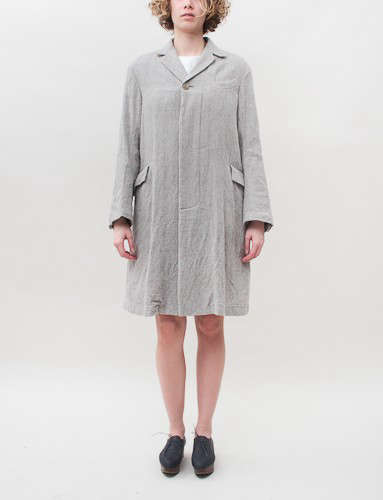
Note: This article is written as an editorial guide to the Arts & Science Chesterfield Work Coat, a collectible design reference rather than a live inventory listing. Availability, sizing, and resale condition can vary widely.
Why the Arts & Science Chesterfield Work Coat Still Feels Relevant
The Arts & Science Chesterfield Work Coat is the kind of garment that does not shout from across the room. It does something much more dangerous: it quietly looks better than almost everything else. In a world where outerwear often arrives covered in zippers, logos, mystery toggles, and pockets sized for camping cookware, this coat takes the opposite route. It is calm, practical, beautifully restrained, and just unusual enough to make people ask, “Where did you get that?”
Arts & Science, the Japanese brand directed by Sonya Park, has long been associated with clothing that feels thoughtful rather than trendy. The brand’s world combines vintage references, Japanese craftsmanship, natural fabrics, and an almost philosophical respect for daily objects. The Chesterfield Work Coat fits that universe perfectly. It borrows from the elegance of the traditional Chesterfield coat and the honesty of vintage workwear, then turns both into something wearable for modern life.
The original archived product description presents the coat as a midi-length, lightweight gray coat with a pointy collar, concealed button placket, breast pocket, flap pockets at the hips, long sleeves with three-button cuffs, and a back slit. It is unlined, falls below the knee, and was listed in a 52% linen and 48% wool composition. That fabric blend tells you almost everything about the coat’s personality: airy but structured, refined but not precious, and ready for layering without becoming a portable sauna.
What Makes This Coat Different?
A Chesterfield, But Not Too Formal
The classic Chesterfield coat has roots in nineteenth-century menswear. Traditionally, it is a formal overcoat with a clean silhouette, often dark, sometimes finished with a velvet collar, and designed to be worn over tailoring. It belongs to the same elegant family as city suits, polished shoes, and people who somehow never spill coffee on themselves.
The Arts & Science version softens that formality. It keeps the long, dignified line but removes the stiffness. Instead of looking like something reserved for a boardroom or winter wedding, the Chesterfield Work Coat feels more like a daily uniform for someone who reads design books, cooks with real olive oil, and knows where their tape measure is. It is elegant, yes, but never uptight.
Workwear Influence Without Costume Energy
The “work coat” part of the name matters. Vintage work jackets and chore coats were originally built for movement, durability, and usefulness. Their loose shapes, strong fabrics, and generous pockets made sense for farmers, railroad workers, painters, and craftspeople. Fashion eventually discovered them, because fashion has a charming habit of finding practical things and making them expensive.
Arts & Science handles this influence with respect. The Chesterfield Work Coat does not look like a costume version of labor. It does not pretend you just stepped out of a nineteenth-century workshop, unless your workshop happens to serve espresso and play quiet jazz. Instead, it borrows the useful parts: room to move, pockets that make sense, a relaxed structure, and fabric with character.
Design Details That Matter
The Concealed Button Placket
A concealed button placket gives the coat a cleaner front. Buttons are practical, of course, but hiding them creates a smoother visual line. That small decision is very Arts & Science: functional, but visually quiet. The coat does not need shiny hardware to prove it has closure. It simply closes.
The Pointy Collar
The pointy collar adds personality. Buttoned up, it gives the coat a slightly sharper, more architectural look. Worn open, it relaxes into something closer to a shop coat or long jacket. That flexibility helps the coat move between casual and polished outfits without looking confused.
Useful Pockets
The breast pocket and hip flap pockets are not decoration pretending to be useful. They support the workwear side of the design. A phone, a small notebook, keys, gloves, a museum ticket, or the receipt for a coffee you promised yourself you would not buy again can all disappear into the coat without ruining the shape.
The Back Slit
A slit at the back helps movement. Long coats can look wonderful while standing still and then turn into fabric prisons when you walk, sit, or climb stairs. The back slit solves that problem with quiet efficiency. It gives the coat movement, especially because the design hits below the knee.
Fabric: Linen and Wool, the Smart Odd Couple
The listed 52% linen and 48% wool blend is one of the coat’s most interesting qualities. Linen brings dry texture, breathability, and a slightly rumpled elegance. Wool adds body, warmth, and drape. Together, they create a fabric that sits between seasons rather than belonging strictly to one.
This makes the Arts & Science Chesterfield Work Coat especially useful as transitional outerwear. It is not a heavy winter overcoat, and that is part of the appeal. It works beautifully in spring, fall, mild winter days, cool offices, gallery visits, travel, and those mysterious weather days when the forecast says “pleasant” but the wind says “absolutely not.”
The unlined construction also matters. Without lining, the coat feels lighter and more relaxed. It may show more of the fabric’s natural movement, which is a good thing if you like clothing that develops personality. The trade-off is that it may not glide over thick knits as smoothly as a fully lined coat. But for many fans of Arts & Science, that tactile honesty is the point.
How to Style the Arts & Science Chesterfield Work Coat
For a Minimal Everyday Look
Pair the coat with a white oxford shirt, straight-leg denim, and leather loafers or simple sneakers. The coat gives the outfit structure, while the casual pieces keep it from looking too formal. This is the kind of outfit that says, “I care,” but not, “I woke up at 5 a.m. to steam my socks.”
For a Japanese Workwear-Inspired Outfit
Wear it with wide cotton trousers, a chambray shirt, and leather boots. Add a canvas tote or a simple leather bag. The proportions matter here: the coat’s length works best when the pants have enough volume to balance it. Skinny jeans can work, but wider trousers usually feel more natural with this silhouette.
For a Smart-Casual Office Outfit
Try the coat over a fine knit, cropped wool trousers, and derbies. Because the coat has Chesterfield DNA, it can handle dressier pieces. Because it has workwear DNA, it keeps them from becoming stiff. That balance is exactly why the design is so appealing.
For Women’s Styling
The coat can look excellent over a long dress, ankle boots, and a soft scarf. It also works with pleated trousers, a tucked-in shirt, and flat shoes. The below-knee length creates a vertical line that feels graceful without being delicate. If worn oversized, it becomes more dramatic and architectural.
For Men’s Styling
Men can wear it as a relaxed topcoat over denim, knitwear, work shirts, or casual tailoring. The key is not to over-polish the outfit. A tie and shiny shoes may push it too far into formal territory, while a textured sweater and worn-in leather shoes bring out the coat’s best qualities.
Who Should Buy This Coat?
The Arts & Science Chesterfield Work Coat is ideal for someone who appreciates understated clothing. It is not for people who want instant logo recognition or trend-based drama. This coat is for the person who notices fabric, proportion, pocket placement, and the difference between “simple” and “boring.”
It also suits collectors of Japanese fashion, slow fashion enthusiasts, lovers of vintage workwear, and anyone building a wardrobe around fewer but better pieces. Because the coat has been listed as discontinued, it often appears through archival product pages, resale platforms, and secondhand listings rather than standard retail channels.
Buying Tips for the Resale Market
Check the Measurements, Not Just the Size
Japanese sizing can vary, and Arts & Science often uses relaxed silhouettes. Always check shoulder width, chest width, sleeve length, and total length. A size number alone is not enough. A coat that looks relaxed on one person may look like a fabric tent on another, and while tents are useful, they are not always stylish.
Ask About Fabric Condition
Linen-wool blends can age beautifully, but they should be inspected for thinning, stains, moth damage, seam stress, and discoloration. Because the coat is unlined, interior seams and fabric condition are easier to inspect. That is good news for buyers who like to know what they are getting.
Look Closely at the Collar and Cuffs
Collars and cuffs often show wear first. On this coat, the pointy collar and three-button cuffs are important design features, so make sure they are intact. Missing buttons are usually fixable, but matching original buttons can be harder than convincing yourself you do not need another coat.
Confirm the Exact Model
Arts & Science has produced multiple coats with similar names, including Chesterfield coats, work coats, balloon coats, and other long outerwear styles. If you specifically want the Chesterfield Work Coat, compare details carefully: concealed placket, breast pocket, flap hip pockets, below-knee length, unlined construction, and linen-wool composition.
Why Arts & Science Has Such Loyal Fans
Arts & Science is not just a clothing label; it is a complete design world. The brand’s stores are known for clothing, bags, shoes, ceramics, home objects, and carefully chosen goods that share a similar spirit. That spirit is quiet, tactile, and precise. It values the daily object as something worth making well.
This is why the Chesterfield Work Coat feels so coherent. It is not a random coat designed to fill a seasonal trend slot. It belongs to a larger idea about living with useful, beautiful things. The same person who appreciates a hand-thrown bowl, a well-made leather wallet, or a perfectly plain shirt will understand this coat immediately.
The Coat as a Wardrobe Investment
Calling any piece of clothing an “investment” can be risky. Your coat will not send you quarterly dividends, unless compliments count, in which case this one may perform respectably. But as a wardrobe investment, the Arts & Science Chesterfield Work Coat makes sense because it avoids obvious trend markers.
The shape is classic. The workwear influence is practical. The fabric is distinctive. The styling range is broad. It can be worn casually or dressed up, and it works across different personal styles. That is exactly what you want from a higher-end outerwear piece: not just beauty, but repeat use.
Care and Maintenance
Because the coat combines linen and wool, care should be gentle. Avoid over-washing. Brush it lightly after wear, air it out, and store it on a good hanger. For deeper cleaning, professional dry cleaning is usually the safest choice, especially if the care label recommends it. Steam can help release wrinkles, but test carefully and avoid aggressive heat.
Linen wrinkles. Wool relaxes. Together, they create texture. Do not fight every crease as if it has personally insulted you. Part of the charm of this coat is that it does not look plastic-perfect. It should look lived in, not neglected.
Experience: Living With the Arts & Science Chesterfield Work Coat
Wearing the Arts & Science Chesterfield Work Coat feels different from wearing a conventional overcoat. A traditional wool topcoat often asks you to stand straighter, polish your shoes, and maybe become the sort of person who owns a silver pen. This coat is more relaxed. It lets you keep your hands in your pockets, walk slowly through a bookstore, and still look like you made a thoughtful decision before leaving the house.
The first thing you notice is the length. Because it falls below the knee, it changes the proportion of an outfit immediately. Simple clothes underneath become more intentional. A plain shirt and trousers suddenly look designed. A sweater and jeans become a uniform. Even sneakers look more considered under a long coat, as if they were invited to a dinner party and behaved surprisingly well.
The unlined body also changes the experience. It feels closer to a long jacket or studio coat than a heavy city overcoat. That makes it especially pleasant for transitional weather. You can wear it in the morning when the air is cool, keep it on indoors if the room is chilly, and fold it over your arm without feeling like you are carrying a sleeping animal.
The pockets become part of the routine. The breast pocket is useful for small, flat items, while the hip flap pockets handle daily essentials. They are not cargo pockets, and that is a blessing. They hold enough without encouraging you to carry your entire apartment. The result is practical but still elegant.
One of the nicest things about this coat is how it invites slower dressing. It looks best with fabrics that have texture: cotton poplin, linen shirts, washed denim, wool trousers, canvas, leather, and knitwear. It does not demand perfection. In fact, it looks better when the outfit has a little softness. A crisp white shirt works, but so does a slightly rumpled one. A polished boot works, but so does a worn loafer.
In daily use, the coat feels like a bridge between work and leisure. You could wear it while commuting, visiting a gallery, going to lunch, shopping at a weekend market, or pretending you only entered the home goods store “to look.” It has enough refinement for public life and enough comfort for ordinary life. That is a rare combination.
The coat also teaches a useful wardrobe lesson: personality does not always require loudness. The Arts & Science Chesterfield Work Coat has personality through proportion, fabric, and restraint. It is memorable because it is quiet in a world full of noisy clothing. That may be its greatest luxury.
Final Thoughts
The Arts & Science Chesterfield Work Coat is a beautiful example of what happens when tailoring, workwear, and Japanese minimalism meet in the middle. It has the long, elegant line of a Chesterfield, the practical soul of a work coat, and the tactile sensitivity that makes Arts & Science so admired.
It is not the easiest coat to find, and it is not the loudest coat to wear. But for the right person, that is exactly the appeal. It is refined without being stiff, practical without being plain, and distinctive without begging for attention. In other words, it is the kind of coat that quietly wins the wardrobe.