

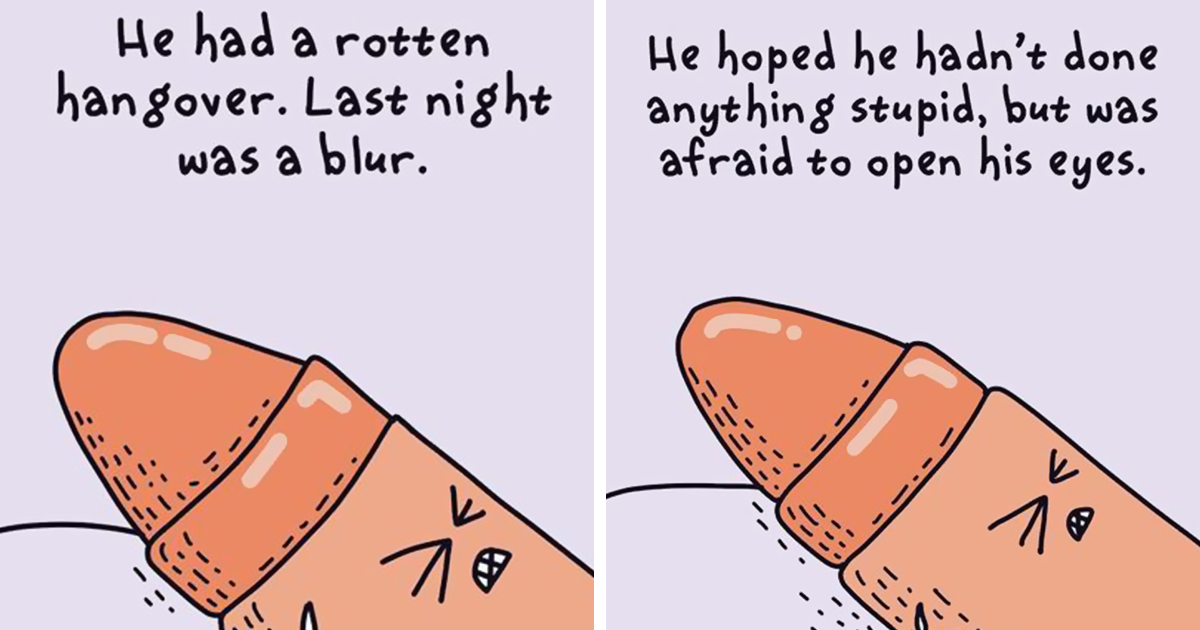
Some comics arrive with dramatic capes, cinematic universes, and enough lore to require a corkboard, red string, and three cups of coffee. Then there are silly comics: tiny bursts of absurdity that walk into your day wearing mismatched socks and somehow fix your mood. That is the charm behind the funny, lighthearted work of Australian cartoonist Pete Joison, best known online for his delightfully odd comic series Once We Were Turnips.
Joison’s comics are not trying to solve the global economy, decode the meaning of life, or explain why one sock always vanishes in the laundry. Instead, they aim for something much more useful: a quick laugh. With simple lines, unexpected punchlines, animals behaving like tiny weirdos, and everyday objects developing suspicious levels of personality, his work proves that comedy does not need to shout. Sometimes it just needs a confused bird, a strange cloud, a cat with bad intentions, or a turnip-adjacent thought that escaped supervision.
In a digital world packed with doomscrolling, algorithmic shouting, and people arguing passionately about sandwich construction, silly comics offer a refreshingly low-pressure escape. The best ones are quick to read, easy to share, and surprisingly memorable. This collection of 30 pics celebrates that exact flavor of internet joy: simple, absurd, wholesome, and just mischievous enough to make your brain snort.
Meet Pete Joison, the Australian Cartoonist Behind the Laughs
Pete Joison is an Australian artist and graphic designer whose comic work blends clean visual storytelling with gentle absurd humor. His series Once We Were Turnips began in 2020, and it quickly found a comfortable home among readers who enjoy short comics with a quirky emotional engine. The idea is straightforward: make people smile. Not every comic needs to end with a thunderclap of satire. Sometimes the punchline is a creature saying or doing exactly the wrong thing at exactly the right time.
That background in graphic design matters. You can feel it in the economy of his panels. The drawings are simple, but not careless. The lines are clean. The characters are expressive without being overbuilt. The visual space is not crowded with decorative noise. Every face, pause, object, and panel beat exists to move the joke forward. In webcomics, that clarity is gold. Readers scroll quickly, and a comic has only a second or two to say, “Hello, please stop here; a mushroom is about to emotionally confuse you.”
Joison’s style also fits neatly into the modern webcomic tradition. Like many successful funny comics online, his work does not rely on long continuity or elaborate worldbuilding. You do not need a backstory, a wiki, or a fan theory involving moon phases. You can jump into a single comic, get the joke, and move on with your day slightly happier than before. That accessibility is one reason silly comics travel so well across platforms.
Why Silly Comics Work So Well Online
Silly comics are perfectly adapted to the internet because they respect the attention span of the modern reader, which currently has the stability of a caffeinated squirrel. A short comic can deliver setup, tension, and payoff in a few panels. It asks for very little and gives back a lot: surprise, recognition, and a small emotional reset.
The format is especially powerful when shared on social media. A four-panel or six-panel comic fits cleanly into a feed, loads quickly, and can be understood even while someone is waiting for coffee, pretending to read work emails, or hiding from responsibilities in a bathroom stall. This does not make the art simple-minded. In fact, creating a good short comic is harder than it looks. The artist has to compress timing, character, and punchline into a tiny visual machine. If one panel is too slow, the joke drags. If the wording is too obvious, the surprise evaporates. If the drawing is too busy, the reader misses the rhythm.
Joison’s silly comics succeed because they understand that humor often lives in the gap between what we expect and what actually happens. A cute animal may suddenly become philosophical. A harmless object may reveal an alarming opinion. A cozy scene may take one step sideways into the absurd. That small twist is enough to make the reader pause, grin, and think, “Well, I did not schedule that thought today.”
The Joy of Absurd Humor
Absurd humor works because it interrupts ordinary logic. Most of us move through the day following invisible scripts. The alarm rings, the coffee brews, the inbox attacks, the dishes somehow reproduce overnight. Absurd comics take those scripts and poke them with a breadstick. They ask, “What if cows mooed for a deeply bureaucratic reason?” or “What if a cat’s emotional life were even more dramatic than we feared?”
This type of comedy does not always need a traditional joke structure. Sometimes the laugh comes from contrast: a serious statement delivered by a ridiculous character, or a tiny creature confronting a massive existential issue with the confidence of someone who has never paid rent. Joison’s work often feels like that. His comics are cheerful but strange, cute but unpredictable, and silly without feeling empty.
That combination is important. Pure randomness can become exhausting. Pure cuteness can become sugary. But absurdity with a clear comic rhythm creates a delightful middle ground. It lets readers enjoy nonsense that still feels crafted. The result is the kind of funny comic you send to a friend with the message, “This is us,” even when the comic is about a turnip, a bird, or something that may or may not be a haunted kitchen utensil.
Simple Lines, Big Personality
One of the most charming things about Pete Joison’s comics is how much personality he can squeeze out of simple drawings. This is a classic strength of cartooning. A few dots, curves, and gestures can suggest panic, pride, betrayal, confusion, or the specific expression of a creature that has just realized Monday exists.
Simple comic art also gives the reader room to participate. Highly detailed illustration can be beautiful, but minimal cartooning invites the audience to fill in emotional blanks. A tiny frown becomes funnier because it is so direct. A blank stare becomes funnier because it says everything while technically doing very little. In Joison’s work, the simplicity helps the jokes land faster.
This is why many beloved comics, from newspaper classics to modern webcomics, use restrained visuals. The goal is not to impress readers with every line. The goal is to guide the eye toward the joke. When a cartoonist understands that, the panel becomes a stage, and every character becomes a performer with excellent timing and questionable life choices.
What Makes These 30 Pics So Shareable?
1. They are easy to understand
A good silly comic does not require a lecture before the laugh. Joison’s humor is accessible because it is built around familiar feelings: awkwardness, curiosity, laziness, confusion, tiny victories, and the strange dignity of being ridiculous. Even when the subject is odd, the emotion is recognizable.
2. They balance cute and weird
Cute characters make readers lower their defenses. Weird punchlines reward them for doing so. This combination is powerful because it creates a soft landing for absurdity. The comic may be strange, but it rarely feels hostile. It is more like being gently ambushed by a smiling mushroom.
3. They use surprise without cruelty
Some humor depends on embarrassment or meanness. Joison’s comics tend to lean toward playful surprise instead. The jokes can be odd, cheeky, or dark around the edges, but the overall mood remains light. That makes the comics easy to share with a wide range of readers.
4. They fit the scroll
Modern readers often discover comics while scrolling through feeds. Short, punchy, visually clean comics are built for that environment. They do not fight the platform; they use it. A strong first panel catches attention, the middle builds curiosity, and the final beat delivers the laugh before the thumb escapes.
The Quiet Craft Behind a Quick Laugh
Because silly comics look effortless, it is tempting to assume they are easy to make. This is adorable and wrong, like a raccoon applying for a banking license. A successful short comic requires sharp editing. The cartoonist has to decide what to show, what to remove, where to place the pause, and how much information the reader needs before the punchline.
Comic timing is especially delicate. In prose, a writer controls rhythm with sentence length and punctuation. In comics, timing happens through panels, spacing, facial expressions, and the order in which the reader absorbs visual information. A silent panel can function like a drumroll. A character’s stare can act like a comma. A final image can become the punchline without needing extra words.
Joison’s work uses these tools in a relaxed, approachable way. The comics feel breezy, but that breeziness comes from restraint. The artist does not over-explain the joke. He trusts readers to meet him halfway. That trust is part of the fun. When the punchline lands, readers feel like they discovered the absurdity rather than being dragged to it by a tour guide holding a megaphone.
Why We Need Funny Comics More Than Ever
People often treat humor as a luxury, but small laughs can play a real role in daily well-being. Laughter can reduce tension, interrupt stress, and create a quick sense of connection. Nobody is claiming that a comic about a confused animal can fix your taxes, repair your sleep schedule, or make your printer behave like a decent citizen. But it can give your mind a brief vacation.
That matters. The internet is full of heavy information, and readers often move through a fog of bad news, work pressure, and social comparison. A short comic breaks that pattern. It gives the brain a tiny, manageable story with a beginning, middle, and end. Better yet, the ending is usually a laugh instead of an invoice.
Funny comics also create social connection. When you send one to a friend, you are not just sharing content. You are saying, “This reminded me of you,” or “I thought we could both use this.” That small act turns a private laugh into a shared one. In that sense, silly comics are not just entertainment; they are little social postcards from the land of ridiculous thoughts.
Australian Humor and the Art of Not Taking Things Too Seriously
Australian humor has a reputation for dryness, irreverence, and a healthy suspicion of anyone acting too grand. That attitude pairs beautifully with Joison’s absurd comic style. His work does not pose dramatically in front of a sunset and announce itself as Important Art. It wanders in, makes something strange happen, and leaves before anyone can ask whether the turnip signed a waiver.
This casual confidence is part of the appeal. The comics feel like they are made by someone who enjoys the act of noticing odd things: funny animals, strange words, tiny visual coincidences, and the mysterious emotional lives of objects. That observational quality gives the humor a personal stamp. The jokes may be silly, but they are not generic. They come from a specific way of looking at the world.
And that may be the secret behind many memorable webcomics. The best ones do not simply chase trends. They reveal the artist’s brain at play. Joison’s brain, apparently, is a place where animals, fungi, language, cats, and miscellaneous absurdities are all invited to a party. The snacks are probably weird, but the conversation is excellent.
What Aspiring Cartoonists Can Learn From Pete Joison
For anyone who wants to create funny comics, Joison’s work offers several useful lessons. First, start with a clear emotional goal. His comics aim to bring joy, and that focus shapes the style. Second, keep the visuals readable. A joke cannot land if the reader needs a magnifying glass and a personal assistant to decode the panel.
Third, trust small ideas. Not every comic needs to begin with a massive concept. A funny phrase, a strange animal expression, or a random question can become enough material for a short strip. Many great comics begin with the artist asking, “What if this ordinary thing were slightly wrong?” That question is a doorway to comedy.
Fourth, develop a consistent voice. Joison’s comics feel connected even when each strip stands alone. The recurring ingredient is not necessarily a character or storyline; it is the tone. Playful, absurd, lightly chaotic, and good-natured, the tone tells readers what kind of laugh they are about to receive.
Finally, keep making things. Joison has described drawing silly pictures for years, encouraged by people around him. That matters because cartooning improves through repetition. Every comic teaches timing, layout, editing, and restraint. The only way to find your funniest ideas is to make enough work that the shy ones eventually come out from behind the couch.
Why This Collection Deserves a Look
Australian Cartoonist Creates Silly Comics To Make You Laugh (30 Pics) is not just a catchy title; it is an accurate promise. The collection offers a parade of lighthearted visual jokes designed to brighten the reader’s day. It is the sort of post that works whether you are a devoted webcomic fan or simply someone who clicked because life felt a little too serious before lunch.
The beauty of these comics is that they do not demand much from you. You can read one, laugh, and leave. Or you can fall into the full set of 30 pics and emerge several minutes later with improved mood and possibly new concerns about the inner lives of vegetables. Either outcome is acceptable.
Joison’s silly comics remind us that humor does not have to be loud to be effective. It can be small, strange, kind, and quick. It can live in a facial expression, a panel pause, or a sentence that takes a sudden left turn into nonsense. In a crowded online world, that kind of simple joy feels surprisingly valuable.
Conclusion: A Little Absurdity Goes a Long Way
Pete Joison’s funny comics prove that silliness is not a weakness. It is a craft. His work takes small observations, clean drawings, and absurd twists, then turns them into compact moments of delight. Whether the subject is an animal, an object, a word, or a tiny situation that has gone wonderfully off the rails, the result is the same: a reason to smile.
That is why these Australian cartoons connect with readers. They are quick but not empty, cute but not bland, weird but not alienating. They offer a pocket-sized break from the serious machinery of the day. And sometimes, that is exactly what people need: not a grand solution, not a motivational speech, but a silly comic that looks at the chaos of life and says, “Yes, but what if the mushroom had opinions?”
Reader Experience: Why Silly Comics Feel Like a Tiny Vacation
Most readers have had the same experience: you open your phone for one practical reason, such as checking the weather, replying to a message, or proving to yourself that raccoons do indeed wash food because they are tiny masked philosophers. Then, somehow, you find a funny comic. Suddenly the serious mission is delayed. The weather can wait. The message can wait. The raccoon research has become urgent but emotionally complicated.
That is the everyday magic of silly comics. They interrupt the routine without demanding a major commitment. You do not need to sit down with a full episode, a long article, or a 900-page fantasy novel featuring twelve kingdoms and one suspicious wizard. A comic takes less than a minute. It gives you a complete little story and lets you return to life with a softer expression on your face.
There is also a special kind of pleasure in recognizing yourself in something ridiculous. A comic about a lazy creature can feel uncomfortably accurate after a long workday. A joke about confusion can mirror the exact feeling of reading assembly instructions. A tiny character overreacting to a small inconvenience can feel less like fiction and more like a documentary about trying to open a stubborn bag of chips in public.
Readers often share these comics because they become emotional shorthand. Instead of typing, “I am tired, mildly dramatic, and trying my best,” you can send a comic that communicates the whole situation through one baffled face. This is why webcomics travel so naturally through group chats. They give people a low-effort way to say, “I saw this and thought of us.” That small connection can brighten a morning, rescue a dull afternoon, or make a stressful day feel a little less lonely.
For artists, the experience is different but equally meaningful. Making silly comics encourages a habit of noticing. The world becomes full of possible jokes: the shape of a cloud, the posture of a bird, the unnecessary confidence of a household object, the way a cat enters a room like it owns both the property and your emotional future. This kind of creative attention changes ordinary life. Everything becomes material, and even annoying moments can become funny later if you tilt them at the right angle.
That is why a collection like Australian Cartoonist Creates Silly Comics To Make You Laugh (30 Pics) feels more valuable than its simple premise suggests. It is not just a gallery of quick jokes. It is a reminder that laughter can be found in small places, that absurdity can be friendly, and that a few simple lines can carry a surprising amount of joy. In a world that frequently behaves like an unsupervised appliance, silly comics are a welcome reset button.
Note: This article is fully rewritten, source-informed, and prepared for web publication without reproducing original images, captions, or source-reference markers.