

A 10,000-square-foot home can do many impressive things. It can host Thanksgiving without requiring a folding table in the hallway. It can hide a toy truck under a sofa for six months without anyone noticing. It can even make a grown adult whisper, “Do we need a map?” But making a very large house feel warm, human, and quietly cozy? That is the real design challenge.
That is what makes this Minnesota home transformation so compelling. Located in North Oaks, Minnesota, the house had strong bones, a generous layout, and the kind of scale many families dream about. The problem was not that the home was broken. It was that it felt heavy, dated, and a little too formal for a young family that wanted comfort, simplicity, and the relaxed spirit of Scandinavian living.
The goal was not to shrink the house physically. That would require a construction crew, a magic wand, and probably several permits. Instead, the design strategy was smarter: soften the finishes, calm the visual noise, brighten the rooms, create intimate zones, and bring in the hygge of a small Swedish space. The result is a before-and-after story that proves cozy is not a square-footage issue. Cozy is a feeling.
What “Hygge” Really Means in a Big American Home
Hygge is often translated as coziness, but that word only gets us halfway there. In the home, hygge is about ease, warmth, comfort, usefulness, and emotional quiet. It is the glow of a lamp instead of a ceiling light interrogation. It is a linen sofa that says, “Sit down,” not “Please admire me from a respectful distance.” It is a room that works for children, guests, coffee, books, winter socks, and the occasional bowl of popcorn eaten with suspicious enthusiasm.
In Scandinavian interior design, beauty and function are not enemies. They are more like polite neighbors who shovel each other’s sidewalks. Light woods, natural textures, neutral colors, layered textiles, durable furniture, and uncluttered rooms all work together to create interiors that feel calm without becoming cold. That balance is especially important in Minnesota, where winter is not a season so much as a long-term roommate.
The Before: A Well-Built House That Felt Too Heavy
The Minnesota home had many advantages before the renovation began. It had a practical floor plan, generous rooms, quality construction, and views of the backyard. But like many large homes from the 1990s, it also carried the design confidence of another era: darker colors, textured walls, oversized fixtures, bulky fireplace treatments, and architectural features that demanded attention whether anyone wanted to give it or not.
That is a common issue in large houses. When every feature is big, dramatic, and visually loud, the eye never gets a place to rest. Instead of feeling luxurious, the home can begin to feel exhausting. The challenge was to keep the strengths of the house while reducing the visual volume. Think of it as turning down the bass on a very expensive stereo.
Dark Finishes Made the Rooms Feel Formal
Dark walls and heavy materials can be beautiful, but in a large home they can also create distance. Instead of inviting people to settle in, they may make spaces feel staged or overly serious. In this renovation, the design direction leaned toward brightness, softness, and a more approachable mood.
Oversized Features Needed Editing
Large homes often come with large gestures: grand fireplaces, statement lighting, chunky columns, dramatic trim, and formal dining rooms that look ready for a treaty signing. The renovation did not erase the home’s character, but it edited the parts that distracted from daily life. The best before-and-after makeovers are rarely about adding more. Often, they are about removing what is shouting.
The After: Swedish-Inspired Calm in a Minnesota Setting
The finished home feels lighter, softer, and much more livable. Walls were brightened, trim was softened, and heavy features were simplified. Natural materials became the emotional anchor. White oak, linen, woven textures, wool, plaster, soapstone, and warm neutrals helped the large rooms feel more personal.
This is where the “small Swedish space” idea becomes powerful. Swedish apartments and Scandinavian cottages are often masters of restraint. They use every object with purpose. They value light. They create warmth through texture instead of clutter. Applied to a large Minnesota home, those same principles prevent the house from feeling cavernous.
A Softer Entry with Practical Storage
The entryway is one of the most important spaces in any family home because it tells the truth. Guests see it first, yes, but so do muddy boots, school bags, mail, packages, mittens, dog leashes, and the mysterious single glove that appears every January. In this home, the entry became more useful and graceful through custom storage and lighter wood tones.
A white oak console provided closed storage for clutter and open storage for daily essentials. That blend is very Scandinavian: practical enough for real life, pretty enough to avoid looking like a command center for lost socks.
A Living Room Designed for Conversation and Comfort
The living room was reworked to feel casual rather than ceremonial. Sofas facing one another encouraged conversation, while soft upholstery and linen textures kept the room relaxed. This is a smart move in a large home because furniture placement can create intimacy. Instead of pushing every piece against the walls and leaving a giant empty middle, the seating area becomes a room within a room.
That is one of the best lessons from small-space design: zones matter. Even in a big house, people naturally gather where the room feels anchored. Rugs, lamps, coffee tables, side chairs, and sofa placement can create invisible walls without closing anything off.
A Fireplace That Finally Learned to Whisper
The original fireplace was a major visual presence. In the renovation, it was simplified with a cleaner frame and calmer surrounding finishes. A fireplace should be a focal point, but it does not need to behave like a medieval throne. By using restrained materials such as soapstone, limewash, and custom white oak built-ins, the new fireplace area became warm, modern, and grounded.
The built-ins also solved a practical problem. Large rooms need storage, but too much freestanding furniture can make them feel busy. Built-ins add function while preserving clean lines. They also create places for books, ceramics, baskets, and personal objectsthe little details that keep minimalism from becoming “nobody lives here” design.
Why Scandinavian Design Works So Well in Minnesota
Minnesota and Scandinavia have more in common than snow jokes. Both places understand long winters, limited daylight, and the emotional importance of a comfortable home. Scandinavian design evolved around practical beauty: bring in light, use honest materials, keep what is useful, and create warmth where the weather does not provide it.
That makes hygge-inspired design especially fitting for a Minnesota renovation. The style does not fight the climate. It responds to it. Pale woods brighten gray days. Wool and linen add tactile comfort. Layered lamps create atmosphere after early sunsets. Neutral colors reflect available light. Natural elements connect the interior to the outdoors even when the outdoors is wearing a parka.
Key Design Lessons from This Before-and-After Makeover
1. Bright Does Not Have to Mean Sterile
White walls and pale finishes can go wrong when everything feels flat, shiny, and impersonal. The secret is texture. Limewash, plaster, wool, linen, woven baskets, wood grain, and handmade ceramics all add depth. The Minnesota home feels bright, but not blank. It has the visual softness of fresh snow before anyone has driven through it.
2. Large Rooms Need Human-Scale Moments
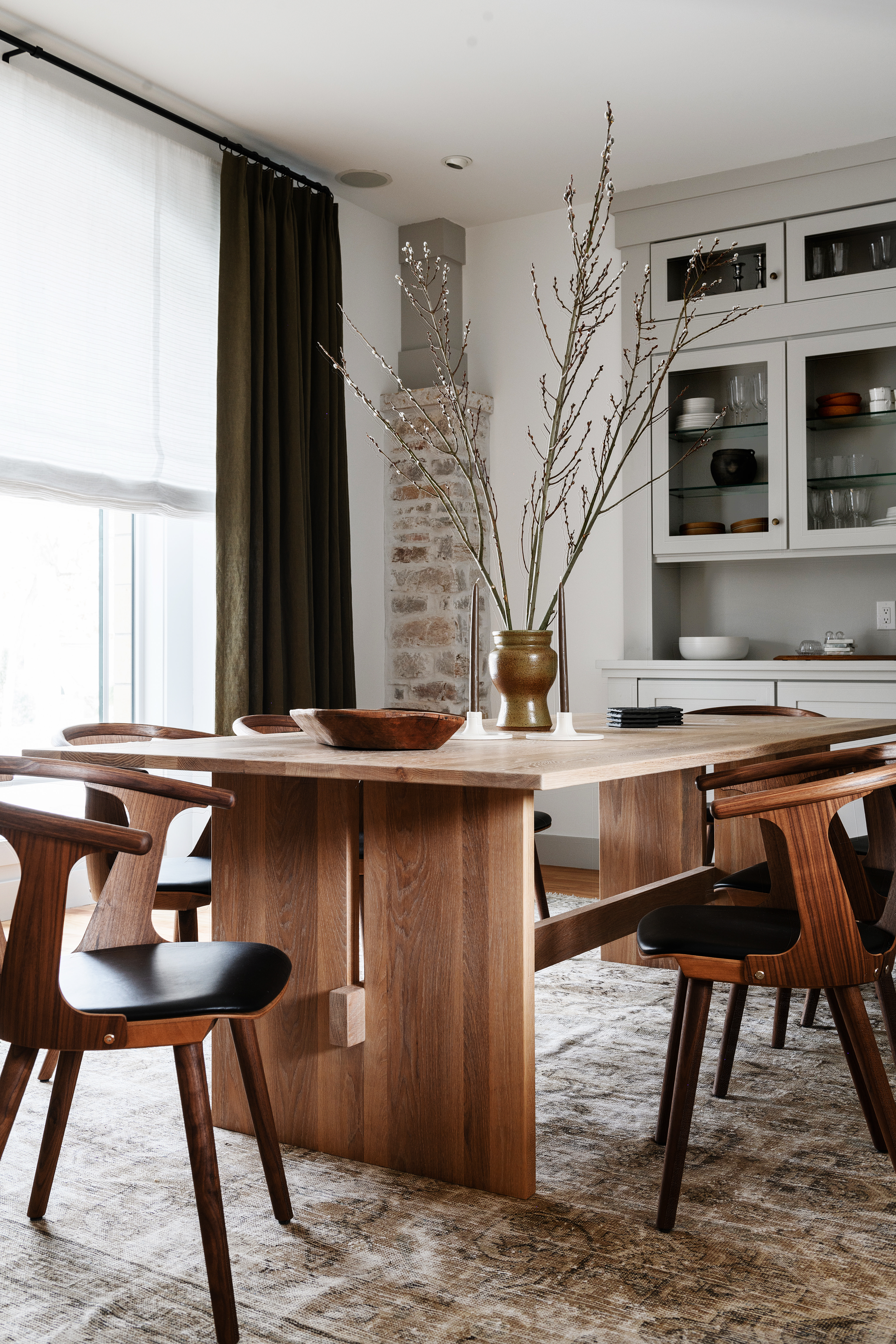
A big room should not be treated as one giant furniture puzzle. It needs smaller destinations: a reading chair near a lamp, a conversation area by the fireplace, a breakfast spot with warm wood chairs, a landing zone near the entry. These small moments make a large home feel approachable.
3. Natural Materials Do the Heavy Lifting
White oak, stone, linen, wool, leather, and plaster age better than trend-heavy finishes. They also help a home feel connected to nature. In Scandinavian interiors, natural materials are not decorative afterthoughts. They are the main event, quietly doing their job like design introverts with excellent taste.
4. Function Is Part of the Aesthetic
True hygge is not just candles and throw blankets. It is also the relief of having a place to put your shoes. It is a sofa fabric that can handle family life. It is lighting that works for reading, entertaining, and winding down. In this home, durability was not treated as a compromise. It was part of the design brief.
5. A Calm Palette Makes Details Matter More
When the background is quiet, small choices become more visible. A blue velvet accent on a chair, the grain of a wood console, a sculptural floor lamp, or a handmade bowl can stand out without competing with everything else. This is how minimalist interiors avoid boredom: they let fewer things speak more clearly.
How to Bring This Look Into Your Own Home
You do not need a 10,000-square-foot house in Minnesota to borrow ideas from this renovation. In fact, the principles work beautifully in apartments, townhomes, cabins, ranch houses, and suburban homes with one closet that appears to contain every charger cable ever manufactured.
Start by Editing the Visual Noise
Before buying anything new, remove what makes the room feel restless. That might be extra furniture, mismatched decor, harsh lighting, or wall colors that no longer serve the space. A calmer room often begins with subtraction.
Choose a Warm Neutral Base
Use warm whites, soft grays, oatmeal, clay, mushroom, stone, or pale beige as a base. These colors feel Scandinavian without becoming icy. If pure white makes your room look like a dentist’s office, try a creamy white instead. Your walls should not ask if you floss.
Layer Lighting Like a Scandinavian Pro
One overhead light is not a lighting plan. It is a threat. Add table lamps, floor lamps, sconces, picture lights, and candles where appropriate. Warm bulbs create atmosphere, while multiple light sources let the room shift from morning coffee to evening movie night.
Use Wood to Warm Up Minimalism
Blonde woods, white oak, birch, pine, and walnut can all bring warmth to simple rooms. If you cannot renovate, add wood through furniture, trays, picture frames, stools, shelves, or a dining bench. A little wood grain goes a long way toward making a room feel alive.
Make Room for Texture
Hygge loves texture. Try linen curtains, a wool rug, a chunky knit throw, boucle pillows, woven baskets, leather chairs, or handmade pottery. Texture is especially useful when you prefer neutral colors because it keeps the palette from feeling one-dimensional.
Common Mistakes to Avoid
Going Too Minimal
Scandinavian design is not the same as empty design. If your room has one chair, one vase, and an echo, you may have gone too far. Hygge needs comfort, personal objects, and signs of life. Add books, textiles, plants, art, and objects that mean something.
Using Only Cool Whites
Cool white paint can make northern homes feel chilly. In places with long winters, warm whites and soft neutrals usually feel more inviting. The goal is bright and calm, not refrigerator interior.
Forgetting Real Family Life
A beautiful home that cannot handle children, pets, guests, snacks, or daily mess is not hygge. It is a museum with throw pillows. Choose washable fabrics, practical storage, forgiving finishes, and furniture people are actually allowed to use.
Why This Makeover Feels So Successful
The success of this Minnesota home is not just that it looks beautiful after renovation. It is that the design now matches the way the family wanted to live. The house still has scale, but it no longer feels showy. It has elegance, but it is not stiff. It feels refined, but also ready for family gatherings, quiet mornings, and the ordinary rituals that make a house a home.
That is the best kind of before-and-after transformation. The “after” does not erase the “before.” It reveals what the home could have been all along. By taking inspiration from Swedish simplicity and Scandinavian comfort, this large Minnesota house became softer, brighter, and more emotionally generous.
Extra Experience: Living with the Hygge Mindset After the Makeover
The most interesting part of a hygge-inspired renovation is what happens after the photos are taken. A home can look perfect for a camera, but daily life is the real design test. The coffee gets spilled. The mail piles up. Someone leaves a blanket on the floor and calls it “decor.” A child builds a fort in the living room and suddenly the carefully selected linen sofa becomes part of a castle wall. This is where the Minnesota makeover offers a useful lesson: good design should improve real life, not require everyone to tiptoe around it.
One experience many homeowners discover after simplifying their spaces is that routines become easier. When the entry has proper storage, mornings feel less chaotic. When the living room has a clear seating plan, people naturally gather there instead of drifting into separate corners. When lighting is layered, evenings feel calmer because the room can gradually shift from active to restful. Hygge is not only about how a room looks. It is about how the room behaves.
Another valuable experience is learning that cozy does not mean cluttered. Many people try to make a large home feel warm by adding more things: more pillows, more signs, more furniture, more decorative objects, more baskets to hold the other baskets. But this renovation shows that warmth often comes from choosing better, not choosing more. A single wool throw, a well-placed lamp, a wood table, and a comfortable chair can create more atmosphere than a cart full of seasonal decor having an identity crisis.
Living with Scandinavian-inspired design also changes how people think about maintenance. Natural materials age, and that is part of their charm. Linen wrinkles. Wood develops patina. Leather softens. Stone varies. These materials do not need to look factory-new forever to remain beautiful. In fact, the slight signs of use often make the home feel more personal. Hygge allows a house to breathe. It gives permission for a room to look lived in, as long as it is cared for.
For families, the biggest benefit may be emotional. A calmer home can create a calmer rhythm. That does not mean life becomes magically peaceful. Children will still lose mittens. Guests will still arrive early. Someone will still ask where the scissors are while standing directly beside the drawer containing the scissors. But a well-designed home reduces friction. It supports the day instead of adding obstacles to it.
The Minnesota home’s transformation also reminds us that scale is not destiny. A large house can feel intimate if it is planned thoughtfully. A small apartment can feel spacious if it is edited well. A dated room can feel fresh if its best features are respected and its loudest features are softened. The experience of hygge is less about copying a Scandinavian catalog and more about asking: What makes this home feel easy to live in?
That question is useful for any homeowner. Maybe the answer is a reading corner by a window. Maybe it is a dining table that welcomes long conversations. Maybe it is better lighting in the family room, softer bedding, fewer unused objects, or a mudroom that finally stops behaving like a winter sports explosion. The point is not perfection. The point is comfort with intention.
In the end, this big Minnesota home proves that hygge is not small by definition. It can stretch across generous rooms, tall ceilings, and large family gatherings. It simply needs warmth, restraint, texture, light, and a sense of welcome. When those pieces come together, even a very large house can feel like the coziest little Swedish retreatminus the need to assemble the furniture with an Allen wrench.
Conclusion
The before-and-after story of this big Minnesota home is a masterclass in making scale feel soulful. By replacing visual heaviness with warmth, simplifying dramatic features, brightening the palette, and layering natural materials, the renovation created a home that feels both spacious and intimate. It honors Scandinavian design without turning the house into a showroom. More importantly, it proves that hygge is not about square footage, budget, or trend-chasing. It is about creating a place where people feel welcome, comfortable, and deeply at ease.
Whether you live in a grand Minnesota home, a compact city apartment, or a house that currently has one room serving as office, gym, storage unit, and emotional support zone, the lesson is the same: edit what feels heavy, keep what feels meaningful, and design for the way you actually live.
Note: This article is written as original, web-ready content synthesized from real home renovation details and reputable U.S. interior design guidance. It contains no copied source passages, citation placeholders, or unnecessary publishing artifacts.