

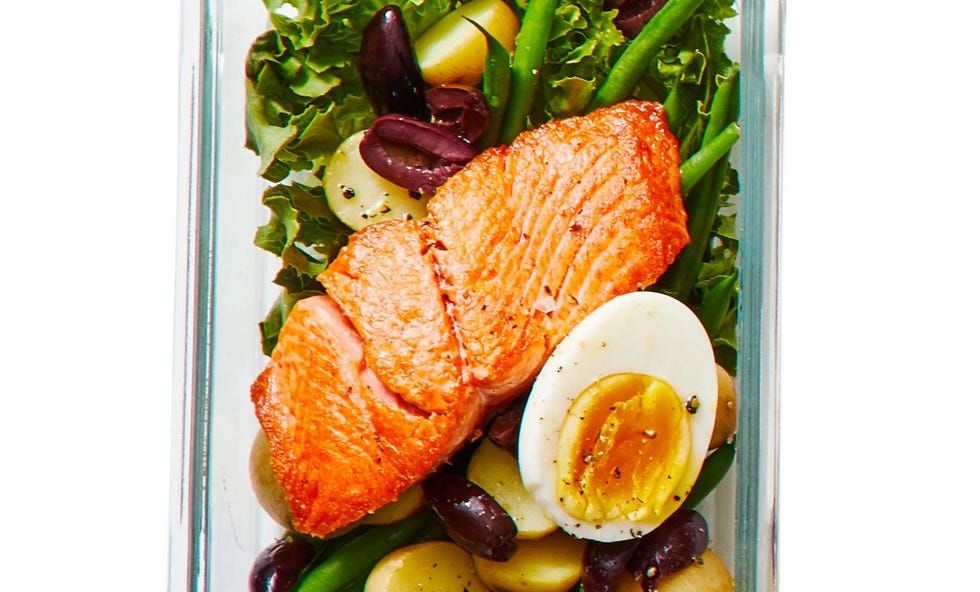
Some salads politely sit beside dinner. Salmon Niçoise salad arrives as dinner, takes the best seat at the table, and asks whether you remembered to chill the wine.
This colorful main-course salad combines tender roasted salmon with buttery potatoes, crisp green beans, juicy tomatoes, hard-cooked eggs, briny olives, and fresh greens. A sharp Dijon vinaigrette ties everything together without smothering the ingredients under a heavy blanket of dressing.
Although traditional salade Niçoise is associated with tuna and the sunny cooking of southern France, salmon makes an excellent substitute. It is rich enough to carry the mustard, capers, olives, and vinegar, yet mild enough to let the vegetables keep their identities. The finished platter looks impressive, but the preparation is mostly boiling, roasting, whisking, and arranging food in attractive little neighborhoods.
Why This Is the Best Salmon Niçoise Salad Recipe
A disappointing Niçoise salad usually has one of three problems: dry fish, bland potatoes, or vegetables that have been cooked into surrender. This recipe avoids all three.
The salmon is roasted as a single piece, which helps it cook evenly and retain moisture. The potatoes are dressed while warm, allowing them to absorb the vinaigrette instead of merely wearing it on the surface. The green beans are quickly blanched and cooled so they remain bright, crisp, and unmistakably green.
The salad is also composed rather than aggressively tossed. That matters because the ingredients have different textures. Vigorous mixing can crush the potatoes, break the salmon into confetti, and send the egg yolks wandering through the dressing. Arranging everything on a platter keeps the presentation handsome and lets each person build the perfect forkful.
A Complete Meal Disguised as a Salad
With salmon, eggs, potatoes, vegetables, and olive oil, this is a substantial meal rather than a bowl of leaves followed by an emergency sandwich. It works for lunch, dinner, summer entertaining, meal preparation, or any evening when you want something fresh but have no interest in feeling hungry again 23 minutes later.
Salmon Niçoise Salad Ingredients
For the Dijon Vinaigrette
- 1 small shallot, finely minced
- 2 tablespoons red wine vinegar
- 1 tablespoon fresh lemon juice
- 2 teaspoons Dijon mustard
- 1 teaspoon honey
- 1 small anchovy fillet, mashed, or 1/2 teaspoon anchovy paste
- 1 tablespoon capers, drained and chopped
- 1/3 cup extra-virgin olive oil
- 1 tablespoon chopped fresh parsley
- 1 tablespoon chopped fresh dill or basil
- 1/4 teaspoon kosher salt, plus more as needed
- Freshly ground black pepper
For the Salmon and Salad
- 1 1/4 pounds center-cut salmon fillet, preferably one even piece
- 1 tablespoon extra-virgin olive oil
- 1/2 teaspoon kosher salt
- 1/4 teaspoon freshly ground black pepper
- 12 ounces baby Yukon Gold or small red potatoes
- 8 ounces haricots verts or slender green beans, trimmed
- 4 large eggs
- 2 cups cherry tomatoes, halved
- 1/2 small red onion, very thinly sliced
- 1/2 cup pitted Niçoise, Kalamata, or mixed olives
- 6 to 8 cups butter lettuce, romaine, arugula, or mixed greens
- Fresh parsley, dill, or basil leaves for garnish
- Lemon wedges for serving
- Optional anchovy fillets for garnish
Recipe at a Glance
- Prep time: 25 minutes
- Cook time: 25 minutes
- Total time: About 50 minutes
- Yield: 4 generous servings
How to Make Salmon Niçoise Salad
Step 1: Make the Vinaigrette
Combine the shallot, red wine vinegar, lemon juice, Dijon mustard, honey, anchovy, and capers in a medium bowl. Let the mixture stand for five minutes. This brief pause softens the raw shallot and gives it time to become sociable.
Slowly whisk in the olive oil until the dressing looks unified and lightly thickened. Stir in the parsley and dill. Taste and season with salt and black pepper. The vinaigrette should taste slightly more assertive than seems necessary because the potatoes, greens, and eggs will mellow it.
Step 2: Cook the Potatoes
Place the potatoes in a medium saucepan and cover them with cold water by about one inch. Season the water generously with salt and bring it to a boil. Reduce the heat and simmer for 12 to 16 minutes, depending on size, until the potatoes are tender when pierced with a small knife.
Drain well. When the potatoes are cool enough to handle but still warm, cut them in halves or quarters. Toss them gently with two tablespoons of vinaigrette. Warm potatoes absorb flavor especially well, so this small step produces a much better salad than pouring all the dressing over the finished platter.
Step 3: Blanch the Green Beans
Bring a second pot of salted water to a boil, or reuse the potato pot after rinsing it. Prepare a bowl of ice water nearby. Add the green beans and cook for two to four minutes, until bright green and crisp-tender.
Transfer the beans immediately to the ice water. Once cool, drain them and dry thoroughly with a clean kitchen towel. Water clinging to the beans can dilute the vinaigrette, and diluted vinaigrette has never improved anyone’s evening.
Step 4: Cook the Eggs
Lower the eggs carefully into gently boiling water and cook for 10 minutes for fully set but tender centers. Transfer them to ice water and cool for at least five minutes. Peel the eggs and cut them into halves or quarters.
To save a pan, the eggs and green beans can be cooked in the same pot in sequence. Cook the eggs first, remove them to ice water, and then blanch the beans in the boiling water.
Step 5: Roast the Salmon
Preheat the oven to 400°F. Line a rimmed baking sheet with parchment paper or lightly oil the pan.
Pat the salmon dry and check for pin bones by running your fingertips across the surface. Remove any bones with clean tweezers. Place the salmon skin-side down on the prepared pan. Rub it with one tablespoon of olive oil and season with salt and black pepper.
Roast for approximately 10 to 15 minutes, depending on the thickness of the fillet. Cook fin fish to an internal temperature of 145°F at the thickest point. The flesh should appear opaque and separate easily into moist flakes. Let the salmon rest for five minutes before dividing it into large pieces.
Step 6: Season the Remaining Vegetables
Toss the green beans with one tablespoon of vinaigrette. In a separate bowl, season the tomatoes with a pinch of salt and another spoonful of dressing.
Place the sliced red onion in cold water for five to 10 minutes if its flavor is particularly sharp. Drain and pat dry. This treatment preserves the onion’s crunch while reducing its ability to dominate every conversation for the rest of the day.
Step 7: Assemble the Niçoise Salad
Arrange the greens across a large platter. Create separate sections of dressed potatoes, green beans, tomatoes, red onion, olives, and egg wedges. Place large flakes of roasted salmon in the center or distribute them across the platter.
Spoon some vinaigrette over the salmon and greens. Garnish with fresh herbs, lemon wedges, and anchovy fillets when using. Serve the remaining dressing at the table so everyone can add more without turning the entire platter into a vinaigrette swimming pool.
Tips for Perfect Salmon Niçoise Salad
Choose an Evenly Shaped Salmon Fillet
A thick, center-cut piece cooks more uniformly than a fillet with one bulky end and one paper-thin tail. If your salmon includes a narrow end, fold that section underneath itself or monitor it closely so it does not dry out before the center is ready.
Salt the Cooking Water
Potatoes and green beans need seasoning from the inside. Properly salted cooking water adds flavor more evenly than a last-minute blizzard of salt over the assembled salad.
Dry the Vegetables Thoroughly
After blanching the beans and rinsing any greens, remove as much water as possible. Dressing adheres to dry vegetables. On wet vegetables, it slides away like a guest who has spotted the stack of dirty dishes.
Dress Components Separately
Potatoes require more dressing than tomatoes, while eggs need only a light drizzle. Seasoning the components individually gives the salad balance and prevents delicate ingredients from being overwhelmed.
Serve It Warm, Cool, or at Room Temperature
Salmon Niçoise salad does not need to be icy cold. In fact, the flavors are often more noticeable when the salmon and potatoes are slightly warm or at room temperature. Avoid leaving the finished salad unrefrigerated for an extended period, especially in hot weather.
Ingredient Substitutions and Variations
Try Grilled Salmon
For smoky flavor, grill individual salmon fillets over medium-high heat. Oil the grates, place the fish skin-side down, and cook until it releases easily before turning. Grilling is especially useful when summer weather has declared the kitchen oven an enemy.
Use Hot-Smoked or Canned Salmon
Hot-smoked salmon offers a firm, flaky texture and requires no cooking. Good-quality canned salmon also works well for an inexpensive, fast version. Drain canned salmon carefully and remove skin or bones according to your preference.
Replace the Olives
Small Niçoise olives are ideal, but Kalamata, Castelvetrano, or a combination of olives can be used. Choose olives with a flavor you genuinely enjoy rather than buying an “authentic” variety that sits uneaten at the side of every plate.
Skip the Anchovy
The anchovy melts into the dressing and adds savory depth rather than making the salad taste aggressively fishy. Nevertheless, it can be omitted. Add another teaspoon of capers and a small pinch of salt to compensate.
Add Seasonal Vegetables
Radishes, cucumber, roasted peppers, asparagus, artichoke hearts, corn, or blanched sugar snap peas can join the platter. The salad should still feel coordinated, however. Adding everything in the refrigerator may transform French elegance into a produce drawer evacuation.
Make-Ahead and Storage Instructions
The vinaigrette can be refrigerated in a sealed container for up to five days. Let it return to room temperature and whisk or shake it before serving.
The potatoes, green beans, and hard-cooked eggs can be prepared one day ahead and stored separately. Cooked salmon can also be refrigerated, but it has the best texture when roasted shortly before serving. Wash and dry the greens in advance, then keep them chilled with a dry paper towel in their container.
For meal preparation, divide the salmon, potatoes, beans, tomatoes, olives, and eggs among containers. Keep the greens and dressing separate until serving. Refrigerated leftovers are best enjoyed within three days. Reheating is unnecessary; let the container stand at room temperature briefly so the olive oil and flavors can loosen up.
What to Serve With Salmon Niçoise Salad
This salmon salad is a complete meal, but crusty French bread is useful for catching the remaining mustard vinaigrette. A simple vegetable soup also works when serving the salad during cooler weather.
For entertaining, pair it with sparkling water flavored with lemon, dry rosé, Sauvignon Blanc, or a crisp nonalcoholic botanical drink. Finish the meal with fresh berries, lemon sorbet, or a simple fruit tart. After such a colorful main course, dessert does not need to arrive wearing fireworks.
Frequently Asked Questions
What Is a Niçoise Salad?
Niçoise salad is a composed salad associated with Nice and the cuisine of the French Mediterranean. Many modern versions include tomatoes, olives, eggs, green beans, potatoes, anchovies, and tuna. Interpretations vary widely, which is why discussions about the “correct” version can become unexpectedly dramatic for a bowl of vegetables.
Can I Make Salmon Niçoise Salad Without Lettuce?
Yes. Arrange the salmon, potatoes, green beans, tomatoes, eggs, olives, and onions directly on a platter. The result is closer to a composed vegetable-and-fish plate and is every bit as satisfying.
Can I Use Frozen Salmon?
Frozen salmon works very well. Thaw it overnight in the refrigerator, remove it from its packaging, and pat it thoroughly dry before seasoning. Excess surface moisture can prevent good roasting and dilute the flavor.
Is Salmon Niçoise Salad Served Hot or Cold?
It can be served warm, chilled, or at room temperature. A particularly appealing combination is warm potatoes, slightly warm salmon, cool crisp beans, and room-temperature vinaigrette.
How Do I Keep Salmon From Drying Out?
Use an evenly thick fillet, avoid extending the cooking time unnecessarily, and check the center with an instant-read thermometer. Allowing the fish to rest briefly before flaking also helps preserve its juices.
Kitchen Experience: What Makes This Salad Work in Real Life
Salmon Niçoise salad looks like the sort of dish that requires a linen apron, a vegetable garden, and a kitchen window overlooking the Mediterranean. In an ordinary home kitchen, however, it is surprisingly manageable. The main challenge is not culinary difficulty. It is timing several simple components without turning the countertop into a small farmers market after a windstorm.
The smoothest experience begins with the vinaigrette. Making it first creates a ready supply of seasoning for every component that follows. It also gives the shallot time to soften in the vinegar. When the dressing is postponed until the end, cooks often discover that the warm potatoes have cooled before absorbing it. The result is perfectly respectable, but noticeably less flavorful.
Potato size makes a bigger difference than many people expect. In one common kitchen scenario, a bag labeled “baby potatoes” contains specimens ranging from marbles to miniature bowling balls. Leaving them whole means the smallest potatoes may split before the largest are tender. Cutting similarly sized pieces before cooking creates more consistent results, although very small potatoes can remain whole.
The green beans provide another useful lesson. They can look undercooked while still in the boiling water, but they soften slightly as they cool. Waiting until they seem fully tender in the pot often produces limp beans on the platter. Removing them when crisp-tender, then plunging them into ice water, preserves both texture and color. The ice bath may feel like an extra production, but it takes less than a minute to prepare and prevents vegetables that resemble tired shoelaces.
Roasting a single salmon fillet is usually calmer than pan-searing four individual pieces. There is no splattering oil, no frantic flipping, and less risk of one portion finishing long before the others. The oven also frees the cook to peel eggs, halve tomatoes, and arrange the platter. An instant-read thermometer is valuable here because visual cues can be misleading, especially with thick fillets.
The assembly stage is where the recipe becomes enjoyable. Instead of tossing everything together, arrange the ingredients in loose groups. Start with the greens, place the salmon near the center, and distribute contrasting colors around it. Bright beans look especially attractive beside pale potatoes, while eggs stand out next to tomatoes and dark olives. There is no need to use tweezers or behave as though a restaurant critic is hiding behind the refrigerator. A little irregularity makes the platter feel abundant rather than engineered.
Another practical discovery is that guests appreciate control over strong flavors. Anchovies, olives, raw onion, and capers have devoted fans as well as determined opponents. Keeping optional anchovies in one section and serving extra dressing separately lets diners customize their plates without forcing the entire table into negotiations.
Leftovers also reveal the value of storing the components separately. A fully dressed platter remains delicious the following day, but the greens soften and the tomatoes release juice. Packing sturdy ingredients together while keeping lettuce and vinaigrette in separate containers preserves the original textures. The next-day lunch may not have the ceremonial beauty of the first platter, but it still delivers the same satisfying combination of rich salmon, bright acidity, creamy egg, and salty olives.
Ultimately, the best experience comes from treating Salmon Niçoise as an adaptable meal rather than a culinary examination. Use excellent vegetables, season them thoughtfully, cook the salmon carefully, and arrange everything with confidence. The finished salad will look celebratory even on a regular Tuesdayand regular Tuesdays deserve good food too.
Conclusion
The best salmon Niçoise salad balances richness, freshness, salt, acidity, and texture. Moist roasted salmon provides the centerpiece, while potatoes and eggs make the meal substantial. Green beans, tomatoes, lettuce, and herbs keep it lively, and olives, capers, mustard, and anchovy supply the bold Mediterranean character that makes every bite interesting.
Prepare the components carefully, dress the potatoes while warm, avoid overcooking the beans or salmon, and assemble the salad on a generous platter. What arrives at the table will be colorful, flexible, and elegant without being fussythe rare dinner that looks like you tried much harder than you actually did.