

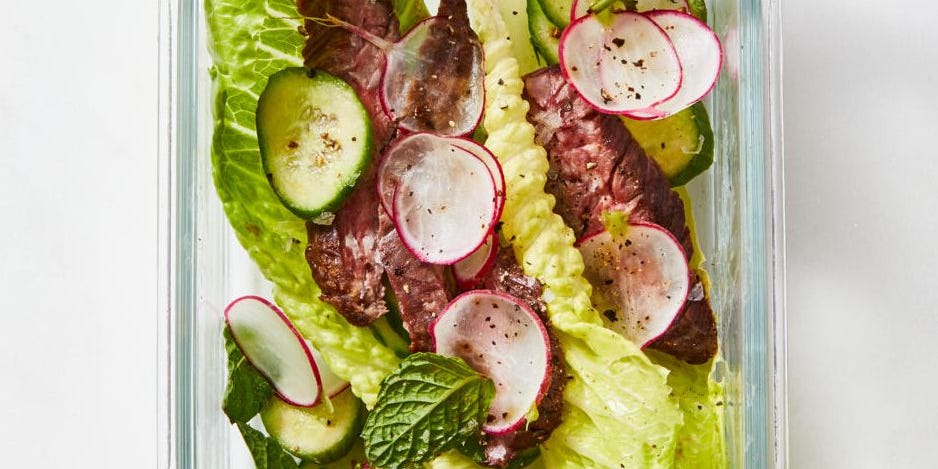
A great steak salad should never feel like punishment for ordering beef. It should deliver everything you want from a proper dinner: juicy meat, smoky char, crunchy vegetables, fresh herbs, a lively dressing, and enough substance to prevent a refrigerator raid an hour later.
This spice-grilled steak salad checks every box. Skirt steak is coated with a warm, smoky blend of paprika, cumin, coriander, garlic, black pepper, and cayenne before meeting a hot grill. The sliced steak is then layered over crisp romaine, peppery arugula, cucumbers, radishes, tomatoes, avocado, and fresh herbs. A lime-Dijon vinaigrette ties the ingredients together without covering the steak in a puddle of dressing.
The recipe takes inspiration from established steak-salad techniques that pair spice-rubbed beef with cooling vegetables, acidic dressings, and bright herbs. Those contrasting flavors are what turn grilled meat and lettuce into a genuinely satisfying main course rather than two unrelated foods sharing a plate.
Spice-Grilled Steak Salad at a Glance
| Prep time | 20 minutes |
|---|---|
| Cooking time | 10 to 12 minutes |
| Resting time | 5 to 10 minutes |
| Total time | About 40 minutes |
| Servings | 4 |
| Difficulty | Easy |
Why This Spice-Grilled Steak Salad Works
The secret is contrast. Warm steak meets cool lettuce. Smoky paprika meets sharp lime. Creamy avocado meets crisp radish. Rich beef meets a vinaigrette with enough acidity to keep every bite lively.
The dry spice rub is especially useful because it adds concentrated flavor without requiring hours of marinating. Paprika contributes color and gentle smokiness, cumin adds earthy warmth, coriander supplies a subtle citrus note, and cayenne brings controlled heat. Garlic powder works better than fresh garlic on the steak because fresh garlic can scorch over direct heat and become bitter.
Skirt steak is ideal here because it cooks quickly, develops an excellent crust, and can be sliced thinly across the grain. Flank steak, hanger steak, flat iron steak, or top sirloin can also work. Grilling authorities commonly pair these flavorful cuts with bold seasonings and fresh vegetable salads because the beef can stand up to assertive dressings and herbs.
Ingredients
For the Spice-Rubbed Steak
- 1 1/4 pounds skirt steak, trimmed of excessive surface fat
- 1 tablespoon olive oil or avocado oil
- 1 1/2 teaspoons smoked paprika
- 1 teaspoon ground cumin
- 1 teaspoon ground coriander
- 3/4 teaspoon garlic powder
- 1/2 teaspoon freshly ground black pepper
- 1/4 teaspoon cayenne pepper, or less to taste
- 1 teaspoon kosher salt
- Juice of 1/2 lime
For the Lime-Dijon Vinaigrette
- 3 tablespoons fresh lime juice
- 1 tablespoon red wine vinegar
- 1 teaspoon Dijon mustard
- 1 teaspoon honey
- 1 small garlic clove, finely grated
- 1/2 teaspoon kosher salt
- 1/4 teaspoon freshly ground black pepper
- 1/3 cup extra-virgin olive oil
For the Salad
- 1 medium heart of romaine, chopped
- 3 cups baby arugula or mixed salad greens
- 1 cup cherry tomatoes, halved
- 2 Persian cucumbers, thinly sliced
- 5 radishes, thinly sliced
- 1/4 small red onion, very thinly sliced
- 1 ripe avocado, sliced
- 1/3 cup fresh mint leaves
- 1/3 cup fresh cilantro leaves
- 1/4 cup crumbled feta or cotija cheese, optional
- Lime wedges, for serving
How to Make Spice-Grilled Steak Salad
Step 1: Prepare the Steak
Remove the skirt steak from its packaging and pat it thoroughly dry with paper towels. Moisture on the surface creates steam, and steam is the enemy of the dark, flavorful crust we are trying to build.
If the steak is one long strip, cut it crosswise into two or three manageable pieces. Notice which direction the muscle fibers run before cooking. Skirt steak has obvious long fibers, but they become slightly harder to identify once the exterior is browned. Remembering their direction now makes slicing easier later.
Step 2: Apply the Spice Rub
Combine the smoked paprika, cumin, coriander, garlic powder, black pepper, cayenne, and kosher salt in a small bowl. Rub the steak with the oil, then coat both sides evenly with the spice mixture.
Let the seasoned steak stand for 15 to 20 minutes while you heat the grill and prepare the vegetables. This short pause allows the salt and spices to adhere to the meat. You do not need to marinate it overnight or hold a complicated ceremony involving twelve bowls.
Step 3: Make the Vinaigrette
In a small bowl or jar, combine the lime juice, red wine vinegar, Dijon mustard, honey, grated garlic, salt, and black pepper. Slowly whisk in the extra-virgin olive oil until the dressing looks slightly thickened and unified.
Taste the vinaigrette on a piece of lettuce rather than directly from the spoon. A dressing may taste extremely sharp by itself but perfectly balanced once spread across greens, avocado, and steak. Add a little more honey if the lime is unusually tart, or another splash of vinegar if the dressing feels flat.
Step 4: Heat the Grill
Preheat a gas or charcoal grill to medium-high or high heat. Clean the grates and oil them lightly. A grill pan or heavy cast-iron skillet can be used indoors, although opening a window is strongly recommended unless the smoke alarm enjoys participating in dinner.
The cooking surface should be hot before the steak goes down. Proper preheating encourages browning and helps prevent the meat from sticking.
Step 5: Grill the Steak
Place the steak on the hot grill and leave it undisturbed for approximately 3 to 5 minutes, depending on its thickness. Flip and cook the second side for another 3 to 5 minutes. Avoid repeatedly pressing the steak with a spatula, which does not make it cook faster and merely squeezes flavorful juices onto the fire.
Cooking time is only a guide, so use an instant-read thermometer to check doneness. USDA food-safety guidance recommends cooking whole beef steaks to a minimum internal temperature of 145°F, followed by a rest of at least three minutes.
Step 6: Rest and Slice
Transfer the grilled steak to a clean cutting board. Squeeze the juice of half a lime over the surface and let the meat rest for 5 to 10 minutes. Resting allows the juices to redistribute instead of escaping across the cutting board the moment the knife arrives.
Slice the steak thinly against the grain. Cutting across the long muscle fibers shortens them, producing pieces that are easier to chew. This step is particularly important with skirt and flank steak. Established grilled-steak recipes consistently use resting and cross-grain slicing to improve texture.
Step 7: Assemble the Salad
Place the romaine and arugula in a large bowl. Add the tomatoes, cucumbers, radishes, red onion, mint, and cilantro. Drizzle in about two-thirds of the vinaigrette and toss gently until the vegetables are lightly coated.
Divide the salad among four plates or arrange it on a large serving platter. Add the avocado, sliced steak, and optional cheese. Spoon a little of the remaining vinaigrette over the meat and serve with lime wedges.
Do not drown the greens in dressing before adding the steak. You can always drizzle on more, but removing excess dressing from lettuce requires equipment normally associated with municipal flood control.
How to Choose the Best Steak
Skirt Steak
Skirt steak has an intense beefy flavor, loose texture, and relatively thin shape. It cooks quickly and takes especially well to dry rubs. Look for a piece with even thickness and visible marbling. Trim thick patches of exterior fat or silver skin, but do not remove every trace of fat because some contributes flavor.
Flank Steak
Flank steak is leaner and usually thicker than skirt steak. It may need an additional minute or two per side. Because it can become chewy when sliced incorrectly, cutting thin strips against the grain is essential.
Flat Iron or Hanger Steak
Flat iron is tender, well marbled, and forgiving. Hanger steak has a deep mineral-rich beef flavor and works beautifully with peppery greens. Either cut makes the salad feel slightly more luxurious without requiring a giant ribeye for every diner.
Top Sirloin
Top sirloin is widely available, moderately priced, and easy to portion. Choose a steak approximately one inch thick and slice it thinly after resting.
Tips for the Best Grilled Steak Salad
Dry the Steak Before Seasoning
Even a powerful grill struggles to brown a wet surface. Patting the meat dry is one of the smallest steps with the biggest payoff.
Use Fresh Spices
Ground spices gradually lose aroma. If your paprika has been living beside the stove since three apartments ago, replace it. Fresh cumin and coriander should smell fragrant as soon as the container opens.
Keep the Lettuce Cold
Warm steak is welcome; warm, limp lettuce is not. Refrigerate the greens until assembly time and let the steak rest before placing it on top.
Season Every Layer
The steak receives salt, but the vegetables and dressing need seasoning too. Taste the finished salad and add a small pinch of salt or squeeze of lime if necessary.
Balance Richness with Acidity
Steak and avocado provide richness, so the vinaigrette must be bright enough to balance them. Lime, red wine vinegar, tomatoes, and fresh herbs keep the dish refreshing. Tomato vinaigrettes, citrus dressings, chimichurri, and herb sauces are popular steak-salad partners for the same reason.
Easy Recipe Variations
Southwestern Steak Salad
Add grilled corn, black beans, sliced jalapeño, and crushed tortilla chips. Replace the feta with cotija and add a spoonful of adobo sauce to the vinaigrette.
Mediterranean Steak Salad
Use oregano in the spice rub and add Kalamata olives, feta, cucumber, tomatoes, and parsley. Replace the lime juice with lemon juice.
Steakhouse-Style Salad
Use crisp iceberg lettuce, cherry tomatoes, grilled onions, and crumbled blue cheese. Add a spoonful of mayonnaise to the vinaigrette for a creamy finish inspired by classic steakhouse salads.
Thai-Inspired Steak Salad
Replace the vinaigrette with a mixture of lime juice, fish sauce, a little brown sugar, garlic, and minced chile. Use cabbage, cucumber, mint, cilantro, and thinly sliced scallions as the salad base.
Grilled Vegetable Version
Grill red onion wedges, bell peppers, zucchini, or corn alongside the steak. Allow the vegetables to cool slightly before adding them to the greens.
Make-Ahead and Storage Instructions
The spice mixture can be combined several weeks ahead and stored in an airtight container away from heat and light. The vinaigrette can be refrigerated for up to three days. Shake or whisk it again before serving because natural separation is normal.
The vegetables can be washed, dried, and sliced several hours ahead. Store the greens with a dry paper towel to absorb excess moisture. Keep the tomatoes, herbs, dressing, avocado, and cooked steak in separate containers until assembly.
Refrigerate leftover steak promptly in a covered container. It can be served cold, allowed to lose its refrigerator chill for a few minutes, or warmed briefly in a skillet. Avoid prolonged reheating, which may turn thin steak slices into fashionable leather accessories.
For a packable lunch, place the dressing at the bottom of a jar or separate container. Add firm vegetables next, followed by the steak. Keep delicate greens and avocado on top. Toss everything together just before eating.
What to Serve with Spice-Grilled Steak Salad
This salad is substantial enough to stand alone, but a few simple additions can turn it into a larger meal. Serve it with grilled bread, warm pita, roasted potatoes, corn on the cob, or a chilled grain salad. For entertaining, place the steak and vegetables on one large platter and allow guests to build their own portions.
A fruit-forward side such as grilled peaches, watermelon, berries, or citrus also works well. Sweet seasonal fruit provides another contrast to the savory spice rub and smoky beef.
Frequently Asked Questions
Can I Cook the Steak Without an Outdoor Grill?
Yes. Heat a cast-iron skillet or grill pan over medium-high to high heat. Add a thin film of high-heat oil and cook the steak using the same general method. Run the exhaust fan and expect some smoke.
Can I Use Leftover Steak?
Absolutely. Slice leftover steak thinly and serve it cold or slightly warmed. This is one of the easiest ways to transform a modest amount of beef into a complete meal.
Is the Salad Very Spicy?
The cayenne produces a gentle kick rather than aggressive heat. Reduce it to a pinch for a milder salad or increase it if your household considers hot sauce a beverage.
Can I Replace the Cilantro?
Use flat-leaf parsley, basil, additional mint, or a mixture of tender herbs. The recipe should taste fresh and aromatic, not like an obligation to eat an herb you dislike.
Why Is My Skirt Steak Chewy?
The usual causes are overcooking, slicing too thickly, or cutting in the same direction as the grain. Rest the meat, identify the muscle fibers, and cut thin slices perpendicular to them.
Final Thoughts
The best spice-grilled steak salad succeeds because it respects both halves of its name. The steak is boldly seasoned, properly grilled, rested, and thinly sliced. The salad is crisp, colorful, herbaceous, and dressed with enough acidity to balance the beef.
It is fast enough for a weeknight yet impressive enough for guests. Better still, the components can be adapted to whatever vegetables and herbs are available. Once you understand the basic formulaspiced steak, crunchy produce, fresh herbs, and sharp vinaigretteyou can make dozens of variations without turning dinner into a research project.
My Experience Making Spice-Grilled Steak Salad
The first time I made a grilled steak salad, I treated it as a steak dinner with lettuce placed nearby for legal reasons. The steak was thick, the dressing was heavy, and the vegetables looked as though they had wandered onto the plate by mistake. It was edible, but it missed the point. A successful steak salad is not merely steak resting on greens; every component has to participate.
The biggest improvement came when I switched to skirt steak and started paying attention to the grain. Its long muscle fibers are easy to see before cooking, so I now study their direction while seasoning the meat. After grilling, I rotate each piece and slice straight across those fibers. The difference is immediate. Instead of wrestling with chewy ribbons, you get tender slices that can be eaten gracefully with a fork.
I also learned that a dry steak develops a far better crust. I once rushed directly from package to grill, leaving the surface noticeably damp. The meat cooked, but it turned gray in places instead of developing those savory browned edges. Now I pat it dry thoroughly, season it evenly, and wait until the cooking surface is properly heated. The steak should sizzle the moment it touches the grill.
The spice blend took several attempts to balance. Too much cayenne overwhelmed the lime and fresh herbs. Too much cumin made the salad taste like taco filling searching for a tortilla. The combination in this recipe keeps smoked paprika in the leading role while cumin, coriander, garlic, pepper, and cayenne provide background warmth. It tastes assertive without becoming muddy.
Another lesson involved the dressing. My early vinaigrettes were either timid or excessively acidic. Steak needs a dressing with personality because mild vinaigrette disappears beside grilled beef. At the same time, pouring a large quantity over the greens makes the salad heavy. I now toss the vegetables with only part of the dressing, then spoon a small amount directly over the sliced steak. That method distributes flavor more evenly and keeps the lettuce crisp.
Temperature contrast also matters. When blazing-hot steak is dropped onto delicate greens immediately, the leaves wilt before the plate reaches the table. Resting the steak solves two problems at once: the meat retains more juice, and its surface cools enough to protect the salad. Romaine is particularly dependable because it stays crunchy under warm beef and vinaigrette.
Fresh mint was the ingredient that surprised me most. Its cooling aroma makes the cayenne and paprika seem brighter, while cucumber and radish provide clean crunch. Avocado adds richness, but I place it on the plate after tossing so it does not dissolve into the dressing and turn the salad vaguely swamp-colored.
For meal preparation, I keep every major component separate. Dressing goes in a small jar, greens stay dry, sliced vegetables occupy another container, and steak is packed on its own. This requires a few extra lids, but the next day’s lunch tastes intentionally prepared rather than rescued from last night’s dinner.
After making the recipe repeatedly, I have come to appreciate its flexibility. In summer, I add corn and ripe tomatoes. During cooler months, I use roasted squash, grilled onions, or warm potatoes. The essential structure never changes: flavorful beef, something crisp, something acidic, and something fresh. Get those four elements right, and the salad practically assembles itself.