

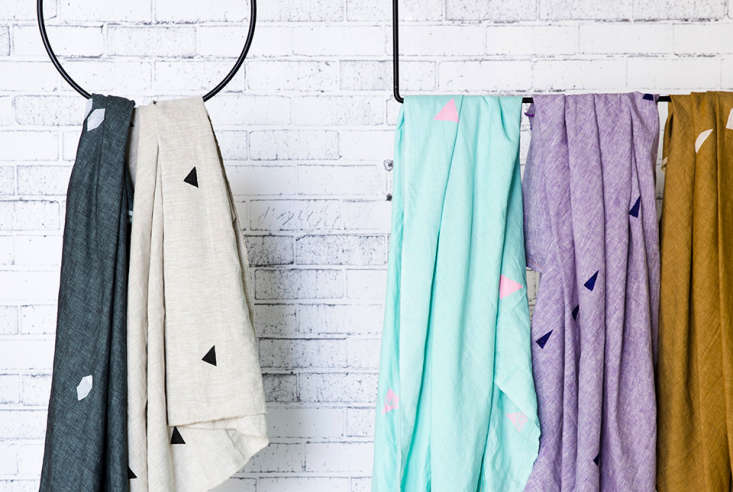
Some home decor announces itself with a trumpet. Block-printed textiles from a New York painter do something better: they walk into a room quietly, sit down on the sofa, and somehow make everything look more thoughtful. That is the charm of painterly, hand-blocked fabric. It is art you can live with, spill coffee near, fold over a chair, drape across a bed, and pretend you arranged casually even though you absolutely adjusted it three times.
At the center of this story is Caroline Z Hurley, a Memphis-born, RISD-trained painter whose textile work grew out of travel, studio experiments, and a very human desire to make a home feel grounded. Her designs are often described as simple, relaxed, and graphic, but “simple” does not mean basic. In block printing, a circle is not just a circle. A stripe can wobble with intention. A repeated mark can feel like a memory. A napkin can become the small domestic hero your dinner table did not know it needed.
This article explores how block-printed textiles became a natural extension of a painter’s hand, why Hurley’s work resonates in contemporary American interiors, and what makes handmade printed linen, quilts, pillows, throws, and fabric by the yard feel so different from mass-produced pattern. Spoiler: the magic is in the imperfect edges. The tiny misalignments are not mistakes; they are proof that a person was there.
Who Is the New York Painter Behind These Block-Printed Textiles?
Caroline Z Hurley is an artist and textile designer associated with New York’s creative design world, especially Brooklyn. Before her patterns appeared on fabric, wallpaper, bedding, clothing, quilts, and home goods, she trained as a painter at the Rhode Island School of Design. That background matters because her textiles do not feel like patterns invented by committee. They feel like compositions. There is negative space, rhythm, color restraint, movement, and a sense of breathing room.
Hurley’s early path into textiles was not a corporate master plan involving fluorescent lighting and an aggressively confident spreadsheet. It began more organically. After being exposed to block printing during a trip to Bali, she returned to New York and began experimenting with hand-blocked fabric, including Italian linen. At first, the textiles were connected to her painting practice. She made printed pieces for herself, used them in her art, shared them with friends, and gradually discovered that people wanted to live with those marks too.
That transitionfrom canvas to clothis the soul of the work. A painting usually asks you to look. A textile asks you to live. It joins the daily choreography of home: breakfast, laundry, reading, guests, pets, toddlers, crumbs, and the occasional decorative pillow debate. Hurley’s work succeeds because it does not treat domestic objects as lesser than art. It treats them as intimate surfaces where art can actually do something.
What Makes Block Printing So Special?
Block printing is one of the oldest ways to transfer pattern onto fabric. Traditionally, a design is carved into a block, inked or dyed, and pressed onto cloth by hand. Each color may require a separate block. Each repeat requires careful placement. Each impression depends on pressure, timing, material, and the printer’s judgment. In other words, block printing is not for people who think “copy and paste” is a spiritual practice.
Museum sources trace woodblock printing as an early and important method for transferring designs to textiles. Historic Indian block-printed cottons, including fragments associated with trade routes through Egypt, show how deeply this craft connects to global textile history. Over centuries, block printing traveled through cultures, markets, workshops, and homes. It shaped how people dressed, decorated, traded, and expressed identity through pattern.
In contemporary interiors, block printing still feels fresh because it offers something digital perfection cannot: evidence of touch. A hand-printed motif may have uneven ink coverage. A line may be slightly soft. A repeated shape may shift a fraction of an inch. These tiny variations create warmth. They are the difference between a pattern that looks manufactured and one that feels alive.
The Painterly Language of Caroline Z Hurley’s Textiles
Hurley’s designs often rely on a vocabulary of simple shapes: lines, dots, diamonds, arcs, stripes, leaves, and abstract forms. But simplicity is not the absence of thought. It is the result of editing. Her patterns tend to have an approachable geometry, the kind that looks calm from across the room and gets more interesting the closer you come.
Many of her textiles are built around a painter’s instincts. Color is used with restraint, not panic. Motifs are arranged with air around them. A block-printed throw or napkin might use a repeated arrow, stick, floral, or semi-circle, but the final effect is not stiff. It is relaxed, a little playful, and quietly artful.
That “quietly artful” quality is why these textiles work in many spaces. They can sit comfortably in a West Village apartment, a Brooklyn brownstone, a beach house, a cottage kitchen, or a minimalist bedroom that needs just enough pattern to prove humans live there. The designs have personality without shouting across the room like a rug with unresolved childhood issues.
From Bali Inspiration to New York Studio Practice
The Bali connection is important because it shows how travel can unlock a creative method without becoming imitation. Hurley encountered block printing abroad, then translated the experience through her own painting background and New York studio life. The result is not a copy of traditional Balinese or Indian block printing. It is a contemporary American design language informed by an ancient technique.
That distinction matters. The best modern craft does not flatten history into a trend. It respects process, labor, and lineage while allowing an artist to develop a voice. Hurley’s textiles bring old-world hand printing into modern interiors through natural materials, loose geometry, and a palette that often feels sun-washed, grounded, or gently coastal.
Her work also reflects the reality of New York creativity: small spaces, hybrid careers, late nights, ambition, accidents, and the heroic belief that an apartment can also be a studio if everyone agrees not to trip over the fabric. Many artists in New York learn to make a lot from a little. That economyof space, color, and gestureshows up in Hurley’s prints.
Why Linen Is a Natural Partner for Block Printing
Linen is one of the most satisfying materials for block-printed textiles because it has texture, strength, and a relaxed drape. It does not try to look perfect, which is convenient because neither do real homes. Linen wrinkles. It softens. It improves with use. It has the elegant confidence of someone who knows ironing is optional.
When block printed, linen gives the pattern a tactile surface. Ink or dye meets the weave in a way that feels physical. The result has depth, especially compared with flat digital prints. On napkins, tablecloths, pillows, and throws, linen makes the design feel both useful and special. It is not precious in the “do not touch this” sense. It is precious because it gets better when it becomes part of daily life.
Hurley’s early pieces included linen throws, blankets, and napkins, and that focus still makes sense. These are objects people handle constantly. A linen napkin can turn a Tuesday dinner into something that resembles civilization. A block-printed throw can make the end of a bed look styled even if the rest of the room is whispering, “We tried.”
Brooklyn Design, New Bedford Craft
One of the most compelling parts of Hurley’s textile story is the relationship between Brooklyn design and New Bedford production. Her designs are developed through an artist’s eye, while many of the block-printed fabrics and artworks are produced with artisans in New Bedford, Massachusetts, a city with a deep relationship to textile and manufacturing history.
This arrangement gives the work a regional American craft identity. It is not only about a New York painter sketching a motif; it is also about skilled hands translating that motif into repeatable fabric. The process depends on collaboration. Someone cuts the block. Someone mixes or manages the color. Someone presses the block again and again until a length of fabric becomes a field of marks.
In a world where many home goods arrive mysteriously from nowhere, that kind of traceability feels refreshing. Knowing that a fabric begins as artwork, is shaped by a designer, and is printed by artisans gives the finished textile more narrative weight. It becomes more than “nice fabric.” It becomes a small record of labor, place, and intention.
Signature Products: Throws, Napkins, Quilts, Pillows, and Fabric by the Yard
Block-printed textiles are especially versatile because they can be scaled across many home categories. Hurley’s work has appeared in linen throws, napkins, blankets, pillows, quilts, wallpaper, bedding, and fabric by the yard. Each format changes how the pattern behaves.
Throws and Blankets
A throw is a generous canvas. It gives a pattern enough space to breathe, which is especially effective for large, abstract motifs. Draped over a sofa, a hand-blocked throw adds softness and graphic interest. Folded at the foot of a bed, it can break up solid bedding without turning the room into a visual wrestling match.
Napkins and Table Linens
Napkins are smaller, but they may be the most charming use of block print. A repeated motif on a linen napkin makes the table feel collected rather than staged. The design does not need to match everything. In fact, block-printed napkins often look best when paired with simple dishes, wood, glass, and flowers that look like they were not bullied into a vase.
Quilts and Bedding
Hurley’s collaborations have also brought block-printed and painterly designs into bedding. In a bedroom, these prints can create a calm mood without relying on plain white sheets forever. A block-printed quilt or floral sheet pattern adds movement, texture, and a sense of ease. It says, “This room has taste,” but in a friendly voice.
Fabric by the Yard
Fabric by the yard is where interior designers and ambitious homeowners can have fun. Curtains, cushions, upholstered benches, lampshades, and wall treatments all become possible. Because Hurley’s patterns are often both organic and geometric, they can bridge traditional and modern interiors. They are graphic enough for contemporary spaces and soft enough for homes with antiques, wood, and vintage rugs.
Collaborations That Expanded the Painter’s Pattern World
Caroline Z Hurley’s collaborations have helped her designs move beyond the original studio context while keeping the handmade spirit visible. Her relationship with Schumacher has been especially important for bringing her painterly patterns into high-end interiors. Schumacher has presented her work as playful, subdued, handmade, and inspired by travel, with block prints connected to artisan production.
Her Banana Stand collection with Schumacher shows how personal memory can become pattern. The collection was inspired by her grandparents’ fruit business, Sugar Ripe, which imported tropical fruit to the United States in the 1950s. That story gives the fabric a sweet sense of biography. A banana motif could easily become kitsch, but in the hands of a painter, it becomes fresh, nostalgic, and sunny without turning your living room into a smoothie bar.
Her Madewell collaboration translated her patterns into clothing and accessories, a notable shift from interiors to wearable design. Her Brooklinen collaboration brought fine-art-inspired stripes and block-printed florals into bedding, showing how her language adapts to sheets, quilts, duvets, and pillows. These projects matter because they prove the flexibility of a strong visual vocabulary. A good mark can travel.
Why These Textiles Fit Modern American Homes
Modern American interiors are increasingly interested in warmth, natural materials, and objects with a story. After years of rooms that looked like nobody had ever eaten toast in them, people are welcoming texture back into the home. Block-printed textiles fit this shift beautifully.
They offer pattern without chaos. They bring craft without fussiness. They make a room feel designed but not overdesigned. They also work well with the mixed style many people actually live with: a vintage chair, a new sofa, a thrifted lamp, a family table, a stack of art books, and one mysterious basket that appears in every house tour.
Hurley’s textiles are especially appealing because they carry a painter’s sensitivity. The patterns are not merely decorative. They suggest place, memory, travel, motherhood, domestic comfort, and the pleasure of repeated forms. They invite touch. That is a powerful thing in an increasingly screen-heavy world. A hand-blocked napkin cannot send push notifications. Frankly, that is part of its charm.
How to Style Block-Printed Textiles at Home
The easiest way to use block-printed textiles is to let them be the relaxed focal point. You do not need to redesign your entire home around one pillow unless you enjoy emotional cardio. Start with one or two pieces and allow the pattern to echo colors already in the room.
Pair Prints with Solids
If you are new to block prints, combine them with solid linen, cotton, wool, wood, or ceramic pieces. A patterned throw over a neutral sofa looks intentional. A block-printed tablecloth with plain plates looks elegant. A printed pillow on a solid chair adds just enough personality without starting a pattern rebellion.
Mix Scale Carefully
Block prints often mix well with stripes, checks, and florals, but scale matters. Pair a larger motif with a smaller one so the eye has somewhere to rest. If every pattern in the room is yelling, nobody wins. Even the curtains get tired.
Use Color as a Bridge
Choose a color from the textile and repeat it elsewhere in the room through art, books, flowers, or ceramics. This makes the design feel integrated. The goal is not perfect matching. The goal is harmony, which is the decorating equivalent of everyone at dinner agreeing not to discuss parking.
Let Imperfection Show
Do not treat hand-blocked textiles like sterile display pieces. Use them. Wash them according to care instructions. Fold them. Let the fabric soften. Handmade textiles gain character through use. Their beauty is not frozen at the moment of purchase; it develops over time.
The Sustainability Angle: Buy Fewer, Better, More Meaningful Things
Block-printed textiles also connect to a broader conversation about sustainable home design. A handmade linen napkin, quilt, or yardage is not disposable decor. It is meant to last, age, and remain useful. While not every handmade object is automatically sustainable, buying fewer, better-made pieces can help shift the home away from fast-decor cycles.
Hurley’s brand language emphasizes handmade patterns and grounded living. That philosophy feels aligned with slow interiors: rooms built over time, objects chosen with care, and materials that do not need to be replaced every season. The point is not to make your home look expensive. The point is to make it feel personal, durable, and alive.
There is also emotional sustainability. When an object has a story, you are less likely to toss it the moment a new trend arrives wearing platform shoes. A block-printed textile can move from table to picnic, from bed to sofa, from first apartment to future house. It can gather memories while remaining useful. That is good design doing its job.
Why Painter-Designed Textiles Feel Different
Textiles designed by painters often have a different kind of energy. They are not always symmetrical in the strictest sense. They may favor gesture over polish. They understand blank space. They allow color to behave emotionally, not just decoratively.
Hurley’s work shows this clearly. Her patterns often look like they began as a mark made by a hand, not as a file generated to fill a product category. This painterly origin gives the textiles looseness. They feel composed but not trapped. That is difficult to achieve. Too much control and a handmade print becomes stiff. Too little control and it becomes visual soup. Hurley’s best patterns live in the delicious middle.
That middle is where contemporary craft feels most exciting. It honors tradition without pretending time stopped. It embraces imperfection without using it as an excuse. It brings art into ordinary rooms and lets ordinary rooms become more beautiful because of it.
Experiences Inspired by Block-Printed Textiles from a New York Painter
Living with block-printed textiles changes the way you notice a room. The first experience is visual: a printed throw catches morning light differently from a flat, factory-perfect blanket. The ink has slight variations. The linen has slubs. The pattern looks steady from a distance, then more human up close. You begin to appreciate the tiny shifts, the places where pressure changed, the edges where the block left a softer mark. It is like listening to a song and suddenly hearing the breath before the first note.
The second experience is tactile. Handmade textiles ask to be touched. A linen napkin has weight. A quilt has body. A pillow cover has texture that makes synthetic smoothness feel a bit suspicious, like a hotel lobby pretending it has a personality. When guests pick up a block-printed napkin, they often notice it. They may not launch into a lecture about textile history, which is probably good for the salad course, but they understand that something about the table feels warmer.
The third experience is emotional. A painter-designed textile can soften a room without making it sentimental. For example, a simple blue-and-cream block print on a bed can make the space feel cooler and calmer, especially in summer. A warm ochre or coral motif can brighten a breakfast nook. A black-and-white geometric print can add structure to a relaxed room. These are small changes, but homes are built from small changes. Nobody wakes up and says, “Today I shall achieve domestic poetry.” You put out better napkins, move a lamp, fold a quilt, and suddenly the room has a mood.
The fourth experience is practical. Block-printed textiles are surprisingly easy to incorporate because they do not require perfection around them. In fact, they often look better with real-life objects: a wooden table with scratches, a stack of books, handmade mugs, flowers leaning slightly to one side, or a sofa that has seen a few movie nights. The handmade quality gives permission for the rest of the room to relax. It says beauty does not have to be uptight. Your home can have art and still have chip crumbs. Caroline Z Hurley’s own design world has often embraced coziness, groundedness, and lived-in ease, which is exactly why these textiles feel usable rather than museum-like.
The final experience is creative. Once you bring one block-printed textile into a room, you may start seeing pattern differently. A shadow on the wall looks like a stripe. A row of lemons looks like a repeat. The edge of a chair becomes a shape. That is the secret gift of painterly textiles: they train the eye. They make everyday surfaces feel available for beauty. You may not become a block printer yourself, although a potato stamp phase is always one craft store away, but you will likely become more alert to marks, materials, and the handmade objects that make a home feel alive.
Conclusion: The Art of Living with the Handmade
Block-printed textiles from a New York painter are more than attractive home accessories. They are a meeting point between fine art, craft history, domestic life, and contemporary interior design. Caroline Z Hurley’s work shows how a painter’s mark can leave the canvas and become part of the rooms where people eat, sleep, gather, read, and recover from the outside world.
The appeal lies in balance. The textiles are graphic but soft, handmade but modern, rooted in old techniques but suited to current homes. They carry the irregular beauty of block printing and the emotional intelligence of painting. In a market crowded with disposable decor, that combination feels refreshingly human.
Whether used as a linen napkin, a quilt, a throw, a pillow, or fabric by the yard, a block-printed textile adds something machines struggle to imitate: presence. It reminds us that homes do not need to be perfect to be beautiful. They need texture, care, memory, and maybe one excellent blanket casually draped in a way that took only seven minutes to perfect.