

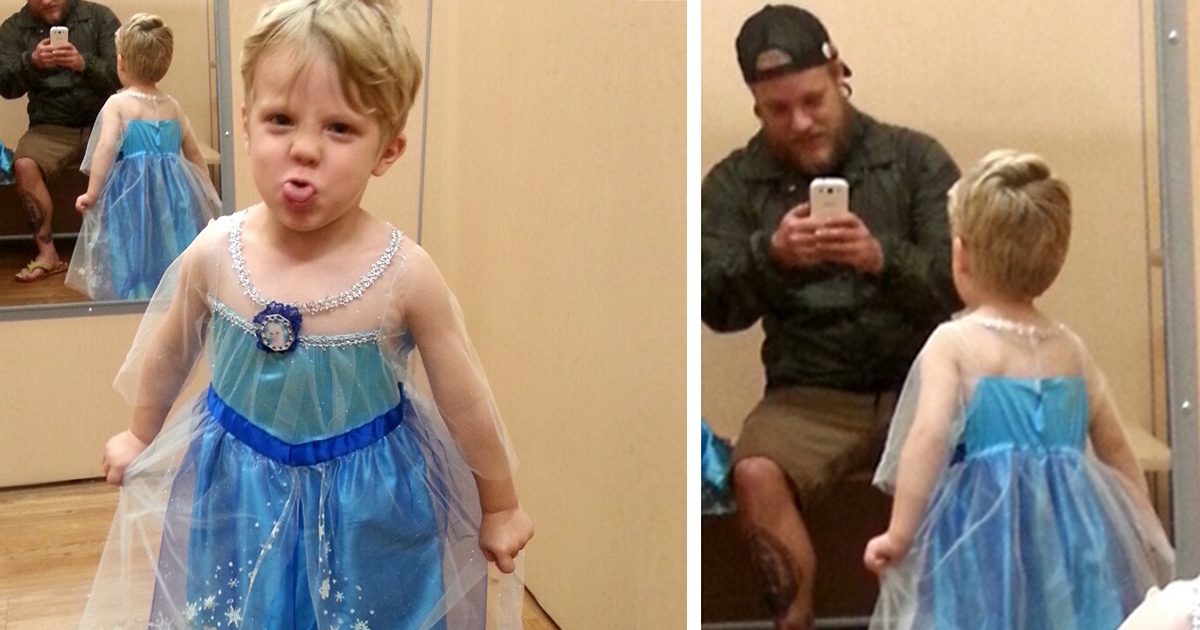
Every Halloween has its unofficial cast of characters: tiny dinosaurs roaring in grocery store aisles, superheroes who refuse to take off their capes, and at least one child who insists on wearing the costume in July “just to practice.” But every so often, a Halloween story becomes more than a cute photo. It becomes a little cultural mirror, showing us what we celebrate, what we question, and how powerful a parent’s simple “yes” can be.
That is exactly why the story of a boy who wanted to be Elsa for Halloween continues to melt hearts years after it first went viral. The young boy, Caiden, loved Elsa from Disney’s Frozen. When Halloween came around, he knew what he wanted: the sparkling blue dress, the magic, the confidence, the whole “ice palace but make it fashion” energy. Some adults might have panicked, lectured, or tried to redirect him toward a pirate, firefighter, or tiny football player. His dad, Paul Henson, did something much better.
He supported him. Not reluctantly. Not with a nervous “fine, but only at home.” He fully embraced the choice and even planned to dress as Anna, Elsa’s sister. That response transformed a simple Halloween costume into a larger conversation about parenting, gender stereotypes, childhood imagination, and the kind of love that says, “I see you, and I am proud to stand beside you.”
Why This Elsa Halloween Story Went Viral
The story spread quickly because it touched a nerve in the best possible way. At the center was a three-year-old boy who wanted to dress as his favorite character. Around him was a culture still learning to loosen its grip on outdated rules about what boys and girls are “supposed” to like.
For Caiden, the choice was probably not complicated. Elsa is powerful. Elsa sings dramatically on a snowy mountain. Elsa has a cape. Elsa can build a castle with one hand gesture. Honestly, from a preschool perspective, the real question is not why a boy would want to be Elsa. The question is why every adult does not want to be Elsa at least once.
For his father, the answer was simple: Halloween is about imagination. A costume does not need to be a political debate, a life forecast, or a family emergency meeting. Sometimes a costume is just a child saying, “This character makes me happy.” Paul Henson’s response resonated because it showed a kind of parenting that many people admire but not everyone practices: calm, confident, and centered on the child rather than the opinions of strangers.
The Best Response Possible: Love Without Conditions
The most powerful part of this story is not the costume itself. It is the father’s reaction. A child asked to express joy, and his dad did not make that joy smaller. He made room for it.
That matters. Children often learn who they are through the reactions of the adults around them. A laugh, a frown, a correction, or a celebration can become part of a child’s emotional memory. When a parent responds with acceptance, the child receives a clear message: “Your interests are safe with me.”
Supportive parenting does not mean parents approve every request a child makes. Children still need boundaries, bedtimes, vegetables, and reminders that glitter glue does not belong on the family dog. But when it comes to harmless self-expression, especially through dress-up and pretend play, support can be a beautiful gift.
Halloween Costumes Are About Imagination, Not Permission Slips From Stereotypes
Halloween is one of the few days when society collectively agrees that it is normal to become someone else. Adults put on vampire teeth. Teenagers become movie characters. Toddlers transform into pumpkins, robots, cats, astronauts, and occasionally a mysterious creature that can only be described as “laundry basket goblin.”
So why do some people suddenly become strict rulekeepers when a boy wants to dress as a princess?
The answer usually comes down to gender stereotypes. For generations, children’s clothing, toys, and costumes have often been divided into narrow lanes. Boys get the action figures, monsters, warriors, and superheroes. Girls get princesses, fairies, sparkles, and gowns. But real children are more interesting than store aisles. A boy can love swords and songs. A girl can love rockets and ruffles. A child can want to be Spider-Man on Monday and Elsa on Tuesday because childhood imagination does not read the labels.
Elsa Is Not Just a PrincessShe Is a Hero
Part of the magic of this story is that Elsa is not a passive character. She is strong, emotional, flawed, funny, lonely, brave, and powerful. She learns to stop hiding who she is. That message connects with many children, regardless of gender.
For a young child, Elsa might represent beauty, music, magic, or confidence. She might simply be the character with the best dress and the most dramatic entrance. None of those reasons require adult over-analysis. Children are drawn to characters because of color, energy, personality, songs, powers, and stories. Their choices often make perfect sense once adults stop trying to filter them through grown-up fears.
What Parents Can Learn From This Dad’s Response
The story offers a simple but meaningful parenting lesson: before reacting to a child’s choice, pause and ask, “Is this actually harmful, or is it just unfamiliar to me?”
A child wearing an Elsa costume is not harmful. A child feeling ashamed for liking something innocent can be. That distinction is important. The goal of parenting is not to train children to avoid judgment by becoming smaller. It is to help them grow strong enough to know they are loved even when other people do not understand them.
1. Listen Before Correcting
When a child asks for a costume, toy, activity, or hairstyle that surprises you, listening first can change the entire conversation. Try asking, “What do you like about that character?” You may hear something sweet and simple: “She has ice powers,” “I like the song,” or “The dress spins.”
That answer reminds adults that children are often operating from imagination, not ideology. A child is not trying to start a national debate in aisle seven of a costume store. He just wants the cape that sparkles.
2. Avoid Turning Joy Into Shame
Children are quick studies in emotional weather. They can sense when adults are embarrassed by them. If a parent says, “That costume is for girls,” the child may hear, “Something about what I like is wrong.”
A better response is curious and kind: “You love Elsa? Cool. What part of the costume do you like best?” That kind of answer keeps the conversation open and protects the child’s confidence.
3. Prepare Without Scaring
Supportive parenting can also include gentle preparation. If a child chooses a costume that might attract comments, parents can help them practice simple replies. For example: “I like Elsa because she is powerful,” or “This is the costume I picked.”
The goal is not to make a child afraid of the world. It is to give them a few words to stand tall if someone else forgets their manners.
Why Pretend Play Matters for Children
Dress-up is not just cute; it is developmental work wearing a cape. When children pretend to be characters, they practice language, problem-solving, empathy, creativity, and emotional regulation. A child pretending to be Elsa may be exploring bravery. A child pretending to be a dragon may be experimenting with power. A child pretending to be a doctor may be processing a real-life appointment.
Experts in child development often emphasize that play is how children make sense of the world. Through pretend play, kids test roles, try new feelings, and build social skills. They negotiate stories with friends, solve imaginary problems, and learn that they can create meaning from ordinary objects. A blanket becomes a royal cape. A cardboard box becomes a castle. A blue dress becomes a doorway into confidence.
The Bigger Conversation About Boys, Princesses, and Confidence
The viral reaction to Caiden’s Elsa costume shows how hungry many people are for stories of acceptance. It also shows that gender stereotypes still have a strong grip on everyday life. Many people have no issue with girls dressing as superheroes, firefighters, or pirates. In fact, they may praise it as brave or empowering. But when boys choose princesses, fairies, or sparkly characters, some adults get uncomfortable.
That double standard teaches boys that certain forms of beauty, softness, music, or emotional expression are off-limits. It can also teach girls that traditionally feminine things are less valuable. Neither message helps children.
A healthier approach is to let children explore a wide range of interests. Boys can enjoy nurturing play. Girls can enjoy adventure play. All children can enjoy magic, strength, kindness, silliness, and sparkle. Confidence grows when children are allowed to discover what they genuinely like, not only what adults approve in advance.
Frozen, Elsa, and the Power of Being Seen
Part of Elsa’s lasting popularity comes from the emotional heart of her story. She spends much of Frozen hiding a part of herself because she fears rejection. Eventually, she learns that freedom comes from honesty, connection, and self-acceptance. That theme is one reason children connect with her so deeply.
For a child, dressing as Elsa may feel like stepping into a story where being different is not a disaster. It can feel like borrowing courage from a character who learns to stop apologizing for her magic.
That is why Paul Henson’s response felt so perfect. He did not treat his son’s choice as strange. He treated it as joyful. And by planning to dress as Anna, he did more than allow the costume. He joined the story.
How Parents Can Support Creative Costume Choices
If your child wants a costume that challenges traditional expectations, here are practical ways to respond with warmth and confidence.
Let the Child Explain the Choice
Ask what they love about the character. You might discover that the costume is about courage, humor, color, music, or a favorite scene. Children’s explanations are often wonderfully straightforward.
Focus on Comfort and Safety
Instead of worrying about whether a costume is “for boys” or “for girls,” focus on whether it fits, whether the child can walk safely, and whether the fabric works for the weather. A freezing child in a princess dress is still freezing. Add leggings, sneakers, or a jacket if needed. Even Elsa would approve of layers.
Model Confidence
Children borrow courage from adults. If you act embarrassed, they may feel embarrassed. If you act relaxed, they are more likely to feel secure. A simple “You look awesome” can do more than a long speech.
Keep the Celebration About the Child
It is wonderful when supportive parenting goes viral, but the child’s feelings should remain at the center. The point is not to turn a kid into a symbol. The point is to protect their joy.
Why This Story Still Feels Important
The internet moves fast. Yesterday’s viral sensation becomes today’s forgotten tab. But some stories keep returning because they speak to something timeless. This one is not only about Halloween. It is about the everyday moments when parents decide what kind of home they are building.
A home can be a place where children perform for approval, or it can be a place where they are safe to be curious. A home can teach children to fear harmless differences, or it can teach them to treat differences with humor and kindness. Paul Henson’s response reminded many people that love does not need to be dramatic to be powerful. Sometimes it looks like a dad saying, “Great choice. I’ll be Anna.”
Experiences Related to the Elsa Halloween Story
Many families have their own version of the Elsa costume moment. It may not involve a Disney princess, a viral photo, or a Halloween post shared across the internet. Sometimes it happens quietly in a bedroom, a classroom, or the seasonal aisle of a store where fake cobwebs are somehow already on sale in August.
One parent might remember a son who wanted pink shoes because they were the fastest-looking pair on the shelf. Another might remember a daughter who refused every princess costume and chose a roaring T. rex with a tail that knocked over three decorative pumpkins. A teacher might remember a preschooler who wore a firefighter helmet with fairy wings because, in his words, “firefighters need to fly sometimes.” Honestly, that child may have solved emergency response.
These small experiences reveal how naturally creative children are before adults start organizing the world into categories. Children do not always see contradiction where adults do. A cape can be heroic and beautiful. A dress can be powerful. A dinosaur can be elegant. A superhero can carry a baby doll. In childhood, identity is often explored through play, and play is wonderfully flexible.
Parents who have supported these choices often describe the same reward: their child’s face lights up. That glow is hard to fake. It is the look of being trusted. When a child walks out the door in a costume they truly chose, they carry more than candy hopes. They carry a little proof that their voice matters.
There may also be awkward moments. A stranger might make a comment. A relative might ask, “Are you sure?” Another child might say something blunt, because children are still downloading the social skills update. In those moments, the parent’s calm response matters. A cheerful “He picked his favorite character” or “She loves that costume” can close the discussion without turning it into a courtroom drama.
Some families turn these moments into traditions. They let each child choose costumes without gender labels. They create dress-up bins with capes, hats, gowns, masks, animal ears, and old scarves. They encourage siblings to swap roles. They take photos not because the costume is unusual, but because the child is happy. Over time, these traditions teach a bigger lesson: imagination belongs to everyone.
The Elsa story also reminds adults to examine their own childhood memories. Many grown-ups can recall being told something was “not for you.” Not that color. Not that toy. Not that hobby. Not that dream. Those comments may have seemed small to the adults who said them, but children often carry them for years. Supportive parenting gives today’s kids a different memory: the time someone said yes.
That does not mean every costume request is automatically practical. Parents still have to consider budget, school rules, weather, and safety. A child who wants to trick-or-treat as a full-size cardboard refrigerator may need help with visibility. A child who wants a costume with a five-foot train may need a sidewalk-friendly redesign. But those are practical problems, not identity problems. They can be solved with tape, layers, sneakers, and patience.
In the end, the best experiences around costume choice are not about proving a point. They are about building trust. When children know their parents will listen to them in small matters, they are more likely to come to them with bigger matters later. Today it may be an Elsa dress. Tomorrow it may be a friendship problem, a fear, a dream, or a question they are nervous to ask. The pattern starts early: “When I show you who I am, will you stay kind?”
Paul Henson’s answer, in spirit, was yes. That is why the story still works. It is funny, sweet, sparkly, and deeply human. A little boy wanted to be Elsa. His dad did not panic. He did not make the moment smaller. He made it warmer. And somewhere in that simple response is a parenting lesson worth saving long after the Halloween candy is gone.
Conclusion: Let Kids Be the Heroes of Their Own Halloween
The story of the boy who wanted to be Elsa for Halloween is charming because it is so simple. A child loved a character. A father loved his child more than he cared about stereotypes. The internet applauded because, beneath all the sparkle and snowflakes, the message was beautifully clear: children deserve room to imagine, explore, and feel accepted.
Halloween costumes may seem small, but small moments shape big memories. When parents respond with love, they teach children that joy is not something to hide. Whether a child wants to be Elsa, Anna, a dragon, a superhero, a ghost, or a glittery firefighter from a yet-unreleased blockbuster, the best response starts with support.
After all, childhood is short. Let the cape fly. Let the dress sparkle. Let the kid sing. And when in doubt, maybe take a lesson from this dad: show up, cheer loudly, and be willing to dress as the sidekick.