

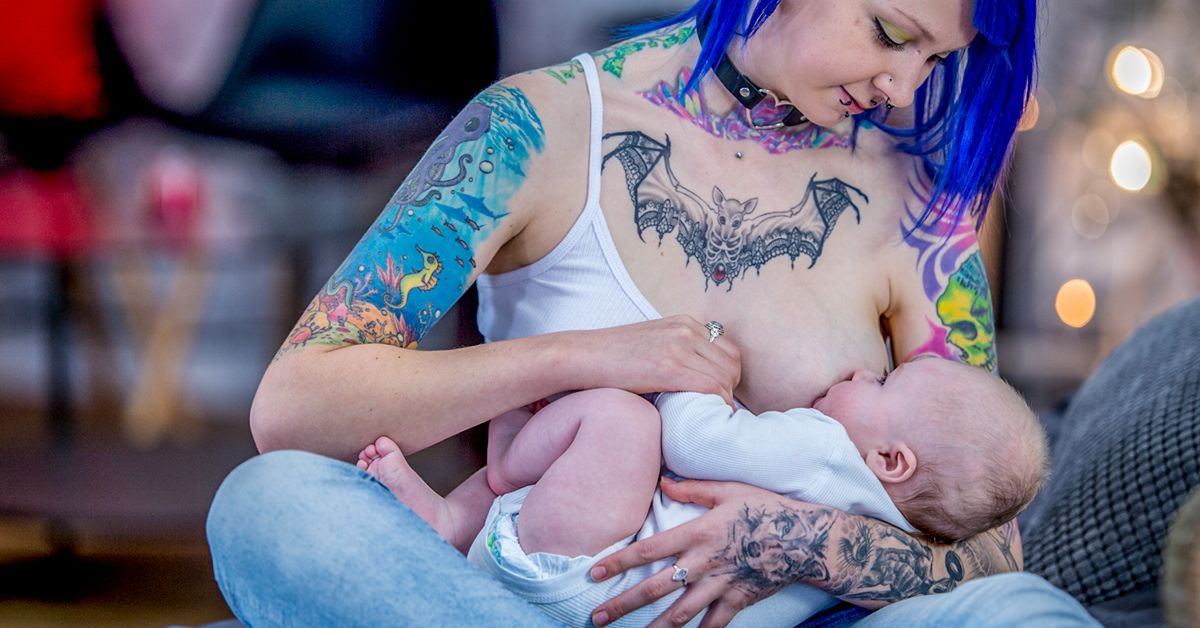
Motherhood changes a lot of things: your sleep schedule, your coffee standards, your definition of “free time,” and sometimes your relationship with your own body. So it makes sense that plenty of nursing parents eventually ask a very modern question: Can I breastfeed if I have tattoos, and can I get a new tattoo while breastfeeding?
The good news is that having an existing tattoo is usually not considered a reason to stop breastfeeding. In most cases, a healed tattoo is just body art, not a milk-supply villain lurking in the shadows. The trickier question is getting a new tattoo while you are nursing. That is where the conversation shifts from “ink looks cute” to “let’s talk about infection risk, skin healing, and the fact that research here is a little thin.”
This article breaks down what is known, what is still uncertain, and what precautions matter most if tattoos and breastfeeding are happening in the same season of life. No scare tactics, no dramatic “never ever” energy, and no pretending that a random internet opinion is the same thing as solid medical guidance.
Can You Breastfeed If You Already Have Tattoos?
In general, yes. If your tattoos are fully healed, they typically do not interfere with milk production, milk letdown, or your baby’s ability to latch. That includes tattoos on the breast itself. A healed tattoo sits in the skin, and the ink is not thought to move into breast milk in any meaningful way.
That distinction matters. A healed tattoo is very different from a fresh tattoo. Once the skin is repaired and there is no active infection, drainage, or broken tissue, the tattoo is not usually the issue. In other words, your forearm rose, shoulder snake, ankle moon, or even breast tattoo does not automatically put breastfeeding on pause.
Still, context matters. If the tattooed area is irritated, infected, cracked, bleeding, or painful, breastfeeding from that side may be uncomfortable or may need a quick medical review, especially if the nipple or areola is involved. The concern there is not “the baby is drinking ink.” The concern is damaged skin, bacteria, pain, and possible exposure to blood if the skin is broken.
Is It Safe to Get a New Tattoo While Breastfeeding?
This is where the answer becomes less black-and-white and more “technically possible, but not automatically a great idea.” There is no major rule that flatly bans tattoos during breastfeeding. At the same time, many medical and lactation sources take a cautious stance and suggest waiting if you can.
Why the caution?
The main issue is not that tattoo ink has been proven to contaminate breast milk. The real concern is that tattooing breaks the skin, and whenever skin is broken, there is a chance of infection, allergic reaction, delayed healing, or exposure to blood-borne illness if the studio follows poor hygiene practices.
That means a new tattoo can create problems that are inconvenient at best and medically serious at worst. And when you are breastfeeding, even “minor” complications can turn into a bigger headache. A painful infection, a fever, a need for medication, or a healing wound in an area your baby rubs against can all make postpartum life harder than it already is.
In short, the risk comes from the procedure and the healing process, not from the simple fact that you are lactating.
What the evidence actually says
Here is the honest version: there is not a mountain of direct research on tattooing during breastfeeding. That gap is exactly why so many medical references lean conservative. When the data are limited, clinicians usually default to “avoid unnecessary risk if you can postpone it.”
So if you are looking for a dramatic myth-busting reveal, this is it: the smartest answer is not “tattoos are definitely dangerous while nursing,” and it is not “go for it, zero concerns.” It is closer to: existing healed tattoos are generally fine, but getting a new tattoo while breastfeeding deserves caution and common sense.
What Are the Real Risks of Getting Tattooed While Nursing?
1. Infection
This is the big one. Poorly sterilized needles, contaminated ink, or sloppy aftercare can lead to local skin infections. In less common but more serious cases, unsafe equipment can spread blood-borne infections such as hepatitis B, hepatitis C, or HIV. That sounds scary because it is serious, even though reputable studios work hard to prevent it.
If you develop a skin infection, you may end up needing treatment, possibly including antibiotics or further medical care. Some medications are compatible with breastfeeding, but it is still a mess you probably would rather avoid while caring for an infant who thinks naps are optional.
2. Allergic reactions to ink
Tattoo ink can trigger allergic skin reactions, sometimes immediately and sometimes much later. Red pigments are often mentioned as more likely to cause trouble. Reactions may look like itching, swelling, rash, or chronic irritation, which is not exactly the postpartum self-care moment most people are chasing.
3. Skin trauma and delayed healing
A new tattoo is a wound. A very artistic wound, sure, but still a wound. It can take weeks to heal, and aftercare matters. If the tattoo is placed where your baby’s hands, feet, or face constantly rub against you, healing may become more annoying than expected. Anyone who has ever nursed a wiggly baby knows that “avoid friction” is a hilarious instruction.
4. Medication issues
If complications happen, you may need medicine for pain, infection, or inflammation. Many treatments are compatible with breastfeeding, but not all. That does not mean treatment is impossible. It means prevention is the better strategy.
5. Uncertainty around fresh procedures
Even though experts generally believe tattoo ink molecules are unlikely to move into milk in a significant way, the lack of robust studies keeps this topic in the “be careful” category. Medicine loves evidence. This topic does not provide enough of it.
What About Tattoos on the Breast, Nipple, or Areola?
This deserves its own section because breast tattoos sound more dramatic than they often are. A healed tattoo on the breast does not automatically prevent breastfeeding. However, the closer a new tattoo is to the nipple and areola, the more practical concerns show up.
For one thing, the nipple and areola are high-contact areas during nursing. A fresh tattoo there may be irritated by frequent feeding, moisture, friction, nipple cream, breast pads, and your baby’s latch. That is not ideal for healing.
There is also the simple comfort factor. If the area is tender, swollen, or scabbing, feeding may hurt more than usual. And if the skin cracks or bleeds, you have one more problem layered on top of normal breastfeeding challenges.
For that reason, if you are actively nursing, it is generally smarter to avoid getting a fresh tattoo on the breast, nipple, or areola until breastfeeding is over or at least well established and easier to manage. If you are dealing with reconstructive nipple-areola tattooing after breast surgery, that is a separate medical conversation and is best discussed with your surgeon and a lactation professional.
Precautions If You Still Want a Tattoo While Breastfeeding
If you have weighed the pros and cons and still plan to get a tattoo, this is the “please do not let a bad decision wear a stylish outfit” section.
Choose the right studio
- Use a licensed, reputable studio with strong hygiene standards.
- Make sure the artist uses new needles from sealed packages.
- Check that ink is placed in single-use disposable cups, not shared containers.
- Confirm the artist wears fresh disposable gloves.
- Ask how equipment is sterilized and whether an autoclave is used where appropriate.
- Do not use do-it-yourself kits, casual home setups, or “my cousin just started tattooing and is really passionate” situations.
Be smart about placement
Pick a location that will not be rubbed constantly during feeding or skin-to-skin contact. A fresh rib tattoo might sound edgy until your baby decides that exact spot is their new favorite kicking target.
During active breastfeeding, avoid getting tattooed on the nipple, areola, or anywhere your baby’s mouth or hands will repeatedly irritate the healing skin.
Think about timing
If your baby is still exclusively or heavily dependent on breast milk, delaying the tattoo may be the simplest move. Some lactation organizations suggest waiting until the baby is older, often around 9 to 12 months, when breast milk is no longer the only source of nutrition. That is a cautious suggestion rather than a universal law, but it gives you a practical benchmark.
Protect healing like it is your part-time job
- Wash the area gently with mild soap and water.
- Follow the artist’s aftercare instructions carefully.
- Do not pick scabs or scratch the area.
- Avoid soaking the tattoo in pools, hot tubs, or baths during early healing.
- Keep it out of direct sun.
- Watch for redness that spreads, pus, worsening swelling, fever, or increasing pain.
Tell your artist you are breastfeeding
Even if the studio has no formal restriction, transparency helps. Some artists will ask you to sign a waiver. Others may recommend waiting. Either way, a professional should be able to discuss hygiene procedures clearly and without acting offended that you asked basic health questions.
When It Probably Makes Sense to Wait
Delaying a new tattoo is usually the better call if any of the following apply:
- Your baby is newborn, premature, or medically fragile.
- You are still dealing with cracked nipples, mastitis, low milk supply, or latch issues.
- You have a history of poor wound healing, keloids, or strong allergic reactions.
- You have eczema, psoriasis, or another active skin condition where you want the tattoo.
- You are immunocompromised or taking medications that affect healing.
- You are considering a tattoo on the breast or areola while actively nursing.
Sometimes “wait a little” is not boring advice. Sometimes it is elite problem-avoidance.
What About Tattoo Removal While Breastfeeding?
Tattoo removal is a different beast. Laser treatment breaks pigment into smaller particles so the body can gradually clear them. Because there is little research on whether those fragmented particles could affect breast milk, many breastfeeding resources suggest waiting until weaning is complete before starting laser tattoo removal.
There is also the fact that laser removal often takes multiple sessions over many months and may cause blistering, irritation, and changes in skin texture. So if you are nursing and wondering whether now is the time to erase the butterfly you got at nineteen, the practical answer is usually: it can probably wait.
Common Questions
Can I breastfeed with a tattoo on my breast?
Usually yes, as long as the tattoo is healed and the skin is healthy. If the skin is broken, bleeding, infected, or very painful, get medical advice.
Can tattoo ink leak into breast milk?
There is no strong evidence showing that healed tattoo ink meaningfully enters breast milk. This is one reason existing tattoos are not generally treated as a breastfeeding problem.
Can I get a small tattoo while nursing if I use a clean studio?
Some people do, and there is no blanket legal prohibition. But many clinicians still recommend waiting because even a small tattoo carries infection and healing risks.
Do I need to pump and dump after getting tattooed?
There is no standard guidance that says you must routinely pump and dump after getting a tattoo. The bigger issue is whether the procedure was performed safely and whether you develop any complications afterward.
Should I avoid black henna or temporary tattoos?
Be cautious with black henna. It may contain para-phenylenediamine, a chemical linked to serious skin reactions. Temporary body art may seem harmless, but “temporary” does not always mean “gentle.”
Real-World Experiences and Practical Lessons
In real life, the tattoo-and-breastfeeding question usually does not show up as a dramatic medical emergency. It shows up as a very normal parent dilemma. A mom wants to celebrate a birth milestone, cover an old tattoo, reclaim her body after pregnancy, or finally book the appointment she postponed for a year. Then she pauses and thinks, “Wait, am I allowed to do this while nursing?”
One common experience is the parent who already has multiple tattoos and breastfeeds without any issue at all. In those cases, existing healed tattoos become background details, like stretch marks or an old ear piercing. The baby latches, milk comes in, and the tattoo on the shoulder or ribs is basically a non-event.
Another very common story is the parent who wants a new tattoo after giving birth because the design feels meaningful. Maybe it is the baby’s birth flower, initials, zodiac sign, or a tiny outline that says, “I survived pregnancy and now deserve nice things.” Emotionally, that makes perfect sense. But once they start reading about infection risk, studio hygiene, and the lack of direct breastfeeding research, many decide to wait a few months. Not because tattoos are forbidden, but because newborn life is already chaotic enough without adding a healing wound.
There are also practical experiences that do not get enough attention. For example, parents with clingy babies quickly realize that tattoo placement matters. A fresh tattoo on the chest, upper arm, or side of the breast can get bumped, scratched, or kicked during feeds. A location that sounded low-maintenance during booking can become wildly inconvenient once a sleepy baby suddenly turns into an octopus.
Some breastfeeding parents also describe feeling more comfortable once their child is older and no longer exclusively dependent on breast milk. That does not magically erase all risk, but it changes the emotional calculation. If a parent ends up needing medication, a temporary feeding adjustment feels less overwhelming with a ten-month-old than with a ten-day-old.
Then there is the studio experience. Reputable tattoo artists often ask about pregnancy or breastfeeding up front. Some will proceed with extra documentation, while others simply will not tattoo a breastfeeding client. That can surprise people, but it usually reflects liability concerns rather than a moral judgment. In a weird way, it can be a good screening tool. If a studio acts annoyed that you asked about sterilization, licensing, or ink handling, that is your cue to leave and take your money somewhere more professional.
The most useful lesson from real-world experiences is this: the decision is rarely about art alone. It is about timing, healing, stress tolerance, and risk management. Parents who feel happiest with their decision are usually the ones who do not rush. They ask smart questions, pick excellent studios, avoid high-friction body areas, and stay honest about whether this is truly the right month for a fresh tattoo. Sometimes the boldest move is getting the tattoo. Sometimes the boldest move is waiting until life is a little less sticky, leaky, and sleep-deprived.
Conclusion
So, is breastfeeding and tattoos safe? Existing healed tattoos are generally not a problem for breastfeeding. A new tattoo while nursing is not automatically forbidden, but it does come with enough uncertainty and enough infection-related risk that many experts and lactation resources recommend waiting if possible.
If you decide not to wait, the safest path is simple: choose a licensed and highly hygienic studio, avoid breast and nipple-area tattooing during active nursing, follow aftercare carefully, and get medical help right away if anything looks infected. If you are considering tattoo removal, postponing until after weaning is usually the more cautious option.
Bottom line: this is not really a story about whether your baby will “drink tattoo ink.” It is a story about skin healing, safe procedures, and smart timing. And honestly, smart timing is one of the few parenting tools that still works after the baby arrives.