

Every wedding needs a little sparkle. A little laughter. Maybe one sentimental speech that makes mascara tremble but survive. What it does not need is a live family takedown performed with a microphone, an audience, and enough emotional splash damage to ruin the dessert course.
That is exactly why the story behind “Bride’s Wedding Speech Roasts Her Sister, Ends In Tears And A Walkout” hits such a nerve. It is messy, painfully believable, and almost too perfect for the internet: one sister gets the mic, decides she is suddenly headlining a roast special, and the other sister ends up humiliated in front of a room full of relatives, friends, and people who only came for the open bar. The result is not edgy comedy. It is a wedding reception gone emotionally sideways.
What makes this kind of story so compelling is that it is not really about one speech. It is about family roles, old resentments, public embarrassment, and that dangerous little phrase people use when they know they crossed the line: “Relax, it was just a joke.” In wedding culture, speeches are supposed to be brief, warm, and memorable for the right reasons. When a bride turns hers into a roast aimed at her sister, the room changes instantly. Guests stop chewing. Smiles lock in place. Someone studies their bread basket with the concentration of a NASA engineer. And the sister being mocked has to make a brutal choice in real time: sit there and absorb it, or leave.
So let’s talk about why this kind of moment lands so badly, why the walkout makes emotional sense, and what wedding speeches are actually supposed to do. Because while a funny wedding toast can be a highlight of the night, a mean one can become the story people tell forever. And not in a cute, “remember Uncle Dave’s dance moves?” way.
What Went Wrong, Exactly?
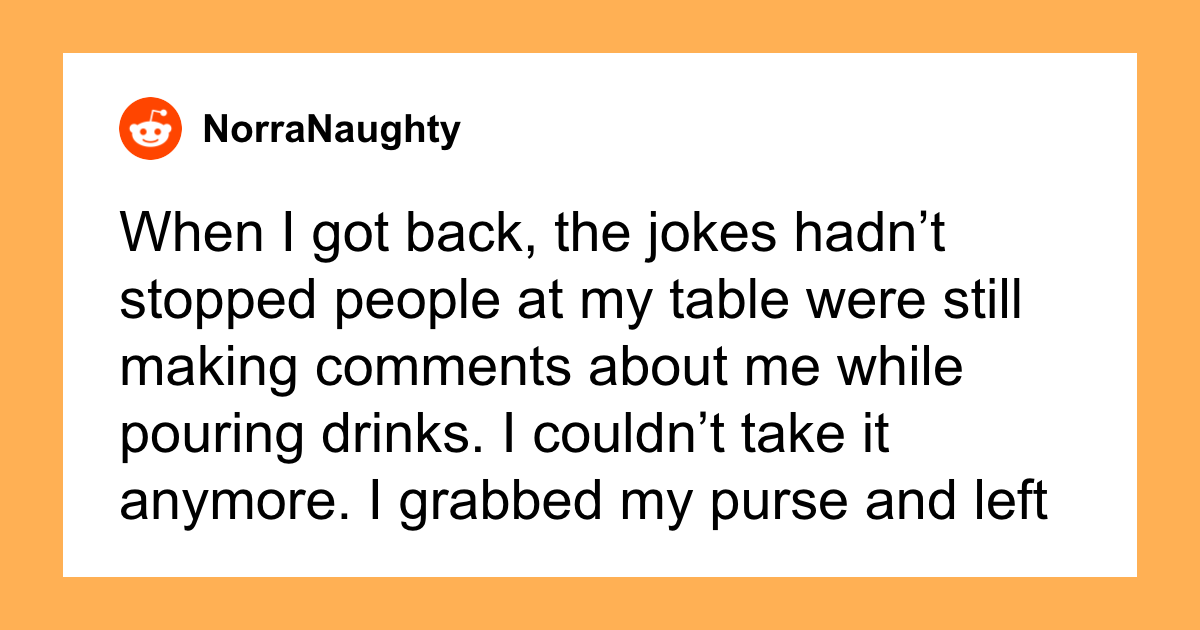
On the surface, the setup sounds harmless enough. A bride gives a speech. She includes jokes about her sister. The room is supposed to laugh. Instead, the comments feel pointed, personal, and just cruel enough to make the target feel cornered. The sister cries, leaves, and suddenly the bride’s big day has a second plotline nobody asked for.
That shift matters. There is a huge difference between affectionate teasing and public humiliation. Affectionate teasing says, “I know you, I love you, and I’m letting everyone in on one harmless little quirk.” Public humiliation says, “I know what hurts you, and I’m betting the room will laugh before it notices.” One creates connection. The other creates fallout.
In family systems, this kind of speech usually does not come out of nowhere. The joke is rarely just the joke. It often rides on years of labels: the “funny one,” the “responsible one,” the “dramatic one,” the “messy one,” the “favorite one,” the “buzzkill one.” Weddings can bring all of that old emotional furniture back into the room. Add stress, attention, alcohol, performance pressure, and a microphone, and suddenly a reception speech becomes a very public airing of private family dynamics.
Why A Wedding Toast Is The Worst Place To Settle A Score
A toast is supposed to honor, not expose
The basic job of a wedding speech is simple: welcome people, celebrate the couple, share one or two meaningful stories, and send everyone back to dinner feeling warm rather than worried. That is the lane. It is not the moment to revisit sibling rivalries, remind everyone who had the wild phase in college, or roast a family member until they look like they would rather be trapped in the restroom with a crying toddler.
Even when humor is encouraged, the best wedding humor works because it is generous. It lets guests laugh with the people in the story, not at them. A clever line can lighten the room. A cutting line can freeze it. And once a speaker drifts into material that sounds mean, self-congratulatory, or bizarrely personal, the audience starts wondering whether they are watching a toast or witnessing a family ambush in formalwear.
Public embarrassment hits harder than private teasing
Some people defend these moments by saying, “But we always joke like that.” Maybe. But context changes everything. A private joke between siblings at the kitchen counter is one thing. A joke delivered to a ballroom full of guests is another species entirely. Public embarrassment magnifies pain because the target is not just hurt. They are also being watched while they are hurt.
That is why walkouts happen. Leaving is not always about theatrics. Sometimes it is the fastest available form of self-protection. Staying would mean smiling through humiliation, becoming part of the bit, and rewarding the person who used the microphone like a weapon. Walking out may look dramatic from the outside, but from the inside it can feel like the only move left.
Old sibling patterns love a spotlight
Sisters, especially adult sisters with long shared histories, know exactly where the emotional landmines are buried. They know which nicknames sting, which old stories still burn, and which “funny” character roles the family keeps assigning. So when one sister uses a wedding speech to lean into a familiar dynamic, the target may not hear one bad joke. She may hear ten years of being minimized, translated into a punchline and amplified through a sound system.
That is why these incidents tend to linger. People rarely remember the exact wording forever, but they remember the role they were forced to play in public. Once someone becomes “the joke” at a family event, it can take a long time to repair the trust that made intimacy possible in the first place.
What Wedding Speeches Are Actually Supposed To Sound Like
Good wedding speeches are not mysterious. They are built from a few reliable ingredients: gratitude, brevity, affection, and one well-chosen story that reveals character rather than exposing weakness. The best ones feel personal without becoming private in the wrong way.
A strong speech usually does four things. First, it acknowledges the room and thanks the guests for being there. Second, it says something specific and kind about the couple or the person being celebrated. Third, it includes a story that illustrates love, loyalty, growth, or joy. Fourth, it ends on a hopeful note, ideally before anyone wonders whether the speaker plans to release a director’s cut.
What should be avoided? Easy: exes, crude jokes, drunken rambling, inside jokes that isolate half the room, references to family dysfunction, or anything that would make the subject of the speech wish for a small trapdoor beneath their chair. If a line would make the target tense up during rehearsal, it does not belong in the final version.
Why The Room Usually Goes Silent In Stories Like This
One of the most painful details in wedding speech disasters is how often the room just… sits there. Not because everyone agrees with the speaker, but because social situations move fast and people freeze. Guests are trying to read each other. Is this normal for this family? Is the sister okay? Are we supposed to laugh? Was that line supposed to be sweeter than it sounded? Nobody wants to be the first person to openly react, so silence spreads like spilled champagne.
That silence can make the target feel even more alone. When no one interrupts, the humiliation appears to gather legitimacy. The speaker keeps going. The target feels exposed. And the event’s emotional weather shifts from celebratory to weirdly post-apocalyptic in about thirty seconds.
Ironically, guests often remember the discomfort more vividly than the joke itself. A wedding speech that goes wrong does not just embarrass one person. It changes the emotional memory of the entire room. The couple might have gorgeous flowers, perfect lighting, and a flawless playlist, but years later someone will still say, “Was that the wedding where the speech turned into a roast and the sister left?” That is not exactly the legacy most people are hoping for between the first dance and the cake cutting.
Was The Walkout An Overreaction?
In a word: no. Or at the very least, not necessarily. People love to call a hurt reaction “dramatic” when it interrupts a convenient narrative. But humiliation is not harmless just because it is dressed in humor. If someone is mocked publicly, especially at a major family event, crying or leaving is not evidence that they are weak. It is evidence that they are human.
Could the sister have stayed, smiled tightly, and discussed it later? Sure. People do that every day. But survival mode is not the same as wellness. The more honest question is this: why is the burden always placed on the humiliated person to remain graceful, while the person holding the microphone gets excused for being “funny”?
Walkouts are often framed as scene-stealing, but the original scene theft usually happens much earlier, when a speech stops honoring the occasion and starts targeting a person. The walkout is just the visible consequence.
How A Bride Could Repair The Damage
If the bride wants to fix things, the first step is not defending the joke. It is dropping the joke entirely. No “you know how I am.” No “everyone laughed.” No “I was only teasing.” No “you embarrassed me by leaving.” That last one, in particular, is emotional gymnastics of Olympic quality.
A real apology should name the behavior clearly, acknowledge the harm, and avoid excuses. Something like: “I used my speech to embarrass you in public. That was cruel, and I understand why you left. I’m sorry.” Not glamorous, but effective. Repair usually starts when the person who caused the damage stops arguing about their intentions and starts listening to the impact.
After that comes boundaries. Maybe the sister says she no longer wants to be the butt of family jokes. Maybe she wants distance. Maybe she wants a conversation with other relatives who enabled the pattern by laughing it off for years. Whatever comes next, the event itself is no longer the only issue. The speech simply exposed a deeper problem that had likely been hanging around in a nice outfit long before the wedding.
How To Be Funny In A Wedding Speech Without Becoming The Villain
Humor at weddings is not the enemy. Bad aim is. If you want a speech to be funny, make the joke broad, kind, and safe. Poke fun at yourself. Joke about wedding planning stress, the groom’s terrible first dance practice, or the fact that every family has one relative already scouting the dessert table before dinner. Keep the humor airy. Keep the target willing. Keep the warmth obvious.
A good rule is this: if the person you are joking about would happily read the line themselves into a microphone, you are probably safe. If you would be nervous to show them the speech in advance, congratulations, your instincts are trying to save you from yourself.
Weddings are emotional amplifiers. A thoughtful line feels more touching. A lazy joke feels meaner. A small slight can grow giant in a formal setting because the stakes are higher and the audience is bigger. So yes, be funny. But be funny in a way that leaves people feeling included, not exposed.
Experiences Related To Wedding Speech Disasters That Show Why This Story Hits So Hard
Stories like “Bride’s Wedding Speech Roasts Her Sister, Ends In Tears And A Walkout” spread so quickly because a surprising number of people have witnessed some version of this chaos in real life. Maybe not the exact same script, but the same emotional pattern: someone gets a microphone, mistakes cruelty for comedy, and turns a once-in-a-lifetime event into a memory people wish they could professionally bleach out of their brains.
One common version involves the speaker who thinks “honesty” means revealing material nobody asked for. Guests have heard speeches that mention old breakups, mental health struggles, weight changes, bad dating history, or family conflict that should never have left the group chat. The speaker often sounds confident at first, almost proud of being “real,” until the room goes so quiet you can practically hear everyone reevaluating their life choices through a forkful of chicken.
Another experience people talk about is the so-called affectionate nickname that lands like a slap. Families get used to these labels over time. The organized sister becomes “Mom 2.0.” The shy brother becomes “the weird one.” The cousin who made mistakes in her twenties becomes “our hot mess.” Everyone claims it is loving. Everyone claims it is tradition. Then one of those nicknames gets aired in formal clothes, in front of coworkers, in-laws, and college friends, and suddenly the target realizes the joke was never as harmless as the family pretended.
Then there is the alcohol factor, the chaotic side character in way too many reception stories. Plenty of people have seen a best man, maid of honor, parent, or even a newlywed go off-script after a few drinks and start “riffing.” Riffing is often just a glamorous word for “making terrible choices with confidence.” The speech gets longer, meaner, and stranger. A joke about one embarrassing story turns into five. The crowd laughs nervously at first, then stops. The speaker does not notice. This is how wedding speeches become cautionary tales.
Guests also remember the aftermath. That is the part people outside the family do not always see. The person who got humiliated may spend days replaying every line. Other relatives start choosing sides. Someone insists the target “ruined the wedding” by reacting. Someone else says the speaker ruined it first. Group texts become battlegrounds. A single speech creates months of resentment because it pulled a private family wound into public view and wrapped it in a bow labeled “just kidding.”
There are also stories where the hurt person says nothing at all in the moment, and that can be just as damaging. They stay seated. They smile tightly. They congratulate the couple. They go home and cry in the hotel bathroom or in the car or while scrubbing off wedding makeup that now feels like part of the costume. On the outside, everything looked fine. On the inside, the relationship shifted permanently. Sometimes the walkout is not the dramatic option. Sometimes it is the healthiest, clearest response available.
That is why this headline lingers. It is not just shocking. It feels familiar. Too many people have seen how easily a celebration can become a stage for unresolved family tension. And too many people know exactly what it feels like to be told that the thing that hurt them most was, apparently, supposed to be funny.
Final Thoughts
At its best, a wedding speech turns love into language. It gives the room a shared emotional moment and makes the couple feel seen. At its worst, it becomes a public power play disguised as humor. In a story like this one, the tears and walkout are not really the shocking part. The shocking part is how often people still confuse humiliation with wit.
If there is one takeaway here, it is beautifully simple: a wedding toast should leave people feeling bigger, not smaller. Funny is welcome. Mean is not. And if you ever find yourself holding a mic at a reception, remember this very elegant rule: if your best line depends on someone else swallowing their pain in public, it is not a toast. It is a problem.