

At first glance, “cathode” and “anode” sound like two tiny robots arguing inside a battery. In reality, they are the two electrodes that make many electrical and electrochemical systems work, from phone batteries and car batteries to electroplating tanks, fuel cells, LEDs, and old-school cathode-ray tubes. If you have ever wondered why a battery has a positive and negative side, why corrosion happens, or why charging and discharging can flip the way we talk about electrodes, you are already standing at the doorway of the cathode vs anode discussion.
The simplest rule is this: the anode is where oxidation occurs, and the cathode is where reduction occurs. That rule stays true in electrochemical cells, even when the positive and negative labels seem to switch depending on the device. The confusion usually begins because people try to define cathode and anode only by charge. That works sometimes, but not always. Electrochemistry loves exceptions the way cats love knocking things off tables.
This guide explains the definitions, key differences, practical examples, and common mistakes in plain American English. By the end, you will know how to identify a cathode and an anode without feeling like you need a chemistry degree, a lab coat, or a dramatic thunderstorm in the background.
What Is an Electrode?
Before comparing cathode vs anode, it helps to understand the word electrode. An electrode is a conductor that allows electrical contact with a nonmetallic part of a circuit, such as an electrolyte, semiconductor, vacuum, or chemical solution. In batteries and electrochemical cells, electrodes are the places where chemical reactions and electron movement connect.
Think of an electrode as a busy train station. Electrons may leave, arrive, or be transferred through reactions happening at the surface. The station itself does not define the whole journey, but it is where the action becomes visible.
What Is an Anode?
An anode is the electrode where oxidation occurs. Oxidation means a substance loses electrons. A classic memory trick is “An Ox”: anode oxidation. If electrons are being produced by a reaction at an electrode, that electrode is the anode.
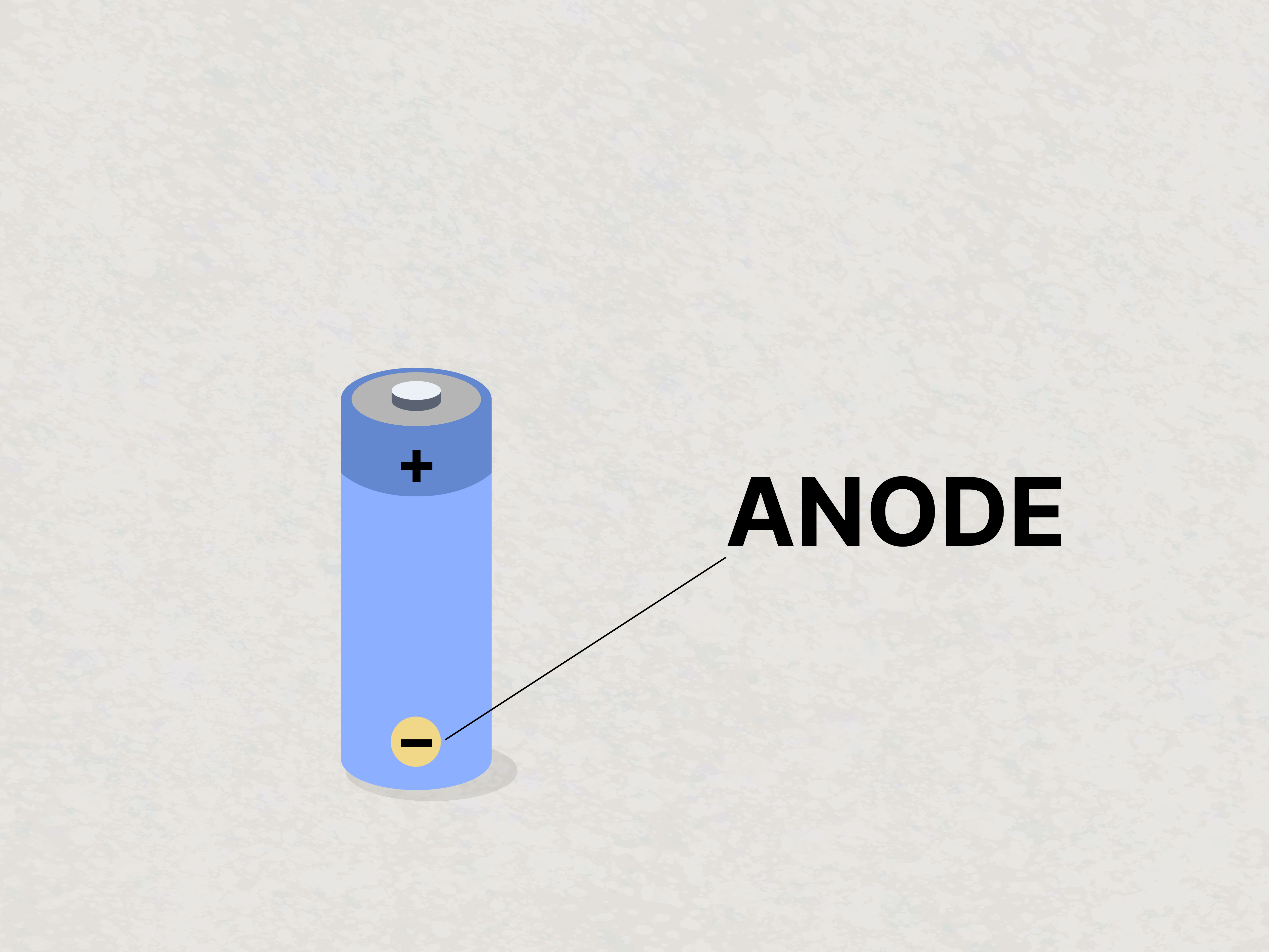
In a discharging battery, such as a typical galvanic or voltaic cell, the anode is usually the negative electrode. Electrons leave the anode and travel through the external circuit to do useful work, such as lighting a bulb or powering a device. In an electrolytic cell, however, the anode is positive because an outside power source pulls electrons away from it.
Anode Definition in Simple Words
The anode is the electrode where electrons are lost by the reacting material. In many batteries during discharge, it is the place where electrons begin their trip through the circuit. In electrolysis, it is the electrode where oxidation is forced to happen by an external power supply.
What Is a Cathode?
A cathode is the electrode where reduction occurs. Reduction means a substance gains electrons. The memory trick is “Red Cat”: reduction cathode. If electrons are being consumed by a reaction at an electrode, that electrode is the cathode.
In a discharging battery, the cathode is usually the positive electrode. Electrons arrive there from the external circuit, and ions inside the cell help complete the chemical process. In an electrolytic cell, the cathode is negative because the external power source pushes electrons toward it.
Cathode Definition in Simple Words
The cathode is the electrode where electrons are gained by the reacting material. In many batteries during discharge, it is where electrons arrive after flowing through the circuit. In electrolysis, it is often where metal ions gain electrons and form solid metal, which is why cathodes are important in electroplating.
Cathode vs Anode: The Core Difference
The core difference between cathode and anode is the type of reaction that happens at each electrode. The anode is always linked to oxidation, while the cathode is always linked to reduction. That is the foundation. If you remember nothing else, remember this:
- Anode = oxidation = electrons are lost
- Cathode = reduction = electrons are gained
This rule is more reliable than saying “anode is negative” or “cathode is positive,” because polarity changes depending on whether the cell is producing electricity or consuming electricity.
Cathode vs Anode Comparison Table
| Feature | Anode | Cathode |
|---|---|---|
| Main reaction | Oxidation | Reduction |
| Electron change | Electrons are lost | Electrons are gained |
| Memory trick | An Ox | Red Cat |
| In a discharging galvanic cell | Usually negative | Usually positive |
| In an electrolytic cell | Positive | Negative |
| Common role in batteries | Source of electrons during discharge | Receiver of electrons during discharge |
| Common role in electroplating | Metal may dissolve into solution | Metal may deposit onto surface |
Why Positive and Negative Labels Cause Confusion
Many learners get tripped up because they expect anode and cathode to have fixed charges. That would be wonderfully convenient. Unfortunately, science looked at convenience and said, “Cute idea.”
In a galvanic cell, also called a voltaic cell, the chemical reaction naturally produces electrical energy. During discharge, the anode is negative and the cathode is positive. Electrons leave the negative anode, flow through the wire, and arrive at the positive cathode.
In an electrolytic cell, an outside power source drives a nonspontaneous chemical reaction. Here, the anode is positive and the cathode is negative. The power supply pulls electrons from the anode and pushes electrons toward the cathode.
So, instead of asking, “Which one is positive?” ask, “Where is oxidation happening?” That question will identify the anode. Then ask, “Where is reduction happening?” That identifies the cathode.
Cathode and Anode in Batteries
Batteries are the most familiar place where people meet cathodes and anodes. A battery contains two electrodes separated by an electrolyte. The electrolyte allows ions to move internally while electrons move through the external circuit. This teamwork is what lets chemical energy become electrical energy.
In a common battery during discharge, the anode releases electrons through oxidation. Those electrons travel through the circuit and power a device. The cathode receives electrons through reduction. Meanwhile, ions move through the electrolyte to balance charge inside the battery.
Lithium-Ion Battery Example
In many lithium-ion batteries during discharge, lithium ions move from the anode toward the cathode through the electrolyte, while electrons travel through the external circuit. The anode is commonly made with graphite, while the cathode often contains lithium metal oxides or related lithium-containing materials. During charging, the process reverses: lithium ions move back toward the anode, storing energy for later use.
This is why rechargeable batteries can feel conceptually slippery. The same physical electrode may behave differently depending on whether the battery is charging or discharging. In everyday product language, manufacturers often label the battery’s positive electrode as the cathode and the negative electrode as the anode, especially when describing discharge behavior. In strict electrochemical terms, however, the reaction taking place determines the name.
Cathode and Anode in Electrolysis
Electrolysis uses electrical energy to drive a chemical reaction that would not happen on its own. This process is used in metal refining, electroplating, water splitting, and industrial chemical production.
In an electrolytic cell, the anode is positive because it is connected to the positive side of the external power source. Oxidation occurs there. The cathode is negative because it receives electrons from the power source. Reduction occurs there.
Electroplating Example
Imagine plating a spoon with silver. The spoon is usually connected as the cathode. Silver ions in solution gain electrons at the spoon’s surface and become solid silver metal. The anode may be made of silver, allowing silver atoms to oxidize and enter the solution as ions. In simple terms, the silver leaves one electrode and dresses up the spoon. Very fancy, very electrochemical.
Cathode and Anode in Corrosion
Corrosion is another area where anodes and cathodes matter. In galvanic corrosion, two different metals are electrically connected in the presence of an electrolyte, such as salt water. One metal becomes the anode and corrodes faster, while the other becomes the cathode and is protected.
This is why sacrificial anodes are used on boats, water heaters, pipelines, and other metal structures. A more reactive metal, such as zinc, magnesium, or aluminum, is attached so it will oxidize instead of the protected metal. The sacrificial anode lives a noble life by slowly disappearing. It is basically the bodyguard of the metal world.
Cathode and Anode in Diodes and Electronics
The terms cathode and anode also appear in electronics. In a diode, current can flow more easily in one direction than the other. The anode and cathode identify the two terminals. In a standard diode under forward bias, conventional current enters through the anode and leaves through the cathode.
LEDs, or light-emitting diodes, also have an anode and cathode. Connect them correctly, and they glow. Connect them backward without proper circuit design, and they may sit there silently judging your wiring choices. In electronics, the names are tied to device behavior and current direction, so context matters.
How to Remember Cathode vs Anode
The easiest memory tool is:
- Red Cat: Reduction happens at the cathode.
- An Ox: Oxidation happens at the anode.
Put together, it becomes Red Cat An Ox. It sounds like a strange children’s book, but it works. Another helpful phrase is OIL RIG: oxidation is loss, reduction is gain. Combine both memory tricks and you get a reliable way to solve most cathode vs anode questions.
Common Mistakes When Comparing Cathode and Anode
Mistake 1: Assuming the Anode Is Always Negative
The anode is negative in many discharging batteries, but it is positive in electrolytic cells. The reaction is the definition, not the charge.
Mistake 2: Assuming the Cathode Is Always Positive
The cathode is positive in many galvanic cells during discharge, but it is negative in electrolysis. Again, reduction defines the cathode.
Mistake 3: Ignoring Whether the Battery Is Charging or Discharging
Rechargeable batteries can reverse processes during charging. If you are studying strict electrochemistry, always check the direction of the reaction.
Mistake 4: Mixing Electron Flow with Conventional Current
Electron flow and conventional current point in opposite directions. Electrons are negatively charged, while conventional current is described as the direction positive charge would move. This difference can make diagrams look like they are arguing with each other.
Real-World Applications of Cathodes and Anodes
Cathodes and anodes are not just textbook vocabulary. They appear across modern technology and industry. In batteries, they store and release energy. In electrolysis, they help produce chemicals and refine metals. In electroplating, they create decorative or protective coatings. In corrosion protection, sacrificial anodes help preserve important structures. In electronics, anodes and cathodes help control current flow in diodes and LEDs.
Understanding cathode vs anode also helps when reading battery specifications, troubleshooting simple circuits, studying chemistry, or comparing energy technologies. The words may seem small, but they carry a lot of electrical weight.
Quick Examples: Identifying Cathode and Anode
Example 1: Zinc-Copper Galvanic Cell
In a classic zinc-copper cell, zinc is oxidized and loses electrons. Therefore, the zinc electrode is the anode. Copper ions gain electrons and form copper metal at the copper electrode. Therefore, the copper electrode is the cathode.
Example 2: Electrolysis of Molten Salt
In electrolysis, an external power source drives the reaction. Positive ions move toward the negative cathode and gain electrons. Negative ions move toward the positive anode and lose electrons. The cathode is still reduction, and the anode is still oxidation.
Example 3: LED Circuit
In a basic LED circuit, the anode connects to the positive side of the supply through a proper resistor, and the cathode connects toward the negative side. When connected correctly, the LED allows current to pass and emits light.
Cathode vs Anode in One Sentence
The anode is where oxidation happens, the cathode is where reduction happens, and their positive or negative labels depend on the type of cell and operating condition.
Practical Experience: Learning Cathode vs Anode Without Getting Shocked by Confusion
One of the most useful experiences when learning cathode vs anode is realizing that the topic becomes much easier when you stop trying to memorize polarity first. Many students, hobbyists, and DIY electronics learners begin by asking, “Which side is positive?” That question feels natural because batteries are labeled with plus and minus signs. But in chemistry, plus and minus signs are only part of the story. The better habit is to identify the reaction first.
A practical way to learn is to draw a simple battery diagram. Put the anode on the left and the cathode on the right. Write “oxidation” under the anode and “reduction” under the cathode. Then draw electrons leaving the anode, moving through a wire, and arriving at the cathode. This visual approach turns abstract vocabulary into a little traffic map. Electrons are the tiny commuters, the wire is the highway, and the electrodes are the stations. Thankfully, electrons do not honk.
Another helpful experience is handling basic household batteries safely and reading their labels. The raised button on many cylindrical batteries is the positive terminal, which is associated with the cathode during discharge. The flat end is the negative terminal, associated with the anode during discharge. This everyday object helps connect classroom definitions to real life. Of course, you should not cut open, puncture, burn, or experiment dangerously with batteries. Batteries can leak, overheat, or fail if abused. Observation is useful; turning your desk into a battery crime scene is not.
If you work with LEDs, the cathode and anode become even more practical. A typical LED has two leads: the longer lead is often the anode, and the shorter lead is often the cathode. The flat edge on the LED body may also mark the cathode side. When beginners wire an LED backward, it usually does not light. That small failure is actually a great teacher. It shows that electrode direction matters, and it makes the vocabulary stick better than a plain definition ever could.
Electroplating examples are also memorable. When an object is plated, the object is commonly the cathode because metal ions gain electrons there and deposit as a metal coating. If you imagine the cathode as the “catcher” of metal, the word becomes easier to remember. It catches electrons in reduction and may catch metal atoms during plating. That is not a formal scientific definition, but it is a useful mental hook.
For students studying chemistry, the best strategy is to write the half-reactions. The half-reaction that shows electrons as products is oxidation, so it belongs at the anode. The half-reaction that shows electrons as reactants is reduction, so it belongs at the cathode. This method works even when diagrams become complicated or when the cell type changes.
In real-world troubleshooting, the biggest lesson is context. A battery, an electrolytic tank, a diode, and a corrosion system may all use the words cathode and anode, but they do not always use them in exactly the same everyday way. Before deciding what each electrode does, ask what system you are looking at and whether it is producing electricity, consuming electricity, charging, discharging, plating, corroding, or controlling current. Context is the difference between clarity and an electrical vocabulary wrestling match.
The more you see cathodes and anodes in different settings, the less intimidating they become. Eventually, the words stop sounding like mysterious laboratory creatures and start acting like useful labels. The anode loses electrons. The cathode gains electrons. The rest is mainly context, arrows, and the occasional diagram that could use a better designer.
Conclusion
Cathode vs anode is one of those topics that seems confusing until you find the right anchor. The anchor is not positive or negative charge. The anchor is the reaction. The anode is where oxidation occurs, and the cathode is where reduction occurs. In discharging galvanic cells, the anode is usually negative and the cathode is usually positive. In electrolytic cells, the anode is positive and the cathode is negative. In rechargeable batteries, charging and discharging can reverse the direction of processes, so context matters.
Whether you are studying chemistry, comparing battery technology, wiring LEDs, learning about corrosion, or simply trying to understand why your phone battery is more complicated than it looks, the cathode and anode are central characters. Remember Red Cat An Ox, check the reaction, and you will avoid most of the confusion. Science may still throw you a curveball now and then, but at least this one will have labels.
Note: This article is original, written in standard American English, and synthesized from reputable educational, government, dictionary, and battery-technology references for web publishing.