

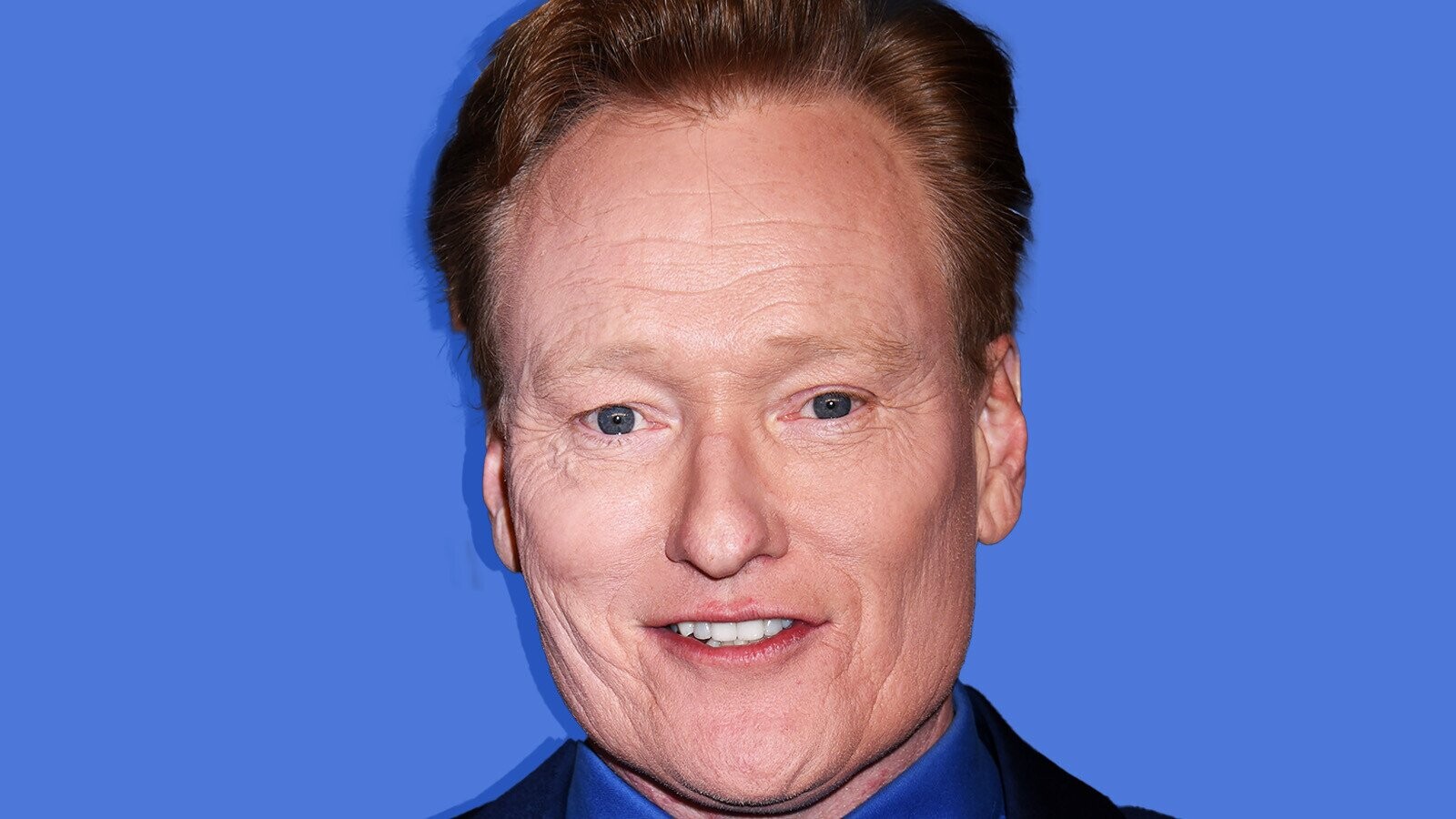
Note: This article is written for web publishing in standard American English. The headline keeps its pop-culture bite, while the article explains the real history more carefully: Conan O’Brien’s exit from The Tonight Show was the result of NBC’s late-night scheduling disaster, Jay Leno’s return to the franchise, and Conan’s refusal to move the show past midnight.
A Late-Night Return That Felt Like a Pop-Culture Ghost Story
When Conan O’Brien returned to The Tonight Show as a guest on April 9, 2024, the moment carried more baggage than a family of six trying to board a discount airline. This was not just another celebrity stopping by to plug a new show, wave at the audience, and pretend the host’s desk has not been disinfected twelve times that day. It was Conan walking back onto the stage of a television institution that once gave him his dream job, then turned that dream into one of the most famous late-night messes in American TV history.
The appearance happened on The Tonight Show Starring Jimmy Fallon, where O’Brien came to promote his Max travel series, Conan O’Brien Must Go. But everyone knew the real headline was bigger than a streaming launch. Conan had not appeared on The Tonight Show since his short, chaotic run as host ended in January 2010. Fourteen years later, the tall red-haired comedy goblin of America returnednot as the wounded former host, not as the guy holding a grudge on camera, but as a veteran entertainer who had outlived the scandal, reinvented himself, and somehow made the whole thing feel strangely sweet.
For longtime fans, it was the late-night equivalent of seeing someone walk calmly into a restaurant where they were once dumped, order dessert, and compliment the lighting. There was awkward history in the room, yes. But there was also maturity, humor, nostalgia, and the unmistakable sense that Conan had won something more valuable than a time slot: cultural affection.
Why Conan’s Return to The Tonight Show Mattered
To understand why this appearance became entertainment news, you have to remember what The Tonight Show represents. It is not just a talk show. It is a throne, a museum piece, a comedy proving ground, and occasionally, a network executive stress test. Johnny Carson made it sacred. Jay Leno made it dominant. Conan O’Brien was supposed to inherit it as the next-generation host who would carry the franchise forward.
Conan had earned that chance through years of oddball excellence on Late Night with Conan O’Brien, which he hosted from 1993 to 2009. His style was not old-school desk-and-monologue comfort food. It was weirder, more self-aware, more absurd. He made comedy out of failure, awkwardness, fake confidence, and bits that sounded like they were invented in a writers’ room after too much coffee and not enough adult supervision.
That weirdness became his brand. Triumph the Insult Comic Dog, the Masturbating Bear, remote segments, surreal sketches, and Conan’s willingness to make himself the joke all helped create a loyal audience. He was not merely hosting a show; he was building a comedy universe where the host looked like a nervous flamingo and somehow made that a leadership style.
So when Conan finally took over The Tonight Show in June 2009, it felt like a generational handoff. The future had arrived. Unfortunately, the future had also been scheduled by NBC, which is where the comedy turned into a corporate group project with no adult in the room.
The 2010 Late-Night Disaster, Explained Without a Corkboard and Red String
The public version of the story is often simplified as “Jay Leno kicked Conan out.” That phrase is emotionally satisfying, very clickable, and roughly as subtle as a piano falling down an elevator shaft. The real situation was more complicated, though not necessarily less ridiculous.
NBC had promised Conan that he would succeed Jay Leno as host of The Tonight Show. To keep Leno from leaving the network, NBC gave him a new prime-time program, The Jay Leno Show, airing at 10 p.m. weeknights. On paper, this looked like an innovative cost-saving move. In practice, it became a scheduling experiment that caused affiliate stations to sweat through their suits.
Local NBC affiliates depended on strong 10 p.m. lead-ins to support their 11 p.m. news broadcasts. When Leno’s prime-time show struggled, affiliates complained. Meanwhile, Conan’s Tonight Show was still finding its footing with a younger, more niche comedy voice at 11:35 p.m. The network began looking for a fix, and its solution was the television equivalent of rearranging deck chairs while the iceberg asked for a producer credit.
NBC proposed moving Leno back to 11:35 p.m. for a half-hour show and pushing Conan’s Tonight Show to 12:05 a.m. Conan refused, arguing that The Tonight Show airing after midnight would damage the franchise. His public statement became one of the defining documents of the conflict: calm, pointed, and emotionally clear. He loved the show, but he would not participate in what he believed was its destruction.
After negotiations, Conan left NBC. Jay Leno returned to The Tonight Show in March 2010 and hosted until 2014, when Jimmy Fallon took over. Conan, meanwhile, moved to TBS, launched Conan, toured, built Team Coco, expanded into podcasts, and eventually became one of the clearest examples of a host who survived losing the biggest job in late night by becoming even more himself.
Jimmy Fallon’s Role: The Friendly Host in a Very Haunted House
One reason Conan’s 2024 return worked is that Jimmy Fallon was the perfect person to host it. Fallon had his own connection to Conan. He followed Conan as host of Late Night before eventually taking over The Tonight Show. He also represented the version of NBC late night that came after the Leno-Conan war had cooled into television folklore.
Fallon’s style is friendly, enthusiastic, and emotionally open. That made the segment feel less like a courtroom deposition and more like a reunion between two comedy people who understood the weirdness of the building. They talked about old memories, Conan’s NBC years, and the surreal experience of being back. The conversation did not need to become a dramatic interrogation. Everyone watching already knew the backstory. The power came from the fact that Conan was simply there.
In show business, sometimes the biggest statement is not a speech. Sometimes it is sitting on the couch, smiling, and letting the audience realize that time has done what no press release could do: soften the sharp edges while preserving the legend.
Conan O’Brien Must Go: The Real Reason for the Visit
Officially, Conan came to promote Conan O’Brien Must Go, his Max travel series. The show grew naturally from the global fan interactions and remote comedy that became central to Conan’s post-network identity. Instead of returning to a traditional late-night desk, Conan leaned into what he does best: wandering into unfamiliar places, behaving like a polite lunatic, and making strangers laugh before they can fully determine whether he is a tourist, a diplomat, or a very tall escaped mascot.
The series built on the spirit of Conan Without Borders and the podcast-era connection he developed through Conan O’Brien Needs a Friend and fan conversations. That evolution matters. Conan’s post-Tonight Show career was not just a backup plan. It became a blueprint for how a comedian can move from network television to cable, podcasting, streaming, digital video, and international comedy without losing a recognizable voice.
That is why his return to The Tonight Show felt less like a comeback and more like a victory lap. He was not asking for the old job back. He was promoting a project from a career that had grown beyond the old job. That difference is enormous.
Why Fans Still Care About the Conan and Jay Leno Story
The Conan-Leno conflict remains sticky because it combines several things audiences love to argue about: fairness, loyalty, ambition, corporate decision-making, comedy, and whether a beloved weirdo got treated badly by a machine with a peacock logo. It also happened at a transitional moment in media. Social media was becoming powerful enough to turn a TV scheduling dispute into a public movement. “Team Conan” became a rallying cry, and viewers who might never have read a network contract suddenly had strong opinions about 11:35 p.m. programming strategy.
Conan’s supporters felt that he had been promised a legacy job, given too little time to establish himself, then pushed aside when the network panicked. Leno’s defenders argued that Jay was also operating within a system built by executives and contracts, and that television is a business where ratings rule. Both views contain pieces of truth. But emotionally, Conan became the symbol of the artist squeezed by corporate caution.
It helped that Conan handled the exit with humor and grace. His final Tonight Show message urged viewers not to be cynical, a surprisingly sincere note from a man who once built comedy around vomiting puppets and fake historical nonsense. That farewell stuck because it sounded like someone choosing dignity in public while privately dealing with disappointment.
The Bigger Lesson: Losing the Dream Job Is Not the End
Conan’s journey is useful beyond entertainment gossip. Many people know what it feels like to work toward something, get it, and then watch circumstances change through no clean fault of their own. Most of us do not experience that on national television, but the emotional math is familiar. You get the role, the promotion, the opportunity, the relationship, the project. Then the floor moves.
What Conan did afterward is the part worth studying. He did not vanish. He did not become only “the guy NBC wronged.” He toured, made more television, built a digital brand, launched a hugely successful podcast, and kept refining the version of comedy that made him distinct. He turned a public career wound into creative fuel without making bitterness his whole personality.
That is harder than it looks. Audiences enjoy a revenge arc, but living inside one forever is exhausting. Conan’s best revenge was not attacking Leno every night or endlessly relitigating NBC’s decisions. It was staying funny, curious, and culturally relevant long after the old late-night structure stopped being the center of gravity.
Why the 2024 Appearance Felt Like Closure
Closure is an overused word, but Conan’s return to The Tonight Show genuinely had that feeling. Not because every old conflict was solved. Not because the business decisions suddenly made sense. And definitely not because the internet agreed on a single version of history, which would require a miracle and possibly a congressional subcommittee.
It felt like closure because the image had changed. In 2010, Conan leaving The Tonight Show looked like a public defeat. In 2024, Conan returning as a respected guest looked like perspective. The chair was no longer the whole story. The franchise had moved on. Conan had moved on. Viewers had moved on, but not so far that they forgot why the moment mattered.
That balance made the appearance satisfying. It acknowledged the past without becoming trapped inside it. Fallon treated Conan warmly. Conan joked, reflected, and promoted his new work. The audience got nostalgia without needing a courtroom sketch artist. Everyone survived.
Conan’s Reinvention in the Podcast and Streaming Era
One of the most interesting parts of Conan’s post-2010 career is how well he adapted to formats that did not exist, or did not matter as much, when he started in late night. Traditional late-night television depends on monologues, celebrity bookings, musical guests, and nightly production rhythms. Podcasting rewards longer conversations, personality, intimacy, and the feeling that listeners are hanging out behind the curtain.
Conan O’Brien Needs a Friend was a perfect title because it turned Conan’s self-mockery into a format. The joke was that after decades of interviewing celebrities, he still did not have real friends. Underneath that joke was a smart reinvention: Conan could be less restricted, more conversational, and more absurdly himself. He could let interviews breathe. He could chase tangents. He could make the production team part of the comedy. He could be silly without worrying whether a network affiliate in Ohio was glaring at a ratings chart.
Streaming gave him another lane. Conan O’Brien Must Go took his gift for remote comedy and expanded it into travel television. Conan has always been funniest when dropped into a real-world environment where he can be both arrogant and helpless at the same time. That contradiction is his secret sauce. He acts like a visiting emperor, then immediately proves he cannot operate a basic object in another country. Somehow, it is charming.
What This Means for Late-Night TV
Conan’s return also highlighted how much late-night television has changed. The old dream was simple: get a network show, win the time slot, dominate the ratings, and maybe one day sit behind The Tonight Show desk. Today, late-night success is more fragmented. Clips travel on YouTube and TikTok. Podcasts build deeper loyalty than nightly monologues. Streaming specials, live tours, newsletters, and social platforms all compete for attention.
In that world, Conan looks less like a displaced host and more like an early example of the modern comedy brand. He is not tied to one desk. His audience follows him because of his sensibility, not because of a broadcast slot. That is a major shift. The host is no longer just the person who appears after the local news. The host is a voice, a feed, a channel, a podcast, a clip library, and sometimes a man in another country making a deeply unnecessary joke about architecture.
This is why the 2024 Tonight Show appearance had symbolic force. The institution welcomed back someone who proved that the institution was not the only path. Conan lost the chair but kept the audience. In the long run, that may be the more impressive achievement.
Experience Section: Watching Conan Return Felt Like Seeing the Internet’s Favorite Awkward Uncle Come Home
For many viewers, especially those who followed the late-night drama in real time, Conan’s return felt personal in a way celebrity appearances usually do not. People remembered where they were when the NBC conflict unfolded. They remembered the “Team Coco” energy. They remembered the feeling that the funniest guy in the room had been cornered by a business decision that sounded like it had been assembled during a lunch break.
Watching him return years later created a strange emotional mix. There was nostalgia, of course, but also relief. Conan did not look like someone haunted by the building. He looked like someone who had learned the building was only a building. That is a quietly powerful thing. Many people spend years giving symbolic power to places where something went wrong: an office, a school, a former home, a meeting room, a stage. Returning without bitterness can feel like reclaiming a piece of yourself.
The appearance also reminded audiences why Conan’s comedy ages well. He has always been ridiculous, but his ridiculousness is rarely empty. Beneath the wild hair, fake arrogance, and rubber-limbed chaos is a performer who understands embarrassment. He knows how to turn discomfort into connection. That is why the Tonight Show return did not need a dramatic confrontation. The awkwardness itself was enough material. Conan’s presence did the writing.
There is also something satisfying about seeing a person continue after a public loss. In most careers, setbacks happen quietly. Someone loses a job, gets passed over, leaves a company, or watches a dream opportunity collapse. Conan’s version happened in front of millions, which made the recovery more visible. His later success on TBS, in podcasting, on streaming, and across digital platforms offered a kind of long-form answer to the question: “What happens after the thing you wanted most does not work out?”
The answer, in Conan’s case, was: you keep making the thing only you can make. You adjust the format. You find the audience where they live now. You stop treating one job title as the final proof of your worth. And, when enough time passes, you can go back to the old room, sit on the couch, and be funny without needing the room to apologize.
That is why this story still resonates. It is not only about Conan O’Brien, Jay Leno, NBC, Jimmy Fallon, or the strange mythology of The Tonight Show. It is about what people do when a dream gets complicated. Conan’s return showed that a career can survive a famous failure, and that sometimes the most elegant comeback is not revenge. Sometimes it is showing up, smiling, making a joke, and proving you no longer need the ending rewritten.
Conclusion: Conan Came Back, and the Joke Was on Time
Conan O’Brien’s return to The Tonight Show was more than a booking. It was a full-circle television moment, a reminder of one of late night’s most dramatic chapters, and a showcase for how completely Conan rebuilt his career after leaving NBC. The history with Jay Leno and the 2010 scheduling conflict will always be part of the story, but it is no longer the whole story.
By 2024, Conan was not defined by losing The Tonight Show. He was defined by surviving it with his comic identity intact. He became a cable host, a podcast star, a streaming traveler, a digital comedy brand, and a beloved figure whose fans still treat “Team Coco” less like a slogan and more like a tiny emotionally unstable nation.
His return to Fallon’s couch proved that time can turn a scandal into lore, a sore spot into a punchline, and a former network crisis into a surprisingly warm reunion. Conan came back to The Tonight Show, but he did not come back empty-handed. He brought fourteen years of reinvention with him. That is the part that makes the story worth telling.