

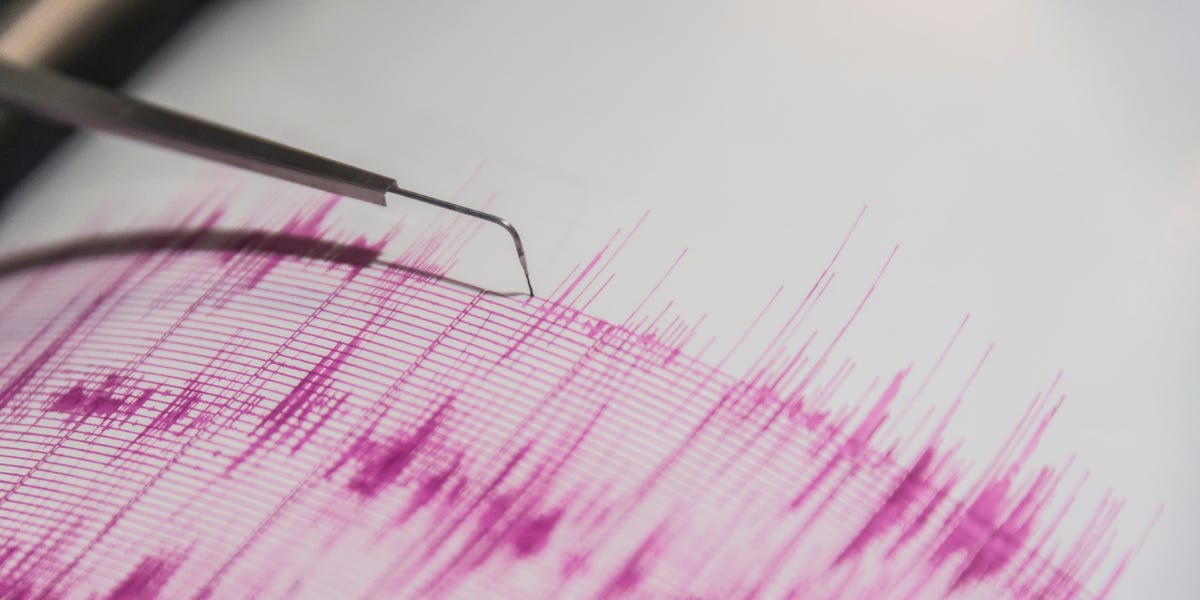
When people think about COVID-19, they usually think about masks, testing lines, video calls, and the era of “you’re on mute.” When people think about seismology, they think about earthquakes, volcanoes, and dramatic squiggles on a seismograph. Put them together, and it sounds like the setup to a very niche joke.
But here’s the surprising truth: the COVID-19 pandemic created one of the most useful accidental experiments in modern seismology. As lockdowns reduced traffic, commuting, construction, flights, and everyday movement, the ground itself got quieter in many places. Not because tectonic plates took a vacation (they did not), but because human-made vibrations dropped. That gave scientists a rare chance to hear subtle signals that are normally buried under the constant buzz of modern life.
This article explains what “COVID-19 coronavirus and seismology” actually means, what researchers discovered during the pandemic, what changed (and what did not), and why this unusual moment still matters for earthquake science, volcano monitoring, and urban sensing.
What Does COVID-19 Have to Do With Seismology?
COVID-19 (coronavirus disease 2019) is caused by the SARS-CoV-2 virus and is primarily a contagious respiratory illness. Public health responses during the pandemic included social distancing, remote work, travel restrictions, and stay-at-home orders in many regions. Those changes massively reduced daily human mobility in waves across the world.
Seismology, meanwhile, is the science of ground motion. Seismometers do not only record earthquakes. They also record background vibrations, often called ambient seismic noise. Some of that background comes from natural sources (like ocean waves and wind), and some comes from us: traffic, trains, factories, construction, foot traffic, and other human activity.
So the link is simple but powerful: when pandemic restrictions changed how people moved, seismometers recorded those changes in the ground. In other words, the planet became a giant accidental activity trackerwithout counting anyone’s steps.
A Quick Seismology Primer (No Hard Hat Required)
Earthquakes vs. Seismic Noise
A common misconception is that pandemic lockdowns “reduced earthquakes.” They did not. Earthquakes are driven by geologic forces, not office closures. What changed was the noise floor in many places, especially in cities.
Think of it like trying to hear a whisper at a crowded restaurant. If the restaurant suddenly empties out, the whisper becomes easier to hear. The whisper did not get louder. The room just got quieter. During COVID-19 lockdowns, many seismologists got the scientific version of that moment.
What Is “Cultural Noise”?
In seismology, “cultural noise” is a standard term for human-generated vibrations recorded in seismic data. It often includes energy from vehicles, machinery, and other near-surface activity. These signals are especially important in urban seismology because cities are wonderfully aliveand scientifically noisy.
This matters because seismologists regularly work to separate natural signals (earthquakes, volcanic tremor, subsurface processes) from background noise. The pandemic quiet period gave researchers a rare before-and-after comparison at a global scale.
What Scientists Observed During COVID-19 Lockdowns
The “Global Quieting” of Seismic Noise
One of the most widely cited findings from 2020 was a global reduction in high-frequency seismic noise linked to human activity during pandemic restrictions. Researchers reported a months-long drop in seismic noise that reached up to about 50% in some locations, describing 2020 as the longest and most prominent global anthropogenic seismic noise reduction on record.
The pattern did not happen all at once everywhere. It moved in waves as different places implemented restrictions at different times. That timing itself was part of the scientific value: seismic records reflected how social behavior changed region by region.
Why the High-Frequency Range Matters
Researchers focused heavily on high-frequency bands commonly associated with human activity (often discussed in the ~4–14 Hz range in pandemic-related studies, with broader “cultural” ranges extending higher and lower depending on location and source). In many cities, that band became noticeably quieter when traffic and industrial activity slowed.
This is exactly the kind of frequency range where human activity can dominate local records. During lockdowns, scientists could compare data from before, during, and after restrictions to better characterize what portion of the signal came from people versus natural background sources.
Urban Areas Changed the Most (Usually)
The largest reductions were typically seen near dense population centers, roads, campuses, and transport corridors. That makes sense: fewer commuters, fewer vehicles, fewer construction crews, fewer vibrations. Some studies and reports also noted that quieter conditions were detectable even beyond city centers and at depth, which highlighted how far anthropogenic signals can propagate.
Importantly, not every place behaved the same way. Essential services continued. Hospitals remained active. Freight and logistics did not vanish. Local policy timing, compliance, industry mix, and geography all shaped the seismic signature of each location.
Why This Was a Big Deal for Seismology
1) Better Detection of Subtle Signals
When anthropogenic seismic noise drops, weaker natural signals become easier to detect. That can help with identifying small earthquakes, local tremors, and possibly subtle volcanic or hydrothermal signals that might otherwise be hidden during busy daytime hours.
Researchers described the lockdown quiet period as a chance to detect subsurface signals that would normally be concealed and to benchmark noise sources more clearly. In plain English: scientists could finally hear parts of Earth’s soundtrack that city life usually drowns out.
2) A New Way to Measure Human Activity (Without Personal Tracking)
A fascinating insight from pandemic-era work was that seismic noise often correlated with independent mobility data. That suggested seismology could serve as an absolute, real-time proxy for changes in population activityespecially in aggregate.
This does not mean seismometers can identify individuals. They cannot. But they can reveal broad shifts in activity levels, such as “traffic dropped sharply” or “campus activity resumed.” That makes seismic monitoring a useful complement to other urban sensing methods.
3) Urban Seismology Got a Major Public Demo
Before 2020, many people assumed seismology was mostly about distant faults and volcanoes. The pandemic showed how useful seismic data can be in cities. Researchers and educators used low-cost sensors to monitor campus noise, and other teams used advanced fiber-optic techniques to track infrastructure use, including large traffic reductions in some corridors while activity persisted near hospitals.
That was a powerful public-facing lesson: the same physics that helps scientists study earthquakes can also help us understand how modern life interacts with the ground beneath us.
What COVID-19 and Seismology Did Not Show
No, the Virus Did Not Cause Earthquakes
Let’s clear this up because the internet occasionally gets creative: COVID-19 did not “shake the Earth” in a tectonic sense. The virus did not alter plate boundaries, trigger fault systems globally, or stop geologic processes. What changed was the background vibration caused by human behavior.
No, Lockdowns Did Not End Seismic Hazards
Earthquake and volcanic hazards remained exactly the kind of hazards they always were: real, ongoing, and indifferent to our meeting schedules. If anything, the quieter conditions simply improved scientists’ ability to monitor some signals in certain places.
The pandemic quiet period was scientifically valuable because it reduced interferencenot because it changed the underlying geologic engine.
How the Pandemic Quiet Period Still Helps Science Today
Noise Benchmarking and Station Planning
Seismologists can use lockdown-era data as a benchmark to better understand local noise conditions. That helps with station placement, instrument design, and data processing strategiesespecially in or near urban environments.
Improving Earthquake and Volcano Monitoring in Cities
As cities grow, anthropogenic seismic noise becomes a bigger challenge. The COVID-19 period gave researchers a natural experiment for separating human and natural signals. Those lessons can improve monitoring in densely populated areas, where early detection and clear signals matter a lot.
Cross-Disciplinary Research Opportunities
The pandemic also encouraged collaboration across seismology, acoustics, urban planning, public health, and data science. Scientists were no longer just asking, “What is the ground doing?” They were also asking, “What does the ground record about society?”
That broader perspective is part of why “COVID-19 coronavirus and seismology” remains such an interesting topic. It sits at the intersection of public health response, human behavior, and Earth scienceand shows how one global event can illuminate another field in completely unexpected ways.
Extended Experience Section (About ): What the Pandemic Quiet Felt Like in Seismology
The most interesting “experience” connected to COVID-19 and seismology is that many researchers described the period less like a dramatic discovery and more like a strange change in the background of everyday work. The seismic traces were still there, the stations were still running, and Earth was still doing Earth thingsbut the human buzz was suddenly turned down. For scientists who spend years fighting urban noise in their data, this was the equivalent of someone politely lowering the volume in a room where everyone normally talks over each other.
In urban and near-urban settings, that change could be obvious. Daily patterns tied to commuting, school schedules, transit systems, and business hours became weaker or shifted. In some places, seismologists saw seismic quieting that matched the timing of local restrictions or reduced mobility. In others, the patterns were more mixed, reflecting the fact that “lockdown” was never one universal experience. Essential workers were still traveling. Hospitals were still operating. Delivery traffic was often very much alive. From a seismology point of view, the pandemic created a map of social behavior written in vibration.
Educators and students also found a powerful teaching moment in this period. Campus-based sensors and low-cost seismology setups became tools for showing how geophysics can capture ordinary life. Instead of only demonstrating distant earthquakes, instructors could point to local changes in seismic noise and connect them to class schedules, campus closures, and reopenings. That made seismology feel more immediate. It also helped students understand an important lesson: data are not just numbers; they are records of processes, and sometimes those processes are human routines.
Another experience often highlighted in reports and research summaries was the scientific value of comparison. Seismologists could place “before,” “during,” and “after” data side by side and see how much of the signal was likely anthropogenic. That improved confidence in interpreting the noise field and opened up new questions about frequency bands, local sources, and how far human-generated vibrations travel. In practical terms, the pandemic quiet period became a calibration momentan unusual reference point that researchers can revisit long after the lockdowns ended.
There was also a human side to the science. The same quietness that helped researchers hear subtler signals came from a global crisis that disrupted lives, caused illness, and reshaped communities. That dual reality matters. The data were scientifically exciting, but the circumstances were not celebratory. Many scientists have written and spoken about the pandemic period with that balance in mind: curiosity about the signal, humility about the cause.
In the end, the experience of COVID-19 in seismology was not just “the Earth got quieter.” It was a reminder that human society leaves measurable fingerprints in the physical environment, and that seismometerstools built to study natural hazardscan also reveal patterns of modern life. The traces from 2020 remain a rare archive: part geophysics, part social history, and part lesson in what becomes visible when the world briefly slows down.
Conclusion
The story of COVID-19 coronavirus and seismology is a powerful example of how science benefits from unexpected natural experiments. Pandemic restrictions did not change tectonic activity, but they did reduce human-generated seismic noise in many places. That gave seismologists a rare chance to isolate cultural noise, improve interpretation of ambient signals, and explore new ways to study urban activity and infrastructure use.
If there’s a lasting takeaway, it’s this: seismology is not only about earthquakes. It is also about listening carefully to the planetand sometimes, to ourselves. During the pandemic, the world’s seismic instruments captured a strange chapter of modern history in real time. That chapter continues to inform better monitoring, better urban science, and better questions for the future.