

“`
Some maker projects whisper. Some blink politely from a breadboard and say, “Look, I learned PWM.” And then there are projects that ignite a tiny orange-red glow inside a glass tube and somehow summon Darth Vader like a Sith spirit trapped in vintage laboratory equipment. Darth Vader, in a Nixie tube, sounds like a joke from a very specific corner of the internet where Star Wars fans, electronics nerds, and people who own at least three soldering irons all nod at once. Yet the idea is real, strange, beautiful, and surprisingly thoughtful.
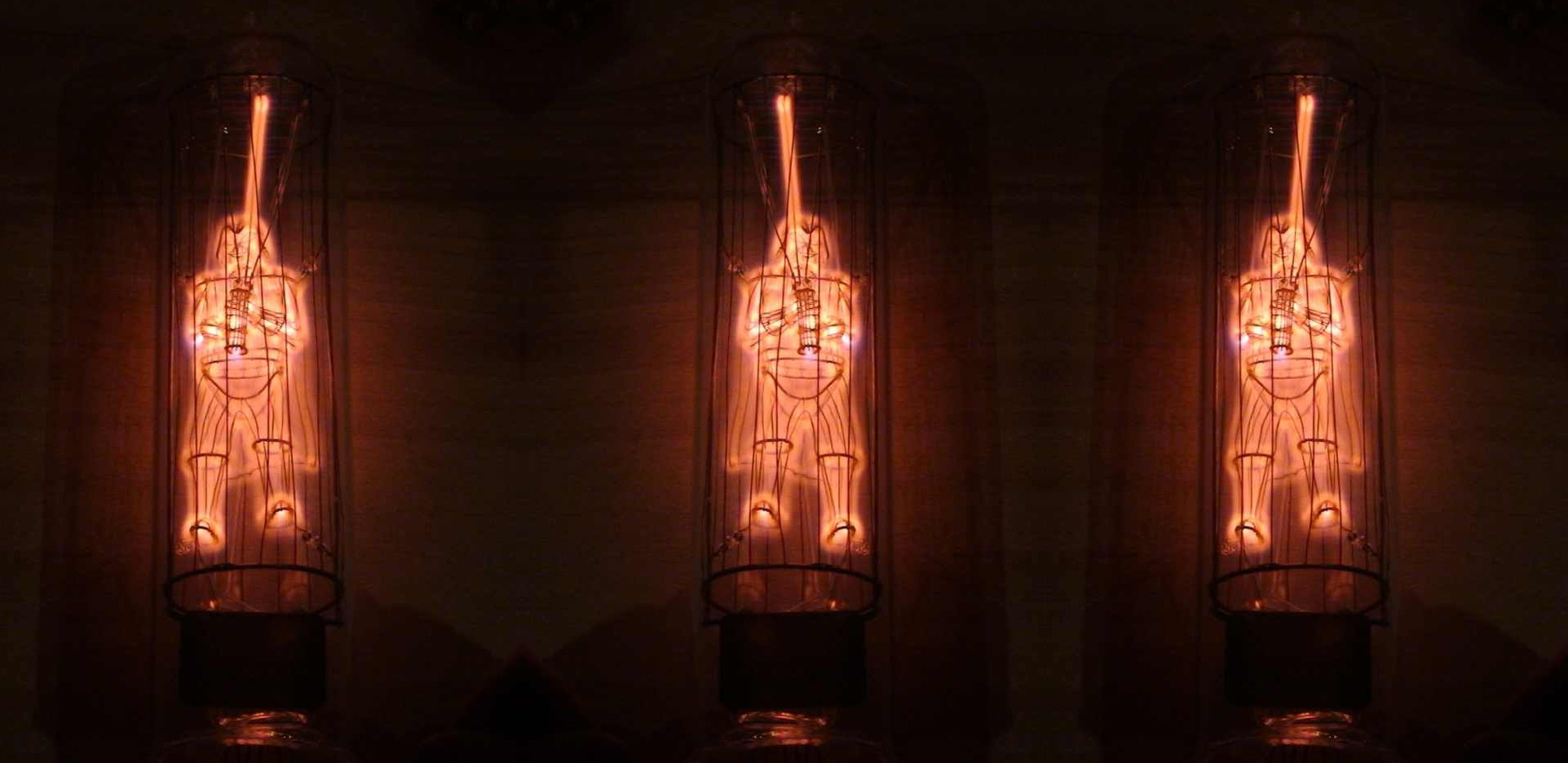
The project that inspired this phrase was created by maker Tobias Bartusch, who built a custom Nixie-style tube containing a tiny wireframe Darth Vader figure rather than the usual glowing numerals. Instead of simply displaying a number, the tube becomes a miniature stage: Vader stands inside the glass envelope, outlined by neon glow, complete with a lightsaber effect. It is not merely a clock part. It is a tiny Imperial art installation with high voltage and excellent drama.
To understand why this project is so charming, you need two ingredients: the retro magic of Nixie tubes and the cultural gravity of Darth Vader. One comes from mid-century electronics, lab counters, calculators, and glowing numeric readouts. The other comes from one of the most recognizable villains in film history. Put them together, and you get something that feels like it escaped from a 1970s Death Star control panel and landed on a maker’s workbench.
What Is a Nixie Tube?
A Nixie tube is a cold-cathode gas-discharge display. That phrase may sound like something a droid says before exploding, so let’s translate. A Nixie tube is a glass tube filled with low-pressure gas, usually neon or a neon-based mixture. Inside are shaped metal cathodes, often formed as digits from 0 to 9. When voltage is applied between the anode and one selected cathode, the gas around that cathode glows with a warm orange light.
Classic Nixie tubes were used in instruments, calculators, counters, measurement equipment, and early digital displays before LEDs and LCDs took over. They were introduced commercially in the 1950s and became visual shorthand for serious engineering: glowing numbers, glass envelopes, metal pins, and the unmistakable feeling that the machine might also be able to calculate a moon landing or open a secret bunker.
Unlike modern displays, Nixies do not hide their mechanism. The digits are physical objects inside the glass. When one lights up, you are not just seeing pixels. You are seeing electricity excite gas around a shaped piece of metal. It is display technology with bones, lungs, and a little theatrical smoke. No wonder modern makers still love them.
Why Darth Vader Belongs in a Glowing Tube
Darth Vader is already half man, half machine, and 100 percent visual design masterpiece. His black helmet, chest panel, breathing apparatus, cape, and red lightsaber make him instantly recognizable even in silhouette. That matters for a Nixie-style sculpture, because the medium is limited. You are not painting with thousands of colors. You are shaping wire and asking glowing gas to do the acting.
Vader’s form works because it is iconic. The helmet dome, triangular mouth grille, armored shoulders, long robe, and lightsaber create a profile that survives simplification. Like a good logo, Vader remains Vader even when reduced to a few essential lines. In a glowing tube, that simplicity becomes power. The orange halo around the figure makes him look less like a toy and more like a warning sign from a very expensive Imperial control room.
There is also a delicious irony here. Nixie tubes often display numbers, which are tidy, rational, and obedient. Darth Vader is none of those things. He is rage in armor, tragedy with a cape, and the galaxy’s most intimidating reminder that poor emotional regulation can have planetary consequences. Putting him inside a precision electronic component turns the tube into a tiny conflict between order and menace.
How the Vader Nixie-Style Tube Works
The handmade Vader tube is not a standard numeric Nixie pulled from a dusty surplus bin. It is closer to a custom neon-glow sculpture built with Nixie principles. Instead of stacked digit cathodes, the maker shaped wire into a three-dimensional Darth Vader figure. The material reported for the sculpture was Kanthal wire, a type of resistance wire commonly used where heat tolerance and stability matter.
Making the figure is not as simple as bending wire into a stick figure and hoping the Force handles the rest. The wire must be shaped, aligned, and joined carefully. The structure must fit inside the glass envelope. The surrounding electrode arrangement must allow the glow discharge to form where it is visually useful. In other words, the maker has to think not only like an artist, but also like plasma. That is not a sentence most career counselors prepare you for.
The glass envelope is part of the magic. A tube like this needs to be sealed, processed, and filled correctly so the gas discharge behaves. Traditional Nixie manufacturing involved specialized equipment, vacuum handling, gas mixtures, glassworking, and careful electrode design. That is why modern handmade Nixie-style work feels so impressive: it revives techniques that industrial display technology largely left behind.
The Moving Lightsaber Effect
The lightsaber is the detail that pushes the project from “neat” to “please take my credits.” A static Vader figure would already be impressive, but a moving lightsaber effect gives the piece personality. It creates the illusion that Vader is not just displayed inside the tube; he is active, present, and possibly annoyed that someone placed him in a glass jar.
From a design standpoint, the saber matters because it adds contrast and motion. Nixie tubes are beautiful, but they can become visually familiar. A glowing figure with a changing saber breaks that expectation. It says this is not another retro clock. This is custom electronic sculpture with a tiny Sith Lord doing performance art.
Why Makers Still Love Nixie Tubes
Modern displays are sharper, cheaper, safer, easier to drive, and available in more colors than a Nixie tube. By practical standards, Nixies lost the display war long ago. But practical standards are not the whole story. If they were, nobody would restore vintage cars, collect vinyl records, or spend a weekend adjusting espresso grind size while whispering, “This time, I understand pressure.”
Nixie tubes remain popular because they have presence. Their glow is warm rather than sterile. Their digits have depth because the cathodes are stacked inside the tube. Their glass catches reflections. Their slight imperfections make them feel alive. A Nixie display does not merely show information; it performs information.
That is why Nixie clocks became such a beloved maker project. They combine electronics, enclosure design, high-voltage power supplies, microcontrollers, and vintage aesthetics. A Nixie clock on a desk tells time, but it also tells visitors, “Yes, I know what a boost converter is, and yes, I may have strong opinions about walnut bases.”
The Engineering Challenge Behind the Glow
Nixie projects are not beginner-level LED blinkers. Many tubes require high voltage, often around 170 volts for striking or operating, depending on the tube and circuit. Current limiting is essential. Driver circuitry matters. Safe insulation, proper component ratings, and careful layout are not optional details. The glow is charming; the voltage deserves respect.
For a custom tube like the Vader sculpture, the challenge becomes even more artistic. A normal Nixie digit is designed to glow predictably. A small wire sculpture has more complex geometry. Some parts may glow more strongly than others. Nearby structures can influence the discharge. The builder must balance recognizability, electrical behavior, and physical durability.
This is where the project becomes more than a novelty. It demonstrates how old display principles can become a creative medium. The maker is not just using a component; he is making the component. That distinction is huge. Anyone can buy a cool part. Far fewer people can build a glass, gas, wire, and voltage sculpture that makes Darth Vader appear like a neon ghost.
Retro Technology Meets Pop Culture
The phrase Darth Vader, in a Nixie tube works because both subjects carry nostalgia, but from different worlds. Nixie tubes belong to the history of instrumentation, industrial design, and early digital electronics. Darth Vader belongs to cinema, myth, merchandising, cosplay, and the collective memory of everyone who has ever tried to do the breathing sound into a desk fan.
Together, they create retrofuturism. The object feels like something that could have existed in the original Star Wars era, even if it did not. The first Star Wars film arrived in 1977, when the aesthetics of analog controls, mechanical switches, glowing panels, and practical props were still deeply familiar. A Nixie Vader looks like it belongs in that universe because Star Wars itself was built from a mix of old machinery, worn textures, and futuristic imagination.
That is one reason fan-made electronics can be so satisfying. They bridge the imaginary and the physical. A movie prop may suggest a world, but a working electronic object lets you put a piece of that world on your desk. It hums, glows, warms the room visually, and quietly threatens the Rebel Alliance between coffee breaks.
Is It Really a Nixie Tube?
Strictly speaking, some purists may argue that a Vader sculpture inside a glow-discharge tube is not a traditional Nixie tube because it does not display numerals or switch among multiple numeric cathodes. That is a fair technical point. Traditional Nixie tubes are numeric or symbolic display devices, while this project is more like a custom neon art tube inspired by Nixie construction.
But language in maker culture is often flexible. People say “Nixie” because the object shares the look, the glass-envelope drama, the glowing cathode effect, and the retro electronics lineage. Calling it a Nixie-style Vader tube is probably the most accurate compromise. Calling it “the coolest Sith Lord night-light your insurance agent might want to discuss” is also emotionally accurate, though less useful for SEO.
Design Lessons from Darth Vader in a Nixie Tube
1. A Strong Silhouette Beats Excess Detail
Vader works inside the tube because his shape is readable. The best small-scale electronic art does not try to reproduce every detail. It captures the form that the eye recognizes first. Helmet, cape, saber: that is enough to trigger the whole character in the viewer’s mind.
2. Materials Should Tell the Story
Glass, wire, and glowing gas fit the Star Wars universe better than a flat printed image would. The materials feel mechanical and cinematic. They do not just represent Vader; they make him feel engineered.
3. Motion Makes Small Objects Feel Alive
The moving lightsaber effect gives the sculpture energy. Even a tiny animation can transform a display from decorative to memorable. In maker projects, one well-chosen motion effect often beats ten unnecessary features.
4. Nostalgia Works Best When It Does Something New
Nixie clocks are beloved, but familiar. A custom Vader tube takes the nostalgic glow and gives it a new subject. That is the secret: do not merely repeat old technology. Remix it.
Where This Project Fits in the Maker World
Maker culture thrives on projects that sit between usefulness and wonder. A standard display tells you data. A custom glowing Vader tells you that someone cared enough to combine glassworking, electronics, sculpture, and fandom into one object. That kind of project may not solve a household problem, unless your household problem is “not enough Sith ambience,” but it expands what people imagine is possible.
It also highlights a broader revival of interest in handmade display technology. Engineers and artists have explored custom Nixie tubes, letter-based tubes, large-format tubes, and modern interpretations using LEDs or OLEDs. Some projects aim for historical accuracy. Others chase the look with safer or cheaper components. The Vader tube belongs to the more romantic category: difficult, impractical, and absolutely worth staring at.
Why It Still Captures Attention
The internet sees thousands of electronics projects every year. Many are clever. Many are useful. Many involve clocks, because apparently humanity will not rest until every technology ever invented has been forced to tell time. But Darth Vader in a Nixie tube stands out because it has a clear emotional hook. You understand it instantly, and then you want to know how it was made.
That two-step reaction is powerful. First comes delight: “That is Vader in a glowing tube.” Then comes curiosity: “Wait, how do you even build that?” The project succeeds as both pop-culture art and technical demonstration. It is a conversation piece that rewards deeper inspection.
It also proves that old technologies do not have to stay frozen in their original use cases. A component once associated with numeric readouts can become sculpture. A display method designed for instruments can become fan art. A villain from a space opera can become a glowing cathode figure. This is how creative engineering keeps the past alive without turning it into a museum label.
Experience Section: Living with the Idea of Darth Vader in a Nixie Tube
Imagine seeing this object on a workbench for the first time. At a distance, it might look like a strange glass tube mounted on a base, the sort of thing you would expect beside an oscilloscope, a coffee mug, and a pile of components labeled “definitely still useful.” Then the power comes on. The tube glows. The wire figure appears. Suddenly the bench feels less like a workspace and more like a tiny Imperial shrine.
The first experience is visual. The glow has that warm Nixie quality that photographs never fully capture. It is not harsh like many modern LEDs. It blooms softly around the metal shape, giving the figure a halo that feels almost supernatural. Vader, already a character associated with machinery and menace, becomes even stranger when rendered in glowing gas. He looks ancient and futuristic at the same time, which is basically the Star Wars design language in one sentence.
The second experience is scale. Darth Vader is normally huge in the imagination: towering, armored, breathing like a haunted ventilator. Inside the tube, he becomes miniature, almost delicate. That contrast is funny and fascinating. It is like trapping a thunderstorm in a perfume bottle. The villain who once strode through starships now fits inside a glass envelope, but somehow he has not lost his authority. If anything, the tiny scale makes viewers lean closer, which is exactly how the dark side gets you.
The third experience is curiosity. Anyone who has built electronics knows that a finished object hides dozens of decisions. How was the wire shaped? How was it welded? How was the glass sealed? How was the gas handled? How was the lightsaber effect made convincing? A casual viewer may simply enjoy the glow, but a maker sees the invisible hours: failed attempts, careful adjustments, probably a few moments of staring into space while wondering why physics has chosen violence today.
There is also a collector’s experience. A Vader Nixie-style tube is not just another Star Wars item. It is not a mass-produced figure or a poster. It carries the charm of an artifact. You can imagine it displayed beside vintage test equipment, prop replicas, or a custom Nixie clock. It would not need to shout for attention. It would glow quietly, which is arguably more intimidating. Vader never needed confetti.
For writers, designers, and makers, the project is a reminder that the best ideas often come from unlikely combinations. Star Wars plus Nixie tubes. Sculpture plus electronics. Nostalgia plus high voltage. Humor plus craftsmanship. The result feels fresh because it is specific. It does not try to please everyone. It aims directly at the small but passionate group of people who hear “Darth Vader in a Nixie tube” and immediately think, “Yes. Obviously. Why did civilization wait this long?”
The final experience is inspiration. After seeing a project like this, ordinary objects start looking more flexible. A display does not have to be a rectangle. A tube does not have to show a number. Fan art does not have to be printed, molded, or painted. It can be electrical. It can be sealed in glass. It can glow because gas molecules are being excited by voltage. That is the kind of realization that sends makers back to their benches with dangerous levels of enthusiasm and a shopping cart full of parts.
Conclusion
Darth Vader, in a Nixie tube, is a small project with a large presence. It combines the warm glow of vintage display technology with one of cinema’s most recognizable silhouettes. It is technically demanding, visually clever, and just absurd enough to be unforgettable. More importantly, it shows what happens when makers treat old technology not as obsolete junk, but as a living artistic material.
Nixie tubes may no longer be practical everyday display components, but practicality is not the only reason people build things. Sometimes the reason is wonder. Sometimes it is nostalgia. Sometimes it is because Darth Vader looks fantastic when summoned in orange glow inside a glass tube. And honestly, that is more than enough.