

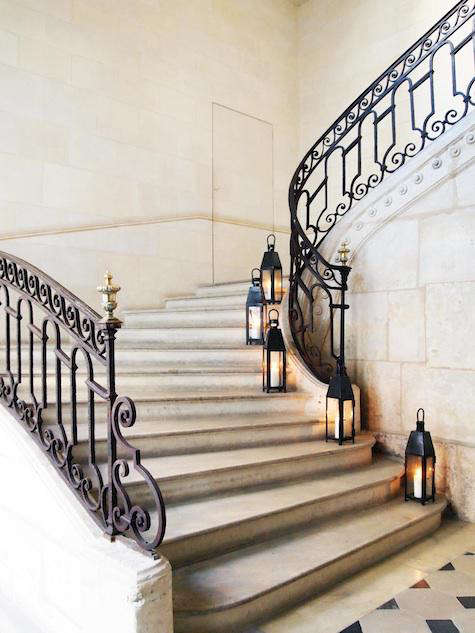
Some interiors whisper. Others clear their throat politely, adjust a linen cuff, and announce that they have a past. The Hotel d’Hallwyl in Paris by Casamidy belongs to the second group. This remarkable designer visit is not about a predictable Paris apartment dressed in beige and ambition. It is about an atmospheric Marais residence where exposed beams, antique hardware, hand-finished furniture, soft gray walls, sisal rugs, lantern light, and a dash of Mexican craftsmanship gather around the table like very stylish dinner guests.
Before we go further, one clarification: Hotel d’Hallwyl is not a hotel in the modern travel-booking sense. It is an hôtel particulier, the French term for a grand private townhouse. Located in the historic Marais district, the building carries architectural weight, cultural memory, and the kind of patina that cannot be ordered overnight, even with express shipping and a dramatic mood board.
Casamidy, the design studio founded by Anne-Marie Midy and Jorge Almada, approached the space with a rare kind of restraint. Instead of polishing away its age, they leaned into it. Instead of forcing a theme, they built a conversation between Parisian history and handmade modern living. The result is a layered, livable, and deeply personal interior that feels elegant without becoming stiff, global without becoming showy, and relaxed without looking unfinished.
What Makes Hotel d’Hallwyl So Special?
The apartment featured in this designer visit sits in the former servants’ quarters of the historic Hotel d’Hallwyl, one of the notable private mansions of Le Marais. The building is associated with Claude-Nicolas Ledoux, an important 18th-century French architect known for his bold neoclassical work. That pedigree matters because it gives the apartment a dramatic backdrop: old stone, structural character, layered history, and the sense that the walls have heard more interesting conversations than most of us have.
Yet Casamidy did not treat the apartment like a museum. That is the magic. Many historic interiors fall into one of two traps: they either become overly precious, where every chair looks afraid to be sat on, or they are renovated so aggressively that the original soul vanishes under a snowfall of drywall and recessed lighting. Casamidy chose a third path. They preserved the feeling of age while making the space useful, tactile, and warm.
A Paris Apartment With a Global Pulse
The interior is rooted in Paris, but it is not trapped by Paris. Casamidy is known for blending European forms, Mexican craftsmanship, and contemporary silhouettes. Their furniture is handmade in San Miguel de Allende, Mexico, and the studio’s work often brings together wrought iron, leather, canvas, textiles, and classical shapes refreshed for modern living.
Inside Hotel d’Hallwyl, that design language feels especially powerful. The apartment does not shout, “Look, I am eclectic!” Instead, it quietly proves the point. A rough-hewn dining table can stand near an ornate chair. A vintage ladder can become part of a lighting moment. An 18th-century-style headboard can live comfortably beside industrial reading lights. The mix works because it is not random. It is curated with confidence, proportion, and humor.
Casamidy’s Design Philosophy: History, Handcraft, and a Little Mischief
Casamidy was established with the idea of combining contemporary design with traditional artisan methods. That sentence sounds simple, but it explains why the Hotel d’Hallwyl apartment feels so alive. Handmade pieces bring irregularity, texture, and personality. They make a room feel inhabited rather than installed.
Anne-Marie Midy and Jorge Almada have long been admired for interiors that celebrate memory, context, color, and craftsmanship. Their work often includes objects that feel collected rather than purchased in one panicked afternoon. This matters because truly memorable rooms rarely come from matching everything. Matching is easy. Layering is harder. Layering asks for judgment, patience, and the bravery to place a humble wooden bench near a polished antique without apologizing to either one.
The Beauty of Not Over-Renovating
One of the most important design lessons from the Hotel d’Hallwyl project is the value of stopping before a space becomes too perfect. The apartment had exposed framework and a terrace, two features that immediately gave it charm. Rather than erase those qualities, Casamidy used them as anchors. The walls were softened with a warm gray tone, while large sisal rugs helped calm the floors and add natural texture.
This is a smart move for anyone designing an older home. If the architecture already has character, the designer’s job is not to compete with it. The job is to give it breathing room. A restrained palette can make beams, hardware, old doors, and irregular surfaces feel intentional. In other words, when the bones are good, do not dress the house like it is going to a costume party.
The Color Palette: Paris in Soft Grays, Stone, and One Wink of Green
The Hotel d’Hallwyl interior uses shades of gray, stone, and muted neutrals to create a calm foundation. This palette is practical and poetic at the same time. Gray can be cold when handled badly, but here it acts like a gallery wall for texture. It allows wood, metal, leather, fabric, and antique details to stand out without creating visual noise.
Then comes the surprise: a flash of lime green. In one dining area moment, that small burst of color brings spring into the room. It is not enough to overwhelm the design, just enough to wake it up. This is a classic Casamidy move. The room stays grounded, but it does not fall asleep.
Why the Palette Works
The success of the palette comes from contrast. Soft gray walls balance the rough texture of wood. Sisal rugs introduce a natural, earthy surface. Metal furniture and lanterns add structure. Antique elements bring age. Small color accents keep the room from becoming too serious. The result feels casual, but the casualness is highly edited.
For homeowners, this is a useful formula: choose a calm base, add texture before adding color, then use color like seasoning. Nobody wants a soup made entirely of paprika. The same rule applies to interiors.
Furniture and Lighting: The Soul of the Space
Furniture does much of the storytelling in this apartment. Casamidy’s Altamura sectional, made with a metal frame, waxed canvas, and saddle leather details, gives the living room a grounded, utilitarian elegance. It is refined, but not delicate. It looks like it can handle real life, which is always refreshing in a design world where some sofas appear emotionally unprepared for snacks.
The dining area mixes rustic and refined elements. A rough wooden table, benches, a giant yardstick, and a silver-toned ornate chair create an environment that feels spontaneous but balanced. The pieces do not match, yet they understand one another. That is the difference between eclectic design and clutter. Eclectic design has rhythm. Clutter just has volume.
Lanterns That Change the Mood
Casamidy’s lanterns are central to the atmosphere. The Simi lanterns on the stairway and the Hospicio lantern on the balcony bring a handcrafted glow to the apartment. Lighting is especially important in historic interiors because it determines whether old surfaces feel romantic or gloomy. Here, the lanterns add warmth, shadow, and intimacy.
The use of lanterns also reinforces the studio’s cross-cultural language. They feel architectural but handmade, traditional but fresh. They give the apartment a subtle evening quality, as if the whole space is best understood after sunset with a glass of something civilized nearby.
Old Meets Modern: The Bedroom and Work Areas
One of the most memorable design choices is the pairing of an 18th-century Venetian-style headboard with modern industrial reading lights. This combination works because the contrast is clear and confident. The headboard brings romance and history. The lights bring utility and edge. Together, they prevent the bedroom from becoming either too theatrical or too plain.
The child’s desk, paired with a battered vintage Tolix chair, adds another layer of charm. It suggests that this is a real home, not merely a styled photo set. A good interior can survive evidence of daily life. In fact, it should welcome it. The slight wear of vintage furniture often makes a room more comfortable because it removes the fear of being the first person to leave a mark.
Why This Paris Designer Visit Still Feels Fresh
Although the project has been admired for years, the Hotel d’Hallwyl apartment still feels relevant because it avoids trend dependency. It is not built around one fashionable color, one viral furniture shape, or one disposable aesthetic. Instead, it depends on principles that age well: proportion, texture, craftsmanship, restraint, contrast, and emotional connection.
This is why Casamidy’s approach remains useful for today’s interiors. In an era of fast furniture and algorithm-approved rooms, Hotel d’Hallwyl feels human. It reminds us that good design is not only about what is new. It is about what can last, what can be repaired, what carries memory, and what makes a space feel unmistakably yours.
The Power of Imperfection
The apartment’s charm comes partly from imperfection. Exposed beams, antique hardware, worn surfaces, and vintage objects create a sense of time. These details cannot be faked convincingly. They must be respected. Casamidy’s design succeeds because it does not sand down every edge or polish every story out of the room.
That lesson applies far beyond Paris. Whether you live in a century-old townhouse, a suburban ranch, or a new apartment with the personality of a printer manual, you can still design with depth. Bring in natural materials. Choose furniture with visible construction. Mix old and new. Let one or two objects be slightly strange. Strange is often where the charm lives.
How to Bring the Hotel d’Hallwyl Look Into Your Own Home
You do not need an 18th-century Paris mansion to borrow ideas from this project. Helpful, yes. Required, no. The Casamidy look can be translated into everyday interiors through a few smart choices.
Start With a Quiet Wall Color
Choose warm gray, stone, mushroom, or taupe tones instead of stark white. These colors create a softer background for wood, leather, iron, and textiles. They also make a room feel more settled and less like it is waiting for a real estate photographer.
Use Texture Before Pattern
Sisal, linen, canvas, aged leather, rough wood, and hand-forged metal can make a neutral room feel rich. Texture is the secret engine of the Hotel d’Hallwyl look. Without texture, neutral rooms can become flat. With texture, they become quietly luxurious.
Mix Furniture Eras
Pair a modern sofa with an antique side chair. Use a rustic table with sculptural lighting. Place a vintage desk chair in a child’s room or home office. The goal is not to create a perfectly historical interior. The goal is to create a room that feels collected over time.
Add Handmade Lighting
Lanterns, sconces, and lamps with artisanal details can transform a room faster than almost anything else. Lighting gives texture a voice. It also makes guests look better, which is a public service and should not be underestimated.
Leave Room for One Odd Detail
The giant yardstick in the dining area is a perfect example of playful design. It is unexpected, graphic, and memorable. Every room benefits from one object that refuses to behave. That object keeps the interior from becoming too polished.
The Experience: What This Designer Visit Teaches About Living With Style
The most valuable experience connected to Hotel d’Hallwyl is not simply looking at a beautiful Paris apartment. It is understanding how a room can hold several lives at once. This apartment carries the life of the building, the life of the designers, the life of handmade objects, and the imagined life of the people who move through it every day. That is why it feels richer than a showroom.
Walking mentally through the space, you notice how the design slows you down. The stairway lanterns invite you to look upward. The antique hardware makes you aware of touch. The sisal underfoot changes the acoustics of the room. The gray walls calm the eye. The terrace opens the apartment to Parisian air. The furniture does not demand admiration from a distance; it asks to be used.
This is the kind of design experience many people want but struggle to name. It is not luxury in the loud sense. There are no screaming logos, no glossy surfaces begging for fingerprints, no furniture that looks like it came with a security guard. Instead, the luxury is atmospheric. It comes from proportion, history, natural materials, and the feeling that each piece was chosen because it belonged.
For anyone decorating a home, that experience is liberating. You do not have to buy everything at once. In fact, you probably should not. Casamidy’s work suggests that rooms become better when they are allowed to develop. A vintage chair found on a weekend trip, a handmade lantern, a linen throw, a family object, a rough wooden table, a painted wall in the right shade of graythese things accumulate meaning. Over time, they create a home with a point of view.
The Hotel d’Hallwyl project also teaches the importance of contrast. A room becomes more interesting when rough meets refined, old meets new, local meets global, and practical meets poetic. The balcony lantern is useful, but it is also romantic. The sectional is comfortable, but its materials give it structure. The antique headboard is decorative, but the industrial lights keep it from becoming too sweet. Every contrast adds energy.
Most importantly, this designer visit reminds us that style does not have to be fragile. A beautiful room can include children, books, worn chairs, imperfect surfaces, and practical lighting. It can welcome daily life without losing its magic. That may be the real genius of Casamidy’s Hotel d’Hallwyl: it proves that historical interiors do not need to feel frozen, and modern living does not need to feel soulless.
If you want to bring that experience home, begin with observation. Notice what your space already has. Maybe it is a good window, an awkward beam, old floors, or even a strange corner that refuses to cooperate. Do not immediately hide those features. Work with them. Add texture. Lower the visual volume. Bring in one handmade object. Choose lighting that flatters the room at night. Let the design become a conversation instead of a command.
That is the lasting beauty of Hotel d’Hallwyl in Paris by Casamidy. It is not a formula. It is a way of seeing. It asks us to respect history, enjoy imperfection, trust craftsmanship, and give rooms enough personality to be remembered. In a world full of interiors that look ready to be scrolled past, this one makes you pause. And in design, as in life, making someone pause is half the victory.
Conclusion
Hotel d’Hallwyl in Paris by Casamidy is a masterclass in layered interior design. Set within a historic Marais hôtel particulier, the apartment balances Parisian architecture with Mexican handcraft, vintage charm, modern comfort, and a calm palette that lets every texture speak. Casamidy’s approach is memorable because it does not chase perfection. It honors age, celebrates artisan work, and proves that a home can be elegant without becoming untouchable.
For designers, homeowners, and anyone who has ever stared at a blank wall wondering whether it needs art, lime green, or emotional support, this project offers a clear lesson: start with character, add texture, mix eras, and let the room breathe. True style is not about making everything match. It is about making everything matter.
Note: This article is an original synthesis based on publicly available design, architecture, historical, and interiors references. Source links have not been inserted in accordance with the publishing request.