

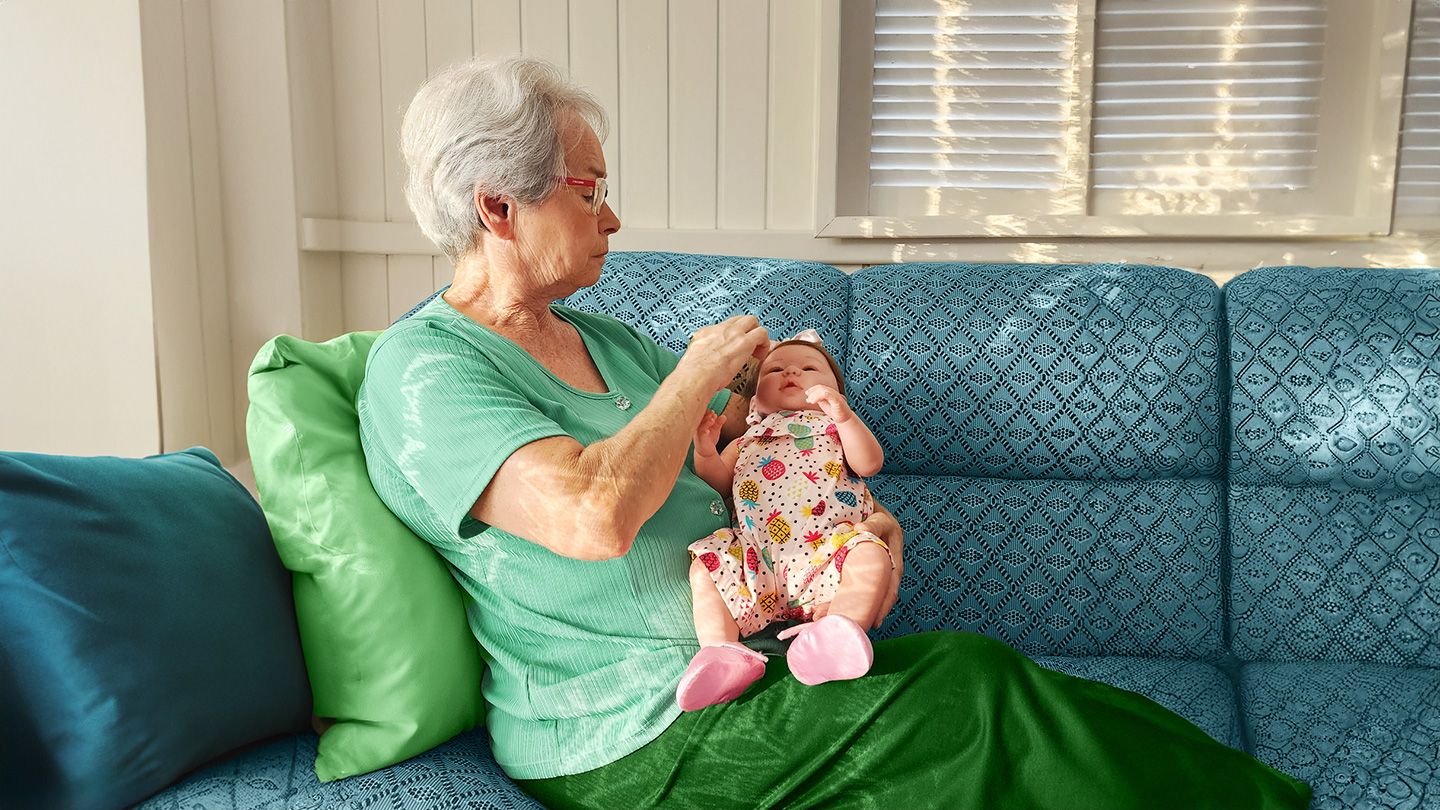
Caring for someone with dementia is a little like trying to build a bookshelf during a windstorm: you have a plan, the plan blows away, and suddenly you are negotiating with a teacup, a cardigan, and a very determined opinion about what year it is. That is exactly why caregivers are always looking for gentle, practical tools that can bring calm without turning the day into a wrestling match.
One of those tools is doll therapy. In the simplest terms, it involves offering a realistic doll to a person living with dementia as a source of comfort, connection, and meaningful engagement. For some people, the response is immediate: softer facial expressions, calmer hands, more conversation, and a sense of purpose that had seemed out of reach five minutes earlier. For others, it is a total miss. And that is fine. Dementia care is not one-size-fits-all; it is more like “try, observe, adjust, repeat.”
This caregiver’s guide explains what doll therapy is, why it may help, when it works best, where it can backfire, and how to introduce it without stepping on dignity, trust, or emotional landmines. Because good dementia care is not about tricking someone into being easier to manage. It is about helping a person feel safer, calmer, and more like themselves.
What Is Doll Therapy in Dementia Care?
Doll therapy for dementia is a non-drug, person-centered approach that uses a lifelike doll as a comforting object or activity. The doll may be held, rocked, talked to, tucked in, or simply kept nearby. The goal is not to “play pretend” in a childish way. The real purpose is to support emotional needs that dementia can make harder to express: the need to nurture, the need to soothe anxiety, the need for companionship, and the need to do something that feels meaningful.
That distinction matters. In dementia care, behavior is often communication wearing a disguise. Agitation may mean fear. Repetition may mean uncertainty. Clinging may mean loneliness. A doll can sometimes meet those needs when words, logic, or another cup of tea have already clocked out for the day.
Many caregivers first hear about doll therapy in the middle or later stages of dementia, when verbal communication becomes harder and emotional distress becomes more visible. But the “benefit window” depends less on a calendar stage and more on the individual person. Some people enjoy the doll because it reminds them of parenting, caregiving, or family life. Others respond to the warmth of holding something familiar and soft. And some look at the doll as if it just insulted their favorite pie recipe. That response is also useful information.
Why Doll Therapy May Help People Living With Dementia
1. It can reduce agitation and restlessness
One of the biggest reasons families try doll therapy benefits for dementia care is agitation. A distressed person may pace, call out, fidget, resist care, or become upset late in the day. In some cases, holding a doll gives the hands something to do and the mind something gentle to focus on. The shift can be surprisingly fast. Instead of spiraling, the person begins rocking, stroking the doll’s blanket, or talking in a soothing tone.
That does not mean the doll is magical. It means the doll may interrupt distress with comfort, rhythm, and familiarity. Think of it less as a cure and more as an emotional anchor.
2. It may create a sense of purpose
Dementia often strips away roles people once wore proudly: parent, spouse, host, helper, worker, organizer, protector. Doll therapy can sometimes reopen that door. When a person says, “She needs her blanket,” or “I have to make sure the baby is okay,” you are seeing purpose show up again. That sense of purpose can improve mood and reduce aimlessness.
For caregivers, this matters because boredom and loss of role can make behavioral symptoms worse. A meaningful task, even a simple one, often works better than repeated correction. Nobody enjoys being told to sit still. Many people, however, enjoy being asked to help.
3. It may improve communication
Some people who speak very little begin speaking to the doll. Others speak to the caregiver about the doll. Suddenly there is eye contact, storytelling, or a remembered phrase from long ago. Even a short exchange can feel like a tiny miracle with comfortable shoes on.
This is one reason doll therapy is often described as a bridge. It does not force conversation. It gives conversation somewhere to land.
4. It can support reminiscence and emotional memory
Long-term emotional memory often stays more accessible than short-term factual memory in dementia. A doll may stir memories of caring for a baby, watching over younger siblings, babysitting neighborhood children, or simply feeling needed. Those old emotional pathways can still be powerful, even when recent memory is patchy.
That is why doll therapy sometimes pairs well with other dementia-friendly activities such as familiar music, photo albums, folding laundry, or looking through family pictures. The doll is not always the star of the show. Sometimes it is the opening act that gets the rest of the memory concert started.
5. It may decrease loneliness
People living with dementia can feel isolated even in a room full of relatives. Social language gets harder. Conversations move too fast. The world becomes confusing. A comforting object may provide emotional company when the environment feels noisy or overwhelming. Families often notice softer expressions, more settled body language, and a calmer mood when the doll is nearby.
What the Research Really Says
Here is the honest version: the research on doll therapy is promising, not perfect. Studies and reviews suggest it may help reduce behavioral and psychological symptoms of dementia, including agitation, and may improve emotional state and communication. At the same time, researchers also note that the overall evidence base is still limited, and not every study finds dramatic results.
That balanced view is important. Caregivers deserve better than hype. Doll therapy should not be sold as a miracle fix, a replacement for medical care, or proof that every distressed behavior can be solved by handing someone a doll and hoping for the best. What it can be is one useful tool inside a larger person-centered dementia care plan that includes routines, reassurance, environmental calm, meaningful activity, medical review, and respect for caregiver well-being.
In other words, doll therapy belongs in the same category as many effective nonpharmacologic dementia interventions: low-risk, individualized, worth trying carefully, and best judged by the real-life response of the person in front of you.
How to Introduce Doll Therapy Respectfully
Start with observation, not salesmanship
Before buying anything, ask yourself a few questions. Did this person enjoy babies, caregiving, or nurturing roles in the past? Do they already hold pillows, blankets, stuffed animals, or folded towels for comfort? Do they seem soothed by touch, rhythm, and familiar routines? Those clues matter.
Then introduce the doll casually. Place it where the person can notice it naturally. Offer it without pressure. You might say, “Would you like to hold her for a minute?” or “Can you keep an eye on the baby while I grab the tea?” Gentle and respectful beats pushy every single time.
Do not force it
If the person ignores the doll, looks offended, or becomes upset, back off. That is not failure. That is data. Not everyone will find a therapeutic doll comforting. Some people may feel insulted. Others may become sad, confused, or worried. Good dementia care listens to the reaction and pivots.
Protect dignity
One of the biggest ethical questions around doll therapy dementia care is whether it infantilizes older adults. The answer depends on how it is used. If the doll is imposed, mocked, or treated like a gimmick, yes, it can feel demeaning. If it is offered as a comforting, meaningful object that the person chooses to engage with, it can be supportive and dignified.
Always treat the person as an adult. Avoid baby talk. Avoid jokes at their expense. Never turn the doll into a performance for visitors. The point is comfort, not comedy material for the group text.
Be careful with honesty and redirection
If the person asks whether the doll is real, avoid arguing or blunt correction. You do not need to say, “Obviously that is a doll.” You also do not need to invent a full soap opera. A better response is gentle redirection: “She’s cute, isn’t she?” or “You look very comfortable holding her. Did babies used to fall asleep on your shoulder like that?”
This kind of response protects trust while keeping the interaction emotionally safe.
Choose the right doll
A realistic, soft, manageable doll usually works best. Avoid dolls that cry, make loud noises, or “need” diaper changes. Those extra features may sound clever in a catalog, but in real life they can create more stress than comfort. Also think about weight. Some people like a slightly weighted doll because it feels more lifelike. Others need something lighter for safety and ease.
When Doll Therapy May Not Be the Best Choice
Doll therapy is not ideal for everyone. It may not work well if the person:
- becomes distressed by the doll or sees it as upsetting rather than comforting,
- feels insulted by the idea,
- shows increased anxiety about “caring” for the doll,
- has grief triggers connected to childbirth, infant loss, or parenting trauma,
- is physically unsafe handling the doll or related accessories.
Caregivers should also watch for a less obvious problem: responsibility overload. Some people become worried that the “baby” is cold, missing, hungry, or in danger. If the doll creates a full-time emotional emergency, it is not helping. The goal is comfort, not a new management crisis.
How Doll Therapy Fits Into a Bigger Dementia Care Plan
Therapeutic dolls work best when they are part of a broader strategy for dementia caregiver support. That strategy often includes:
- a calm, predictable daily routine,
- reduced noise and clutter,
- familiar objects and photos,
- meaningful activities matched to ability,
- medical review for pain, infection, medication side effects, or sleep issues,
- communication techniques that avoid arguing and emphasize reassurance,
- breaks and backup for the caregiver.
This is especially important because behavior changes are not always emotional in origin. Sometimes a person is in pain, constipated, dehydrated, overstimulated, or frightened during bathing and dressing. A doll will not fix untreated discomfort. It may help in the moment, but it should never replace a proper medical and caregiving assessment.
And yes, we need to talk about caregiver health too. Families often spend so much time trying to calm a loved one that they become exhausted, anxious, and isolated themselves. If doll therapy gives you ten quieter minutes, use at least some of them to breathe, stretch, drink water, or sit down like a person who also belongs in the house.
Practical Tips for Family Caregivers and Care Facilities
At home
Use the doll during times of day when agitation usually rises, such as late afternoon, before bathing, or during long periods with little activity. Keep the doll in a familiar spot. Notice patterns. Did it help during pacing? Did it make mealtime smoother? Did it trigger worry? Your observations are gold.
In memory care or nursing homes
Staff should communicate with family members about the person’s history and preferences before using doll therapy. It should be included in a person-centered care plan, not passed around randomly because it worked for someone else in room 214. One resident may feel soothed. Another may feel insulted. A third may try to rescue every doll in the building. Context matters.
For everyone involved
Keep the doll clean. Avoid unsafe accessories. Make sure all caregivers know how the person responds to it. Consistency helps. Nothing says “confusing care environment” quite like one person lovingly offering the doll and another snatching it away because they think it looks odd.
Common Caregiver Experiences With Doll Therapy
Ask families and professional caregivers about doll therapy, and you will hear less like a product review and more like emotional weather reports. Many describe the first good response with genuine surprise. A daughter who had spent weeks hearing only anxious repetition suddenly hears her mother whisper, “She’s sleeping.” A husband sees his wife stop pacing long enough to sit, rock, and hum a tune he has not heard in years. A nursing assistant notices that the resident who usually resists evening care becomes calmer when allowed to hold the doll during the transition to bed.
These experiences matter because dementia often steals the ordinary feedback caregivers rely on. Conversation changes. Gratitude may disappear. Familiar routines no longer work. That can leave caregivers feeling as though they are failing every hour on the hour. When doll therapy helps, what families often describe first is not clinical improvement but emotional relief. They feel they have found a doorway back into connection.
That said, the experiences are not all sweet and simple. Some caregivers talk about discomfort the first time they tried it. They worried it would feel childish. They worried other relatives would judge them. They worried they were somehow deceiving the person they loved. Those worries are understandable. In many families, the breakthrough comes when they stop asking, “Does this look normal?” and start asking, “Does this bring comfort without causing harm?” Dementia care can be humbling that way. It has a habit of replacing pride with practicality.
There are also mixed experiences. A son may report that the doll helped beautifully for two weeks, then suddenly began causing concern because his mother wanted to know where the baby’s mother was. A care aide may find that one resident becomes more social and gentle with the doll, while another becomes possessive and upset if anyone touches it. A spouse may discover that the doll works only at certain times of day, not as an all-purpose peace treaty. These stories remind us that person-centered dementia care is not about forcing a method to succeed. It is about paying close attention to the human response.
Some of the most powerful caregiver stories are not dramatic at all. They are small. A calmer transfer from chair to bed. Less shouting during sundowning. A few minutes without frantic searching. A softer face. A hand that unclenches. A moment when the caregiver is no longer bracing for the next emotional storm. In the world of dementia care, small improvements are not small. They are survival.
Caregivers also often say doll therapy changes their behavior. When the person becomes calmer, the caregiver naturally speaks more softly, slows down, and feels less defensive. That change in tone can improve the whole environment. Sometimes the benefit is not just the doll itself, but the way it helps both people settle into a more reassuring rhythm. The room gets quieter. The interaction becomes more cooperative. The day stops feeling like a fight.
In the end, real-life experiences with doll therapy tend to land in one of three categories: “This helped a lot,” “This helped in specific situations,” or “This was not for us.” All three are valid outcomes. The best caregiver mindset is curiosity without pressure. Try it kindly. Observe honestly. Keep what helps. Release what does not. That approach is not flashy, but it is often the wisest guide in dementia care.
Final Thoughts
Doll therapy benefits for dementia care are real for some people: calmer behavior, improved communication, less loneliness, and a renewed sense of purpose. But the true benefit is bigger than any one doll. It is the reminder that emotional needs still matter deeply in dementia, even when memory is fading and language is changing.
The best use of doll therapy is thoughtful, respectful, and individualized. Offer it gently. Watch carefully. Protect dignity. Pair it with reassurance, routine, familiar surroundings, and caregiver support. When it works, it does not look silly. It looks like comfort. And in dementia care, comfort is never a small thing.
Note: This article is for educational purposes and should not replace medical advice. Sudden changes in behavior, agitation, confusion, pain, or sleep should be discussed with a qualified healthcare professional.