

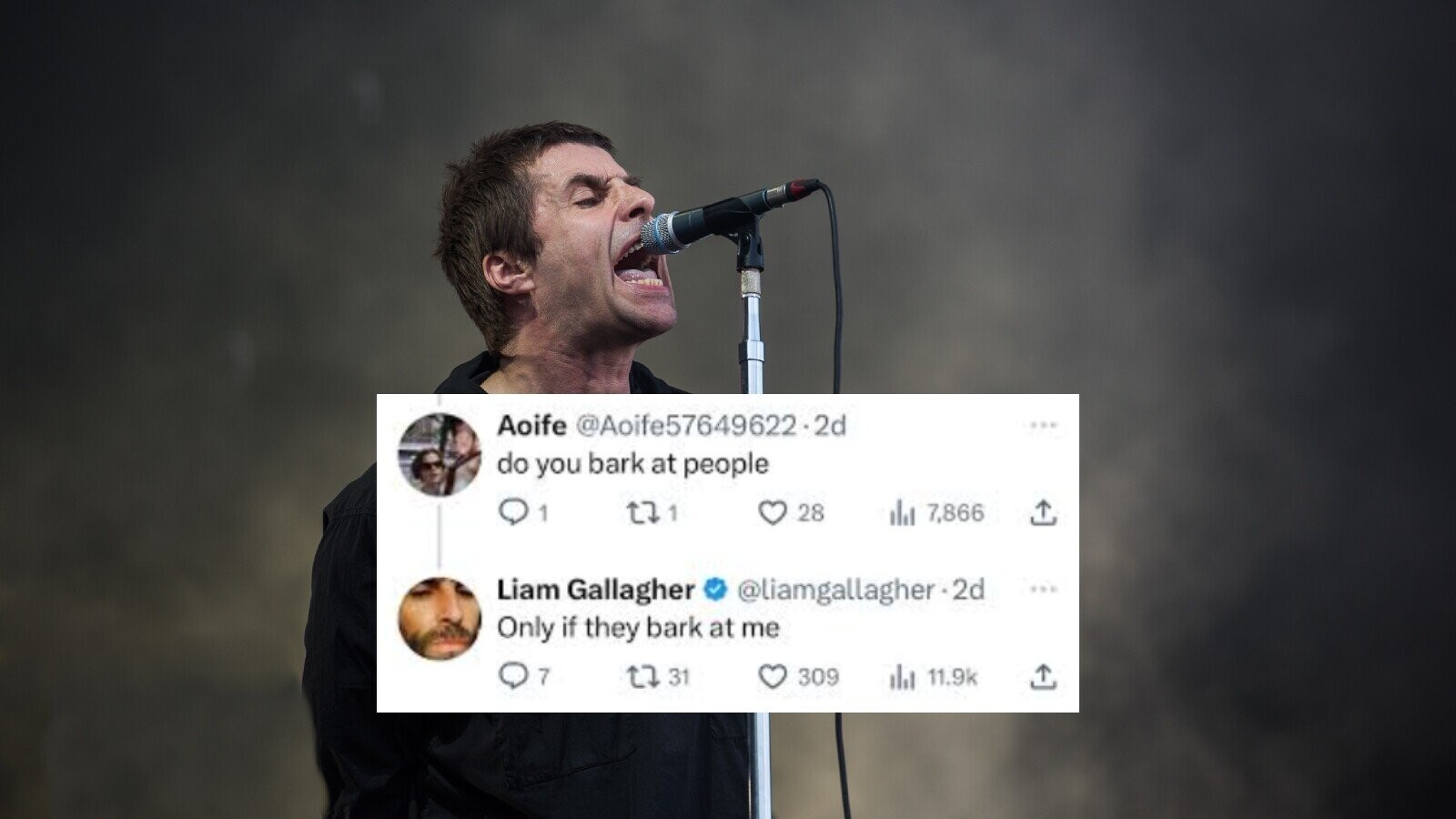
Note: This article is a fully rewritten, original synthesis based on real public information about Liam Gallagher, Oasis, British pop culture, entertainment reporting, interviews, reunion-tour coverage, and public social media commentary.
England has not officially passed a law declaring Liam Gallagher funnier than most stand-ups, although, honestly, would anyone be shocked if Parliament tried it during a slow news week? The former Oasis frontman has spent decades doing something many professional comedians spend entire careers chasing: producing unforgettable lines without looking like he tried. No setup. No spotlight. No tasteful brick-wall comedy-club background. Just a parka, a microphone, a stare sharp enough to cut glass, and the verbal timing of a man who treats sarcasm like a breakfast food.
The idea behind “England Declares That Liam Gallagher Is Funnier Than Most Stand-Ups” works because it sounds ridiculous and strangely believable at the same time. Gallagher is not a stand-up comedian. He is a rock singer, a Manchester icon, a walking weather system of swagger, and one-half of one of music’s most famous sibling rivalries. Yet his funniest moments often travel faster than carefully polished comedy routines. He answers fan questions like a pub philosopher who has lost patience with humanity but still enjoys the conversation. He heckles complaints, dodges sentimentality, and turns mild inconvenience into performance art.
In the age of clips, screenshots, reunion-tour memes, and quote-post culture, Liam Gallagher’s humor has become part of his brand. Fans do not just want the songs. They want the sideways remarks between songs. They want the sudden one-liners on X. They want the slightly chaotic energy that makes every interview feel like it could become either a confession, an insult, or a weather report from the kingdom of rock and roll.
Why Liam Gallagher’s Humor Works So Well
Liam Gallagher is funny because he rarely appears to be “doing comedy.” That is the secret sauce. Stand-up can be brilliant, but it can also feel engineered: setup, pause, punchline, applause, repeat. Gallagher’s funniest lines feel smuggled in from real life. They land because they are direct, impatient, and weirdly poetic. He has the confidence to say something blunt, the rhythm to make it memorable, and the face of a man who absolutely refuses to explain the joke afterward.
His humor comes from contrast. Onstage, he is the rock star with the hands-behind-the-back stance and the nasal blast of a voice that helped define Britpop. Online, he becomes something else: a mischievous uncle of the internet, firing off short replies that can make fans laugh, groan, or immediately screenshot the exchange for future generations. The comedy is not always gentle, and it is not always tidy, but it is unmistakably him.
The Comedy of Absolute Certainty
Many comedians build jokes around uncertainty. Liam Gallagher builds jokes around being unbelievably certain. Whether he is teasing critics, responding to fans, or making fun of an institution he previously dismissed, his comic style depends on total commitment. He says the absurd thing as if it has been carved into stone tablets and delivered from the mountaintop in sunglasses.
This is why his short social-media replies work so well. A tiny phrase from Gallagher can feel like a full sitcom episode. He does not need a paragraph. He just needs a target, a mood, and about four words. That economy makes him perfect for modern entertainment culture, where a single screenshot can do the work of a press campaign.
From Oasis Frontman to Accidental Comedian
Oasis formed in Manchester in the early 1990s and became one of the defining rock bands of the Britpop era. Liam Gallagher’s voice powered songs such as “Live Forever,” “Wonderwall,” “Supersonic,” and “Champagne Supernova,” while his brother Noel wrote much of the band’s best-known material. Together, they created the kind of cultural force that made fans argue in pubs, buy parkas, start bands, and believe that walking slowly into the wind counted as a personality.
But the music was only half the spectacle. The Gallagher brothers were famous for their tension, interviews, insults, and combustible chemistry. Their relationship turned press conferences into theater and interviews into appointment viewing. Even when things got messy, one fact remained obvious: Liam had timing. He understood silence, interruption, disdain, exaggeration, and the devastating power of sounding mildly bored by everything except the thing he loved.
That timing carried into his solo years. After Oasis split in 2009, Gallagher continued making music, first with Beady Eye and then as a solo artist. Yet his public personality remained just as important as his records. He was not merely promoting albums; he was extending the Liam Gallagher Cinematic Universe, one quote at a time.
The Reunion Tour Made the Jokes Bigger
When Oasis announced their reunion after years of speculation, the internet reacted as if someone had reopened a national monument. Fans scrambled for tickets. Comment sections became emotional support groups. Younger listeners discovered that Oasis nostalgia is not a hobby; it is a weather condition.
The Oasis Live ’25 tour gave Liam Gallagher a massive stage again, and naturally, the jokes followed. One of the most talked-about moments came when he poked fun at the eye-watering ticket-price controversy during the opening night in Cardiff. The joke worked because it acknowledged the elephant in the stadium without pretending the elephant had not charged a service fee. In classic Liam fashion, he did not deliver a careful corporate statement. He tossed out a line and let the crowd roar.
That is the strange magic of Gallagher’s humor: he can say what everyone is already thinking, but in a way that feels less like commentary and more like someone opening a window in a room full of publicists.
Why Fans Treat His Replies Like Comedy Specials
Modern celebrity culture rewards constant access, but constant access can make famous people less interesting. Not so with Liam Gallagher. His online presence works because it feels unfiltered without feeling random. He responds to fans, critics, rumors, and absurd questions with the same energy: part rock star, part neighborhood character, part man waiting for a bus that is personally annoying him.
For fans, this has become a show of its own. A Liam Gallagher reply is not merely a reply. It is an event. Screenshots circulate because people understand the performance. Even when he is promoting something serious, he usually finds a way to make it sound like it has wandered into a pub argument and come out wearing sunglasses.
His humor also thrives because it is recognizably British but globally understandable. Americans may not catch every bit of slang, but they understand confidence, absurdity, sibling drama, and a man refusing to be impressed. That crosses borders nicely.
Liam Gallagher Versus Stand-Up Comedy
So is Liam Gallagher actually funnier than most stand-ups? As a literal claim, that depends on the stand-ups. As a cultural joke, it is perfect. Gallagher does not have a tight hour. He does not tour comedy clubs. He does not need to workshop material in front of twenty people eating nachos in a basement. His comedy is situational, reactive, and powered by personality.
Professional stand-ups must make strangers laugh on command. Gallagher makes millions laugh by behaving exactly like himself in public. That is a different skill, but it is still a skill. Some comedians write jokes. Liam Gallagher often becomes the joke’s natural habitat.
His funniest moments usually come from three ingredients: bluntness, speed, and total refusal to overthink. Where a comedian might polish a line until it shines, Gallagher often throws one into the world like a brick through a gift-shop window. The roughness is part of the charm. It feels alive.
The Power of the Anti-Punchline
Another reason Gallagher lands laughs is his love of the anti-punchline. He often says something that sounds like it is building toward a joke, then ends with a phrase so flat, strange, or unnecessarily aggressive that the absence of polish becomes the punchline. This is very hard to fake. Many people try to be random; Gallagher seems naturally allergic to normal phrasing.
That style suits rock and roll. Rock stars are supposed to be larger than life, but Gallagher’s comedy makes him oddly human. He can headline stadiums and still sound like the funniest person complaining near the kettle.
The Oasis Sibling Dynamic: Comedy With a Guitar Solo
No discussion of Liam Gallagher’s humor is complete without Noel Gallagher. The brothers’ rivalry has been analyzed like international diplomacy, except with better coats and more guitars. Their arguments helped shape the Oasis myth, and their insults became a form of entertainment separate from the music.
Sibling humor has a special edge because it comes with history. Liam and Noel do not need to explain the backstory; the backstory is the atmosphere. Fans know there is love, resentment, competition, admiration, and a lifetime of shared chaos behind every public remark. That tension gives even small comments extra voltage.
The reunion softened the story without erasing it. Seeing Oasis back together gave fans the emotional payoff they had wanted for years, but the humor remained essential. A completely polite Oasis would feel suspicious, like a pub with no chairs. The jokes, the teasing, and the occasional verbal jab are part of the brand’s architecture.
Why America Gets the Joke Too
Although Liam Gallagher’s humor is deeply rooted in British culture, American audiences have embraced it because it feels refreshingly unsanded. In a celebrity environment where answers are often media-trained into beige pudding, Gallagher sounds like a person. A dramatic person, yes. A person who may insult a concept before breakfast, also yes. But a person.
American fans also recognize the archetype: the rock frontman who says the wrong thing with the right rhythm. From classic late-night interviews to viral clips, U.S. pop culture has always loved entertainers who cannot be fully controlled. Gallagher fits that lineage while remaining unmistakably Manchester. He is not trying to be universally palatable, which is exactly why he travels so well.
His humor is also linked to nostalgia. For longtime Oasis fans, every joke carries the echo of the 1990s, when bands were messy, magazines mattered, and rock stars gave interviews that could ruin a publicist’s week. For younger fans, he feels like a meme machine with a legendary catalog attached. That combination is rare.
The Fine Line Between Funny and Too Much
Of course, Gallagher’s humor is not always universally adored. His blunt style can be abrasive, and some comments over the years have drawn criticism. That matters. Being funny does not give any public figure unlimited permission to be careless. Part of understanding Liam Gallagher as a cultural figure means recognizing both the brilliance of his timing and the risks of a personality built on provocation.
Still, his longevity suggests that audiences respond to something deeper than shock value. The best Gallagher moments are not funny because they are cruel. They are funny because they are immediate, vivid, and weirdly musical. His phrasing has rhythm. His insults often sound like rejected song titles. His sincerity tends to arrive disguised as a complaint.
That balancechaos plus charismais why his comic reputation has endured. He is not everyone’s cup of tea. He is more like someone throwing the tea into the sea and asking why the cup had an attitude.
How Liam Gallagher Became a Meme Without Becoming a Cartoon
Many celebrities become memes by accident and then ruin the fun by trying to participate too enthusiastically. Gallagher avoids that trap because he does not seem interested in becoming cute. He remains prickly. He remains stubborn. He remains capable of turning a harmless question into a miniature thunderstorm. That consistency keeps the character believable.
Fans love the meme version of Liam Gallagher because it still connects to the real performer. The stance, the voice, the parka, the walk, the eyebrows, the brotherly drama, the stadium singalongsnone of it is separate from the jokes. It all belongs to the same mythology.
That is why the phrase “Liam Gallagher is funnier than most stand-ups” feels less like a ranking and more like a cultural observation. He is funny in a way stand-ups are not trying to be. He is funny because he is a rock star who talks like a heckler, a poet, and a man who has just discovered the kettle is broken.
What Brands, Writers, and Performers Can Learn From Liam Gallagher
There is a useful lesson hiding under the parka: voice matters. Gallagher’s public persona works because it is unmistakable. You can identify a Liam Gallagher line without seeing his name attached. That is powerful in music, comedy, journalism, and digital marketing.
Too many public figures sound interchangeable. They speak in approved sentences, thank “the fans” in identical wording, and apologize for “any confusion” when nobody was confused, just annoyed. Gallagher’s style is the opposite. It is specific, risky, memorable, and impossible to mistake for a committee.
For writers and creators, the lesson is not to copy his attitude. Please do not start replying to clients like a Britpop thundercloud. The lesson is to develop a recognizable point of view. Humor works best when it grows from character. Gallagher’s jokes land because they sound like him and only him.
Experiences: Watching a Rock Star Accidentally Out-Comedy the Comics
There is a particular experience that comes with following Liam Gallagher online or watching him in interviews. You open a clip expecting music news, maybe a tour update, perhaps a mild promotional comment about an album. Then, without warning, he says something so oddly shaped and confidently delivered that the actual news becomes secondary. You came for a headline and left with a phrase your group chat will use for the next three months.
That experience is different from watching stand-up comedy. With stand-up, you prepare to laugh. The lights dim, the comedian walks out, and your brain understands the contract: this person will attempt jokes, and you will judge them accordingly. With Gallagher, the laugh sneaks in through the side door. You may be reading a fan exchange about ticket prices, a reunion rumor, or a Rock and Roll Hall of Fame comment, and suddenly there it isa line that feels too casual to be written and too funny to be accidental.
For many fans, that unpredictability is the appeal. Liam Gallagher turns ordinary entertainment coverage into a spectator sport. When a new interview drops, people do not only ask, “What did he announce?” They ask, “What did he say?” That difference matters. Announcements fade. Quotes survive. A tour date is useful, but a ridiculous reply becomes folklore.
There is also a shared social experience around his humor. Fans trade his lines the way earlier generations traded bootlegs. A single screenshot can move through social media like a tiny comedy special. Someone posts it, someone adds context, someone else remembers an older interview, and soon the entire thread becomes a celebration of Gallagher’s strange gift for turning irritation into entertainment. It feels communal, especially for Oasis fans who have spent years living inside reunion rumors, breakup lore, and brother-versus-brother mythology.
Seeing Liam on a reunion stage adds another layer. Stadium rock is usually built on spectacle: lights, sound, giant screens, emotional choruses. Gallagher brings all of that, but he also brings the possibility that between two beloved songs he might say something so dry that it cuts through the grandeur. That combination is rare. He can sing to tens of thousands of people like a generational frontman, then speak to them like a man leaning over a garden fence. The distance between icon and local character collapses, and that is where the comedy lives.
Personally, the funniest part of the Liam Gallagher phenomenon is how little it seems to depend on permission. He does not wait for the cultural room to decide he may be amusing. He just talks. Sometimes it is sharp. Sometimes it is silly. Sometimes it is nonsense polished by confidence until it becomes wisdom. The result is a kind of accidental comedy that feels more alive than many carefully packaged celebrity moments.
That is why the “funnier than most stand-ups” claim continues to resonate. It is not really about disrespecting comedians. It is about recognizing a rare natural rhythm. Some people learn timing. Some people are born with it. Liam Gallagher appears to have walked out of Manchester with a voice, a haircut, a sense of grievance, and a punchline delivery system already installed.
Conclusion: The Last Laugh Belongs to Liam
Liam Gallagher may never need a Netflix comedy special, a stool onstage, or a carefully rehearsed bit about airport security. His comedy lives somewhere else: in interviews, fan replies, reunion-tour banter, family mythology, and the glorious refusal to sound like anyone but himself. That is why the idea of England declaring him funnier than most stand-ups feels so satisfying. It is exaggerated, yes, but it points toward something true.
Gallagher’s humor works because it has voice, timing, and danger. It is not always polished, but it is rarely boring. In a media world full of cautious statements and brand-safe smiles, Liam Gallagher remains magnificently unvarnished. He can make a stadium sing, make a critic blink, make a fan laugh, and make a simple reply feel like national news.
So, no, England has not officially crowned Liam Gallagher the king of accidental comedy. But if it ever does, the ceremony should be short, loud, and held outdoors in a parka-friendly climate. Liam would probably accept, insult the trophy, thank his mum, and somehow get the biggest laugh of the night.