

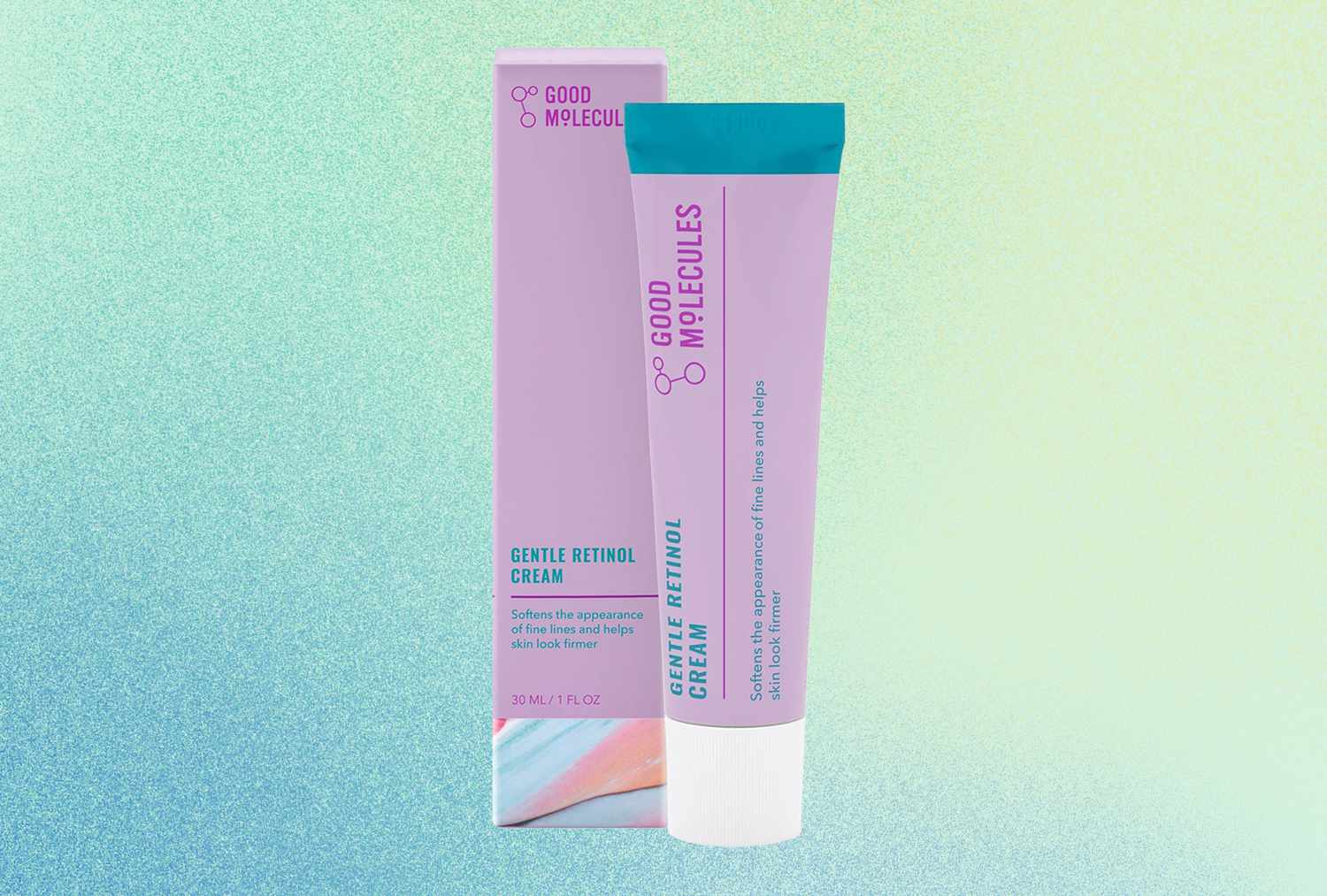
Somewhere between “my coffee is basically therapy” and “this mascara changed my life,” the internet crowned a budget moisturizer with a bold nickname:
“liquid Botox.” The product in question is Good Molecules Gentle Retinol Creaman affordable, fragrance-free retinol night cream
that keeps popping up in carts because people say it makes skin look smoother, bouncier, and more even.
Let’s be real: a topical cream can’t do what an injectable neurotoxin does (we’ll get into that). But the hype isn’t totally random, either.
This formula combines a beginner-friendly retinol level with calming, cushiony ingredientsso you’re more likely to actually stick with it.
And with retinol, consistency is the whole game.
Quick Product Snapshot: What It Is (and What It Isn’t)
- Product: Good Molecules Gentle Retinol Cream (often marketed as a night cream)
- Hero active: 0.1% retinol (a vitamin A derivative used for texture, tone, and the look of fine lines)
- Support actives: bakuchiol (plant-derived ingredient often paired with retinoids)
- Comfort crew: grape seed oil, allantoin, and acmella oleracea extract (soothing/conditioning ingredients)
- Vibe: lightweight, easy to layer, meant for nighttime use
- Reality check: it can help improve the appearance of lines and unevenness over time; it does not “freeze” muscles
Why Retinol Has Main-Character Energy in Skincare
Retinol is popular for one reason: it’s one of the most studied over-the-counter ingredients for visible skin changes.
In plain English, retinol helps your skin behave a little more like it did when it had fewer opinions and more patience.
What retinol can help with
- Texture: smoother-looking skin (think “less bumpy,” not “glass filter” overnight)
- Fine lines: softening the look of early lines with continued use
- Uneven tone: helping fade the look of discoloration over time
- Clogged pores and breakouts: supporting clearer-looking pores for some people
What retinol can’t do
- Instant results: if a product claims you’ll look “brand new by Tuesday,” it’s mostly hydration + lighting
- Muscle relaxation: no topical retinol can stop facial muscles from contracting
- Outrun sunscreen neglect: retinol without daily SPF is like buying a treadmill and only using it as a coat rack
Retinol is also famous for a less glamorous side effect: the adjustment period. Dryness, flaking, and irritation can happenespecially if you start
too often, use too much, or stack it with other intense actives.
“Liquid Botox” vs. Actual Botox: Same Goal, Different Universe
The reason the nickname sticks is that both Botox and retinol are associated with smoother-looking skin. But the similarity basically ends there.
Botox (the real one) works on muscles
Botox (botulinum toxin) is injected into specific muscles to reduce their ability to contract. Less movement can mean softer-looking expression lines
(like frown lines) for a few months. It’s a medical procedure with dosing, anatomy, and professional technique involved.
Retinol works on skin behavior over time
Retinol doesn’t “freeze” anything. It supports skin renewal and helps improve the look of texture and tone with consistent use.
If your “wrinkles” are mostly fine dehydration lines or rough texture, a good retinol + moisturizer routine can make those look noticeably softer.
That’s the “liquid Botox” illusion: skin looks smoother, so lines look quieter.
A helpful analogy: Botox is like muting a loud instrument (muscle movement). Retinol is like tuning the whole orchestra
(skin texture and tone) so everything looks more harmonious.
What Makes Good Molecules Gentle Retinol Cream So Hypable
1) 0.1% retinol: a “start-here” strength
Many people quit retinol because they start too strong, too often, too soon. A 0.1% retinol cream is typically considered a gentler entry point
for beginners or for people who want benefits with less drama. Translation: you’re more likely to use it consistentlywhich is how retinol actually works.
2) Bakuchiol: the supportive sidekick
Bakuchiol is a plant-derived ingredient that’s often described as a “retinol alternative,” but you’ll also see it used alongside retinol.
Research suggests bakuchiol can improve signs of photoaging and may be better tolerated than retinol in some users.
In a practical, everyday routine, the appeal is simple: bakuchiol is often included to help improve visible results while keeping irritation lower.
3) Soothing, barrier-friendly ingredients
This is where the formula earns its “gentle” label. Retinol can be drying, so pairing it with more comforting ingredients matters.
Grape seed oil is commonly used as an emollient (skin-softening support), and allantoin is a classic soothing ingredient found in many sensitive-skin products.
When your skin barrier feels calmer, retinol becomes less of a “fight” and more of a “relationship with boundaries.”
4) Acmella oleracea extract: the “smoothed-now” vibe
Acmella oleracea (sometimes linked to the compound spilanthol) shows up in some cosmetic formulas aimed at improving the look of expression lines.
It’s occasionally nicknamed “nature’s Botox” in marketingagain, not because it replaces injections, but because it can contribute to a temporary
smoother appearance (often described as improved “microrelief” or surface texture).
Who This Cream Is Best For
- Retinol beginners who want a lower-strength option
- People with sensitive-leaning skin who still want retinol benefits (slowly!)
- Texture + tone goals like roughness, dullness, or uneven-looking pigment
- Combo routines where you want one simple night cream instead of five separate steps
Who Should Skip (or Ask a Pro First)
- Anyone pregnant or trying to get pregnant: dermatology guidance commonly recommends avoiding retinoids/retinol during pregnancy.
- People using prescription retinoids (like tretinoin/adapalene) unless a clinician says doubling up is okay.
- Very irritated or compromised skin (active eczema flare, severely peeling barrier, sunburn).
- Ultra-active routines that already include strong acids, peels, or multiple harsh actives most nights.
How to Use It (Without Starting a Skin Uprising)
Step-by-step nighttime routine
- Cleanse with a gentle cleanser and pat dry.
- Wait a few minutes so skin is fully dry (this can reduce irritation for some people).
- Apply a pea-sized amount for the whole face (more is not moremore is just… more irritation).
- Moisturize if you need extra comfort, especially in dry weather.
- Morning rule: wear sunscreen every day. Retinol routines and SPF are a package deal.
How often?
If you’re new: start 2–3 nights per week for a couple of weeks, then increase as tolerated.
Many brand directions for gentle retinol creams suggest working up to several nights weekly rather than instantly going nightly.
The “retinol sandwich” trick (for sensitive skin)
If you tend to get irritated, try:
moisturizer → retinol cream → moisturizer.
You may get slightly slower results, but you’ll be more comfortableand comfortable routines are the ones you keep.
What not to mix on the same night
- Strong acids (AHA/BHA exfoliants)
- Benzoyl peroxide (can be extra drying/irritating in the same routine)
- High-strength vitamin C (many people prefer C in the morning and retinol at night)
What Results to Expect (A Realistic Timeline)
- Week 1–2: hydration-driven smoothness + possible dryness/flake-y moments if you overdo it
- Weeks 3–6: texture starts looking more refined; makeup may sit better; pores can look “cleaner”
- Weeks 8–12: more noticeable changes in the appearance of fine lines and uneven tone for many consistent users
If someone says it worked “in five days,” that can happen for surface softness and glow (moisture can be powerful!).
For deeper, longer-term changes, think in months, not days.
Is It Worth the Hype?
If you want a beginner-friendly retinol cream that doesn’t feel like a chemistry experiment on your face, this one earns its popularity.
The formula is straightforward, the retinol strength is approachable, and the added soothing ingredients make it easier to use consistently.
And consistency is what turns “maybe” into “wow.”
Just keep the nickname in perspective: it’s “liquid Botox” in the same way a smoothie is “liquid vegetables.”
Technically true in spirit, wildly different in mechanism.
Reporting Notes: The Research Behind This Review
This article synthesizes guidance and reporting from a mix of U.S.-based dermatology organizations, major health publishers, and medical references,
plus widely cited research on retinol, bakuchiol, and botulinum toxin. Sources consulted include outlets such as:
American Academy of Dermatology, Harvard Health Publishing, Mayo Clinic, Cleveland Clinic, GoodRx, WebMD, Health/Good Housekeeping-style service journalism,
NIH/PubMed, and ClinicalTrials.gov, along with recent beauty reporting that tracked shopper feedback and product details.
Experiences: A 4-Week “Liquid Botox” Starter Diary (Composite, Realistic, and Very Human)
Because skincare is intensely personal (and because your face did not sign up for surprise auditions), here’s a realistic “starter diary” style experience
that reflects what many beginners report when they start a gentle 0.1% retinol cream. Consider this a friendly previewyour timeline may be faster,
slower, or take a detour depending on your skin type, climate, and whether you treat sunscreen like a daily non-negotiable.
Week 1: The Optimism Phase (a.k.a. “I have a plan!”)
You patch test like a responsible adult (gold star), then apply a pea-sized amount on Night 1. The texture feels light, not greasy, and you go to bed
feeling suspiciously proudlike you just meal-prepped. In the mirror the next morning, you might notice a tiny boost in softness. Not “new face,” but
“slept eight hours” energy. If you’re someone with easily irritated skin, you’ll probably be glad you didn’t start nightly. Retinol is powerful, and
power is best introduced with boundaries.
Week 2: The “Is This Normal?” Phase (spoiler: usually, yes)
Around the second week, a lot of people meet the Retinol Adjustment Olympics: mild dryness around the mouth or nose, a little tightness, or a tiny bit
of flaking. This is where the soothing ingredients in a gentler formula can feel like a safety net. You learn the difference between “a little dry” and
“my skin is yelling.” If it’s the first one, you moisturize more and keep your schedule (2–3 nights a week). If it’s the second one, you pause,
simplify, and restart later. The “liquid Botox” dream is not worth a barrier meltdown.
Week 3: The Texture Plot Twist
This is often when people start saying, “Okay… I get it.” Makeup may sit a bit smoother. Skin looks a little more even on camera. Those tiny lines that
looked extra loud when your skin was dehydrated? They start to look quieter. Not because anything got “frozen,” but because the surface is more hydrated
and refined. This is also when you realize why sunscreen matters: your skin is doing renewal work, and UV exposure is the world’s least supportive
coworker. Daily SPF becomes the routine’s best friend.
Week 4: The “I’m Sticking With This” Phase
By week four, the routine feels normallike brushing your teeth, except your teeth don’t get flaky when you try too hard. If you’ve been consistent,
you may notice smoother-looking cheeks, less obvious roughness, and a more rested look overall. Expression lines might still show up (because you are a
living person with emotions), but they can look softer when the surrounding texture is improved. This is where the “liquid Botox” nickname makes the most
sense: the effect is more like a flattering blur than a dramatic change. You’re not changing who you areyou’re just giving your skin a calmer canvas.
The best takeaway from the experience isn’t “I must erase every line.” It’s “I found a routine I can actually tolerate.” If a product is gentle enough
that you’ll use it regularly, it has a much better chance of delivering the slow-burn benefits retinol is known for.