

Note: This article is based on public reporting about the viral relationship story, research-backed information on sentimental objects, LEGO collecting, conflict behavior, and property destruction.
Some relationship fights begin with a forgotten anniversary, a suspicious text message, or the mysterious disappearance of all the good snacks. This one began with a teddy bear. Not just any teddy bear, either, but a worn, patched-up, emotionally irreplaceable childhood bear given to a woman by her dying grandmother. Then came the boyfriend, who apparently looked at this treasured keepsake and thought, “You know what this relationship needs? A trash bag and a spectacular lack of emotional intelligence.”
The result was internet chaos: the girlfriend discovered that her boyfriend had thrown away her beloved teddy bear because he thought it looked ugly. In response, she destroyed his extensive LEGO collection, tossing pieces around the room, out the window, and into the trash before ending the relationship. He was shocked. The internet was less shocked. In fact, many readers seemed to agree that when you treat someone’s priceless memory like garbage, you should not be stunned when your own prized possessions suddenly experience a Category 5 brick storm.
Still, the story is more complicated than a simple “he started it” argument. It raises big questions about sentimental value, respect, revenge, boundaries, and why adults attach deep meaning to objects that may look silly to outsiders. A teddy bear can attach deep meaning to objects that may be more than fabric and stuffing. A LEGO collection can be more than plastic bricks. And a relationship can collapse very quickly when one person decides their partner’s feelings are optional accessories.
The Viral Story: Teddy Bear vs. LEGO Collection
According to the widely shared account, the woman had owned the teddy bear since childhood. Her grandmother, who was seriously ill with cancer, gave it to her when she was eight years old and told her to care for it and talk to it whenever she missed her. Over the years, the bear became worn down, repaired, and visibly aged. To the woman, however, every frayed seam was part of its history.
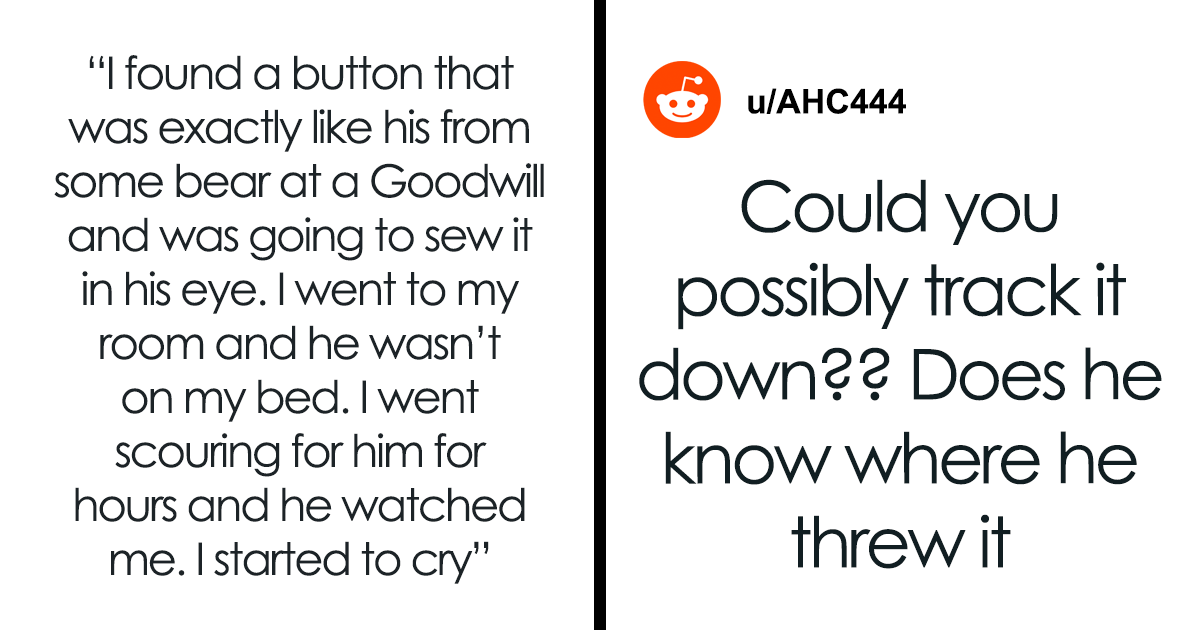
Her boyfriend knew this. That detail matters. This was not a random old toy he mistook for trash during a cleaning frenzy. He reportedly understood that the bear was connected to her grandmother, grief, comfort, and childhood. Yet he threw it out because he found it unattractive. That is the emotional equivalent of deleting someone’s family photos because the lighting was bad.
When she noticed the bear was missing, she searched for hours. Eventually, the boyfriend admitted what he had done. Hurt, furious, and feeling betrayed, she retaliated by destroying his LEGO collection. The man, who had not shown much concern for her sentimental object, suddenly developed a very advanced understanding of personal property rights when his own collection was in pieces.
Online reactions were intense. Many commenters argued that while destroying his LEGO sets was not the healthiest response, his decision to throw away the teddy bear was cruel and controlling. Others pointed out that LEGO pieces can often be replaced or rebuilt, while a childhood keepsake from a deceased grandparent is emotionally unique. In an update, the woman reportedly managed to recover the bear after digging through the trash, which is somehow both heartbreaking and the most determined teddy bear rescue mission imaginable.
Why Sentimental Objects Matter More Than They Look
To someone outside the situation, a ragged teddy bear may look like clutter. But psychology tells us that personal belongings often carry emotional meaning far beyond their market value. Research and expert commentary on object attachment show that possessions can comfort people, help them feel connected to loved ones, and even become iteturn243314search1turn243314search3
This is why a cheap object can be priceless. A teddy bear from a late grandmother is not valuable because of fabric quality, resale potential, or whether it still has both eyes pointing in the same direction. It is valuable because it carries memory. It represents a relationship. It preserves a voice, a moment, and a promise made during a painful time.
Adults keeping childhood items is not automatically immature. Plenty of people keep old blankets, letters, shirts, toys, jewelry, ticket stubs, or photos because these things serve as emotional anchors. They remind us where we came from and who loved us along the way. Sometimes they help people process grief. Sometimes they simply offer comfort after a hard day.
That does not mean every sentimental item must sit on a velvet throne under museum lighting. Couples can absolutely discuss storage, shared space, cleanliness, and décor. But there is a world of difference between saying, “Can we find a safe place for this?” and secretly throwing it away because you personally dislike looking at it. One is communication. The other is a relationship red flag wearing work gloves.
Why the LEGO Collection Was Not “Just Toys” Either
Here is where the story gets interesting: the boyfriend’s LEGO collection also mattered. LEGO is not merely a children’s toy anymore. The LEGO Group has actively grown its adult audience, and demand among adults has become an important part of the brand’s performance. In 2026, LEGO reported strong 2025 results and noted highen and adults. citeturn648164search10
Adult LEGO fans often collect sets for creativity, display, nostalgia, stress relief, and investment value. Some retired sets can become expensive on resale markets, and BrickLink, owned by LEGO, operates as a large marketplace for new and nd minifigures. citeturn648164search3
So yes, destroying someone’s LEGO collection is serious. These sets can take hours, days, or even weeks to build. They can cost hundreds or thousands of dollars. They may be organized by theme, rarity, or personal memory. For many adult fans, a collection is part hobby, part art installation, part stress management system, and part “please do not touch that shelf unless you enjoy hearing a grown man gasp like a Victorian widow.”
That said, the point is not that LEGO has no value. The point is that both people had meaningful possessions, but only one of them respected that meaning before the fight exploded. The girlfriend’s revenge did not magically become perfect behavior because she was hurt. But his outrage looked hypocritical because he seemed to recognize the sanctity of personal property only after his own prized items were damaged.
The Real Issue Was Not Plastic or Plush
The surface-level debate is teddy bear versus LEGO collection. The deeper issue is respect. Healthy relationships require partners to understand that “I do not care about this thing” is not the same as “this thing does not matter.” A partner does not have to personally understand every emotional attachment. They only have to respect that the attachment exists.
When someone destroys, discards, hides, or damages a partner’s belongings, it can become more than a messy argument. Relationship abuse resources warn that controlling behavior and destruction of property can be part of a broader pattern of intimidation or abuse, especially when used teturn437111search34turn437111search15
In this story, the boyfriend’s action communicated something ugly: “My opinion of your object matters more than your grief, your history, and your boundary.” That is why so many people reacted strongly. He did not accidentally break the bear. He reportedly made a choice, concealed it, watched her search, and only admitted the truth later. That is not a cleaning mistake. That is a trust demolition project.
The girlfriend’s reaction, meanwhile, shows how quickly pain can turn into retaliation. The American Psychological Association notes that anger can be associated with interpersonal conflict and even property dout of control. citeturn437111search2 Revenge may feel satisfying for about twelve seconds, but it often creates new harm, new legal risk, and a bigger emotional mess.
Was She Wrong to Destroy His LEGO Collection?
Morally, emotionally, and legally, the answer is uncomfortable: understandable does not always mean acceptable. Many readers sympathized with her because the boyfriend’s behavior was cruel. That sympathy makes sense. Losing a keepsake from a dead loved one can feel like losing the person all over again. But intentionally destroying someone else’s property is still a serious act.
In the United States, intentionally damaging or destroying another person’s property may fall under vandalism, criminal mischief, or civil property damage depending on the state and circumstances. Legal resources note that penalties can include fines, restitution, community service, iteturn229524search1turn229524search0
That does not erase the boyfriend’s responsibility. Throwing away her teddy bear was also a violation of trust and property. If the bear had been permanently lost, its emotional value would have been impossible to replace. But the healthier response would have been to remove him from her life, demand accountability, document what happened, and avoid giving him a counterclaim gift-wrapped in colorful plastic bricks.
In other words: break up with the person, not the Millennium Falcon.
What This Story Teaches About Boundaries
Boundaries are not just dramatic statements people post on social media between coffee photos. They are practical rules for safety, respect, and emotional health. In this case, a simple boundary could have been: “Do not touch, move, clean, discard, lend, sell, or destroy my personal belongings without asking me.” This should be Relationship 101, but apparently some people skipped orientation.
A partner who respects you may not understand why your old hoodie, childhood bear, action figure, record collection, or LEGO display matters. But they will ask before touching it. They will listen when you explain. They will not make unilateral decisions about your property because it offends their interior design preferences.
Couples living together should discuss sentimental and collectible items early. Where will collections be stored? What items are off-limits? What can be cleaned or moved? What is fragile, valuable, or emotionally irreplaceable? These conversations may sound boring, but they prevent the kind of domestic disaster that ends with someone digging through a dumpster and someone else mourning a LEGO city like it was hit by a tiny plastic meteor.
Healthy Conflict Does Not Involve Revenge Missions
Relationship experts often warn against destructive conflict patterns such as criticism, contempt, defensiveness, and stonewalling. The Gottman Institute famously calls these the “Four Horsemen” because they can predict serious relationship breakdown when thication habits. citeturn437111search1
This story contains a whole stampede. The boyfriend showed contempt for something meaningful to his girlfriend. She responded with destructive revenge. He reacted with outrage. Trust vanished faster than a rare minifigure at a garage sale.
A healthier response after discovering the teddy bear was gone might have looked like this: pause, leave the room, call a trusted friend, demand the exact location where it was thrown away, retrieve it if possible, and then end the relationship if the betrayal was unforgivable. That response would still honor the seriousness of the harm without creating additional damage.
For the person who caused the harm, the repair process would require more than “sorry you feel that way.” It would require a real apology, immediate action to recover the item, willingness to make amends, and acceptance that the relationship might still be over. Some actions reveal character so clearly that no amount of backpedaling can reassemble the trust.
Why the Internet Took Her Side
The internet can be chaotic, dramatic, and occasionally convinced that every relationship problem should be solved by moving to a cabin and changing your name. But in this case, many people sided with the girlfriend because the emotional imbalance was obvious.
His LEGO collection had monetary value, time investment, and personal importance. Her teddy bear had deep grief-related meaning and could not truly be replaced. He knowingly discarded her irreplaceable object, then reacted with disbelief when his replaceable-but-expensive collection became the target of revenge. People were not necessarily cheering for property destruction. They were reacting to the hypocrisy.
There is also a cultural double standard at play. Sentimental soft toys are often mocked as childish, especially when kept by women. Meanwhile, expensive hobbies associated with adults, fandoms, or collectors are treated as legitimate. But both are forms of attachment. A teddy bear and a LEGO set can each represent comfort, identity, and memory. Respect should not depend on whether an item looks “grown-up” enough.
Practical Lessons for Couples With Sentimental Items or Collections
1. Ask Before Touching Anything Important
This is the golden rule. If an item belongs to your partner and you do not know whether it matters, ask. If you do know it matters, definitely ask. If you are thinking about throwing it away, ask yourself why you are trying to speedrun becoming single.
2. Make a “Do Not Disturb” List
Couples can create a simple list of items that should never be moved, cleaned, donated, repaired, or discarded without permission. This might include heirlooms, collectibles, childhood toys, old letters, handmade gifts, rare books, or expensive hobby gear.
3. Document Valuable Collections
Collectors should photograph their sets, keep receipts when possible, and maintain an inventory. Insurance guidance commonly recommends documenting belongings with photos, descriptions, and purchase information to mteturn229524search11turn229524search3
4. Separate Annoyance From Control
It is fair to say, “This collection is taking over the dining room.” It is not fair to secretly destroy, donate, or discard it. Shared living requires compromise, not sabotage.
5. Leave Before You Escalate
If you are angry enough to destroy something, leave the room. Take a walk. Call someone. Write down what happened. Revenge may feel powerful in the moment, but it often creates consequences that outlive the argument.
Additional Experiences Related to the Story
Almost everyone has a “don’t touch that” object, even if they pretend they are too practical for sentimentality. It might be a stuffed animal, a baseball card, a concert wristband, a box of old birthday cards, a childhood blanket, a game console, or a mug with a chip in it that somehow survived four apartments and one emotionally questionable roommate. These items are not always beautiful. Sometimes they look like they lost a fight with a washing machine. But their meaning is not stored in their appearance.
One common experience in relationships is the moment partners realize they value objects differently. One person sees a shelf of LEGO sets as clutter; the other sees hundreds of hours of patience, creativity, and tiny engineering victories. One person sees an old teddy bear as dusty fabric; the other sees a grandmother’s voice, childhood comfort, and a link to someone they can no longer call. The conflict begins when someone assumes their interpretation is the only valid one.
In shared homes, this can become a real challenge. Space is limited. Collections grow. Sentimental boxes multiply like they have a secret subscription service. A person who loves minimalism may feel overwhelmed by a partner’s collectibles. A collector may feel judged or controlled when asked to reduce or reorganize. The solution is not to wait until resentment boils over. The solution is to talk before the shelf collapses, the closet explodes, or someone decides to “help” by taking a sacred object to the dumpster.
A healthy couple might say, “This bear matters to me, so I want it stored safely,” or “These LEGO sets are expensive and meaningful, so please don’t move them without me.” They might agree on display areas, storage bins, dusting rules, or a dedicated hobby corner. These conversations can even build intimacy because they reveal personal history. A partner who listens to the story behind an object learns more about the person they love.
The worst approach is mockery. Laughing at someone’s keepsake is rarely harmless. It tells them their memories are embarrassing. It makes them less likely to share vulnerable parts of themselves. Over time, that kind of dismissal can quietly drain warmth from a relationship. Nobody wants to feel like they have to defend their grief, childhood, or harmless hobbies in their own home.
Another lesson from this story is that revenge rarely creates justice. It creates symmetry, and symmetry can be tempting. “You hurt my thing, so I’ll hurt your thing” feels balanced in the heat of anger. But after the adrenaline fades, both people are standing in the wreckage. The relationship is still broken. The original pain is still there. Now there may also be guilt, legal concerns, repair costs, and a room full of sharp little bricks waiting to attack bare feet at 2 a.m.
The better experience, difficult as it is, is to choose self-protection over retaliation. That might mean ending the relationship immediately. It might mean asking friends or family to help recover the item. It might mean documenting the loss and seeking compensation. It might mean packing up and leaving. None of those options are easy, but they preserve dignity and avoid becoming the villain in the sequel.
For collectors, this story is also a reminder to protect valuable hobbies. Keep inventories. Store rare pieces carefully. Make sure housemates understand what should not be touched. If a collection is worth significant money, check whether insurance coverage is enough. A hobby can be fun, meaningful, and financially valuable at the same time.
For sentimental item keepers, the reminder is just as important: explain what matters before a crisis. A loving partner will not need a twelve-page legal brief to respect your teddy bear, but telling the story can help them understand its place in your life. The right person may not share your attachment, but they will honor it. They may even help you repair the bear, build the display shelf, or gently remind guests not to touch the LEGO city unless they have excellent health insurance.
Conclusion
The story of the girlfriend who destroyed her boyfriend’s LEGO collection after he threw out her teddy bear became viral because it sits at the messy intersection of grief, hobbies, revenge, and respect. On one side was a sentimental object connected to a late grandmother. On the other was an adult LEGO collection with real time, money, and personal value behind it. Both mattered. But the conflict began when one partner decided only his judgment mattered.
The biggest takeaway is simple: do not destroy, discard, or disrespect your partner’s belongings. If something matters to them, treat it with care even if you do not understand it. Love does not require you to adore every teddy bear, every LEGO spaceship, or every dusty box of memories. It does require you to ask before touching what is not yours.
Revenge may make the internet gasp, laugh, and argue, but respect is what keeps real relationships standing. And if your partner tells you a worn-out teddy bear is priceless, believe them the first time. It is much easier than explaining why your LEGO collection is now a modern art installation called “Consequences on the Floor.”