

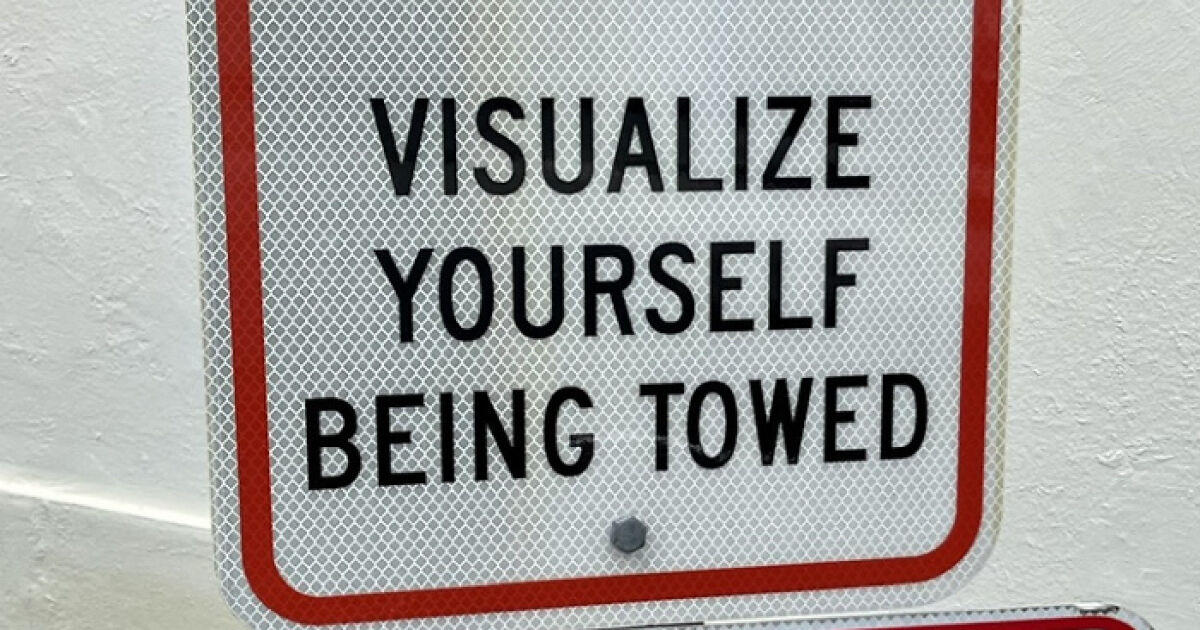
Somewhere in America, a driver is currently staring at six parking signs attached to one pole and attempting toson has discovered a street name that sounds inappropriate, impossible, or suspiciously personal. And somewhere else, a perfectly ordinary warning sign has been placed beside an object that transforms it into accidental comedy.
Street and parking signs are supposed to create order. They tell us where to stop, when to turn, how fast to drive, and whether leaving a car beside a curb will result in a peaceful afternoon or an expensive relationship with a towing company. Yet signs do not always behave according to plan. Awkward wording, unfortunate placement, weather damage, strange street names, and rebellious drivers can turn routine instructions into photographs worth sharing.
So, Pandas, open your camera rolls. We want to see the funniest street signs, confusing parking notices, bizarre road names, and perfectly timed sign photos you have encountered in the wild.
Why Are Funny Street Signs So Entertaining?
A sign is usually written in an authoritative voice. It expects immediate cooperation and offers little room for debate. That seriousness makes any mistake dramatically funnier. When a sign contradicts itself, points toward nowhere, or accidentally insults the reader, it feels as though a tiny government employee trapped inside the pole has lost patience.
The best funny street sign photos generally combine two ingredients: a clear instruction and an unexpected second meaning. The humor may come from the words themselves, but context often delivers the punch line.
Accidentally Ambiguous Wording
Consider the familiar warning “SLOW CHILDREN AT PLAY.” Without punctuation, the message can sound less like a request to reduce speed and more like an unnecessarily harsh review of the neighborhood children. Everyone understands the intended meaning, but the alternative interpretation arrives instantly.
Other signs become funny because they are far too direct. A plain “DIP” sign may be useful to motorists, yet it becomes comedy when someone poses beneath it. “NO OUTLET” sounds harmless until it appears beside a cemetery, a maze, or an especially intimidating alley.
This type of humor works because the reader processes signs quickly. Federal traffic-sign guidance emphasizes that official messages should be direct, brief, legible, and clear. When a sign fails one of those tests, the brain notices the failure immediatelyand occasionally rewards us with a joke. erfectly Unfortunate Placement
Context can transform even the dullest sign. A “WATCH FOR FALLING ROCK” warning becomes more memorable when a pebble is balanced on top of it. A “DO NOT ENTER” sign placed in front of an open field seems oddly controlling. A “ROAD CLOSED” notice beside a vehicle already stuck in mud suggests the warning arrived approximately one decision too late.
Then there are photographs in which nature joins the production team. Tree branches cover one essential word. Snow buries half a parking restriction. A bird sits directly over a letter and edits the message in real time. The result looks staged, but reality often has better comic timing than a professional photographer.
Street Names That Sound Invented
Real communities contain street names that sound like discarded sitcom jokes. Some are named after families, geographical features, historical businesses, or local stories whose meanings have faded. Without that background, the signs can appear wonderfully absurd.
A road name might sound romantic, threatening, exhausting, or embarrassingly anatomical. The funniest photographs often include a person, business, or neighboring sign that creates a second joke. A breakup photo beneath a romantically named street sign, for example, can tell an entire story without a caption.
Parking Signs Are the Overachievers of Accidental Comedy
Street signs give directions. Parking signs deliver legal homework.
Urban parking rules may change according to the hour, day, vehicle type, permit, holiday, loading schedule, street-cleaning calendar, and direction of a tiny arrow that appears to have been designed by a mischievous cartographer. One sign says two-hour parking. The next prohibits parking during morning rush hour. A third allows deliveries. A fourth mentions permits. A fifth appears to have been added after somebody found a loophole in the first four.
New York City advises drivers to read every sign on the block carefully, including signs located away from the exact parking space. Drivers may also need to pay attention to the side of the pole, commercial restrictions, meter rules, and potentially conflicting notices. Those instructions are practical, but they also explain why photographing a parking-sign tower sometimes feels like documenting a rare urban monument. he Classic Parking-Sign Puzzle
The funniest parking collections frequently include a pole carrying so many regulations that the safest interpretation seems to be, “Sell the car and take the bus.” Drivers stand beneath these signs with tilted heads, reading them from top to bottom and then bottom to top as though a secret message might appear.
Designers have explored more visual ways to present parking schedules. One widely discussed concept converted complicated restrictions into a weekly grid, using colored and patterned blocks to show when parking was allowed or prohibited. Los Angeles later tested a related approach because even transportation professionals recognized how difficult stacked rules could be to interpret. course, improved design could remove one of the internet’s most reliable comedy genres. Clearer parking signs would help drivers avoid tickets, but they would deprive social media of photographs captioned, “I have a law degree and still took the train home.”
Unofficial Parking Threats
Private parking signs enjoy freedoms that government signs generally do not. Homeowners and businesses can replace formal language with personality:
- “Reserved for people who can park between the lines.”
- “The last car parked here is still missing.”
- “Parking for customers only. Yes, we mean you.”
- “Unauthorized vehicles will be transformed into compact cars.”
- “Do not block the driveway unless you are delivering tacos.”
Some of these messages are mass-produced novelty signs, while others are handmade responses to years of frustration. The uneven paint, improvised spelling, and unnecessary number of exclamation marks usually improve the joke.
When the Driver Completes the Punch Line
A “NO PARKING” sign is not automatically funny. A vehicle parked directly beneath it is.
The photograph becomes even better when the car belongs to a towing company, traffic-enforcement department, driving school, or sign-installation contractor. These images illustrate a reliable rule of observational comedy: contradiction is funnier when the person breaking the rule should understand it better than anyone else.
What Kinds of Sign Photos Should Pandas Share?
Almost any sign can qualify, provided the humor occurred naturally and the photograph tells the story clearly. Here are several categories worth checking in your camera roll.
Confusing Signs
Share combinations that appear to allow and prohibit the same action. Directional arrows pointing against each other, outdated notices left beside newer rules, or signs with missing words are especially welcome. A good confusing-sign photo should make viewers laugh before inspiring them to appoint a committee.
Funny Road and Street Names
Look for names that sound like commands, arguments, medical conditions, relationship advice, or lines from a comedy sketch. Intersections are particularly valuable because two innocent names can create an entirely new phrase when they meet.
Handmade Neighborhood Warnings
These may address speeding, dog waste, blocked driveways, loud music, wandering chickens, suspicious raccoons, or neighbors who treat trash collection rules as optional suggestions. Handmade signs often reveal more about a community than polished official notices ever could.
Signs Defeated by Their Surroundings
Perhaps the “KEEP OFF GRASS” sign has fallen onto the grass. Maybe “CLEAN RESTROOMS” is displayed beside a location that appears to challenge the definition of both words. Perhaps a height-warning sign has already been struck by a truck. These photos succeed because the physical scene argues with the written message.
Animals Interacting With Signs
A cow standing beneath a cattle-crossing sign is accurate but charming. A deer licking a deer-warning sign appears to be checking its publicity. A dog waiting beside a “NO DOGS” notice has the expression of someone preparing a constitutional challenge.
Signs With Creative Safety Messages
Some transportation agencies have deliberately experimented with witty safety messages. Arizona, for example, has invited the public to submit creative phrases for electronic highway displays, generating messages that use wordplay to encourage seat-belt use, attentive driving, and safer behavior. The program shows why humor can be attractive: a clever phrase is more likely to be noticed and remembered. ever, official electronic signs have an important job. Current federal guidance recommends avoiding obscure references, unconventional syntax, slogans, and intentionally humorous wording when these features could require extra processing time or reduce respect for the sign. In other words, the joke must never compete with information about a crash, closure, or dangerous road condition. n>
How to Take a Great Funny Sign Photo
A good sign photograph does more than record the text. It preserves the context that made the text funny.
Include the Surroundings
Do not zoom so tightly that viewers miss the vehicle parked illegally, the contradictory sign below, or the business whose name completes the joke. Capture enough of the street to explain why you raised your camera in the first place.
Make the Words Readable
Tap the sign on your phone screen to focus. Avoid strong glare, extreme angles, and digital zoom whenever possible. If the sign is reflective, changing your position by a few feet can prevent sunlight or headlights from washing out the letters.
Take More Than One Frame
Capture a wide shot for context and a closer image for readability. Signs beside moving animals, pedestrians, or vehicles can change from ordinary to hilarious in one second, so take several photographs rather than trusting a single attempt.
Stay Out of the Road
No photograph is worth standing in a travel lane, stopping on a dangerous shoulder, blocking a driveway, or distracting a driver. Photograph signs from a sidewalk, parking area, passenger position, or another legal and secure location. NHTSA encourages road users to remain alert and pay attention to moving vehicles, particularly around pedestrian areas. rotect People’s Privacy
Consider cropping or blurring clearly visible faces, house numbers, telephone numbers, and license plates when they are not essential to the joke. A funny parking job can be shared without sending an online crowd after the vehicle’s owner.
Do Not Alter Official Signs
Never add stickers, move equipment, cover letters, or create a dangerous situation for the sake of a photograph. The goal is to document comedy, not manufacture it by damaging property or confusing motorists.
Why Sign Photos Become So Popular Online
Funny signs are unusually shareable because they are fast. Viewers do not need a complicated backstory, specialized knowledge, or a four-minute video introduction. They read the message, notice the contradiction, and understand the joke.
Online communities have built enormous collections around signs discovered in stores, offices, neighborhoods, parking lots, and public streets. Bored Panda galleries and community challenges regularly invite readers to contribute their own discoveries, turning ordinary observers into local comedy reporters. Some collections feature signs that are funny because of mistakes; others focus on notices so confusing that viewers wonder how they were approved. se photographs also travel well across cultures. Specific traffic rules may vary, but most people understand bad punctuation, contradictory instructions, and the eternal confidence of someone who parks directly under a prohibition sign.
What Makes a Submission Stand Out?
The most memorable image is not always the sign with the cleverest sentence. Strong submissions usually contain a combination of surprise, authenticity, and visual storytelling.
First, the sign should be easy to read. Second, the photograph should explain why it is funny without requiring a paragraph of instructions. Third, the scene should feel spontaneous. A faded neighborhood warning held together with tape can be more entertaining than a professionally printed novelty sign because it carries evidence of a real dispute.
A useful caption can add context without killing the joke. Tell readers where you found the sign, what was happening nearby, and whether you initially misunderstood it. Keep the explanation brief. Comedy rarely becomes stronger after a witness delivers a 40-slide presentation.
Experiences From the Hunt for Funny Street and Parking Signs
Searching for humorous signs changes the way you move through a city. Instead of treating roads as empty space between destinations, you begin examining corners, alleys, storefronts, and parking-lot entrances. Familiar neighborhoods suddenly contain tiny stories that were invisible when you were rushing past them.
One of the most entertaining experiences is watching people encounter a complicated parking pole. The performance usually begins with optimism. A driver spots an open space, activates the turn signal, and slides into it with the satisfaction of an explorer discovering land. Then the driver looks up.
The first sign is read quickly. The second causes hesitation. By the fourth, the driver has left the vehicle and is standing on the sidewalk. A phone appears. Perhaps the person is checking the time, searching municipal rules, or calling a relative who once worked near city hall. Eventually, the driver either walks away proudly or returns to the car with the exhausted expression of someone who has been rejected by a metal pole.
Another rewarding experience is finding a sign whose humor depends entirely on timing. On one trip, an ordinary warning about ducks might seem barely worth noticing. Seconds later, a family of ducks crosses beneath it in a perfectly organized line. The sign suddenly becomes an official portrait caption. The photographer must react quickly, but safely, before the scene dissolves into ordinary traffic again.
Weather creates similar opportunities. Wind rotates temporary arrows until they point toward a wall. Snow hides the word that makes a warning logical. Heavy rain fills a low section of road beside a “FLOOD AREA” sign, while one confident driver proceeds as though the notice were merely reviewing the scenery.
Handmade parking notices can reveal years of neighborhood history in a single sentence. A professionally printed “DO NOT BLOCK DRIVEWAY” sign suggests a rule. A plywood board reading “SERIOUSLY, KEVIN, THIS MEANS YOUR TRUCK” suggests seasons of conflict, multiple failed negotiations, and at least one tense garbage-collection morning.
Photographing these discoveries can also lead to conversations. Local residents may explain why a road has a strange name or why a business installed an unusually specific warning. Sometimes the story is funnier than the sign. A notice about runaway goats, for example, probably exists because the goats have already demonstrated both ambition and experience.
There are disappointments too. A promising sign may be unreadable in the photograph. A parked van may block the crucial word. The funniest moment may disappear before the camera opens. On other occasions, the image looks hilarious at first, but closer inspection reveals private information or a person in genuine distress. Knowing when not to share is part of responsible street photography.
The habit eventually becomes difficult to switch off. Friends begin sending sign pictures from road trips. Family members stop beside unusual intersections because they know someone will appreciate the evidence. Even routine errands become miniature scavenger hunts.
Most importantly, these photographs preserve local character. Signs are replaced, businesses close, rules change, and handmade warnings disappear after the original problem is solvedor after Kevin finally moves his truck. A quick photo can save a small, ridiculous moment that might otherwise vanish without anyone outside the neighborhood knowing it existed.
Show Us the Signs You Could Not Ignore
Funny street and parking signs remind us that public communication is designed by humans, installed by humans, interpreted by humans, and occasionally ignored by a human parked directly underneath it.
Your photograph might feature an impossible parking schedule, an unfortunate street name, a homemade threat, a rebellious animal, or two unrelated signs that accidentally created the perfect joke. It does not need professional lighting or expensive equipment. It only needs a clear view and a moment worth sharing.
So, Pandas, inspect your old vacation photos, neighborhood snapshots, and road-trip albums. Show us the sign that made you stop, laugh, reverse the car, and ask everyone else, “Did you see that?” Just remember to take the picture from somewhere safeand check the parking rules before you leave your vehicle.