

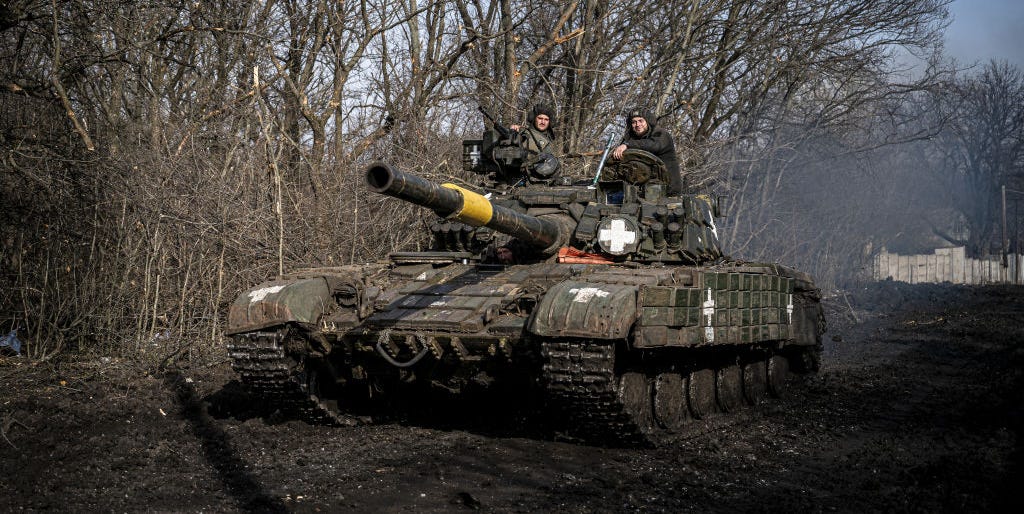
On the battlefields of Ukraine, the tank has not disappeared. It has simply learned that the sky is now full of very rude, very cheap, very persistent flying problems. A modern main battle tank can shrug off machine-gun fire, smash through obstacles, and deliver heavy firepower with terrifying precision. But a small first-person-view drone carrying an explosive charge can slip toward its roof, where armor is thinner, and turn a multimillion-dollar vehicle into a smoking headline.
That is why kamikaze-drone jammers have become one of the most important survival tools for Ukrainian armor. These electronic warfare systems do not rely on thicker steel or a bigger gun. Instead, they try to break the invisible connection between a drone and its operator. In simple terms, a jammer says to the attacking drone, “Sorry, your call cannot be completed as dialed.” If the drone loses control at the final moment, it may miss, crash, or fail to complete its attack.
The idea sounds simple. The battlefield reality is not. Drone jammers can protect tanks, armored vehicles, artillery, and supply trucks, but they can also interfere with friendly communications, disrupt Ukraine’s own drones, and reveal the location of the vehicle using them. In the Ukraine war, every advantage arrives with a receipt, a warning label, and sometimes a Russian Lancet drone circling overhead.
Why Kamikaze Drones Became Such a Tank Killer
Kamikaze drones, also known as loitering munitions or one-way attack drones, combine surveillance and strike capability in a single package. Instead of firing a missile at a target that has already been found, the drone can search, observe, and attack during the same mission. Russian Lancet drones, FPV drones, and other explosive unmanned systems have repeatedly targeted Ukrainian tanks, artillery pieces, air-defense systems, and logistics vehicles.
The threat is especially dangerous because drones are inexpensive compared with the targets they hunt. A tank may cost millions of dollars and require months of training, maintenance, fuel, spare parts, and crew coordination. A small drone may cost a tiny fraction of that. This creates an ugly math problem for armored forces: even if many drones miss, only a few successful hits can change the economics of the battlefield.
FPV drones have made the problem worse. These drones give the operator a live video feed, allowing them to steer the aircraft as if they were sitting in its nose. For tank crews, that means the threat can approach from above, from behind, or through gaps in terrain and tree cover. A drone does not need to defeat the thickest frontal armor. It only needs to find a vulnerable angle. Like a mosquito with a shaped charge, it is annoying until it becomes catastrophic.
What a Drone Jammer Actually Does
A drone jammer is an electronic warfare tool designed to interfere with the signals that control or guide an unmanned aircraft. Many small drones depend on radio links between the operator and the drone. They may also depend on satellite navigation, video transmission, or other electronic connections. If those links are disrupted, the drone may lose control, drift, land, crash, or fail to complete its attack.
Mounted on a tank or armored vehicle, a jammer can create a protective electronic bubble around the vehicle. Instead of trying to shoot down every incoming drone with bullets, the jammer attempts to confuse or disconnect the drone before it reaches the target. For Ukrainian tanks operating near the front, that can mean the difference between surviving an ambush and becoming another viral battlefield video.
Importantly, jamming is not magic. It does not create an invisible wall that stops every drone. Some drones may use different control methods, stronger links, preprogrammed routes, autonomous guidance, or fiber-optic cables. Other drones may attack from outside the jammer’s effective area or use tactics designed to overwhelm defenses. Still, against many radio-controlled kamikaze drones, jamming can be a powerful layer of protection.
Why Ukraine’s Tanks Need Electronic Armor
Traditional tank protection focuses on physical armor: steel, composite materials, explosive reactive armor, slat armor, and improvised “cope cages” designed to disrupt incoming munitions. Ukraine has used many of these methods. Tanks have appeared with added roof protection, metal screens, camouflage, and field-built modifications that look like someone asked a welding shop to design a medieval helmet for a 70-ton machine.
Physical protection helps, but drones changed the geometry of danger. Tanks were historically built to face enemy guns, missiles, and artillery fragments. The heaviest armor usually protects the front. Drones, however, often attack from above, where tanks are more vulnerable. This is why Ukrainian crews have combined old-school concealment with new-school electronic warfare. Camouflage hides the tank from cameras. Armor reduces damage if something hits. Jammers try to prevent the hit in the first place.
In this sense, a drone jammer functions like electronic armor. It does not replace steel, but it adds a defensive layer in the electromagnetic spectrum. Modern tanks now need protection in three places: the physical world, the thermal and visual world, and the radio-frequency world. A tank that ignores any one of those layers is basically showing up to a chess match wearing boxing gloves.
The Lancet Problem and the Race to Break the Link
Russia’s Lancet loitering munition has been one of the most visible threats to Ukrainian equipment. These drones can circle, identify targets, and dive into them with an explosive warhead. Their use against artillery and armored vehicles helped push Ukraine toward more aggressive counter-drone measures, including vehicle-mounted jammers.
The logic is straightforward: if the drone needs a control signal, attack the signal. If the operator needs a video feed, disrupt the feed. If the drone depends on navigation support, interfere with that dependency. Electronic warfare turns the drone’s greatest strengthremote operationinto a vulnerability. The drone may be dangerous, but it still has to communicate, navigate, and obey.
For Ukrainian tank crews, even a few seconds of disruption can matter. A kamikaze drone diving toward a turret roof does not have much time to recover from signal loss. If it wobbles, veers, or loses its final approach, the tank may survive. On a battlefield where replacement tanks, trained crews, and repair capacity are precious, survival is not a small victory. It is the whole business plan.
The Big Trade-Off: Protection Versus Detection
Drone jammers come with a serious drawback: they emit signals. On a battlefield filled with sensors, drones, electronic surveillance, and artillery, emitting a strong signal can attract attention. In other words, the same jammer that hides a tank from a kamikaze drone may also tell enemy electronic warfare teams, “Hello, yes, a valuable armored vehicle is over here.”
This creates a difficult tactical problem. Should the crew keep the jammer on all the time, reducing the risk from drones but increasing the risk of electronic detection? Or should they switch it on only when a drone is nearby, saving emissions but risking a slower reaction? There is no perfect answer. The right choice depends on terrain, enemy capability, friendly drone activity, mission urgency, and whether the crew has reliable warning of incoming drones.
Jammers can also interfere with friendly systems. Ukrainian units rely heavily on their own drones for reconnaissance, artillery spotting, route monitoring, and battlefield awareness. A jammer that protects a tank may also blind nearby friendly drone operators. That means electronic warfare must be coordinated, not simply switched on like a kitchen light. Otherwise, the cure can give the patient a headache.
How Jammers Fit Into Layered Tank Defense
The future of tank survival in Ukraine is not one gadget. It is a layered defense system. A tank needs concealment to avoid detection, mobility to avoid predictable routes, armor to reduce damage, electronic warfare to disrupt drones, and coordination with friendly reconnaissance to detect threats early. No single layer is enough. Together, they can make the drone operator’s job much harder.
Camouflage and Concealment
Tree cover, camouflage nets, decoys, and careful movement still matter. Drones are powerful, but they must find the target before they can destroy it. If a tank can remain hidden until it fires or moves, it reduces the number of attack opportunities.
Physical Protection
Additional roof armor, cages, reactive armor, and anti-drone screens can help reduce the damage from top-attack drones. These add weight and may affect mobility, visibility, or crew access, but they can be valuable when drones are everywhere.
Electronic Warfare
Vehicle-mounted jammers add a flexible shield against radio-controlled drones. They are especially useful when tanks are stationary, supporting infantry, defending a position, or operating in areas known for FPV and loitering munition attacks.
Active Detection and Warning
Crews need warning. A jammer is more useful if the crew knows when to activate it, where the threat is coming from, and whether friendly drones are nearby. Acoustic sensors, visual observers, drone-detection networks, and shared battlefield data can improve reaction time.
Russia and Ukraine Are Both Adapting Fast
The war in Ukraine has become a giant, brutal laboratory for drone warfare and electronic warfare. Ukraine develops a countermeasure. Russia studies it and adapts. Russia introduces a new drone tactic. Ukraine copies, counters, or improves on it. The cycle moves quickly because both sides are under constant pressure. In peacetime, a new defense system might take years to test and approve. In Ukraine, battlefield units often need a solution before the next sunrise.
That speed has produced rapid innovation. Ukrainian startups and defense teams have worked on AI-assisted drone guidance, autonomous final approach, optical navigation, and other methods to keep drones effective when jamming is heavy. Russia has also adapted by using fiber-optic drones, which are guided through physical cables and are much harder to jam with traditional radio-frequency methods.
This matters for tanks because drone jammers are not a final answer. They are part of an arms race. If jammers become widespread, attackers will use drones that can resist jamming, switch guidance methods, attack in groups, or target the jammers themselves. The defense must keep evolving. In this war, yesterday’s clever solution can become tomorrow’s museum exhibit with scorch marks.
AI-Guided Drones Complicate the Jammer’s Job
One of the biggest challenges for drone jammers is the rise of AI-assisted guidance. If a drone can identify a target and continue its final approach after losing contact with the operator, jamming becomes less decisive. The drone may not need constant human steering. It may only need enough guidance to reach the target area, then use onboard software to finish the attack.
Ukraine has invested heavily in AI-enabled drone systems to overcome Russian jamming. The same trend also affects Russian drones. As autonomy improves, electronic warfare must become smarter. Instead of simply flooding a signal, defenders may need layered countermeasures: jamming, spoofing detection, physical interception, decoys, smoke, camouflage, and rapid movement.
For tank crews, this means drone defense cannot depend on a single switch. A jammer may defeat one threat and fail against another. A cage may stop one munition and be useless against a different angle. The lesson is not that tanks are obsolete. The lesson is that tanks must travel with a digital bodyguard.
Are Tanks Still Worth Saving?
Every few months, someone announces the death of the tank. The tank, being a stubborn machine with tracks and a cannon, refuses to attend its own funeral. Ukraine has shown that tanks are vulnerable, but also that armored vehicles remain useful when properly supported. Tanks provide direct fire, mobility, shock effect, protected movement, and psychological weight that drones alone cannot fully replace.
The real question is not whether tanks are obsolete. It is whether tanks can adapt to a battlefield where cheap drones are constant. The answer appears to be yes, but only if armies stop treating tanks as isolated steel beasts. A tank now needs drone scouts, electronic warfare support, infantry coordination, air-defense coverage, repair networks, and disciplined movement. It must be part of a system.
Kamikaze-drone jammers help preserve that system. They buy time. They reduce losses. They force the enemy to spend more drones, use better drones, or take greater risks. In a war of attrition, forcing the enemy to work harder is not glamorous, but it is extremely useful. Glamour is optional. Survival is not.
What Ukraine’s Experience Teaches NATO and the World
Ukraine’s battlefield experience is already reshaping how Western militaries think about armored warfare. The old assumption that tanks mainly need protection from other tanks, anti-tank missiles, mines, and artillery is no longer enough. Modern armored forces must also defend against drone swarms, loitering munitions, electronic surveillance, and cheap attack systems launched by small teams.
For NATO armies, the lesson is clear: every armored formation needs organic counter-drone capability. That includes detection, electronic warfare, short-range air defense, hardened communications, and training for electromagnetic discipline. Soldiers must understand when to emit, when to stay silent, when to launch friendly drones, and when to ground them because nearby jammers are active.
Ukraine has also shown that innovation must move closer to the front. Soldiers, engineers, software developers, and manufacturers need fast feedback loops. A jammer that works in one sector may fail in another because enemy drones use different methods. A solution that performs well in testing may need immediate changes after a week of combat. The best defense is not a single perfect device. It is a system that learns faster than the threat.
The Human Side: What Tank Crews Actually Gain
For the crew inside a Ukrainian tank, a drone jammer is not an abstract technology. It is a little more confidence when moving across exposed ground. It is a better chance of firing a mission and returning. It is one more reason the crew can focus on the battlefield instead of staring nervously at every buzzing sound above them.
Combat stress matters. Tank crews operate in cramped, loud, hot, dangerous conditions. They must navigate mines, artillery, anti-tank missiles, drones, and enemy armor. A jammer does not make them invincible, but it can reduce the feeling that the sky itself is hunting them. That psychological benefit matters because exhausted crews make mistakes, and mistakes in armored warfare are expensive in the most human way.
Good protection also preserves experience. A tank can be repaired or replaced, eventually. A veteran crew is much harder to replace. Every survived drone attack keeps trained people in the fight. That is why counter-drone tools should be viewed not only as equipment protection, but also as crew protection.
Experiences Related to Kamikaze-Drone Jammers and Ukraine’s Tanks
One of the most important practical experiences from Ukraine is that tank survival now depends on habits as much as hardware. Crews cannot simply bolt a jammer onto a turret and assume the problem is solved. The best results come when crews understand the rhythm of drone threats: when drones are most active, which routes are watched, where tree lines provide cover, and how enemy operators exploit predictable movement. A jammer is most useful when it supports smart behavior, not when it replaces it.
Another experience is that coordination between tank crews and drone teams has become essential. Ukrainian units rely on friendly drones for scouting, artillery correction, and route security. But a jammer can interfere with friendly drones if used carelessly. This means units need procedures for when jammers are active, when friendly drones are in the air, and how commanders communicate during electronic warfare. The battlefield has become crowded not only with vehicles and soldiers, but also with signals. Managing those signals is now part of combat discipline.
Tank crews have also learned that concealment remains powerful. Electronic warfare works best when combined with old-fashioned fieldcraft. A tank hidden under trees or camouflage is harder to find. A tank that moves briefly, fires, and relocates is harder to target. A tank that sits in the open with a jammer broadcasting for too long may survive one drone but invite other attention. The practical lesson is simple: do not make the enemy’s targeting job easy. Even the best technology appreciates a little common sense.
Maintenance is another overlooked experience. Jammers, antennas, cables, batteries, mounts, and protective boxes must survive mud, vibration, shrapnel, rain, cold, heat, and the daily abuse of armored operations. A system that works beautifully on a demonstration table may fail after hours on a moving tank. Ukrainian experience suggests that ruggedness, ease of repair, and simple operation are just as important as technical performance. In war, “easy to fix” can be more valuable than “impressive in a brochure.” Brochures rarely get shelled.
There is also a training lesson. Crews must learn what jammers can and cannot do. Overconfidence is dangerous. A jammer may defeat one drone type but not another. It may protect one angle but leave other vulnerabilities. It may be less effective against autonomous drones or fiber-optic systems. Training should therefore emphasize layered defense, not gadget worship. The goal is not to create tank crews who believe they are safe. The goal is to create tank crews who understand how to improve their odds.
Finally, Ukraine’s experience shows that adaptation never ends. Drone operators change frequencies, guidance methods, attack profiles, and tactics. Defenders respond with new jammers, decoys, detection tools, and procedures. Then attackers adapt again. This constant contest means the best military organizations will be those that learn quickly from losses, field improvements rapidly, and listen to the people closest to the danger. In Ukraine, the front line is not just a place where equipment is used. It is where equipment is judged.
Conclusion: Jammers Could Help Tanks Survive, But Only as Part of a System
Kamikaze-drone jammers could save Ukraine’s tanks because they attack the weak point of many drones: their dependence on signals. By disrupting control links and guidance, jammers can cause incoming drones to miss or fail, giving crews a better chance to survive. But they are not a silver bullet. They can reveal positions, disrupt friendly systems, and lose effectiveness as drones become more autonomous or use fiber-optic control.
The future of armored warfare will not be tank versus drone. It will be system versus system. Tanks will survive when they combine armor, concealment, electronic warfare, friendly drones, air defense, fast repair, and disciplined tactics. Ukraine’s experience shows that the tank is not dead; it is being forced to evolve. And if drone jammers keep even a few crews alive and a few tanks in the fight, they will have done something valuable in a war where every saved machine and every saved life matters.