

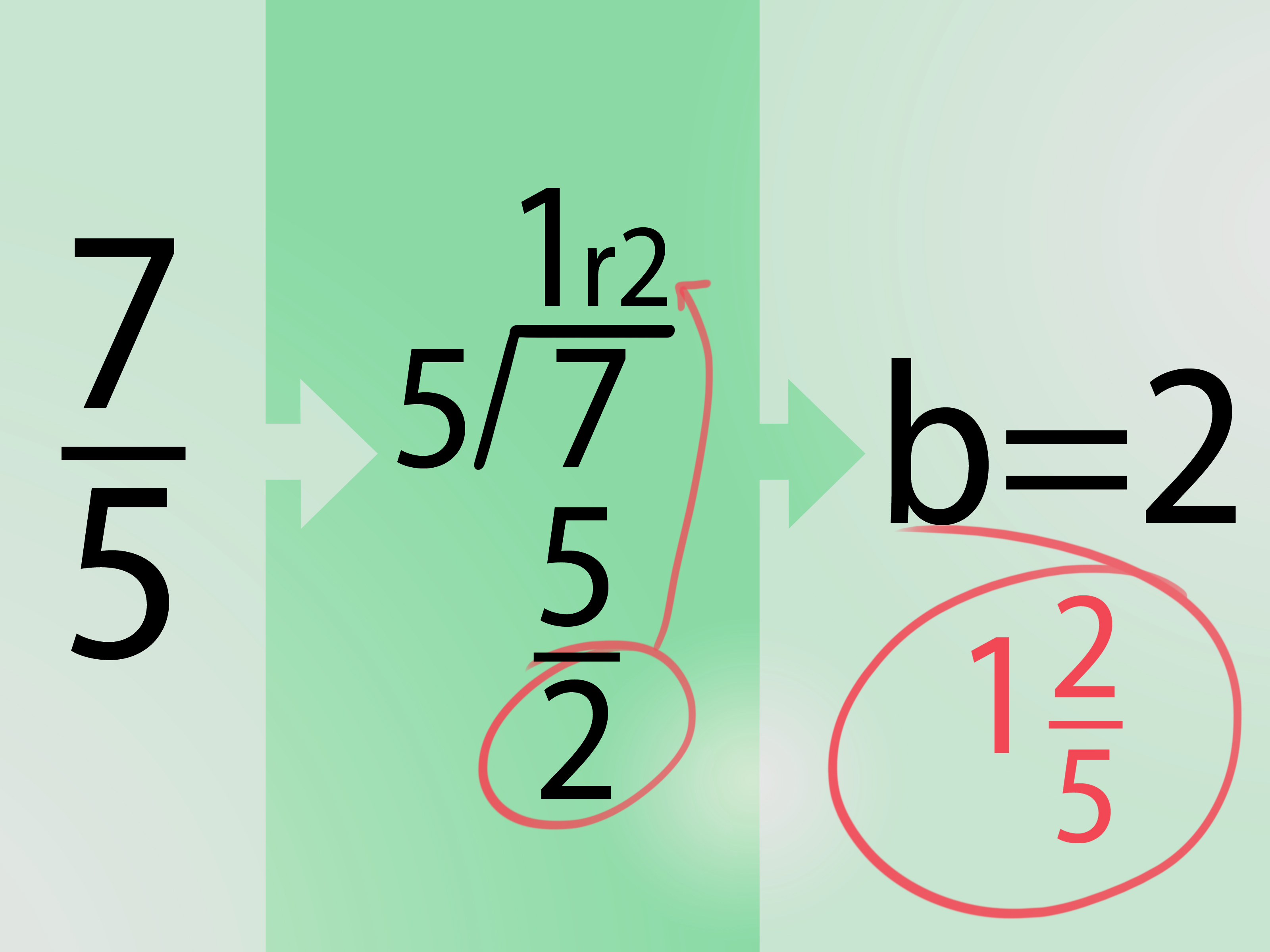
Mixed numbers look friendly. They walk into math class wearing a whole number on one side and a fraction on the other, like 2 1/3 or 5 3/4. Improper fractions, on the other hand, sound like they forgot their manners. But do not let the name fool you. An improper fraction is not “wrong.” It is simply a fraction where the numerator is greater than or equal to the denominator, such as 7/3 or 23/4.
Learning how to change mixed numbers to improper fractions is one of those math skills that unlocks a lot of doors. It helps with adding fractions, subtracting mixed numbers, multiplying fractions, dividing fractions, solving word problems, and surviving homework without giving your pencil the dramatic villain treatment. The good news? The process is simple once you understand what is happening.
In this guide, you will learn the conversion method in 10 clear steps, with examples, explanations, common mistakes, and practical tips. By the end, mixed numbers and improper fractions will feel less like mysterious math creatures and more like two outfits for the same number.
What Is a Mixed Number?
A mixed number is a number made of two parts: a whole number and a proper fraction. For example, 3 2/5 means three whole units plus two-fifths of another unit. It is called “mixed” because it mixes a whole number with a fraction.
Mixed numbers are common in everyday life. A recipe might call for 1 1/2 cups of flour. A board might measure 4 3/4 feet. A runner might complete 2 1/4 miles. Mixed numbers are easy for humans to picture because they separate the full parts from the leftover part.
What Is an Improper Fraction?
An improper fraction is a fraction where the top number, called the numerator, is greater than or equal to the bottom number, called the denominator. Examples include 5/4, 11/6, and 19/8.
Improper fractions represent values equal to or greater than one whole. For example, 7/4 means seven one-fourth pieces. Since four fourths make one whole, seven fourths equals 1 3/4. Same value, different form. Think of it like wearing sneakers instead of sandals: the number is still going to the same place.
Why Convert Mixed Numbers to Improper Fractions?
Mixed numbers are great for reading and understanding size, but improper fractions are often easier for calculations. When you multiply, divide, add, or subtract fractions, a mixed number can make the problem clunky. Converting it into an improper fraction gives you one clean fraction to work with.
For example, multiplying 2 1/3 × 3/4 becomes easier when 2 1/3 changes to 7/3. Then the problem becomes 7/3 × 3/4, which is much easier to simplify and solve.
The Quick Formula
The formula for converting a mixed number to an improper fraction is:
(Whole number × Denominator) + Numerator = New numerator
The denominator stays the same.
For the mixed number 4 2/5:
- Multiply the whole number by the denominator: 4 × 5 = 20
- Add the numerator: 20 + 2 = 22
- Keep the same denominator: 22/5
So, 4 2/5 = 22/5.
How to Change Mixed Numbers to Improper Fractions: 10 Steps
Step 1: Identify the Whole Number
Look at the mixed number and find the whole number part. In 6 3/8, the whole number is 6. This tells you how many complete units you have before adding the fractional part.
Do not skip this step. Many mistakes happen because students rush and accidentally multiply the numerator instead of the whole number. The whole number is the big piece of the mixed number puzzle.
Step 2: Identify the Numerator
The numerator is the top number in the fraction. In 6 3/8, the numerator is 3. It tells you how many extra fractional pieces are included after the whole units.
In a pizza model, if each pizza is cut into eighths, the numerator tells you how many extra slices you have beyond the complete pizzas. Three extra slices? That is your numerator. Delicious and educational, which is the best kind of pizza.
Step 3: Identify the Denominator
The denominator is the bottom number in the fraction. In 6 3/8, the denominator is 8. It tells you how many equal parts make one whole.
The denominator is very important because it becomes the denominator of the improper fraction too. It does not change during the conversion. If the mixed number is in eighths, the improper fraction stays in eighths.
Step 4: Multiply the Whole Number by the Denominator
Now multiply the whole number by the denominator. This shows how many fractional pieces are inside the whole-number part.
Using 6 3/8:
6 × 8 = 48
This means six wholes contain forty-eight eighths. That may sound like a lot, but it makes sense: each whole has eight eighths, and there are six wholes. Math is just counting in a fancy jacket.
Step 5: Add the Numerator
Next, add the numerator to the product you found in Step 4.
48 + 3 = 51
Why add? Because the mixed number includes the whole-number part plus the fraction part. You already converted the six wholes into eighths, and now you are adding the extra three eighths.
Step 6: Write the Sum as the New Numerator
The number you found after adding becomes the new numerator. In the example 6 3/8, the new numerator is 51.
This new numerator represents the total number of fractional pieces. In plain English: you have fifty-one pieces, and each piece is one-eighth of a whole.
Step 7: Keep the Original Denominator
The denominator remains the same. Since the original mixed number was 6 3/8, the denominator is still 8.
So far, you have the new numerator 51 and the same denominator 8. Put them together and you get:
51/8
That means 6 3/8 = 51/8.
Step 8: Check Whether the Fraction Makes Sense
A quick reasonableness check can save you from sneaky mistakes. Since 6 3/8 is a little more than 6, the improper fraction should also be a little more than 6.
To check 51/8, divide 51 by 8. Since 8 × 6 = 48 with 3 left over, 51/8 equals 6 3/8. Perfect. The math penguin approves.
Step 9: Practice with Different Denominators
Try mixed numbers with different denominators so the pattern becomes automatic.
- 2 1/3: 2 × 3 = 6, then 6 + 1 = 7, so 2 1/3 = 7/3
- 5 4/7: 5 × 7 = 35, then 35 + 4 = 39, so 5 4/7 = 39/7
- 9 2/5: 9 × 5 = 45, then 45 + 2 = 47, so 9 2/5 = 47/5
The denominator can be 2, 3, 5, 8, 10, 12, or any other nonzero number. The steps stay the same.
Step 10: Use the Improper Fraction in a Problem
Converting is useful because it helps you solve larger problems. Suppose you need to multiply:
3 1/2 × 4
First convert 3 1/2 to an improper fraction:
3 × 2 = 6
6 + 1 = 7
3 1/2 = 7/2
Now multiply:
7/2 × 4/1 = 28/2 = 14
So, 3 1/2 × 4 = 14. The mixed number became easier to handle once it changed into an improper fraction.
Examples of Changing Mixed Numbers to Improper Fractions
Example 1: Convert 1 2/3
Multiply the whole number by the denominator:
1 × 3 = 3
Add the numerator:
3 + 2 = 5
Keep the same denominator:
1 2/3 = 5/3
Example 2: Convert 4 5/6
Multiply:
4 × 6 = 24
Add:
24 + 5 = 29
Keep the denominator:
4 5/6 = 29/6
Example 3: Convert 10 1/4
Multiply:
10 × 4 = 40
Add:
40 + 1 = 41
Keep the denominator:
10 1/4 = 41/4
Common Mistakes to Avoid
Mistake 1: Changing the Denominator
The denominator stays the same. If you are converting 3 2/7, the final fraction must have a denominator of 7. The denominator is the size of the pieces, and the size of the pieces does not change.
Mistake 2: Adding Before Multiplying
The correct order is multiply first, then add. For 5 2/3, do 5 × 3 = 15, then 15 + 2 = 17. The answer is 17/3, not something wild like 21/3.
Mistake 3: Forgetting the Fraction Part
If you convert 8 1/5 and only do 8 × 5 = 40, you have forgotten the extra 1/5. The correct new numerator is 41, so the answer is 41/5.
Mistake 4: Thinking “Improper” Means Incorrect
The word “improper” can sound negative, but in math it simply describes the form of the fraction. Improper fractions are useful, valid, and often preferred when doing calculations.
A Visual Way to Understand the Conversion
Imagine 2 3/4 as two whole chocolate bars and three-fourths of another chocolate bar. Each whole bar can be split into four equal pieces. Two whole bars have:
2 × 4 = 8 fourths
Then add the extra three fourths:
8 + 3 = 11 fourths
So 2 3/4 = 11/4. This picture helps explain why the formula works. You are not changing the value; you are simply counting all the pieces using the same denominator.
How to Check Your Answer by Converting Back
To check an improper fraction, divide the numerator by the denominator. For example, if you converted 7 2/9 to 65/9, check it like this:
65 ÷ 9 = 7 remainder 2
The quotient becomes the whole number, and the remainder becomes the numerator. That gives you 7 2/9, which matches the original mixed number. This is a great way to catch errors before turning in homework.
Practice Problems
Try converting these mixed numbers to improper fractions:
- 2 2/5
- 3 1/4
- 6 5/8
- 7 3/10
- 12 2/3
Answers
- 2 2/5 = 12/5
- 3 1/4 = 13/4
- 6 5/8 = 53/8
- 7 3/10 = 73/10
- 12 2/3 = 38/3
When Will You Use This Skill?
You will use mixed-number conversion in many math topics. It appears in fraction operations, measurement problems, recipes, construction measurements, algebra, unit rates, and test questions. Teachers often ask students to convert mixed numbers before multiplying or dividing because improper fractions make the process more direct.
For example, if a recipe uses 2 1/2 cups of oats and you want to triple it, converting 2 1/2 to 5/2 makes the multiplication easier:
5/2 × 3 = 15/2 = 7 1/2
So, you need 7 1/2 cups. Congratulations, your oatmeal empire is expanding.
Helpful Memory Trick
Use the phrase: Multiply, Add, Keep.
- Multiply the whole number by the denominator.
- Add the numerator.
- Keep the denominator.
For 8 3/4:
8 × 4 = 32
32 + 3 = 35
Keep 4
So, 8 3/4 = 35/4.
This trick is short, memorable, and much less likely to abandon you during a quiz than a complicated explanation. Write it on a sticky note, say it out loud, or chant it dramatically like a math wizard. No judgment here.
Experience Notes: What Helps Students Actually Master This Skill
From classroom practice, tutoring sessions, homework struggles, and the occasional “I swear I knew this yesterday” moment, one thing becomes clear: students usually understand mixed numbers faster when they can see what the numbers mean before memorizing the formula. A student may repeat “multiply, add, keep” perfectly but still feel lost if the steps seem like random math magic. That is why visual models are so helpful at the beginning.
For example, when learners draw 3 1/4, they can sketch three whole rectangles and one extra quarter. If each whole rectangle is divided into four equal parts, they can count 4 + 4 + 4 + 1, which equals 13 fourths. Suddenly, 13/4 is not just an answer from a formula. It is a picture they can understand. The formula comes later as a shortcut, not as a mystery spell from the Ancient Book of Fractions.
Another helpful experience is connecting the skill to food and measurement. Pizza, brownies, chocolate bars, measuring cups, and feet-and-inches problems make mixed numbers feel real. If someone has 2 1/2 pizzas and each pizza is cut into two halves, they have 5 halves. That is 5/2. If a board is 4 3/8 feet long, converting it to 35/8 can make certain calculations easier. Real examples help students stop asking, “When will I ever use this?” which is the unofficial national anthem of math class.
One common tutoring tip is to have students label each part of the mixed number before solving. They can write “whole,” “numerator,” and “denominator” above the numbers. This slows the brain down just enough to prevent careless errors. Many wrong answers come from rushing, not from lack of understanding. When students pause and identify the parts, the conversion becomes much cleaner.
Practice also works best in short bursts. Ten well-checked problems are better than forty rushed ones. After each answer, students should convert back once or twice to confirm the result. For instance, after changing 5 2/3 into 17/3, they divide 17 by 3 and get 5 remainder 2. That confirms the original mixed number. Checking builds confidence, and confidence is a big deal in math. Once students believe they can do it, fractions become far less scary.
Finally, mistakes should be treated as clues. If a student changes the denominator, they may not yet understand that the size of the pieces stays the same. If they forget to add the numerator, they may be focusing only on the whole number. If they add before multiplying, they may need the order repeated with examples. Every mistake points to the next teaching step. In other words, errors are not disasters. They are little math breadcrumbs leading to understanding.
Conclusion
Changing mixed numbers to improper fractions is a basic but powerful fraction skill. The method is simple: multiply the whole number by the denominator, add the numerator, and keep the denominator. Once you understand why the steps work, the process becomes much easier to remember.
Mixed numbers are useful for describing real-world amounts, while improper fractions are often better for calculations. Knowing how to move between both forms gives you more flexibility in math. Whether you are solving homework problems, adjusting a recipe, measuring materials, or preparing for a test, this skill will keep showing up like a reliable sidekick.
So the next time you see a mixed number like 7 5/6, do not panic. Multiply, add, keep. That is it. Fractions may look dramatic, but with the right steps, they behave nicely.