

If you want to dress like an Ancient Egyptian, the first rule is simple: put down the shiny Halloween polyester and slowly back away. Ancient Egyptian style was elegant, airy, surprisingly practical, and far more refined than the average “pharaoh party” costume would have you believe. Real Egyptian clothing was shaped by heat, sunlight, religion, status, and a love of clean lines. Think white linen, crisp pleats, statement collars, dramatic eye makeup, and enough gold accents to make a modern jewelry counter feel insecure.
But there is one important catch: Ancient Egypt lasted for thousands of years. So there was no single outfit that everyone wore from the pyramids to Cleopatra. Styles changed over time, and social rank mattered a lot. A farmer, a court official, and a pharaoh did not wake up, open the same cedar chest, and choose from the same wardrobe. If you want your look to feel authentic, build it the way the Egyptians did: start with linen, keep the silhouette clean, add accessories with purpose, and let the makeup do some of the heavy lifting.
This guide walks you through how to dress like an Ancient Egyptian in a way that is stylish, historically informed, and actually wearable. Whether you are creating a costume, building a themed event look, styling for theater, or just satisfying a very specific fashion curiosity, here is how to do it right.
Start with the Big Picture: Era, Rank, and Role
Before you choose a single bracelet or reach for the eyeliner, decide who you are dressing as. Ancient Egyptian fashion was deeply tied to identity. Your outfit should answer a few basic questions: Are you portraying a laborer, a noblewoman, a priest, a royal, or a generic upper-class Egyptian? Are you aiming for a simple Old Kingdom feel, a more elaborate New Kingdom look, or a glamorous queen-inspired version?
For most people, the most recognizable and visually satisfying choice is a New Kingdom-inspired style. This period gives you the details people associate with Ancient Egypt: fine linen, pleated garments, broad collars, wigs, sandals, and bold eye makeup. It also gives you room to create a look that feels dramatic without turning into a historical traffic accident.
The easiest mistake is mixing everything at once. A royal striped headdress, a laborer’s plain wrap, Cleopatra-level eyeliner, and ten pounds of random snake jewelry do not create authenticity. They create confusion. Ancient Egyptian style works best when it looks intentional.
The Foundation: Ancient Egyptian Clothing Basics
Linen Was the Star of the Show
The backbone of Ancient Egyptian clothing was linen, which was made from flax. That makes sense when you remember the climate. Linen is light, breathable, and ideal for hot weather. So if you want to recreate the look today, linen or a linen-look cotton blend is your best friend. The closer the fabric is to soft white, ivory, cream, or natural flax tones, the more convincing the outfit will feel.
Avoid heavy fabric, thick velvet, stiff metallic costume cloth, or anything that looks like it belongs on a nightclub Pharaoh. Ancient Egyptian clothing was often simple in construction but luxurious in finish. The beauty came from drape, texture, cleanliness, and careful detail.
What Men Wore
For a male Ancient Egyptian look, the easiest and most accurate starting point is a wrap kilt. This garment, often called a schenti or shendyt in modern discussions, was wrapped around the hips and secured at the waist. It could be short and plain for everyday wear or longer and sharply pleated for wealthier men.
If you are creating a basic version, use a white or off-white linen wrap that falls above or just below the knee. Keep the lines neat and the waist clean. For a higher-status look, add front pleating, a more structured apron panel, or a slightly longer wrap. Some elite men also wore fine linen shirts or additional layers, but the kilt remains the most recognizable and historically grounded core piece.
A nobleman’s version should look crisp, pressed, and controlled. Ancient Egyptian fashion had an eye for order. If your wrap is drooping, bunching, or behaving like a beach towel in a crisis, it needs help.
What Women Wore
For a female Ancient Egyptian look, the classic starting point is a long, close-fitting linen dress. Early and middle styles are often shown as sheath dresses with straps, while later elite looks become more layered, pleated, and visually rich. A simple column silhouette works beautifully for a historically inspired outfit.
The best modern interpretation is a fitted or softly draped white linen dress with a straight shape and minimal seams. Thin shoulder straps or a sleeveless cut can echo the visual language of older garments. For a more elite version, layer on pleated overfabric, a shawl-like panel, or a beaded net effect over the dress.
If you want a noblewoman look rather than a queenly fantasy, focus on proportion and materials. The dress should feel graceful, not flashy. Ancient Egyptian elegance whispered first and shimmered second.
Pleats Made Everything Better
One of the most striking features of elite Egyptian fashion was pleating. Pleated linen appears again and again in Egyptian art and surviving descriptions of dress. Pleats added movement, light, and status. They also signaled that someone had the resources to maintain fancy clothes in a hot, dusty environment, which is a flex even by modern standards.
If you want your look to read as upper-class, incorporate pleating somewhere: a pleated kilt front, a pleated outer layer, pleated sleeves, or a pleated shawl. Keep it structured and clean. Ancient Egypt loved geometry almost as much as it loved eyeliner.
Hair, Wigs, and Headpieces
Short Hair, Shaved Heads, and Excellent Wigs
Many Egyptians kept their natural hair short or shaved, especially in the heat. Wigs were common, especially among the elite, and they were not just decorative. They offered style, status, and practical control in a climate that did not reward frizz. In art, wigs often appear smooth, tidy, and dark, with shapes that frame the face and shoulders.
For a believable Ancient Egyptian hairstyle, choose a black or very dark brown wig cut in a blunt bob, shoulder-length straight style, or a fuller structured shape for a higher-status look. Braids can work, but keep them controlled and symmetrical. This is not the moment for beach waves.
When to Use a Headdress
Be careful with headdresses. The striped nemes headdress is iconic, but it was associated with royalty, especially pharaohs. So unless you are specifically portraying a ruler, skip it. For non-royal women, a headband, lotus-inspired fillet, or decorative hair ornament is a safer and more accurate choice.
For royalty-inspired looks, a structured headdress can work, but it should feel ceremonial rather than cartoonish. One cobra ornament does more for authenticity than twelve random serpents zip-tied to a crown.
Jewelry and Accessories: Small Details, Big Impact
Broad Collars Are Essential
If there is one accessory that instantly says “Ancient Egyptian” without saying “I bought this three hours before the costume party,” it is the broad collar. These wide necklaces sat across the upper chest and could be made with faience, beads, gold, turquoise tones, carnelian shades, and other vivid materials.
A modern version can be made from beadwork, layered rows of colored stones, metallic elements, or a collar-style necklace with blue, green, gold, and red accents. It should sit high on the chest and feel substantial. Broad collars are not shy, and that is exactly why they work.
Bracelets, Rings, and Amulets
Ancient Egyptians loved adornment. Bracelets, arm cuffs, rings, and amulets all help complete the outfit. Gold looks especially effective, but painted beadwork and faience-inspired blues and greens also fit the style beautifully.
Choose pieces that feel symbolic rather than cluttered. Scarabs, lotus motifs, falcon imagery, and protective eye symbols all make sense. Stack a few bracelets. Add a ring or two. Wear an amulet if it complements the outfit. The goal is richness with intention, not the visual equivalent of emptying a craft store onto your elbows.
Footwear Matters More Than You Think
Egyptian footwear ranged from going barefoot to wearing sandals made from plant fibers, wood, or leather. For a modern outfit, simple flat sandals are the best option. Look for a natural sole, minimal straps, and a clean profile. Avoid gladiator sandals with a hundred laces climbing to the knee. That is Ancient Mediterranean-adjacent, not specifically Egyptian.
If the setting allows it, barefoot styling can also work for a staged or photographed look. Just use common sense. Ancient Egyptians were stylish, but they probably would not recommend walking barefoot through a hotel lobby.
How to Do Ancient Egyptian Makeup
The Eyes Come First
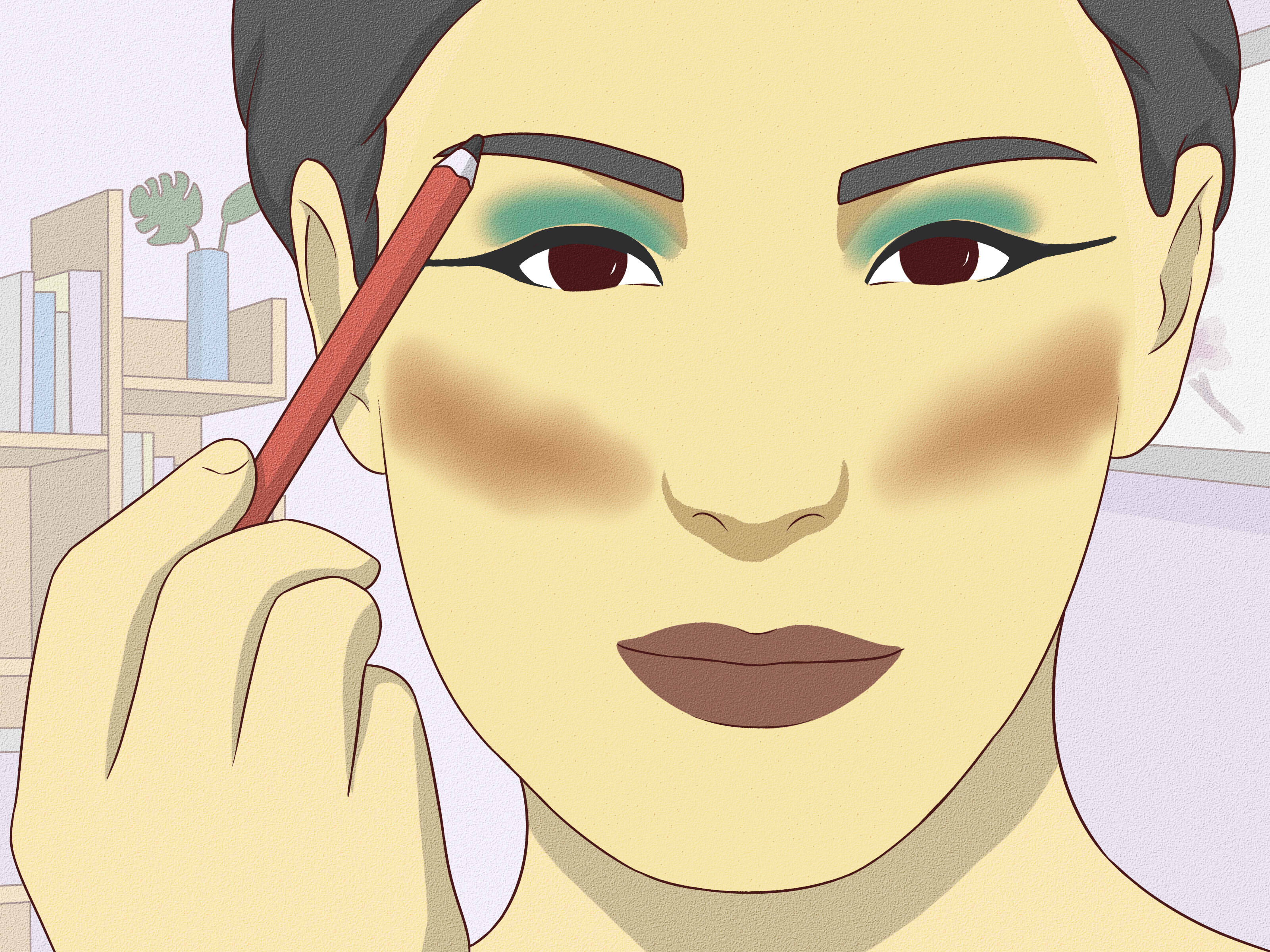
If clothing built the outline of Ancient Egyptian beauty, makeup finished the sentence in bold. Eye makeup was the signature element, and both men and women used it. The classic look centered on kohl, a dark eye cosmetic, as well as mineral pigments such as malachite-based green paint.
To recreate the look today, line both the upper and lower lash lines in black. Extend the line slightly outward and upward at the corners for that elongated almond-eye shape seen in Egyptian art. Keep the lines deliberate and symmetrical. Ancient Egyptian makeup was graphic, not smudgy. The effect should look more sculpted than smoky.
You can add muted green shadow to the lid or around the eyes for a historically inspired nod to mineral eye paint. Do not overblend. A crisp edge feels more authentic than a soft modern haze. Think “temple wall elegance,” not “I got ready in the back seat.”
Cheeks and Lips
Red ochre and other mineral pigments were used for color in Ancient Egyptian cosmetics. For a modern adaptation, keep blush warm and subtle, leaning terracotta, brick, or muted rose. Lips can be tinted in a soft red, earthy coral, or dried-rose shade. Matte or satin finishes look more convincing than glossy lacquer.
The overall face should look polished, not overloaded. Egyptian beauty favored clear shapes and defined features. The eyeliner should remain the star.
Skin and Scent
Skin in Egyptian beauty culture was often cared for with oils and ointments. You can echo that tradition with moisturized skin and a soft natural glow. Skip glitter unless you are doing a fantasy version. A subtle sheen is enough.
Fragrance also mattered in Egyptian life. If you want to carry the aesthetic all the way through, choose a warm scent with notes that feel resinous, floral, or softly spiced. It is not mandatory, but it does complete the mood. Ancient Egyptian style was visual, tactile, and aromatic. It believed in the power of the full effect.
How to Build the Look by Character Type
Simple Everyday Egyptian
- White linen wrap or sheath dress
- Minimal jewelry
- Simple dark hair or wig
- Light eyeliner
- Flat sandals or barefoot styling
Elite Noble Look
- Pleated linen garment
- Broad collar necklace
- Dark structured wig
- Bold kohl-lined eyes
- Bracelets, rings, and elegant sandals
Royal-Inspired Look
- Finely pleated white or cream garment
- Luxurious collar and gold accents
- Decorative headdress or royal wig styling
- Stronger eye definition and symbolic jewelry
- More formal, ceremonial presentation
The more elevated the rank, the finer and more elaborate the materials should appear. The silhouette stays controlled. The details get richer.
Common Mistakes to Avoid
The first mistake is going too shiny. Ancient Egyptian fashion used precious materials, yes, but it did not look like a foil balloon in human form. The second mistake is dressing everyone like a pharaoh. Royal regalia was specific, and using it carelessly makes the whole outfit less convincing. The third mistake is forgetting that simplicity is part of the beauty. A plain white linen garment with the right collar and makeup will usually look more authentic than an overloaded costume with every decorative symbol known to civilization.
Also, do not treat Ancient Egypt as one giant style blender. The civilization lasted a very long time, and status, gender, and occasion shaped what people wore. A thoughtful inspired look will always beat a random mash-up.
What It Feels Like to Dress Like an Ancient Egyptian
Once the outfit is actually on, something interesting happens. Ancient Egyptian style does not just change how you look; it changes how you carry yourself. A straight linen silhouette makes you stand taller. A broad collar draws your shoulders back. The clean line of a wrapped kilt or sheath dress encourages a more measured way of moving, because the clothing looks best when the body underneath it appears calm and composed. You stop fidgeting. You start gliding. Suddenly, even reaching for a glass of water feels like it deserves wall painting treatment.
The fabric plays a huge role in that experience. Linen has a way of feeling cool, dry, and alive at the same time. It holds a crease, catches light softly, and moves with enough structure to feel elegant without becoming stiff. In warm weather, it is easy to understand why ancient Egyptians relied on it so heavily. It does not just look period-appropriate; it feels sensible. You put it on and realize that this civilization absolutely knew what it was doing. Fashion and climate had a healthy working relationship.
The makeup creates a different kind of transformation. The moment you define the eyes with strong black liner, the whole face becomes more architectural. Features sharpen. Expressions become more dramatic. Even a neutral face starts looking intentional, almost ceremonial. The style does not depend on heavy contour, bright color, or modern trends. It depends on line, shape, and focus. That simplicity gives it surprising power. You can wear a very restrained outfit, but once the eyes are done in an Egyptian-inspired way, the look suddenly feels complete.
Accessories deepen the effect. A broad collar changes the visual center of your body. Instead of the eye going first to the waist or the hips, it goes to the neckline, shoulders, and face. That creates a regal impression almost instantly. Add a bracelet, a ring, and a pair of simple sandals, and the outfit begins to feel less like a costume and more like a design system. Everything works together. Nothing is accidental. The best versions of Ancient Egyptian style feel edited, balanced, and symbolic.
There is also a strange modern pleasure in how timeless the look can be. Strip away the historical context for a moment, and you still have some very current fashion principles: breathable natural fabric, statement jewelry, graphic eyeliner, monochrome dressing, and pieces that look expensive because they are simple and well-shaped. That may be why Egyptian-inspired fashion keeps resurfacing. It is ancient, yes, but it also understands something deeply modern: less can be dramatic when the details are right.
And perhaps that is the most enjoyable part of the experience. Dressing like an Ancient Egyptian is not really about piling on props. It is about editing yourself into a cleaner silhouette, choosing details that mean something, and embracing a style language built on grace, order, and visual confidence. It feels composed. It feels ceremonial. It feels a little bit glamorous, a little bit scholarly, and just theatrical enough to be fun. In other words, it is history with excellent eyeliner.
Conclusion
If you want to dress like an Ancient Egyptian, the smartest approach is also the simplest: start with white linen, choose a silhouette based on rank and role, add a broad collar and a few symbolic accessories, then finish with clean, dramatic eye makeup. Keep the look elegant rather than overloaded, and remember that authenticity lives in materials, proportion, and restraint.
The result should feel less like a costume bin explosion and more like a living interpretation of one of history’s most recognizable style traditions. Ancient Egyptian fashion was practical, beautiful, and packed with meaning. Recreate it with care, and it still turns heads thousands of years later.