

Finding the area of regular polygons may sound like something only a geometry textbook could love, but it is actually one of the friendlier parts of math once you know the trick. A regular polygon is simply a many-sided shape where all sides are equal and all interior angles are equal. Think equilateral triangles, squares, regular pentagons, regular hexagons, and those fancy stop-sign-shaped octagons that quietly boss traffic around.
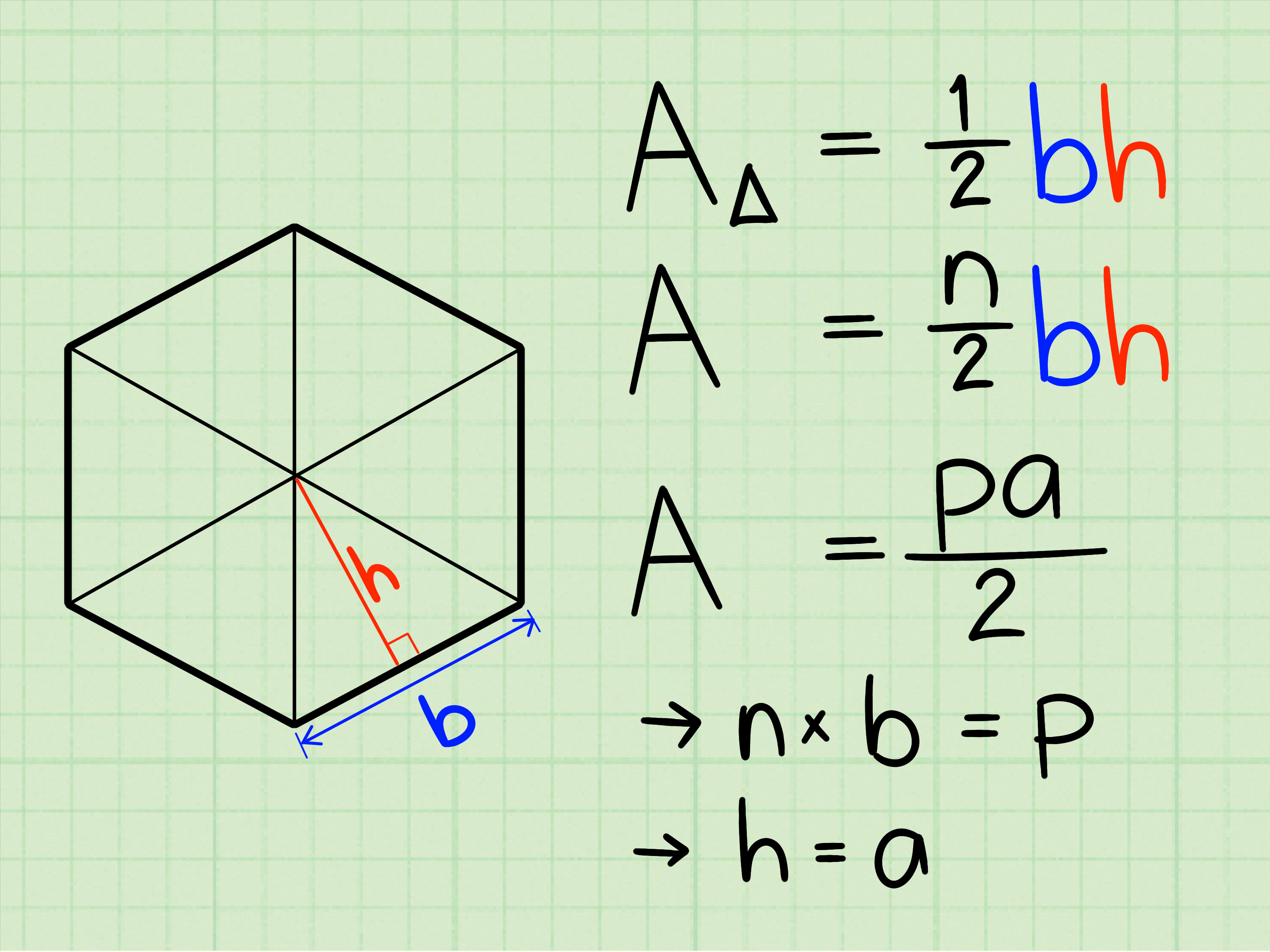
The secret is this: every regular polygon can be divided into matching triangles. Once you see that, the area formula stops looking mysterious and starts acting like a very organized pizza. Whether you are solving homework, helping a student, designing a pattern, estimating tile coverage, or trying to impress someone at a party where geometry somehow came up, this guide will walk you through the process in seven clear steps.
In this article, you will learn how to find the area of a regular polygon using the apothem, perimeter, side length, and number of sides. We will also cover common mistakes, real examples, and practical experience-based tips that make the formula easier to remember.
What Is a Regular Polygon?
A regular polygon is a two-dimensional closed shape with straight sides, equal side lengths, and equal angles. The word “regular” is important. A random five-sided shape may be a polygon, but unless all five sides and all five angles match, it is not a regular polygon.
Here are a few familiar examples:
- A regular triangle is an equilateral triangle.
- A regular quadrilateral is a square.
- A regular pentagon has five equal sides and five equal angles.
- A regular hexagon has six equal sides and often appears in honeycomb patterns.
- A regular octagon has eight equal sides, like many stop signs.
The more sides a regular polygon has, the more it begins to look like a circle. That is not just a cute visual observation; it helps explain why formulas involving radius, apothem, and trigonometry work so well.
The Main Formula for the Area of a Regular Polygon
The most common formula for finding the area of a regular polygon is:
Area = 1/2 × apothem × perimeter
In mathematical shorthand, this is written as:
A = 1/2ap
In this formula, A means area, a means apothem, and p means perimeter. The perimeter is the total distance around the polygon. The apothem is the distance from the center of the polygon to the midpoint of one side, meeting that side at a right angle.
If the word “apothem” looks like it wandered in wearing a tiny wizard robe, do not panic. It is just a special height measurement inside the polygon. Once you know the apothem and the perimeter, the area becomes surprisingly easy to calculate.
How to Find the Area of Regular Polygons: 7 Steps
Step 1: Confirm That the Polygon Is Regular
Before using the regular polygon area formula, make sure the shape is actually regular. This means every side must have the same length, and every angle must have the same measure. If the sides are uneven, the formula A = 1/2ap will not reliably work.
For example, a regular hexagon with six sides of 8 inches each qualifies. A six-sided backyard patio with random side lengths does not. That patio may still be lovely, but mathematically it has chosen chaos.
If your problem states “regular pentagon,” “regular octagon,” or “regular polygon,” you are safe to proceed. If it simply says “polygon,” check the measurements carefully.
Step 2: Count the Number of Sides
Next, count how many sides the polygon has. The number of sides is often represented by the letter n. This matters because the perimeter depends on how many equal sides there are.
For example:
- A triangle has 3 sides.
- A square has 4 sides.
- A pentagon has 5 sides.
- A hexagon has 6 sides.
- An octagon has 8 sides.
If a regular polygon has 10 sides, it is called a decagon. If it has 12 sides, it is called a dodecagon. If it has 37 sides, it is still a polygon, but your teacher may be testing your patience.
Step 3: Find the Length of One Side
Because all sides of a regular polygon are equal, you only need the length of one side to find the full perimeter. The side length is usually represented by s.
Suppose you have a regular hexagon where one side is 9 centimeters. Since all six sides are equal, each side is 9 centimeters. You do not need to measure all six sides unless you enjoy unnecessary cardio for your pencil.
The side length will help you calculate the perimeter using this formula:
Perimeter = number of sides × side length
Or:
p = n × s
Step 4: Calculate the Perimeter
Now multiply the number of sides by the length of one side. This gives you the total distance around the polygon.
For example, imagine a regular octagon with a side length of 6 feet:
p = 8 × 6 = 48 feet
The perimeter is 48 feet. That number will go into the area formula later.
Here is another example. A regular pentagon has 5 sides, and each side is 10 inches:
p = 5 × 10 = 50 inches
So the perimeter is 50 inches.
Step 5: Find the Apothem
The apothem is the perpendicular distance from the center of the regular polygon to the midpoint of any side. It works like the height of one of the triangles formed when you divide the polygon from the center to each vertex.
Sometimes the apothem is given directly in the problem. For example, a problem may say, “A regular pentagon has a side length of 12 cm and an apothem of 8.26 cm.” In that case, fantastic. The geometry gods have smiled upon you.
If the apothem is not given, you may need to calculate it using trigonometry. When you know the number of sides and the side length, the apothem can be found with:
apothem = side length ÷ [2 × tan(180° ÷ number of sides)]
Or:
a = s ÷ [2tan(180°/n)]
This formula comes from splitting the regular polygon into congruent triangles and then splitting one of those triangles into two right triangles. The tangent function helps connect the half-side length, center angle, and apothem.
Step 6: Apply the Area Formula
Once you know the perimeter and apothem, use the main formula:
Area = 1/2 × apothem × perimeter
Let’s use a regular hexagon with a side length of 10 cm and an apothem of 8.66 cm.
First, calculate the perimeter:
p = 6 × 10 = 60 cm
Now use the area formula:
A = 1/2 × 8.66 × 60
A = 259.8 square centimeters
So the area of the regular hexagon is approximately 259.8 cm².
Notice the unit changes from centimeters to square centimeters. Area always uses square units because it measures surface coverage, not just length.
Step 7: Check Your Answer and Units
The final step is simple but important: check your work. Make sure you multiplied correctly, used the right formula, and labeled your answer with square units.
If the side length is measured in inches, the area should be in square inches. If the measurements are in meters, the area should be in square meters. Forgetting square units is one of the most common mistakes in geometry, and yes, it can cost points even when the number is perfect.
Also, ask whether your answer makes sense. If you calculate the area of a small regular pentagon and get a number larger than a football field, something has probably gone rogue.
Example 1: Area of a Regular Pentagon
Let’s solve a complete example step by step.
Problem: Find the area of a regular pentagon with a side length of 12 inches and an apothem of 8.3 inches.
Step 1: Count the sides. A pentagon has 5 sides.
Step 2: Find the perimeter.
p = 5 × 12 = 60 inches
Step 3: Use the area formula.
A = 1/2 × 8.3 × 60
A = 249 square inches
The area of the regular pentagon is 249 in².
Example 2: Area of a Regular Octagon
Problem: Find the area of a regular octagon with a side length of 7 meters and an apothem of 8.45 meters.
An octagon has 8 sides, so first calculate the perimeter:
p = 8 × 7 = 56 meters
Now apply the formula:
A = 1/2 × 8.45 × 56
A = 236.6 square meters
The area is 236.6 m².
Finding Area When Only Side Length Is Given
Sometimes a problem gives only the number of sides and the side length. In that case, you can use a formula that includes trigonometry:
A = n × s² ÷ [4 × tan(180°/n)]
In this formula:
- A is the area.
- n is the number of sides.
- s is the side length.
- tan is the tangent function.
For example, find the area of a regular hexagon with side length 6 cm:
A = 6 × 6² ÷ [4 × tan(180°/6)]
A = 6 × 36 ÷ [4 × tan(30°)]
A = 216 ÷ [4 × 0.577]
A ≈ 216 ÷ 2.308
A ≈ 93.6 cm²
This method is useful when the apothem is missing, but it does require a scientific calculator. Make sure your calculator is in degree mode if you are using 180° in the formula.
Why the Formula Works
The formula A = 1/2ap works because a regular polygon can be divided into equal triangles. Draw lines from the center of the polygon to each vertex. A regular hexagon becomes six equal triangles. A regular octagon becomes eight equal triangles. A regular pentagon becomes five equal triangles.
Each triangle has a base equal to one side of the polygon. The height of each triangle is the apothem. The area of one triangle is:
1/2 × side length × apothem
When you add all the triangles together, the side lengths combine to form the full perimeter. That is why the formula becomes:
Area = 1/2 × apothem × perimeter
In other words, the formula is not magic. It is just the triangle area formula wearing a polygon costume.
Common Mistakes to Avoid
Using the Radius Instead of the Apothem
The radius of a regular polygon usually means the distance from the center to a vertex. The apothem is the distance from the center to the midpoint of a side. These are not the same measurement. Mixing them up can throw off your answer.
Forgetting to Find the Full Perimeter
Do not plug one side length into the formula as if it were the perimeter. If a regular octagon has sides of 5 cm, the perimeter is 40 cm, not 5 cm. The formula needs the full perimeter.
Using the Wrong Calculator Mode
If you use trigonometry, check whether your calculator is in degree mode or radian mode. For school-level geometry problems using 180°/n, degree mode is usually required.
Leaving Off Square Units
Area is measured in square units: cm², m², in², ft², and so on. A final answer without square units is like a sandwich without filling. Technically present, but disappointing.
Real-Life Uses for Regular Polygon Area
Regular polygon area appears in more places than many people realize. Designers use polygon measurements when creating tiles, logos, decorative patterns, and architectural details. Engineers may use polygon calculations when working with mechanical parts or structural layouts. Artists and crafters use regular polygons for quilting, mosaics, origami, paper design, and digital illustrations.
A regular hexagon is especially popular because it fits together without gaps, which is why it appears in honeycombs, floor tiles, and game boards. Regular octagons are common in signs, decorative tables, and landscape design. Once you understand how to calculate the area, these shapes stop looking like abstract classroom problems and start looking like practical design tools.
Quick Reference Formula List
Use these formulas when solving regular polygon area problems:
- Perimeter: p = n × s
- Main area formula: A = 1/2 × a × p
- Area using side length only: A = n × s² ÷ [4 × tan(180°/n)]
- Apothem using side length: a = s ÷ [2 × tan(180°/n)]
The easiest formula is usually A = 1/2ap, especially when the apothem is already given. If the apothem is missing, the side-length formula can save the day.
Experience-Based Tips for Learning How to Find the Area of Regular Polygons
One of the best ways to understand regular polygon area is to stop memorizing the formula for a moment and draw the shape. Seriously, draw it. Even a slightly wobbly sketch helps. When students see a regular polygon divided into triangles, the formula becomes much less intimidating. A pentagon is not just a five-sided mystery. It is five matching triangles arranged around a center point.
A helpful learning habit is to label everything before calculating. Write n for the number of sides, s for the side length, p for the perimeter, and a for the apothem. This small setup step prevents a lot of errors. Many wrong answers happen because someone rushes straight into the formula and accidentally uses the side length where the perimeter should go.
Another practical tip is to estimate before solving. If a regular hexagon has side lengths of 10 inches, its area should be bigger than a single 10-by-10 square? Maybe, depending on the apothem. It should not be 2 square inches, and it should not be 20,000 square inches. Estimation is like a smoke alarm for math mistakes. It tells you when something smells suspicious.
When using the apothem, imagine it as the “inside height” of the polygon’s triangle slices. This mental picture is especially useful because many students confuse apothem with radius. The radius goes to a corner. The apothem goes straight to the middle of a side. One points to a vertex; the other lands on a side at a right angle. If you remember that distinction, you avoid one of the most common geometry traps.
For trigonometry-based problems, calculator mode matters more than people expect. If a formula uses tan(180°/n), your calculator should usually be in degree mode. If it is in radian mode, your answer may look wildly wrong, and the calculator will not apologize. It will simply sit there, cold and confident, while giving you nonsense.
It also helps to practice with familiar shapes first. Start with a square, because its area can be checked using the simple formula side × side. Then move to an equilateral triangle, regular pentagon, hexagon, and octagon. A regular hexagon is a great practice shape because it divides neatly into six equilateral triangles when drawn from the center.
If you are studying for a test, create a tiny formula card with three lines: p = ns, A = 1/2ap, and A = ns²/[4tan(180°/n)]. Then practice deciding which formula fits each problem. The real skill is not just calculating; it is choosing the right tool.
For real-world projects, always round carefully. If you are calculating tile, fabric, wood, or garden space, rounding too early can create measurement errors. Keep extra decimal places during the calculation, then round the final answer based on the situation. For homework, follow your teacher’s rounding instructions. For actual materials, add a little extra for cuts, waste, or mistakes. Geometry is precise; scissors, saws, and humans are less so.
Finally, remember that regular polygon area is built from basic ideas you already know: perimeter, triangles, height, and multiplication. The formula may look advanced at first, but underneath it is the same triangle area concept you learned earlier. Once that clicks, regular polygons become less like math monsters and more like neatly sliced geometric snacks.
Conclusion
Learning how to find the area of regular polygons becomes much easier when you understand the relationship between the apothem, perimeter, and triangle area. The main formula, A = 1/2ap, works because a regular polygon can be divided into equal triangles, each with a base along the polygon’s side and a height equal to the apothem.
To solve most problems, confirm the polygon is regular, count the sides, find the side length, calculate the perimeter, identify or calculate the apothem, apply the formula, and label your answer with square units. With a little practice, regular polygon area problems become straightforward, useful, and maybe even slightly fun. Geometry may not bring snacks, but at least it brings patterns.