

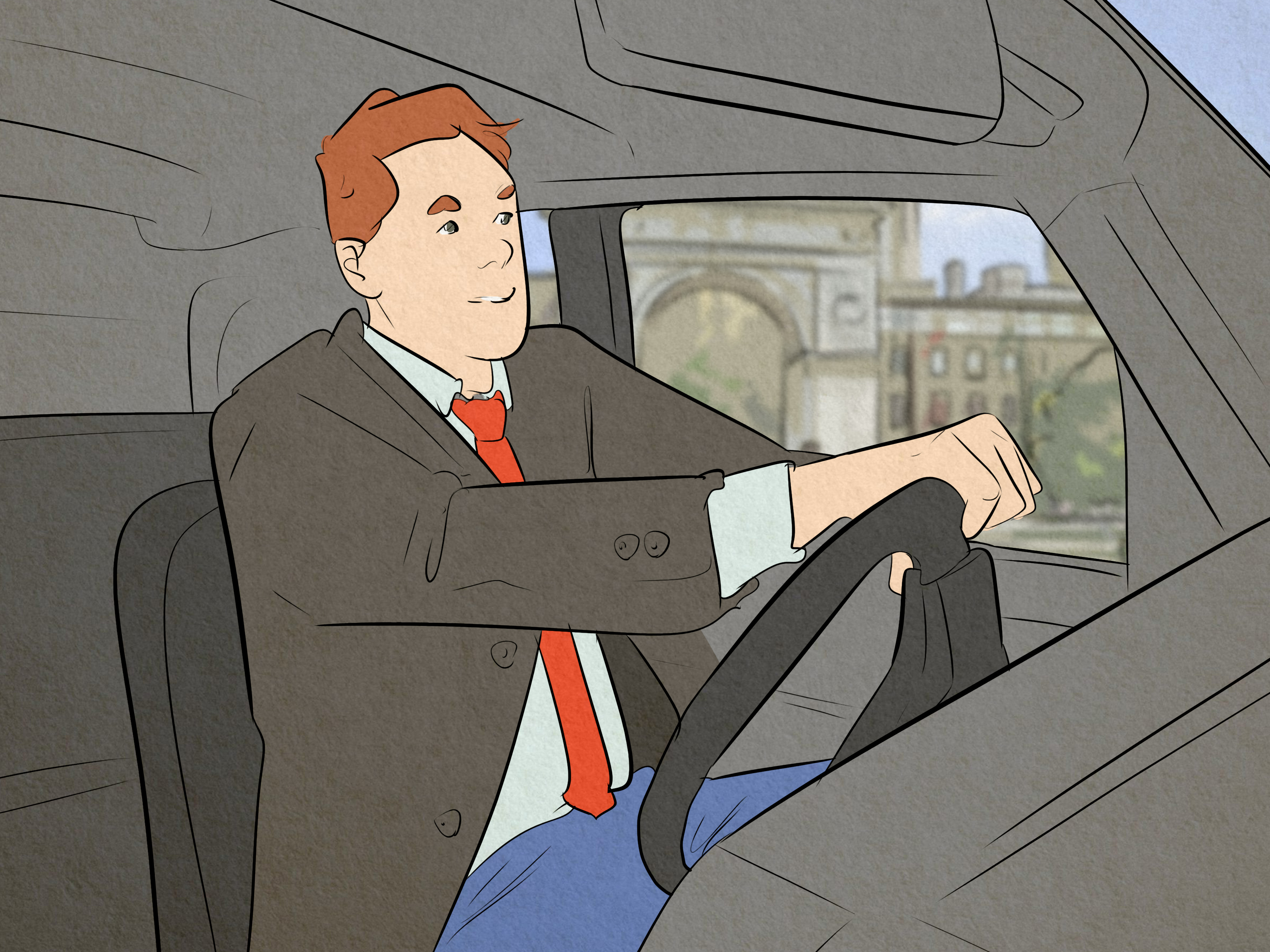
Getting a driver’s license in the United States can feel like unlocking a secret level in adulthood. One minute you are studying road signs, the next you are trying to parallel park while a silent examiner writes mysterious notes on a clipboard. The good news? The process is much less scary when you understand the steps.
In the USA, driver’s licenses are issued by each state, not by one single national office. That means the exact rules can vary depending on whether you live in California, Texas, New York, Florida, Illinois, Washington, or another state. Still, most states follow the same basic path: prove who you are, apply for a learner’s permit, pass a knowledge test, practice driving, pass a road test, and receive your license. Easy? Not always. Possible? Absolutely.
This step-by-step guide explains how to get a driver’s license in the USA, what documents you may need, how the written and road tests work, what teen drivers should know, and how to avoid common DMV mistakes. Buckle up. We are going to the DMV, but emotionally prepared this time.
Understanding How Driver’s Licenses Work in the USA
A U.S. driver’s license is more than permission to drive. It is also one of the most commonly used forms of identification in America. People use it to board domestic flights when it is REAL ID-compliant, open bank accounts, verify age, rent cars, and prove residency.
Every state has its own Department of Motor Vehicles or similar agency. Some states call it the DMV, while others use names like Department of Public Safety, Secretary of State, Department of Licensing, or Motor Vehicle Administration. Different names, same basic mission: make sure drivers know enough not to treat highways like bumper cars.
Most first-time applicants apply for a standard non-commercial license, often called a Class D, Class C, or Class E license depending on the state. This license usually allows you to drive regular passenger vehicles, including cars, small SUVs, and light trucks. Commercial vehicles, motorcycles, and certain large vehicles require separate licenses or endorsements.
Step 1: Check Your State’s Requirements
The first step is to visit your state’s official driver licensing website. Do not rely only on random forums, outdated blog posts, or your cousin who “totally remembers how it worked in 2014.” Rules change. Fees change. Appointment systems change. Even document requirements can change.
Look for the official page about first-time driver licenses, learner permits, or new drivers. Your state will explain the minimum age, required documents, testing rules, driver education requirements, fees, and appointment options.
For example, some states allow online pre-application before visiting an office. California allows applicants to start a driver’s license or ID card application online, while Washington also offers online pre-application for a first license or permit. New York allows eligible applicants to begin the learner permit process and then complete licensing steps through its DMV system. Other states may require more in-person steps.
Step 2: Gather the Required Documents
Before you apply, prepare your documents carefully. This is where many people lose time. The DMV will not accept “I forgot it at home” as an official form of identification, even if you say it with excellent confidence.
Most states require proof of identity, date of birth, lawful presence or legal status, Social Security number or proof of ineligibility, and state residency. Acceptable documents often include a U.S. birth certificate, valid U.S. passport, permanent resident card, foreign passport with immigration documents, Social Security card, W-2 form, utility bill, lease agreement, bank statement, school record, or pay stub.
If your current name is different from the name on your identity document, you may also need proof of name change, such as a marriage certificate, divorce decree, or court order.
Standard License vs. REAL ID
When applying, you may be asked whether you want a standard license or a REAL ID-compliant license. A REAL ID is a state-issued license or ID that meets federal identification standards. Since May 7, 2025, travelers generally need a REAL ID-compliant license or another acceptable ID, such as a passport, to board domestic flights in the United States.
You can usually recognize a REAL ID by a star or special marking in the upper corner of the card. If you fly often, choose REAL ID unless you already plan to use a passport at airports. If you do not bring the right documents for REAL ID, your state may still issue a standard license, but it may not be accepted for certain federal identification purposes.
Step 3: Apply for a Learner’s Permit
For most first-time drivers, the learner’s permit is the first official milestone. A learner’s permit allows you to practice driving under supervision. It does not mean you can grab the keys, turn on your favorite playlist, and cruise alone to get tacos. Supervised means supervised.
The minimum age for a learner’s permit varies by state. Many states allow teens to apply around age 15 or 16, while adults can usually apply at 18 or older. Some states require teen applicants to enroll in or complete driver education before receiving a permit.
To get a permit, you usually need to complete an application, provide required documents, pay a fee, pass a vision screening, and pass a written knowledge test. The test checks your understanding of traffic laws, road signs, safe driving practices, alcohol and drug rules, speed limits, right-of-way rules, and emergency procedures.
Step 4: Study for the Written Knowledge Test
The written driver’s test is not designed to trick you, but it will expose whether you actually studied. Your best resource is your state’s official driver handbook. These handbooks explain road signs, traffic signals, parking rules, passing rules, distracted driving laws, DUI laws, and what to do around school buses, emergency vehicles, pedestrians, cyclists, and railroad crossings.
Many states offer sample tests or practice questions online. Use them. Practice tests help you learn the style of questions and identify weak areas before test day. Reading the handbook once while half-watching TV is not a strategy; it is a polite suggestion to your brain.
Focus especially on road signs, right-of-way rules, speed limits, lane markings, safe following distance, parking on hills, and rules for intersections. These topics appear often because they matter every day on real roads.
Step 5: Pass the Vision Screening
Almost every state requires a vision screening before issuing a permit or license. The goal is simple: drivers need to see signs, signals, vehicles, pedestrians, and hazards clearly enough to operate safely.
If you wear glasses or contact lenses, bring them. If you pass the screening while wearing corrective lenses, your license may include a restriction requiring you to wear them when driving. That restriction is not decorative. Driving without required glasses can result in penalties and, more importantly, a very bad day.
Step 6: Practice Driving Under Supervision
Once you have your learner’s permit, practice becomes the main event. This stage is where you turn handbook knowledge into real-world skill. You learn how to steer smoothly, brake gently, check blind spots, change lanes, park, merge, reverse, handle intersections, and avoid panicking when someone behind you honks after 0.3 seconds at a green light.
States often require teen drivers to complete a minimum number of supervised driving hours. California, for example, requires minors to hold an instruction permit for at least six months and complete supervised practice, including nighttime driving, before taking the drive test. Florida requires teens to hold a learner’s license for 12 months, have no traffic convictions, and complete behind-the-wheel training before moving forward. Texas uses a graduated driver license system with learner and provisional phases for teens.
Even when adults are not required to complete a set number of practice hours, practice is still essential. The road test is not just about moving the car. Examiners want to see observation, control, judgment, safety, and confidence.
Step 7: Complete Driver Education if Required
Driver education rules vary widely. Teen drivers are more likely to face mandatory driver education requirements, while adults may have fewer requirements depending on the state. Some states also require special courses for first-time adult drivers under a certain age.
For example, Texas requires certain first-time applicants ages 18 through 24 to complete a six-hour adult driver education course unless an exemption applies. New York requires applicants to complete a pre-licensing course or approved driver education course before scheduling the road test. Florida requires teen applicants to complete approved driver education before applying for a learner’s license.
Driver education may include classroom instruction, online lessons, behind-the-wheel training, or a combination. Even if it feels like one more hoop to jump through, it can make you safer, calmer, and more prepared for both the test and real traffic.
Step 8: Schedule the Road Test
After you meet the permit holding period, education requirements, and practice requirements, you can schedule your road test. Some states let you schedule online. Others allow appointments by phone or through approved third-party testing providers.
Do not wait until the last minute. Road test appointments can fill up quickly, especially before school breaks, summer, and holiday travel seasons. If your permit or course certificate expires, you may have to renew or repeat steps before testing.
Before test day, confirm what you must bring. Common requirements include your learner’s permit, proof of insurance, vehicle registration, a safe test vehicle, completed driver education certificate if required, a licensed supervising driver, and any state-specific forms.
Step 9: Prepare the Vehicle for the Driving Test
Your test vehicle must be legal, safe, and properly equipped. Examiners usually check items such as brake lights, turn signals, horn, mirrors, seat belts, tires, license plates, registration, and insurance. If the car fails the basic safety check, your test may be canceled before you even leave the parking lot. That is not the dramatic entrance anyone wants.
Practice in the same type of vehicle you plan to use for the test. If you learned in a small sedan, test day is probably not the ideal time to borrow a giant pickup truck with the turning radius of a small yacht.
Make sure you know how to operate the headlights, windshield wipers, hazard lights, defroster, parking brake, and signals. Some examiners may ask you to identify or use these controls before the road portion begins.
Step 10: Take and Pass the Road Test
The road test evaluates whether you can drive safely and legally. You may be asked to start and stop smoothly, turn correctly, change lanes, obey signs, check mirrors, observe speed limits, yield properly, park, reverse, merge, and respond to traffic conditions.
The examiner is not looking for race-car skills. They are looking for safe, predictable driving. Signal early, check mirrors, look over your shoulder when required, keep both hands controlled, stop completely at stop signs, and do not speed. Rolling through a stop sign is one of the fastest ways to turn a promising test into a “see you next time” situation.
If you fail, do not treat it as the end of your driving career. Many people fail the first time. Ask what you need to improve, practice those skills, and reschedule according to your state’s rules. A failed test is feedback with paperwork.
Step 11: Receive Your Driver’s License
After passing the road test, your state may issue a temporary paper license first, then mail the permanent card. Some states print cards at the office, while others mail them for security reasons. Your temporary license usually allows you to drive legally while waiting for the physical card.
Check the information on your license carefully. Make sure your name, address, date of birth, license class, restrictions, and expiration date are correct. If something is wrong, contact the licensing agency quickly.
Special Rules for Teen Drivers
Teen drivers usually follow a graduated driver licensing system. This system typically has three stages: learner permit, intermediate or provisional license, and full license. The purpose is to introduce driving privileges gradually while reducing high-risk situations such as late-night driving, carrying teen passengers, and driving without enough experience.
Restrictions vary by state, but they may include nighttime driving limits, passenger limits, cell phone restrictions, seat belt requirements, and minimum permit holding periods. Parents or guardians may also need to certify supervised driving hours.
These rules may feel annoying to teens, but they exist for a serious reason. New drivers face higher crash risks, and structured practice helps reduce that danger. Think of graduated licensing as training wheels for a two-ton machine.
What New Residents Should Know
If you already have a license from another U.S. state and move to a new state, you usually need to transfer your license within a specific deadline. That deadline may be 30, 60, or 90 days depending on the state.
You may need to provide proof of identity, residency, Social Security number, and your current out-of-state license. Some states waive the road test for licensed drivers transferring a valid license, but they may still require a vision test, knowledge test, or surrender of the old license.
If your license is expired, suspended, revoked, or from another country, requirements may be different. Always check your new state’s official rules before assuming you can simply swap cards like trading baseball cards.
Can Non-U.S. Citizens Get a Driver’s License?
Many non-U.S. citizens can apply for a driver’s license, but eligibility depends on state law and immigration status documentation. States may require proof of identity, lawful presence, residency, and authorized stay. Some states also offer limited-purpose licenses or driving privilege cards for residents who meet state requirements but cannot provide every document required for a standard or REAL ID license.
Visitors driving temporarily in the United States may need a valid license from their home country and, depending on the state, an International Driving Permit. An International Driving Permit is not a standalone license; it works as a translation of a valid foreign license. In other words, it is a helpful sidekick, not the superhero.
Common Mistakes to Avoid
Bringing the Wrong Documents
This is the classic DMV mistake. Bring originals or certified copies when required. Photocopies, screenshots, and expired documents may not be accepted.
Ignoring State-Specific Rules
Do not assume your friend’s experience in another state applies to you. California, Texas, New York, Florida, Illinois, and Washington all have their own rules, forms, and testing procedures.
Practicing Only Easy Routes
Empty parking lots are useful at first, but real driving includes traffic, lane changes, pedestrians, cyclists, hills, bad weather, school zones, and confusing intersections that seem designed by someone holding the map upside down.
Forgetting Insurance and Registration
If you bring your own vehicle to the road test, it usually must have valid registration and proof of insurance. No proof, no test.
Driving Too Nervously
Nerves are normal, but hesitation can become unsafe. Practice until you can make calm, legal decisions without freezing at every intersection like the stop sign asked you a philosophical question.
Practical Experiences and Real-World Tips for Getting a Driver’s License in the USA
One of the most useful experiences new drivers share is this: the DMV process rewards preparation. People who walk in with every document organized, appointment confirmation ready, fees prepared, and application completed usually have a much smoother day. People who arrive with a mystery folder full of random papers often spend more time in the waiting area than anyone should spend under fluorescent lighting.
A smart approach is to create a “license folder” before your appointment. Put your identity document, Social Security proof, residency proofs, immigration documents if applicable, permit, driver education certificate, insurance, registration, appointment confirmation, and payment method in one place. Check your state’s online document checklist the night before. Then check it again. This may sound excessive, but it is much better than standing at the counter while an employee calmly explains that your bank statement is too old.
Another real-world tip: practice the boring stuff. New drivers often want to practice highways, speed, and smooth turns, but many road tests are lost on simple habits. Complete stops. Mirror checks. Shoulder checks. Proper lane position. Correct signaling. Smooth braking. Safe following distance. Looking both ways even when you have the right of way. These small actions tell the examiner that you are not just operating the caryou are managing risk.
Parallel parking gets a lot of attention, but it is not the only skill that matters. Depending on your state, you may also need to show a three-point turn, backing in a straight line, curb parking, lane changes, unprotected left turns, or parking on a hill. Practice these skills slowly and repeatedly. The goal is not to look cool. The goal is to avoid bumping the curb so dramatically that the examiner starts writing faster.
For nervous drivers, mock tests are incredibly helpful. Ask a licensed adult, instructor, or experienced driver to act like an examiner. Have them give instructions without coaching. Drive for 20 to 30 minutes through neighborhoods, business areas, intersections, and parking zones. At the end, ask for honest feedback. This kind of practice builds confidence because it makes the test feel familiar instead of mysterious.
Timing also matters. If you can choose your road test appointment, avoid scheduling it when you are rushed, hungry, exhausted, or mentally juggling ten other problems. A morning appointment can be helpful for some people because they feel fresh. Others prefer midday after traffic calms down. Choose a time when you can arrive early, breathe, check in, and settle your nerves.
If you fail the test, do not turn it into a personal identity crisis. Failing a driving test does not mean you are a bad driver forever. It means that on that day, under those conditions, you did not meet the required standard. Review the feedback carefully. If you failed for observation, practice scanning and mirror checks. If you failed for parking, practice parking. If you failed for speed control, practice maintaining consistent speed. Improvement is usually very specific.
Finally, remember that getting the license is not the finish line. It is the beginning of responsible driving. The real test starts after the card arrives, when there is no examiner beside you and the road is full of impatient commuters, unpredictable weather, construction zones, and drivers who apparently believe turn signals are optional accessories. Keep learning. Stay patient. Drive defensively. Your future self, your passengers, and everyone else on the road will thank you.
Conclusion
Getting a driver’s license in the USA is a step-by-step process, not a mystery ritual guarded by DMV wizards. Start by checking your state’s official requirements, gather the correct documents, apply for a learner’s permit, study your driver handbook, pass the knowledge test, practice under supervision, complete any required driver education, schedule the road test, and bring a safe, insured, properly registered vehicle.
The exact rules vary by state, but the big idea is the same everywhere: prove who you are, learn the rules, practice safely, and demonstrate that you can drive responsibly. Whether you are a teen driver, adult beginner, new resident, or international applicant, preparation is your best friend.
Note: Driver licensing rules can change and vary by state. Before applying, always confirm current requirements with your state’s official driver licensing agency. This article is based on current federal and state guidance from official U.S. transportation, DMV, DPS, DOL, TSA, USA.gov, and road safety resources.