

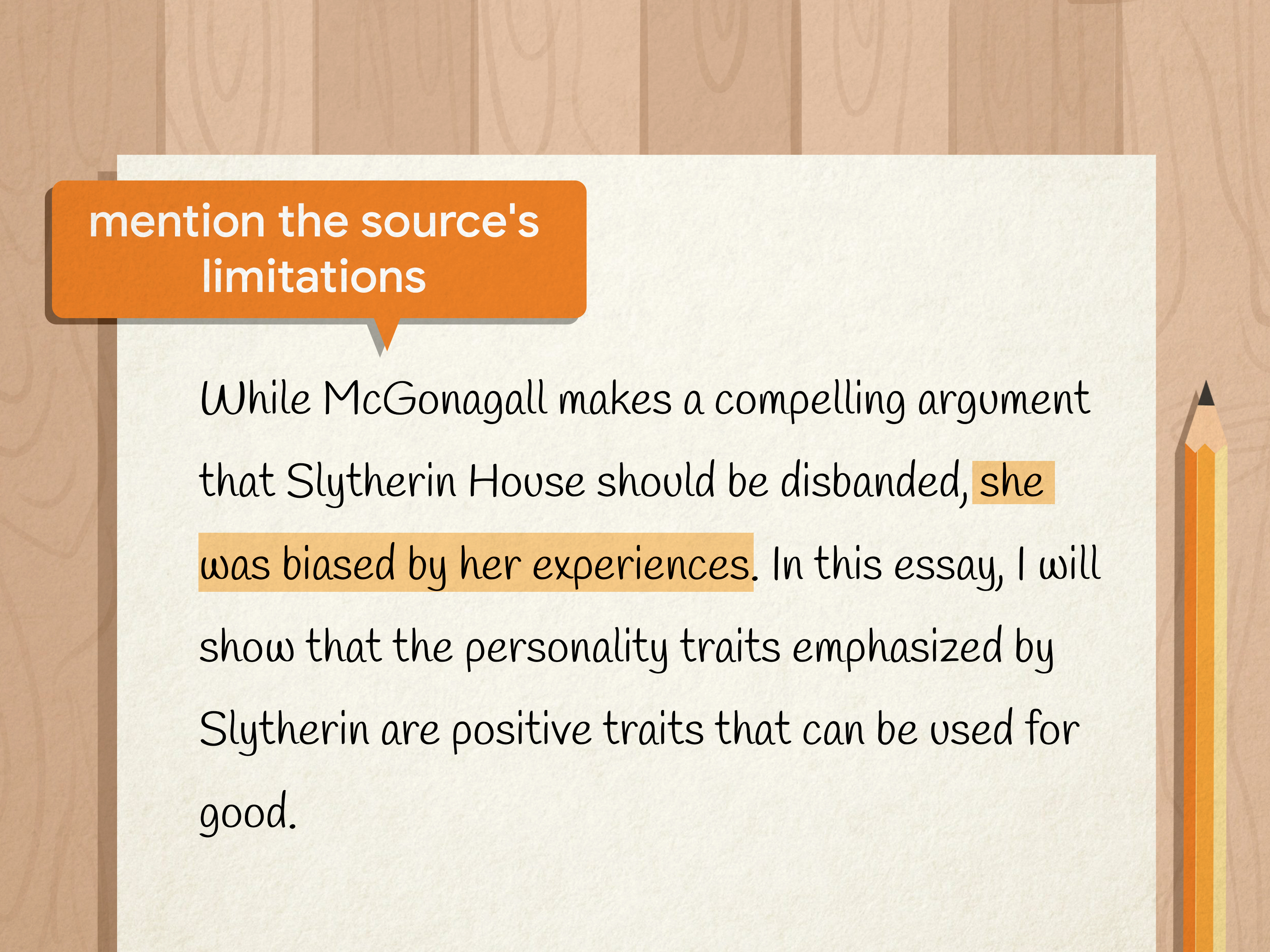
Introducing a journal article in an essay sounds simple until you actually try to do it. Suddenly, your sentence starts looking like it is carrying three backpacks: the author’s name, the article title, the journal title, the date, the main idea, the citation style, and maybe a quote that is longer than your lunch break. The good news? You do not need to wrestle your source into the paragraph like a sofa through a narrow doorway. You just need a clear method.
Learning how to introduce a journal article in an essay is really about learning how to guide your reader. A journal article should not randomly appear in your paragraph like an uninvited guest at a group project meeting. It should enter with context, purpose, and a smooth connection to your own argument. Whether you are writing a research paper, literary analysis, sociology essay, psychology review, or argumentative essay, the goal is the same: show who wrote the article, why it matters, what idea you are using, and how that idea supports your point.
This guide explains how to introduce a journal article naturally, how to use signal phrases, when to summarize or quote, how to avoid dropped quotations, and how to make your source sound like part of your essay instead of a copy-and-paste emergency. You will also find examples, templates, common mistakes, and a practical experience-based section at the end.
What Does It Mean to Introduce a Journal Article?
To introduce a journal article means to present it to your reader before using its information, argument, data, or conclusion. Instead of throwing a quote into your essay without warning, you prepare the reader by identifying the source and explaining its relevance.
A good introduction to a journal article usually answers four questions:
- Who wrote the article?
- What is the article about?
- Why is this source useful for your essay?
- How does it connect to your claim?
For example, a weak introduction might say:
“Students learn better when feedback is specific and timely.”
That quote may be useful, but it arrives without context. The reader does not know who said it, where it came from, or why it matters. A stronger version would be:
In a 2022 article published in the Journal of Educational Psychology, researcher Maria Chen argues that students respond more effectively to feedback when it is specific, timely, and connected to clear learning goals.
Now the source has a proper entrance. It walks in through the front door, introduces itself, and does not track mud across your paragraph.
Why Introducing a Journal Article Matters
Journal articles are usually written by scholars, researchers, or experts. They often contain original studies, literature reviews, data analysis, and specialized arguments. Because they carry academic authority, they can strengthen your essay. However, that authority only helps if your reader understands how the article fits your point.
When you introduce a journal article clearly, you do three important things. First, you establish credibility by showing that your essay is based on serious research. Second, you help your reader follow your reasoning. Third, you avoid plagiarism by making the boundary between your ideas and the source’s ideas easy to see.
Think of your essay as a dinner party. Your thesis is the host. Your paragraphs are the table conversation. Journal articles are guests with impressive résumés. You do not want them barging in and talking over everyone. You want to introduce them politely, let them contribute, and then explain how their contribution supports your main argument.
The Basic Formula for Introducing a Journal Article
A simple and reliable formula looks like this:
Author + article context + main idea + connection to your argument.
Here is an example:
In her article on workplace communication, published in the Journal of Business Psychology, Dana Mitchell explains that employees are more likely to trust managers who provide consistent, transparent feedback. This finding supports the idea that communication style plays a major role in workplace morale.
This introduction works because it names the author, identifies the topic, gives the source’s key idea, and connects that idea to the essay’s argument. It does not make the reader guess. Academic readers are smart, but they are not mind readers. Do not make them do detective work when a clear sentence will do.
Use Signal Phrases to Bring the Article Into Your Essay
A signal phrase is a short phrase that tells readers you are about to use material from a source. It can introduce a quotation, paraphrase, summary, or statistic. Signal phrases are one of the easiest ways to introduce a journal article smoothly.
Common Signal Phrase Verbs
Choose verbs that match what the author is actually doing. Not every author “says” something. Some argue, suggest, demonstrate, challenge, compare, observe, or conclude. The verb matters because it tells the reader how to understand the source.
- Argues use when the author makes a claim.
- Finds use when the article reports research results.
- Suggests use when the conclusion is cautious or interpretive.
- Demonstrates use when evidence strongly supports a point.
- Challenges use when the article disagrees with another view.
- Explains use when the article clarifies a concept or process.
- Notes use for a smaller observation.
Examples of Signal Phrases
According to Lee and Ramirez, students who revise essays after receiving targeted feedback tend to produce stronger final drafts.
Smith argues that social media platforms influence political participation by shaping which issues users see most often.
In a study of urban transportation habits, Johnson finds that commuters are more likely to use public transit when service is frequent and predictable.
Notice that each example gives the source a job. The article is not sitting there like decorative academic furniture. It is doing something useful.
How to Introduce a Journal Article in APA Style
APA style is common in psychology, education, social sciences, business, nursing, and many science-related fields. In APA, the author’s last name and year are central. When introducing a journal article in APA style, you can use either a narrative citation or a parenthetical citation.
APA Narrative Citation
In a narrative citation, the author’s name appears in your sentence, and the year appears in parentheses.
Garcia (2021) found that students who practiced retrieval strategies remembered course material more effectively than students who only reread notes.
This style works well when you want to emphasize the author’s role in the research.
APA Parenthetical Citation
In a parenthetical citation, the author and year appear at the end of the sentence.
Students who practiced retrieval strategies remembered course material more effectively than students who only reread notes (Garcia, 2021).
This style works well when you want the idea to remain the center of attention. Both approaches are correct when used properly. The best choice depends on whether your paragraph emphasizes the researcher or the finding.
How to Introduce a Journal Article in MLA Style
MLA style is often used in literature, language studies, philosophy, cultural studies, and the humanities. MLA usually emphasizes the author’s name and page number. If you mention the author in your sentence, you generally only need the page number in parentheses after the borrowed material.
Thompson argues that modern novels often use fragmented narration to represent uncertainty and emotional conflict (42).
If you do not mention the author in the sentence, include the author’s last name and page number in the citation.
Modern novels often use fragmented narration to represent uncertainty and emotional conflict (Thompson 42).
In MLA, article titles are usually placed in quotation marks, while journal titles are italicized. For example:
In “Narrative Memory and Modern Fiction,” published in Studies in the Novel, Thompson argues that fragmented narration mirrors the instability of memory.
Should You Mention the Journal Title?
You do not always need to mention the journal title in the body of your essay. If the journal is especially relevant, prestigious, or useful for context, include it. If mentioning the journal title makes the sentence clunky, save the full publication information for the Works Cited or References page.
Use the journal title when it adds credibility or context:
In an article published in the Journal of Adolescent Health, Patel examines how sleep patterns affect academic performance among high school students.
Skip the journal title when the sentence becomes overloaded:
Patel examines how sleep patterns affect academic performance among high school students.
The second version is cleaner, especially if the full citation appears elsewhere. Academic writing should be clear, not stuffed like a suitcase before a three-week vacation.
How to Introduce a Journal Article in the Introduction of an Essay
Sometimes you may want to introduce a journal article in your essay’s opening paragraph. This can work well if the article helps establish the problem, shows the importance of the topic, or provides a surprising statistic. However, do not let the source take over your introduction. Your introduction should lead to your thesis, not become a mini literature review wearing a fake mustache.
Here is a strong example:
Recent research on digital distraction suggests that students often underestimate how frequently they switch tasks while studying. In a 2023 article on attention and learning, Miller argues that even brief interruptions can reduce comprehension and increase study time. This essay argues that schools should teach digital self-management as a core academic skill rather than treating distraction as a personal flaw.
This paragraph uses the journal article to create context, then moves toward the writer’s own thesis. That final movement is essential. A source can open the door, but your argument needs to walk through it.
How to Introduce a Journal Article in a Body Paragraph
Most journal articles are introduced in body paragraphs. A strong body paragraph usually begins with your own topic sentence, then brings in the source as evidence or support.
Use this structure:
- Start with your point.
- Introduce the journal article.
- Use a paraphrase, summary, statistic, or quote.
- Explain how the source supports your point.
Example:
Clear feedback helps students improve because it shows them exactly what to revise. In a study of writing instruction, Nguyen found that students who received specific comments on thesis development and organization made more meaningful revisions than students who received general praise. This evidence shows that feedback works best when it gives students a practical direction, not just a gold star and a vague “nice job.”
The explanation after the source is just as important as the introduction before it. Never assume the evidence explains itself. Evidence is powerful, but it is not a self-driving car. You still need to steer.
Quote, Paraphrase, or Summarize?
When introducing a journal article, you have three main options: quote, paraphrase, or summarize. The best choice depends on your purpose.
Use a Quote When the Wording Matters
Quote when the author’s exact words are especially strong, technical, memorable, or difficult to rephrase without losing meaning. Keep quotes short unless your assignment requires close analysis.
Rivera describes academic confidence as “a learned relationship with difficulty,” suggesting that students build confidence by practicing through challenge rather than avoiding it.
Use a Paraphrase When the Idea Matters
Paraphrase when you want to restate a specific idea in your own words. A paraphrase should be genuinely rewritten, not just a thesaurus costume party where “important” becomes “significant” and everyone pretends the sentence is new.
Rivera suggests that students develop academic confidence when they repeatedly work through challenging tasks and learn that difficulty does not equal failure.
Use a Summary When the Whole Article Matters
Summarize when you need to present the article’s overall argument or findings without focusing on one sentence or detail.
Rivera’s article examines how students build confidence across a semester-long writing course, concluding that structured revision, instructor feedback, and peer discussion all contribute to stronger academic self-belief.
Avoid Dropped Quotes
A dropped quote is a quotation that appears without introduction or explanation. It feels abrupt because the reader does not know where it came from or why it is there.
Weak version:
“Feedback must be specific if students are expected to revise effectively.”
Better version:
In her study of college writing courses, Alvarez argues that “feedback must be specific if students are expected to revise effectively.” This point matters because vague comments may encourage students, but they rarely show students what to change.
The better version introduces the author, gives context, includes the quote, and explains its importance. That is the academic writing equivalent of turning on the lights before asking everyone to admire the furniture.
How Much Background Should You Give?
Give enough background to make the source understandable, but not so much that your paragraph wanders away from your argument. Usually, one sentence of context is enough. Mention the author’s field, study focus, or article topic if it helps your reader understand the evidence.
Too little context:
Brown says that sleep affects grades.
Too much context:
Brown, who has written several articles about education, psychology, student behavior, classroom culture, motivation, homework routines, and school policy, conducted a study that was published in a journal that focuses on adolescent development and educational performance.
Balanced context:
In a study of adolescent sleep habits, Brown found that students with consistent sleep schedules reported stronger concentration and better academic performance.
The balanced version gives the reader what they need and then gets back to business.
Best Templates for Introducing a Journal Article
Templates can help when you are stuck. Just remember to customize them so your writing does not sound like it was assembled in a citation factory.
Template 1: Author-Focused
[Author] argues that [main claim], showing that [connection to your point].
Example:
Hernandez argues that community gardens improve neighborhood health, showing that public spaces can influence both nutrition and social connection.
Template 2: Study-Focused
In a study of [topic], [Author] found that [finding].
Example:
In a study of remote workers, Kim found that flexible schedules improved job satisfaction but also made work-life boundaries harder to maintain.
Template 3: Article-Title Focused
In “[Article Title],” [Author] examines [topic] and concludes that [main idea].
Example:
In “Digital Reading and Student Attention,” Walters examines online reading habits and concludes that scrolling environments can make deep comprehension more difficult.
Template 4: Contrast-Focused
While some researchers suggest [viewpoint], [Author] challenges this position by arguing that [counterclaim].
Example:
While some researchers suggest that homework improves discipline, Bennett challenges this position by arguing that excessive homework can increase stress without improving long-term learning.
How to Connect the Article to Your Own Argument
The most common mistake students make is letting the journal article do all the talking. Your essay should not become a parade of other people’s ideas. After introducing a journal article, explain how it supports, complicates, or challenges your argument.
Use phrases like:
- This finding supports the claim that…
- This evidence complicates the common assumption that…
- The article helps explain why…
- This conclusion matters because…
- Although the study focuses on…, its findings also apply to…
Example:
In a study of first-year college students, Morgan found that students who visited writing centers early in the semester were more likely to revise their essays substantially. This finding supports the argument that academic support services are most effective when students use them before they feel overwhelmed.
The second sentence is the writer’s analysis. Without it, the source would sit there quietly, hoping someone understands why it was invited.
Common Mistakes to Avoid
1. Starting With the Article Instead of Your Point
Do not begin every paragraph with “In an article…” Your essay should be driven by your argument, not by your sources. Start with your idea, then bring in the journal article as support.
2. Giving Too Much Citation Information
You usually do not need to include the article title, journal title, volume, issue, database, DOI, and the author’s academic life story in your sentence. Save full details for the reference list.
3. Using Weak Signal Verbs
Words like “says” and “talks about” are not wrong, but they are often too vague for academic writing. Try “argues,” “finds,” “demonstrates,” “suggests,” or “examines.”
4. Forgetting to Explain the Evidence
Even strong evidence needs interpretation. After introducing the article, tell your reader why it matters.
5. Overusing Direct Quotes
Journal articles are often dense. Quoting too much can make your essay feel heavy. Paraphrase findings and quote only when the exact language is important.
Quick Checklist: Introducing a Journal Article Smoothly
- Have I identified the author or authors clearly?
- Have I given enough context about the article?
- Have I used a strong signal verb?
- Have I cited the source in the required style?
- Have I connected the source to my own argument?
- Have I avoided dropped quotes?
- Have I explained why the article matters?
Experience-Based Advice: What Actually Works When Introducing Journal Articles
After working with academic essays, research drafts, and student writing, one lesson becomes obvious: the hardest part is rarely finding a journal article. The harder part is making the article sound like it belongs in the essay. Many writers collect impressive sources, highlight half the PDF, and then freeze when it is time to use the research. The problem is not intelligence. The problem is integration.
A practical habit that works well is writing a one-sentence “source purpose note” before adding the article to the essay. For example: “I am using this article to show that feedback improves revision when it is specific.” That sentence may not appear in the final draft, but it helps you understand why the source is there. Once you know the purpose, the introduction becomes easier. You are no longer introducing the article as random information; you are introducing it as evidence for a specific job.
Another useful experience-based strategy is to introduce the source after your topic sentence, not before it. When students begin a paragraph with the source, the paragraph often becomes a summary of the article. When they begin with their own claim, the source naturally becomes support. Compare these two openings. “Jones studied student motivation in online classes” is fine, but it puts Jones in charge. “Online classes require students to manage motivation more independently” puts the writer’s argument in charge. Then Jones can enter as evidence: “In a study of student motivation in online classes, Jones found…” The difference is small, but the paragraph becomes much stronger.
It also helps to think of journal articles as conversations rather than trophies. Some students treat a scholarly source like a shiny object they must display: “Look, professor, I found a peer-reviewed article!” But strong academic writing does more than display research. It responds to research. It agrees, questions, extends, or applies the article’s ideas. After introducing a journal article, ask yourself: “What do I want to do with this source?” If the answer is only “prove I read it,” keep revising.
One common experience is discovering that the article’s title sounds perfect, but the article itself is only partly useful. That is normal. You do not need to use every section of a journal article. Sometimes one finding, one definition, or one paragraph from the discussion section is enough. A focused introduction is better than a giant summary. Instead of writing, “This article discusses many aspects of climate policy,” write, “Lopez’s analysis of state-level climate policy shows that local incentives can influence household energy choices.” That version is narrower, clearer, and more useful.
Students also improve quickly when they stop dropping quotes into paragraphs and start building “quote sandwiches.” The first slice of bread introduces the source. The filling is the quote or paraphrase. The second slice explains it. It may sound a little silly, but it works. Without the bread, your essay is just holding a handful of academic deli meat, and nobody asked for that.
Finally, the best introductions sound natural because they are written for a reader, not for a citation checklist. Yes, you must follow APA, MLA, Chicago, or whatever style your instructor requires. But the sentence still needs to read smoothly. If your introduction feels too crowded, split it into two sentences. If the author’s name and year interrupt the flow, try a parenthetical citation. If the article title is long enough to need its own parking space, do not force it into the sentence unless it is necessary. Clear writing wins.
The real skill is balance. Introduce enough information to establish credibility, but not so much that the sentence collapses under its own backpack. Use the journal article confidently, explain its relevance, and return to your own argument. That is how research becomes part of an essay instead of a pile of academic bricks stacked in the middle of the page.
Conclusion
Knowing how to introduce a journal article in an essay is one of the most useful academic writing skills you can build. A strong introduction gives your source context, uses a clear signal phrase, follows the correct citation style, and connects the article to your own argument. Whether you quote, paraphrase, or summarize, the goal is not simply to prove that you found research. The goal is to use research in a way that strengthens your thinking.
Introduce journal articles with purpose. Let the author enter the conversation, but do not hand over the microphone for the entire essay. Your thesis should remain the star of the show. The journal article is there to support, challenge, deepen, or complicate your point. When you manage that balance, your essay becomes more credible, more readable, and much more persuasive.