

A silk flower wreath is one of those magical DIY projects that looks expensive, feels personal, and does not require you to whisper encouraging words to a houseplant at 7 a.m. Unlike fresh flowers, silk flowers do not wilt, pout, shed petals dramatically, or demand a vase full of clean water. They simply sit there looking charming, which is exactly the kind of low-maintenance friendship most front doors deserve.
Learning how to make a silk flower wreath is also a practical way to refresh your home decor for spring, summer, fall, holidays, weddings, showers, or everyday curb appeal. With a wreath base, artificial flowers, greenery, floral wire, hot glue, and a little patience, you can create a custom wreath that matches your color palette, style, and budget. Better yet, you can make it look full and professional without needing a floral design degree or a craft room the size of a small airport.
This guide walks you through the entire process: choosing supplies, arranging flowers, attaching stems securely, adding finishing touches, fixing common mistakes, and storing your wreath so it can live to decorate another day.
Why Make a Silk Flower Wreath Instead of Buying One?
Store-bought wreaths are convenient, but DIY silk flower wreaths give you control over every detail. You decide the size, color, fullness, flower type, ribbon style, and seasonal mood. Want a soft cottagecore wreath with peonies and eucalyptus? Done. Prefer a bold summer wreath with sunflowers, lemons, and greenery? Also done. Want a Halloween wreath that says “classy haunted greenhouse”? Oddly specific, but absolutely possible.
Silk flowers and other artificial florals are especially useful because they are long-lasting, reusable, and available in many styles. Modern faux flowers can look surprisingly realistic when you mix large blooms, smaller filler flowers, leafy greenery, and natural-looking textures. The trick is not to use only one flower type in perfect circles. Nature is not that tidy, and your wreath should not look like it was arranged by a very enthusiastic compass.
Supplies You Need to Make a Silk Flower Wreath
Before you start, gather your tools and materials. Having everything ready will save you from the classic craft-table shuffle, where you hold a half-glued flower in one hand while searching for wire cutters with the other.
Basic Materials
- One wreath base, such as grapevine, wire, foam, straw, or an embroidery hoop
- Silk flowers or artificial flower bushes
- Artificial greenery, such as eucalyptus, fern, ivy, lamb’s ear, or boxwood
- Filler stems, berries, seed pods, baby’s breath, lavender, or small blossoms
- Floral wire, preferably flexible but strong enough to hold stems
- Hot glue gun and glue sticks
- Wire cutters or floral snips
- Ribbon, burlap, twine, or a ready-made bow
- Wreath hanger, loop of wire, or sturdy ribbon for hanging
Optional Extras
- Floral tape for wrapping stem bundles
- Wooden floral picks for short stems
- Pipe cleaners for temporary placement
- Spray sealant for outdoor display
- Faux fruit, butterflies, mini pumpkins, ornaments, or seasonal accents
For beginners, a grapevine wreath is usually the easiest base. It already has texture and natural gaps where stems can be tucked in. A wire wreath form works well for fuller designs, especially if you plan to wrap it with ribbon. Foam bases are lightweight and easy to cover, but they often need more greenery or fabric to hide the surface.
How to Choose the Right Silk Flowers
The best silk flower wreath starts with good flower selection. You do not need the most expensive stems in the store, but you do want flowers that have believable color, flexible stems, and petals that are not frayed, crushed, or shiny enough to signal aircraft.
Pick a Color Palette
Choose three to five main colors before shopping. A simple palette keeps the wreath polished. For example, a spring wreath might use blush pink, cream, soft green, and lavender. A summer wreath might use coral, yellow, white, and leafy green. A fall wreath might feature rust, burgundy, mustard, copper, and olive. For winter, try ivory, evergreen, champagne, cranberry, or icy blue.
Mix Flower Sizes
A professional-looking artificial flower wreath usually includes three layers: focal flowers, medium flowers, and fillers. Focal flowers are the stars, such as peonies, roses, hydrangeas, dahlias, magnolias, or sunflowers. Medium flowers support the main blooms. Filler flowers and greenery soften the gaps and make the wreath feel lush.
Use Greenery for Realism
Greenery is not just background decoration. It adds movement, depth, and balance. If your wreath looks flat, sparse, or too “craft-store aisle,” add more greenery. Eucalyptus, fern, olive leaves, boxwood, ivy, and lamb’s ear are reliable choices. Place greenery first so it creates a natural frame for your flowers.
Step-by-Step Guide: How To Make A Silk Flower Wreath
Now for the fun part. Clear a table, plug in the glue gun, and prepare to find tiny pieces of faux greenery in mysterious places for the next three days.
Step 1: Prepare the Wreath Base
Start by inspecting your wreath base. If you are using grapevine, shake off loose twigs and decide which side looks best as the front. If you are using a wire or foam form, consider wrapping it with ribbon, burlap, moss, or fabric so the base does not show through.
For a wire frame, wrap ribbon around a small section and secure it with hot glue. Continue wrapping as you attach flowers, or cover the entire form before decorating. For a foam form, sheet moss or burlap gives a natural foundation and hides the bright foam underneath.
Step 2: Remove and Trim the Flower Stems
Most artificial flowers come in bushes or long stems. Use wire cutters to separate individual stems, leaving about two to four inches of stem below each bloom. Do not cut stems too short at first. You can always trim more later, but you cannot easily convince a chopped stem to grow back. It will not listen.
If a flower head pops off during cutting, do not panic. Many faux flowers are designed with removable heads. Add a dot of hot glue and reattach it to the stem or glue the flower head directly onto the wreath when needed.
Step 3: Create a Dry Layout Before Gluing
Before you commit with hot glue, arrange your flowers on the wreath without attaching them. This is called dry fitting, and it is the secret to avoiding a wreath that is mysteriously heavy on the left side. Place your largest blooms first, then add medium flowers, greenery, and filler stems.
Choose a design style. A full wreath covers the entire circle with flowers and greenery. A crescent wreath decorates only one side or lower section, leaving part of the wreath base visible. An asymmetrical wreath feels modern and relaxed. A symmetrical wreath feels more traditional and formal.
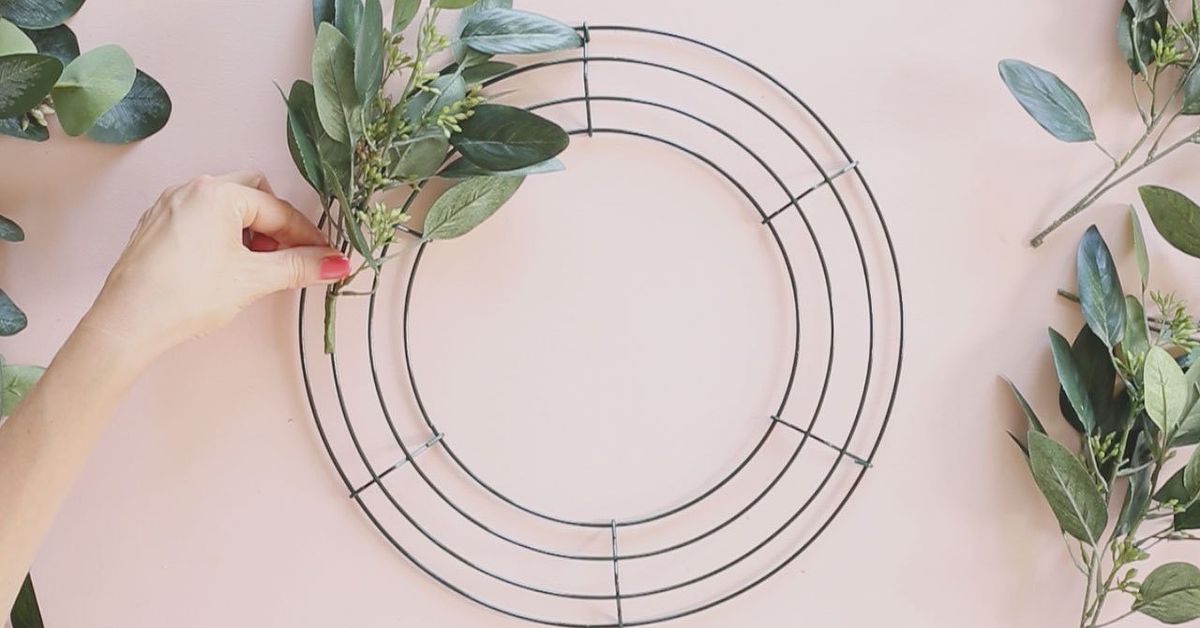
Step 4: Add Greenery First
Insert greenery stems into the grapevine or wire them onto the frame. Angle the greenery in the same direction around the wreath so the design has flow. Think of it as giving your wreath a hairstyle. It should not look like it woke up during a thunderstorm.
Secure each stem with floral wire or hot glue. If the wreath will hang outdoors or on a frequently used door, use both wire and glue for extra strength. Doors slam. Wind happens. Gravity has no respect for your crafting schedule.
Step 5: Attach the Focal Flowers
Place the largest silk flowers next. These blooms create the structure of the wreath. For a balanced design, use odd numbers such as three, five, or seven focal flowers. Space them naturally instead of placing them at exact clock positions.
Push stems into the grapevine base or attach them to a wire form with floral wire. Add hot glue where the stem meets the wreath for extra security. Hold each piece in place for a few seconds while the glue sets. Be careful with hot glue near delicate petals, because it can leave visible strings or melted spots.
Step 6: Layer Medium Flowers and Fillers
Once the focal blooms are secure, add medium flowers around them. Tuck smaller flowers slightly under larger petals so the arrangement looks layered instead of pasted on top. Then use filler stems to cover gaps, soften edges, and create movement.
Good fillers include baby’s breath, lavender, waxflower, berries, tiny daisies, seed pods, and small leafy picks. These details make a silk flower wreath look finished. Without fillers, even beautiful flowers can look like they are standing awkwardly at a party where they only know one person.
Step 7: Add Ribbon or a Bow
A bow is optional, but it can make the wreath feel complete. Choose wired ribbon if you want loops that hold their shape. Burlap works well for farmhouse wreaths, satin feels dressier, gingham adds cottage charm, and velvet is excellent for fall or winter.
Place the bow where it supports the design. On crescent wreaths, bows often look best near the bottom or side where the flowers are fullest. On full wreaths, a bow can sit at the top, bottom, or slightly off-center. Attach it with floral wire so you can adjust or replace it later.
Step 8: Check the Wreath from Every Angle
Hold the wreath upright and step back. Look for empty spots, uneven weight, visible glue, or flowers facing odd directions. Rotate the wreath and view it as it will hang on the door. This matters because a wreath that looks perfect flat on the table may look completely different vertically.
Fill holes with small greenery clippings or flower heads. Fluff petals and leaves with your fingers. Trim any long stems poking out from the back. If the wreath bumps against the door, secure loose pieces with more wire or glue.
Step 9: Add a Hanger
Make a hanging loop with floral wire, ribbon, twine, or a zip tie. Attach it to the back of the wreath and test it before displaying. If your wreath is heavy, use a sturdy wreath hanger rather than a tiny nail. A finished wreath falling off the door is not “rustic charm.” It is a floral landslide.
Design Ideas for Different Seasons
Spring Silk Flower Wreath
Use tulips, peonies, cherry blossoms, lilacs, ranunculus, and soft greenery. Pastel pink, lavender, butter yellow, ivory, and fresh green create a cheerful spring look.
Summer Silk Flower Wreath
Try sunflowers, roses, hydrangeas, daisies, lemons, tropical leaves, or bright zinnias. Coral, yellow, turquoise, white, and deep green make the wreath feel sunny and welcoming.
Fall Silk Flower Wreath
Choose mums, dahlias, maple leaves, berries, wheat, mini pumpkins, and eucalyptus. Rust, burgundy, orange, mustard, cream, and brown create a cozy harvest palette.
Winter or Holiday Silk Flower Wreath
Use evergreen picks, poinsettias, magnolia leaves, pinecones, berries, ornaments, and velvet ribbon. Ivory, cranberry, forest green, gold, silver, and navy look festive without feeling overly busy.
Common Mistakes to Avoid
Using Too Few Flowers
A sparse wreath can look unfinished unless you intentionally create a minimal hoop design. If your wreath feels thin, add more greenery before adding more flowers. Greenery is usually cheaper and fills space beautifully.
Gluing Too Soon
Hot glue is helpful, but it is not forgiving. Dry fit your design first. Take a quick photo with your phone before removing pieces to glue them. That photo becomes your map when the arrangement suddenly starts looking like a botanical puzzle.
Ignoring Scale
Large flowers on a tiny wreath can look crowded. Tiny flowers on a huge wreath can disappear. Match flower size to the wreath base. An 18-inch wreath usually handles larger blooms well, while a smaller hoop may look better with delicate stems.
Forgetting About Weather
If your wreath will hang outside, choose durable artificial flowers and protect it from harsh sun, heavy rain, and strong wind when possible. Covered porches are ideal. Direct sunlight can fade petals over time, and moisture can weaken glue or damage ribbon.
How to Make a Silk Flower Wreath Look Expensive
The difference between “homemade” and “handmade boutique” is often in the details. First, vary texture. Combine smooth petals, matte leaves, berries, seed pods, ribbon, and twiggy grapevine. Second, avoid perfect spacing. Real floral arrangements have natural clusters and movement. Third, hide mechanics. Cover visible stems, glue blobs, and wire with greenery or filler flowers.
Another smart trick is to bend stems slightly before attaching them. Straight stems can look stiff, while curved stems follow the wreath shape and appear more organic. Also, use a limited color palette. Too many colors can make the wreath look chaotic, especially from the street.
How to Store a Silk Flower Wreath
When the season ends, dust the wreath gently with a microfiber cloth or a cool hair dryer on a low setting. Store it in a wreath storage bag, plastic bin, or cardboard box. Avoid crushing the flowers. If possible, hang the wreath on a hook in a closet or garage area where it will stay dry and protected.
Label seasonal wreaths so you do not open three boxes in November looking for the winter wreath and accidentally discover Easter tulips, patriotic ribbon, and one suspiciously glittery pinecone.
Budget Tips for Making a Silk Flower Wreath
A silk flower wreath can be affordable if you shop strategically. Look for floral bushes instead of individual stems because bushes often provide multiple blooms for less money. Buy off-season supplies during clearance sales. Reuse a grapevine base by removing wired flowers and replacing them with new seasonal stems. Save leftover greenery scraps because they are perfect for filling future gaps.
You can also refresh an old wreath instead of starting from scratch. Remove faded flowers, keep the base and greenery, then add new focal blooms and ribbon. This approach saves money and reduces waste while still giving your door a fresh look.
Personal Experiences and Practical Lessons from Making Silk Flower Wreaths
The first time you make a silk flower wreath, you may expect the process to be neat, graceful, and possibly accompanied by soft background music. In reality, there will probably be clipped stems on the floor, hot glue strings floating around like tiny spiderwebs, and at least one flower that refuses to face the correct direction. That is normal. Wreath making is part design, part problem-solving, and part friendly wrestling match with artificial greenery.
One of the biggest lessons is that the wreath almost always looks strange halfway through. When only the greenery and a few large blooms are attached, it may seem uneven or too empty. Do not judge it too early. A silk flower wreath comes together in layers. The filler flowers, small leaves, ribbon, and final fluffing make a huge difference. Many beginners stop too soon because they think they made a mistake, when the wreath simply needs more depth.
Another experience worth sharing is the importance of taking breaks. After staring at the same wreath for thirty minutes, your eyes stop noticing balance. Step away, get a drink, come back, and look again. Suddenly, you may see that all the pink flowers are huddled on one side like they are gossiping, while the other side looks abandoned. A short break helps you correct the design before everything is permanently glued.
It also helps to photograph the wreath as you work. A phone photo makes balance issues more obvious than the naked eye. If the wreath looks good in a photo, it will usually look good on a door or wall. This trick is especially helpful for asymmetrical designs, where the goal is not perfect matching but visual balance.
Over time, you learn that wire is your best friend. Hot glue is fast, but floral wire gives strength and flexibility. If you like changing decor by season, wire your main pieces instead of gluing everything permanently. You can remove spring flowers and replace them with fall leaves later. This makes the wreath base reusable and keeps your craft budget from developing expensive hobbies of its own.
Finally, the most satisfying part of making a silk flower wreath is seeing it displayed. A handmade wreath adds warmth before anyone even steps inside your home. It says, “Someone cheerful lives here,” or at least, “Someone owns wire cutters and knows how to use them.” Whether your style is elegant, farmhouse, cottage, modern, or wildly floral, the finished wreath becomes a small expression of your taste. And if one flower sits a little crooked? Call it movement. Designers do that all the time.
Conclusion
Making a silk flower wreath is an easy, creative, and rewarding DIY project for beginners and experienced crafters alike. Start with a sturdy wreath base, choose realistic artificial flowers, layer greenery first, arrange before gluing, and secure everything with floral wire or hot glue. The best wreaths combine color, texture, balance, and personality. They do not need to be perfect; they need to feel welcoming.
Once you understand the basic method, you can create wreaths for every season, holiday, and mood. A spring tulip wreath, a summer sunflower wreath, a fall dahlia wreath, or a winter greenery wreath all follow the same simple principles. With a little practice, your front door can look fresh year-round without one single flower needing water. That is the kind of gardening success we can all celebrate.