

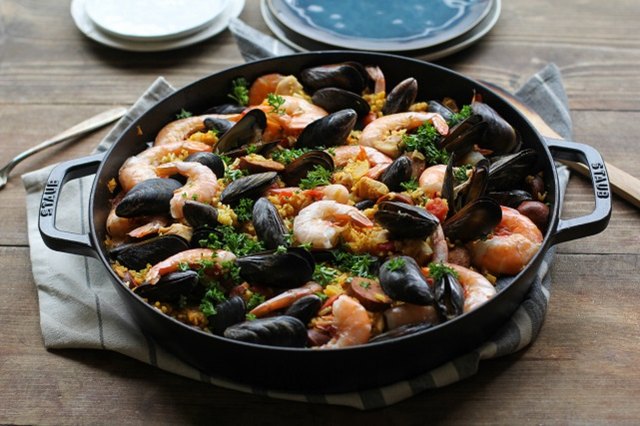
Seafood paella looks like the sort of dinner that requires a seaside villa, a Spanish grandmother, and several years of rice-related training. Fortttle patience, you can make an impressive seafood paella in an ordinary American kitchen.
The secret is not piling every available ocean creature into the pan. Great paella depends on deeply flavored sofrito, saffron-infused stock, properly cooked rice, and seafood added at the right time. Follow the method below and you will get separate, flavorful grains, tender shellfish, andwhen the kitchen stars aligna crisp layer of toasted rice called socarrat.
What Is Seafood Paella?
Paella is a Spanish rice dish associated with Valencia, where traditional versions developed as practical meals cooked in wide, shallow pans. Seafood paella, or paella de marisco, is a coastal variation made with ingredients such as shrimp, squid, mussels, clams, and fish stock.
Although paella is often described as Spanish risotto, the cooking techniques are nearly opposites. Risotto is stirred to release starch and create a creamy consistency. Paella rice is spread across the pan and then left mostly undisturbed. The goal is flavorful rice with distinct grainsnot a creamy rice puddle wearing shrimp as accessories.
Equipment You Will Need
A Wide, Shallow Pan
A 14- to 16-inch paella pan is ideal for six servings. Its broad surface helps the rice cook in a thin layer and allows moisture to evaporate evenly. Carbon-steel paella pans respond quickly when you adjust the heat, which is useful when developing the bottom crust.
No paella pan? Use the widest, shallowest skillet you own. A 12- to 14-inch stainless-steel or cast-iron skillet can work, although heavy cast iron retains heat longer and requires careful temperature control. Avoid a deep saucepan because it encourages thick layers of unevenly cooked rice.
Other Helpful Tools
- A small saucepan for heating the seafood stock
- Tongs for arranging and turning the shellfish
- A box grater for preparing fresh tomato
- A clean kitchen towel or foil for loosely covering the resting paella
- An instant-read thermometer for checking seafood when necessary
Seafood Paella Ingredients
Yield: 6 servings
Prep time: 30 minutes
Cooking time: 40 minutes
Total time: About 1 hour 10 minutes
- 5 cups low-sodium seafood or fish stock
- 1 generous pinch saffron threads, about 1/2 teaspoon
- 1/4 cup extra-virgin olive oil
- 12 ounces large shrimp, peeled and deveined, tails optional
- 8 ounces cleaned squid, cut into rings
- 1 small yellow onion, finely chopped
- 1 red bell pepper, finely chopped
- 4 garlic cloves, minced
- 2 ripe Roma tomatoes, grated, skins discarded
- 1 teaspoon sweet Spanish smoked paprika
- 2 cups bomba or Calasparra rice
- 1/2 cup dry white wine
- 12 mussels, scrubbed and debearded
- 12 littleneck clams, scrubbed
- 1/2 cup frozen peas, thawed, optional
- Kosher salt and freshly ground black pepper
- 1/4 cup chopped flat-leaf parsley
- 2 lemons, cut into wedges
Choosing the Best Rice
Bomba rice is the most forgiving choice because it absorbs generous amounts of liquid while holding its shape. Calasparra rice is another excellent Spanish option. A short- or medium-grain rice may be substituted, but the amount of stock and cooking time may need adjustment.
Arborio rice can work in an emergency, but it releases starch readily. Resist the urge to stir it as though you are making risotto. Long-grain rice is less suitable because it does not absorb broth in the same way and produces a different texture.
Selecting Seafood
Fresh seafood should smell mild and clean rather than aggressively fishy. Mussels and clams should have intact shells and should close when gently tapped. Discard cracked shellfish and any live shellfish that remain open after tapping.
Frozen shrimp and squid are perfectly acceptable when properly thawed in the refrigerator. Pat all seafood dry before cooking. Excess surface water creates steam, prevents browning, and can make the final paella wetter than intended.
How to Make Seafood Paella Step by Step
1. Warm and Season the Stock
Pour the seafood stock into a small saucepan and warm it over medium-low heat. Crush the saffron threads gently between your fingers and add them to the stock. Let the saffron steep for at least 10 minutes while you prepare the remaining ingredients.
Keeping the stock hot prevents the temperature of the paella pan from dropping when the liquid is added. Taste the stock before using it. It should be well seasoned but not excessively salty because its flavor becomes more concentrated as it reduces.
2. Quickly Sear the Shrimp and Squid
Set the paella pan over medium-high heat and add 2 tablespoons of olive oil. Season the shrimp and squid lightly with salt and pepper. Sear the shrimp for about one minute per side, just until the exterior begins turning pink. Cook the squid for 60 to 90 seconds.
Transfer both to a plate. They will finish cooking later. This quick sear adds flavor without forcing the seafood to spend the entire rice-cooking time becoming increasingly familiar with the texture of a pencil eraser.
3. Build the Sofrito
Reduce the heat to medium and add the remaining olive oil. Cook the onion and bell pepper for 5 to 7 minutes, stirring occasionally, until softened. Add the garlic and cook for about 30 seconds.
Stir in the grated tomatoes, a pinch of salt, and the smoked paprika. Cook for 6 to 8 minutes, stirring regularly, until the mixture becomes thick, darkened, and almost jammy. This concentrated mixture is the sofrito, the main flavor foundation of the paella. Do not rush it. Watery sofrito produces rice that tastes as though it merely waved at a tomato from across the room.
4. Toast the Rice
Add the rice to the pan and stir for 1 to 2 minutes, coating every grain with the sofrito and olive oil. Pour in the white wine and let it bubble for about one minute, scraping up any flavorful browned bits from the pan.
Spread the rice into an even layer. Once the stock is added and the rice is evenly distributed, stirring should stop. This is the point at which paella asks you to trust the process and temporarily retire your spoon.
5. Add the Stock and Begin Cooking
Carefully pour approximately 4 1/2 cups of hot saffron stock over the rice. Reserve the remaining stock in case the rice needs more liquid. Gently shake the pan to distribute the rice, but do not continue stirring.
Bring the liquid to a strong simmer and cook for 8 minutes over medium-high heat. Rotate the pan occasionally if your burner heats unevenly. Reduce the heat to medium-low and continue cooking for another 5 minutes.
6. Arrange the Seafood
Nestle the clams and mussels into the partially cooked rice with their hinged sides down. Arrange the shrimp and squid across the top. Scatter in the peas, if using.
Continue cooking for 7 to 10 minutes. The rice should become tender with a slight bite, the shrimp should be opaque, and the shellfish should open. If the rice remains firm after most of the liquid has evaporated, drizzle a little reserved hot stock around the pan. Add only what is needed; paella should not finish soupy.
Discard any mussels or clams that do not open. Most seafood should reach an internal temperature of 145°F, although visual signs such as firm, opaque shrimp and opened shellfish are also useful.
7. Develop the Socarrat
When the rice is nearly done and the liquid has been absorbed, increase the heat to medium-high for 60 to 90 seconds. Listen for gentle crackling and notice whether the aroma becomes lightly toasted. Those are signs that the bottom layer is crisping.
Do not walk away. Socarrat can turn from golden and nutty to charcoal flooring surprisingly fast. If you smell burning rather than toasting, remove the pan from the heat immediately.
8. Rest Before Serving
Remove the paella from the heat and loosely cover it with a clean kitchen towel or foil. Let it rest for 5 to 10 minutes. Resting allows the rice to finish absorbing moisture and helps the texture settle.
Garnish with chopped parsley and lemon wedges. Serve directly from the pan, making sure each diner receives some seafood, saffron rice, and, ideally, a portion of crisp socarrat.
Common Seafood Paella Mistakes
Using Too Much Seafood
More seafood does not automatically create better paella. Overcrowding traps steam, releases excessive liquid, and makes the rice difficult to cook evenly. Use a balanced combination and leave enough exposed surface for evaporation.
Stirring the Rice
Frequent stirring releases starch, producing creamy or sticky rice. Stir while building the sofrito and briefly when coating the uncooked rice. After adding the stock, spread the rice evenly and leave it alone.
Adding Shrimp Too Early
Shrimp cook much faster than rice. Searing them briefly and returning them near the end preserves their texture. Large shrimp usually need only several minutes to finish cooking in the simmering paella.
Cooking a Thick Layer of Rice
A proper paella is relatively shallow. A thick layer can become mushy on top while burning underneath. When feeding a larger group, use a larger pan or make two batches rather than stacking more rice into a small skillet.
Using Cold Stock
Cold stock interrupts cooking and makes timing less predictable. Keep the saffron stock hot in a nearby saucepan so it begins simmering shortly after entering the paella pan.
Forcing the Socarrat
A crisp bottom is desirable, but burning the entire batch in pursuit of it is not. Listen for quiet crackling, use your nose, and apply higher heat only near the end. The crust should taste toasted, not like an insurance claim.
What to Serve With Seafood Paella
Seafood paella is a complete meal, so side dishes should remain simple. A green salad with sherry vinaigrette, roasted peppers, marinated olives, or crusty bread will complement the rice without competing with it.
Dry Spanish white wine, sparkling wine, or a crisp rosé pairs naturally with shellfish and saffron. For a nonalcoholic option, serve sparkling water with lemon or a citrus-forward iced tea.
Bring the pan to the table rather than transferring the paella to a serving bowl. The dramatic presentation is part of the experience, and serving from the pan protects the precious bottom crust.
Experiences and Lessons From Making Seafood Paella at Home
The first lesson seafood paella teaches is that preparation matters more than culinary heroics. Once hot stock meets rice, events move quickly. This is not the moment to discover that the garlic is unpeeled, the shrimp still have veins, and the parsley is hiding behind three jars of mustard. Measuring the ingredients, cleaning the shellfish, and heating the stock in advance transforms the cooking process from a small emergency into an enjoyable dinner project.
Pan size was the biggest surprise during my early attempts. I initially used a deep skillet because it seemed roomy enough. Technically, everything fit. Unfortunately, “fitting” and “cooking evenly” are distant relatives. The rice formed a thick layer, the center remained wet, and the bottom edges browned too quickly. Switching to a wider pan immediately improved evaporation, consistency, and the amount of crisp rice available for polite arguments at the table.
I also learned to treat the seafood as several ingredients rather than one category. Shrimp, squid, mussels, and clams do not share a synchronized cooking schedule simply because they once lived in water. Shrimp need only a short finish. Squid benefits from either very brief or much longer cooking, while shellfish need enough steam and heat to open fully. Adding everything simultaneously is convenient, but convenience is how rubbery shrimp sneak onto otherwise excellent rice.
The most nerve-racking moment is the period after the stock is added. Every instinct says to stir, particularly when one side bubbles more vigorously than the other. Rotating the pan is the better solution. It distributes heat without releasing unnecessary starch or disturbing the rice layer. On a standard home stove, I rotate the pan a quarter turn every few minutes and shift it slightly across the burner when one area appears inactive.
Socarrat requires similar restraint. On my first serious attempt, I heard crackling and became greedy. I left the pan over high heat because more crust sounded better. It was not better. A narrow window separates beautifully toasted rice from a bottom layer that tastes like a campfire shovel. Now I raise the heat briefly, listen carefully, and remove the pan as soon as a nutty aroma appears.
Another useful discovery is that paella does not need to be overloaded to feel generous. A modest quantity of good shrimp, mussels, clams, and squid looks abundant when arranged thoughtfully. Leaving visible areas of golden rice makes the finished dish more attractive and improves texture. Lemon wedges and fresh parsley add enough color without burying the pan under decorative produce.
Most importantly, homemade seafood paella becomes easier after one attempt. The first batch teaches timing. The second teaches heat control. By the third, you begin recognizing the sound of properly simmering stock and the aroma of finished sofrito. Perfection is welcome but unnecessary. Serve the paella in its pan, give everyone a lemon wedge, and let the communal nature of the dish do the rest. Even an imperfect batch has a remarkable ability to make an ordinary dinner table feel like a celebration.