

Some card tricks require years of sleight-of-hand practice, suspiciously flexible fingers, and the ability to look innocent while absolutely not being innocent. This one is different. A math-based card trick lets you look like a mind reader without secretly palming cards, hiding a second deck, or whispering to a trained pigeon under the table.
The classic version uses 21 cards, three columns, and a simple placement rule that quietly does all the hard work for you. Your spectator thinks they are freely choosing any card. You only ask which column the card appears in. After a few rounds, the math narrows the mystery card into a predictable position. To the audience, it feels like magic. To you, it is a tidy little system wearing a cape.
In this guide, you will learn how to perform a card trick using math in 9 clear steps. You will also understand why it works, how to present it naturally, and how to avoid common beginner mistakes. No advanced math required. If you can count to 21 and keep a straight face for about two minutes, you are ready.
What Is a Math Card Trick?
A math card trick is a self-working card effect that relies on a fixed pattern, number principle, arrangement, or counting system. Instead of secretly manipulating the cards, the performer follows a procedure. The procedure controls where the chosen card lands.
The 21-card trick is one of the most famous examples. It works because repeatedly dealing cards into three columns and placing the spectator’s column in the middle forces the chosen card toward a known position. The audience sees randomness. The performer sees structure. That is the whole secret: math is doing the sneaky part while you smile politely.
This trick is perfect for beginners because it is visual, easy to remember, and strong enough to entertain friends, classmates, family members, or anyone who says, “Show me a trick,” while handing you a deck like they are issuing a challenge.
What You Need Before Starting
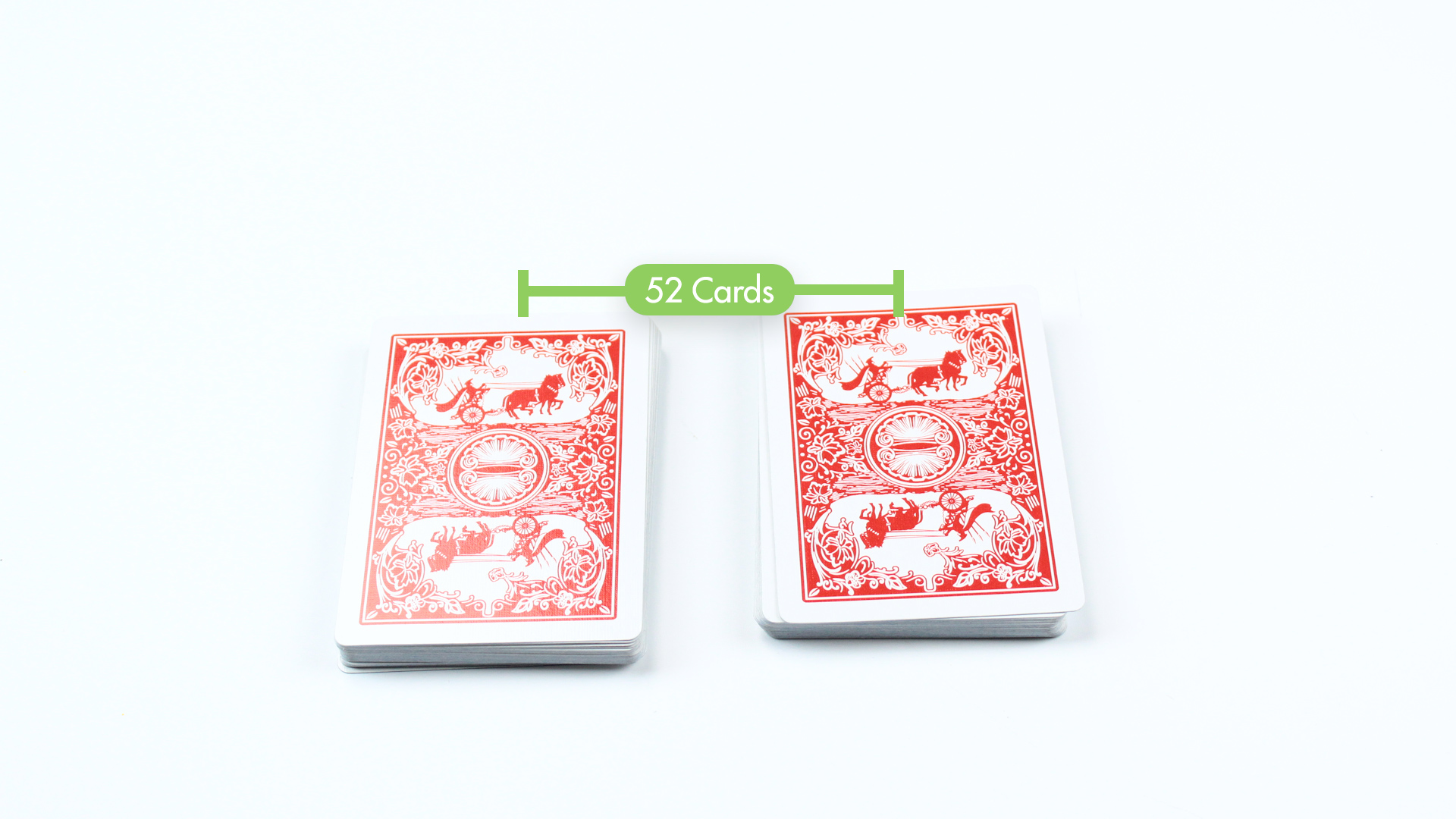
You only need a standard deck of playing cards and one spectator. Remove any 21 cards from the deck. The values and suits do not matter. You can use hearts, spades, clubs, diamonds, jokers removed, favorite cards, boring cards, dramatic cardsit makes no difference as long as the packet contains exactly 21 cards.
Using exactly 21 cards matters because the trick depends on dividing the packet into three equal groups of seven. If you accidentally use 20 or 22 cards, the trick may collapse like a folding chair at a bad picnic. Count carefully before you begin.
How to Perform a Card Trick Using Math: 9 Steps
Step 1: Prepare a Packet of 21 Cards
Take 21 cards from a regular deck. Count them slowly and confidently. You do not need to tell the spectator why the number matters. In fact, it is better if you casually say something like, “We’ll use a small packet so this doesn’t take all night.” That sounds normal and keeps the method hidden.
Hold the cards face down. You may shuffle them or allow the spectator to mix them, as long as you still have exactly 21 cards when the trick begins. Shuffling makes the effect feel fair and removes the suspicion that the cards are prearranged.
Step 2: Ask the Spectator to Choose and Remember One Card
Spread the 21 cards face up and ask your spectator to mentally choose one card. They should remember it but not say it out loud. You do not need them to remove the card from the packet. They simply look at the spread and silently lock one card in their mind.
For stronger presentation, say, “Do not pick the obvious card. Pick one that feels random to you.” This makes the choice feel personal. Of course, the math does not care whether they choose the 7 of clubs or the queen of hearts. Math is wonderfully emotionally unavailable.
Step 3: Deal the Cards Into Three Columns
Pick up the cards and deal them face up into three columns, one card at a time from left to right. The first card goes into column one, the second into column two, the third into column three, the fourth back into column one, and so on until all 21 cards are on the table.
Each column should end with seven cards. Keep the columns neat so the spectator can easily find their card. Do not rush. The trick feels more impossible when the audience has a clear view of the cards and believes everything is happening openly.
Step 4: Ask Which Column Contains Their Card
Ask, “Which column is your card in?” They should point to or name the column. They must not tell you the actual card. This is the only information you need.
Keep your reaction casual. Do not stare at the column as if you are downloading secrets from the universe. You are simply collecting information that the mathematical structure needs. The less dramatic you are at this stage, the more dramatic the reveal will feel later.
Step 5: Pick Up the Cards With Their Column in the Middle
This is the most important move in the entire trick. Gather the three columns into one packet, making sure the column containing the spectator’s card is placed between the other two columns.
For example, if their card is in the left column, pick up one of the other columns first, then place the chosen column on top of it, then place the remaining column on top. The chosen column must become the middle group of seven cards in the packet.
You do not need to explain this. Just collect the cards naturally. This middle placement is what begins forcing the chosen card toward the center of the packet.
Step 6: Deal the Cards Into Three Columns Again
Deal the cards again into three face-up columns, one card at a time from left to right. Ask the spectator to find their card visually. Once again, they only tell you which column contains it.
By now, the trick has started to feel repetitive, so keep the mood light. You might say, “The cards are being very cooperative today, which is suspicious behavior for cards.” Small humor helps prevent the procedure from feeling mechanical.
Step 7: Place Their Column in the Middle Again
Gather the cards again, placing the column with their card between the two other columns. This second middle placement narrows the possible location of the chosen card even further.
At this point, the card is no longer floating randomly among 21 positions. It has been guided into a much smaller range. The spectator does not know that, because from their point of view, they only answered a harmless question twice.
Step 8: Deal a Third Time and Ask for the Column
Deal the cards into three columns one final time. Ask which column contains the chosen card. After this third deal, the math has done its job. Their card is now the middle card of the column they identify.
That means the selected card is the fourth card down in that column. You can reveal it immediately by pointing to the center card of the column, or you can gather the cards once more with their column in the middle. If you gather them again using the same rule, their card will become the 11th card in the packet.
Step 9: Reveal the Chosen Card
Now it is time for the magic moment. You have two easy reveal options.
Option one: After the third deal, look at the column they name and identify the fourth card from the top. That is their card. Pause, build suspense, and reveal it dramatically.
Option two: Gather the cards one final time with their column in the middle. Then count down to the 11th card in the packet. Turn it over and announce it as their chosen card.
The second option often feels cleaner because it gives you a reason to handle the cards again and makes the reveal look less like you simply counted within a column. You can say, “I’m going to let the deck decide,” then count slowly to the 11th card. It sounds mystical, but really the deck is just following instructions.
Why This Math Card Trick Works
The secret is position control. When the spectator tells you the column containing their card, you place that entire column in the middle of the packet. Since each column has seven cards, the selected card is pushed into the center section of the 21-card packet.
After the first round, the chosen card must be somewhere between positions 8 and 14. After the second round, it is narrowed closer to the center. After the third round, it lands in the exact center position: the 11th card. The procedure looks like dealing and collecting, but it is really a sorting system.
This is why the trick is often called a self-working card trick. The performer does not need to know the chosen card at the beginning. The method slowly converts the spectator’s column answers into positional information.
Performance Tips to Make the Trick Feel Like Real Magic
Do Not Mention Math Too Early
If you say, “I will now perform a mathematical algorithm,” your audience may suddenly remember they have laundry to do. Let the trick feel mysterious first. After the reveal, you can explain that the secret is mathematical if the audience asks.
Use a Story
A simple story makes the trick more entertaining. You can pretend the cards are sorting themselves, that the chosen card is trying to hide, or that you are testing whether your spectator has a “loud-thinking brain.” The method stays the same, but the presentation becomes more memorable.
Practice the Pickup Rule
The only real mistake beginners make is collecting the columns in the wrong order. Always place the spectator’s column in the middle. Practice this several times alone before performing. Once the movement becomes automatic, you can focus on your voice, timing, and reveal.
Keep the Dealing Neat
Messy columns make the trick confusing. Deal slowly and clearly. If the spectator cannot see their card, the effect loses rhythm. Neatness is not just good manners; it is part of the illusion.
Common Mistakes Beginners Should Avoid
The first mistake is using the wrong number of cards. This trick needs exactly 21 cards. Not “about 21.” Not “probably 21.” Exactly 21. Count them before you perform.
The second mistake is turning the trick into a math lecture before the reveal. Your audience wants to be amazed first. Save the explanation for later, unless you are presenting it in a classroom or educational setting.
The third mistake is rushing the reveal. When you know the answer, it is tempting to immediately flip the card. Instead, pause. Look thoughtful. Let the moment breathe. A two-second pause can make a simple trick feel twice as powerful.
The fourth mistake is repeating the trick too many times for the same person. Once spectators know the procedure, they may begin watching the collection order. Perform it once, maybe twice with a different reveal, then move on.
Variations You Can Try
The 27-Card Version
A related version uses 27 cards dealt into three piles of nine. It follows a similar idea but gives you more room to customize the final position using base-three logic. The 21-card version is easier for beginners, while the 27-card version is fun for people who want a slightly more advanced math card trick.
The Prediction Reveal
Before starting, write “Your card will be the 11th card” on a piece of paper and fold it. After the final pickup, count to the 11th card and reveal the prediction. This makes the effect feel less like discovery and more like prophecy, which is a fancy word for “I counted correctly.”
The Mind-Reading Reveal
After the third deal, look at the fourth card in their chosen column but do not immediately point to it. Instead, pretend to read their expression. Say the color, then the suit, then the value. For example, “I think it is red… a heart… the 9 of hearts.” This adds drama without changing the method.
How to Practice the Trick
Practice alone with 21 cards and choose a card for yourself. Deal the cards three times, each time pretending you are the spectator and identifying the column containing your chosen card. Place that column in the middle every time. After three rounds, check whether the chosen card is in the expected position.
Once you can do the mechanics, practice your script. A good script keeps the audience engaged while your hands do the repeated dealing. You do not need to memorize a speech, but you should know what you will say during each round.
Try recording yourself. You may discover that you deal too fast, mumble during the important instruction, or look too pleased with yourself before the reveal. The camera tells the truth, even when your ego would prefer a softer version.
Experience Notes: What Performing This Trick Teaches You
The first time you perform the 21-card math trick, you may be surprised by how strong it feels. On paper, it looks almost too simple. Deal, ask, collect, repeat. But when a spectator sees their chosen card appear exactly where you predicted, the reaction can be wonderfully satisfying. That is one of the best lessons in beginner magic: a trick does not need to be complicated to be impressive.
One useful experience is learning how much presentation matters. If you silently deal the cards three times and reveal the answer, the trick works, but it may feel like a puzzle. If you add personality, eye contact, and a small story, the same method becomes entertainment. The math creates the result; your performance creates the memory.
Another experience is realizing that spectators often remember the effect differently from how it happened. They may later say, “I only thought of a card, and somehow it appeared.” In reality, they told you the column three times. But because you never asked for the card’s name and never seemed to learn anything obvious, the memory becomes more magical. This is not because people are foolish. It is because attention follows meaning. If the column questions feel unimportant, the final reveal feels impossible.
Practice also teaches patience. Beginners often want to rush through the procedure because they are afraid the audience will get bored. A steady pace is better. The dealing gives the spectator time to see the cards and feel involved. The key is to keep your voice relaxed and your movements clear. Silence can feel awkward, but calm silence can also build suspense.
You may also learn that mistakes are not disasters. If you accidentally place the spectator’s column on the top or bottom instead of the middle, the trick may fail. But even that is useful. It teaches you to slow down and focus on the one rule that matters most. Many performers practice the pickup sequence until they can do it while talking, smiling, and pretending not to be terrified.
The trick is especially useful for teaching math because it turns an abstract idea into a physical experience. Instead of explaining position, grouping, and narrowing possibilities with a dry diagram, you show those ideas with real cards. Students and curious spectators can see how repeated structure creates a predictable result. It is a friendly doorway into patterns, algorithms, and logical thinking.
Finally, performing this card trick builds confidence. It gives beginners a reliable effect they can perform almost anywhere. A borrowed deck, a table, and a willing spectator are enough. You do not need expensive props or secret gimmicks. You only need preparation, counting, and the ability to act like the 11th card appearing was never in doubt.
Conclusion
Learning how to perform a card trick using math is a great way to combine entertainment, logic, and a little theatrical mischief. The 21-card trick works because each round gathers new information and moves the chosen card closer to a known position. By the final reveal, the card is exactly where the math says it should be.
For beginners, this trick is one of the best places to start. It teaches timing, audience interaction, clear handling, and the power of a simple method presented well. Once you master the 9 steps, you can add your own style, story, humor, and reveal. That is where the trick stops being just a procedure and starts becoming your performance.