

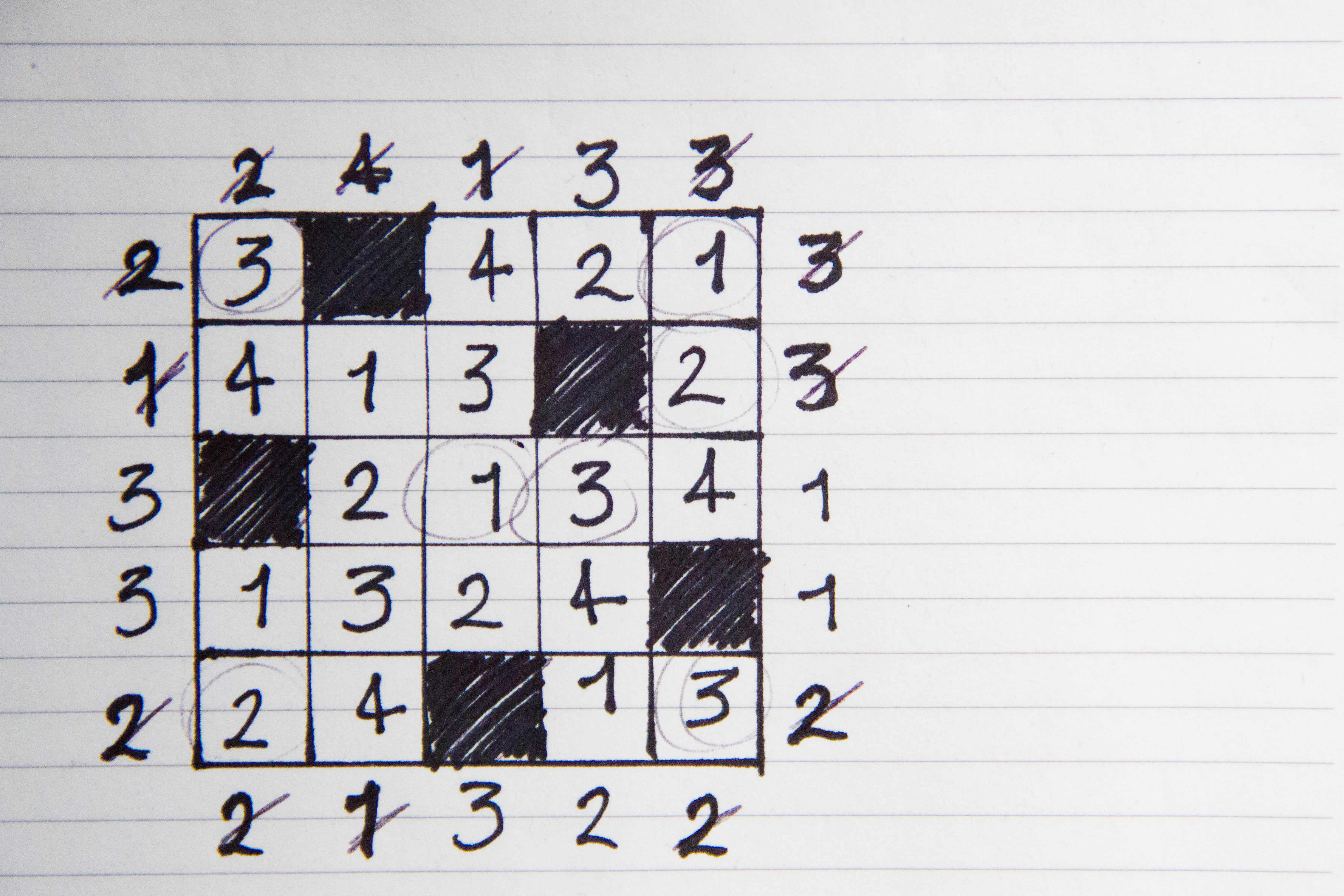
Skyscrapers puzzles look innocent at first. A tidy square grid, a few numbers sitting politely around the edges, and absolutely no warning that your brain is about to start negotiating with invisible buildings. But once you understand the logic, this puzzle becomes wonderfully addictive. It combines the no-repeat discipline of Sudoku with a clever “line of sight” rule: taller buildings block shorter ones behind them.
In this guide, you’ll learn how to solve a Skyscrapers puzzle in 10 practical steps, using beginner-friendly explanations, clear examples, and the kind of logic that makes you feel like a city planner with a pencil. Whether you are solving a 4×4 starter puzzle or working your way toward a tougher 6×6 grid, these Skyscrapers puzzle tips will help you move confidently without guessing.
What Is a Skyscrapers Puzzle?
A Skyscrapers puzzle is a logic puzzle played on an N x N grid. In a 4×4 puzzle, you place the numbers 1 through 4 in each row and column. In a 5×5 puzzle, you use 1 through 5, and so on. Each number represents the height of a building. A 1 is a tiny building. The largest number is the tallest tower in town, probably with a rooftop restaurant and a dramatic elevator.
The goal is simple: every row and every column must contain each number exactly once. The clues around the outside of the grid tell you how many buildings are visible when looking from that direction. A taller building hides all shorter buildings behind it. For example, if a row reads 1-2-3-4 from left to right, all four buildings are visible from the left. But if the row reads 4-1-2-3, only the 4 is visible from the left because it blocks everything behind it.
How to Solve a Skyscrapers Puzzle: 10 Steps
Step 1: Understand the Basic Rules Before Writing Anything
Before placing your first number, read the grid like a map. Ask three questions: What size is the puzzle? What numbers must appear in every row and column? Which outside clues are strongest?
In a 5×5 Skyscrapers puzzle, each row and column must contain 1, 2, 3, 4, and 5. No duplicates are allowed. That means if a row already contains a 5, no other cell in that row can be 5. The same rule applies to columns. This Latin-square structure is the backbone of the puzzle, while the outside clues provide the skyline logic.
Step 2: Start With the Easiest Edge Clues
The fastest way to begin is to look for clues of 1 and clues equal to the grid size. These are the puzzle’s friendly welcome mat.
If a 5×5 puzzle has a clue of 1, the tallest building, 5, must be placed in the first cell from that clue. Why? Because only the tallest building can block every other building behind it. If the clue is 5, the row or column must be in perfect ascending order from that side: 1-2-3-4-5. In a 4×4 grid, a clue of 4 means 1-2-3-4 from that viewing direction.
This step often gives you several confirmed numbers immediately. Take the freebies. Logic puzzles rarely hand out coupons.
Step 3: Use Opposite Clues Together
Many beginners look at one clue at a time. Strong solvers compare both ends of a row or column. The clue on the left and the clue on the right describe the same row from opposite viewpoints. Together, they narrow the possible arrangements.
For example, in a 4×4 puzzle, a row with clues 2 from the left and 2 from the right cannot be 1-2-3-4, because that would show four buildings from the left. It also cannot be 4-3-2-1, because that would show four buildings from the right. Instead, the row must have a balanced skyline, such as 2-4-1-3 or 3-1-4-2, depending on the other row and column restrictions.
Whenever two opposite clues appear, treat them as a pair. They are not arguing; they are collaborating.
Step 4: Mark Possible Numbers in Empty Cells
If your puzzle is larger than 4×4, pencil marks become your best friend. Write small candidate numbers in each empty cell based on what is still possible in that row and column.
Suppose you are solving a 5×5 puzzle and a row already contains 1, 3, and 5. The remaining numbers in that row are 2 and 4. If one empty cell sits in a column that already contains 4, that cell must be 2. This is basic elimination, but it is powerful. Skyscrapers puzzles reward careful bookkeeping. The puzzle is not testing whether you can guess; it is testing whether you can notice what the grid has already told you.
Step 5: Place the Tallest Buildings Strategically
The tallest number is the most influential number in the grid. In a 6×6 puzzle, the 6 blocks everything behind it. Because of that, outside clues often reveal where the tallest building can or cannot go.
A clue of 1 places the tallest building immediately next to the clue. A clue of 2 often suggests that the tallest building is not too close unless another tall building appears before it. For instance, if the tallest building is placed at the far end of a row viewed from a clue of 2, then the second-tallest building may need to appear near the clue to keep the visible count low.
When stuck, scan the grid for the largest number. Ask: Where can the tallest tower still fit? Which clue would it satisfy? Which clue would it ruin? That one question can unlock an entire section of the puzzle.
Step 6: Learn the Visibility Count
Visibility is the heart of Skyscrapers solving. To count visible buildings, look from the clue inward and count only buildings that are taller than every building before them.
Consider this 5-cell row: 2-1-4-3-5. From the left, you see 2 first. Then 1 is hidden because it is shorter than 2. Then 4 is visible because it is taller than 2. Then 3 is hidden behind 4. Finally, 5 is visible because it is taller than 4. The clue from the left would be 3.
Now reverse the view. From the right, the first building is 5, and it blocks all others. The clue from the right would be 1. Same row, different skyline. That is why opposite clues matter so much.
Step 7: Eliminate Rows or Columns That Break a Clue
As your candidate list grows, start testing small possibilities mentally. You are not guessing; you are checking whether a number placement violates a clue.
For example, imagine a 4×4 row has a clue of 3 from the left. If you place 4 in the first cell, the visible count from the left becomes 1 immediately, because 4 blocks everything else. That placement cannot work. Cross it out.
This kind of elimination is especially useful near clues of 2, 3, and 4. These clues are flexible enough to require thought but strict enough to remove bad candidates. The trick is to ask, “Could this row still produce the required number of visible buildings?” If the answer is no, erase that candidate with confidence and possibly a tiny victory dance.
Step 8: Apply Row and Column Cross-Checking
Every placement affects two directions: its row and its column. A number that seems perfect for a row may be impossible in its column. Always cross-check before committing.
Suppose a cell looks like it should be 4 because of a row clue. Before writing it boldly, check the column. Does the column already contain 4? Would placing 4 there make the top or bottom clue impossible? If yes, the row logic needs revision.
This is where Skyscrapers puzzles become beautifully layered. You are not just solving one street at a time; you are designing an entire city where every building must satisfy horizontal and vertical views. Urban planning has never been so delightfully nerdy.
Step 9: Look for Hidden Singles and Forced Pairs
A hidden single occurs when a number has only one possible location in a row or column, even if the cell has multiple candidates. For example, if only one cell in a row can contain 5, that cell must be 5.
A forced pair happens when two cells in a row or column can contain only the same two numbers, such as 2 and 3. Those two numbers must occupy those two cells in some order, which means other cells in that row or column cannot contain 2 or 3. This technique is familiar to Sudoku solvers and works beautifully in Skyscrapers puzzles.
These smaller deductions often lead to bigger breakthroughs. A forced pair may reveal the position of the tallest building. A hidden single may complete a column. A completed column may satisfy a clue. Suddenly the puzzle starts solving itself, which is the logic-puzzle version of watching popcorn pop.
Step 10: Finish by Verifying Every Clue
When the grid is full, do not celebrate too early. First, verify every row, every column, and every outside clue. Check that each row and column contains each number exactly once. Then count visible buildings from each clue direction.
This final review catches small mistakes before they become big mysteries. If one clue does not match, do not erase the whole puzzle. Trace the affected row or column first. Usually, the problem is a swapped pair or a number placed without checking the opposite clue.
A completed Skyscrapers puzzle should satisfy all number-placement rules and every visibility clue. When it does, congratulations: your pencil has successfully built a city that obeys zoning laws, skyline aesthetics, and pure logic.
Common Mistakes Beginners Make
Ignoring the Opposite Side
One of the most common mistakes is solving from only one direction. A clue may seem to allow several arrangements until you check the clue at the other end. Always compare both views before settling on a row or column pattern.
Confusing “Visible” With “Present”
A clue does not tell you how many buildings are in the row. Every row is full of buildings. The clue tells you how many buildings can be seen from that side. Short buildings behind taller buildings still exist; they are just blocked, like someone standing behind a basketball player in a group photo.
Guessing Too Soon
Good Skyscrapers puzzle solving relies on deduction. If you feel tempted to guess, pause and scan for easier moves: clue 1 placements, maximum clues, missing numbers, hidden singles, forced pairs, or contradictions in visibility counts.
Example: How a 4×4 Skyscrapers Row Works
Imagine a 4×4 row with the clue 2 on the left and 1 on the right. Since the right clue is 1, the tallest building, 4, must be at the far-right end when viewed from the right. That means the row ends in 4.
Now the left clue is 2. From the left, exactly two buildings must be visible before the view reaches the final 4. A possible row is 3-1-2-4. From the left, you see 3, then 4. The 1 and 2 are hidden behind 3. From the right, you see only 4. This arrangement satisfies both clues.
This example shows why Skyscrapers puzzles are so satisfying. A single clue gives information. Two clues give structure. Row and column restrictions turn that structure into certainty.
Advanced Tips for Faster Solving
Create a Small Pattern Library
For common grid sizes, learn frequent clue patterns. In a 4×4 puzzle, a clue of 4 always means 1-2-3-4. A clue of 1 always places 4 first. A clue pair like 1 and 2 sharply limits the row. Over time, you will recognize these patterns instantly.
Work From Strongest to Weakest Clues
Start with clues that provide the most information. Clues of 1 and maximum-size clues are strongest. Clues of 2 are often useful. Middle clues may require more context, so return to them after the grid has more confirmed numbers.
Use Pencil Marks Cleanly
Messy pencil marks create messy thinking. Keep candidates small, readable, and updated. Each time you place a number, remove that number from the rest of the row and column. This simple habit prevents many mistakes.
Personal Experience: What Solving Skyscrapers Puzzles Teaches You
The first time I tried a Skyscrapers puzzle, I treated it like Sudoku wearing a funny hat. That was partly true, but also dangerously incomplete. Sudoku asks you to manage numbers. Skyscrapers asks you to manage numbers and perspective. The same row can look completely different depending on where you stand, which is a surprisingly good life lesson for something printed next to a coffee stain.
At first, the outside clues felt mysterious. I understood that taller buildings blocked shorter ones, but I kept forgetting to check both directions. I would proudly place a number, admire my cleverness for about four seconds, then realize the opposite clue had quietly exploded. The puzzle did not shout. It simply sat there, judging me with tiny numbers.
What helped most was learning to slow down. Instead of rushing to fill cells, I began asking better questions. Which clues are strongest? Where must the tallest building go? Can this row still show three buildings if I place the largest number here? That shift changed everything. The puzzle became less about filling boxes and more about listening to constraints.
Another useful habit was practicing visibility counts outside the puzzle. I would take random rows like 2-4-1-3 and count what could be seen from each side. From the left, you see 2 and then 4, so the clue is 2. From the right, you see 3 and then 4, so the clue is also 2. Doing this repeatedly made the skyline rule feel automatic.
I also learned that mistakes are not failures; they are diagnostic tools. If a row cannot satisfy its clue, something earlier went wrong. Instead of wiping out the whole grid, I trace the contradiction backward. Which placement forced this impossible skyline? Which candidate did I forget to remove? This makes solving feel calmer and more methodical.
One of the best experiences with Skyscrapers puzzles is the moment when the grid suddenly opens up. You may stare at it for five minutes with nothing happening. Then one hidden single appears. That single removes a candidate from a column. The column forces the tallest building into place. The tallest building satisfies a clue. Three more cells fall like dominoes. It feels less like solving and more like the city has finally approved your construction permit.
For beginners, I recommend starting with 4×4 puzzles until the rules feel natural. Then move to 5×5 grids, where candidate marking becomes more important. Do not jump straight into large puzzles unless you enjoy emotional architecture. Small puzzles teach the logic clearly, and that foundation carries into harder grids.
Skyscrapers puzzles are excellent for building patience, pattern recognition, and flexible thinking. They train you to see constraints from multiple angles. They also remind you that the tallest object is not always the most important one; sometimes the tiny 1 in the right place unlocks the whole skyline. That is the charm of the puzzle: every building matters, even the little one hiding behind the giant tower.
Conclusion
Learning how to solve a Skyscrapers puzzle is all about mastering three ideas: each number appears once per row and column, outside clues count visible buildings, and taller buildings block shorter ones. Once those rules become second nature, the puzzle transforms from confusing grid to logical cityscape.
Start with easy clues, compare opposite sides, mark candidates, place the tallest buildings carefully, and verify every clue at the end. With practice, you will begin to recognize skyline patterns faster and solve more difficult puzzles without guessing. And when the final number clicks into place, you get that satisfying little brain sparkle that says, “Yes, I just built a mathematically perfect city.”