

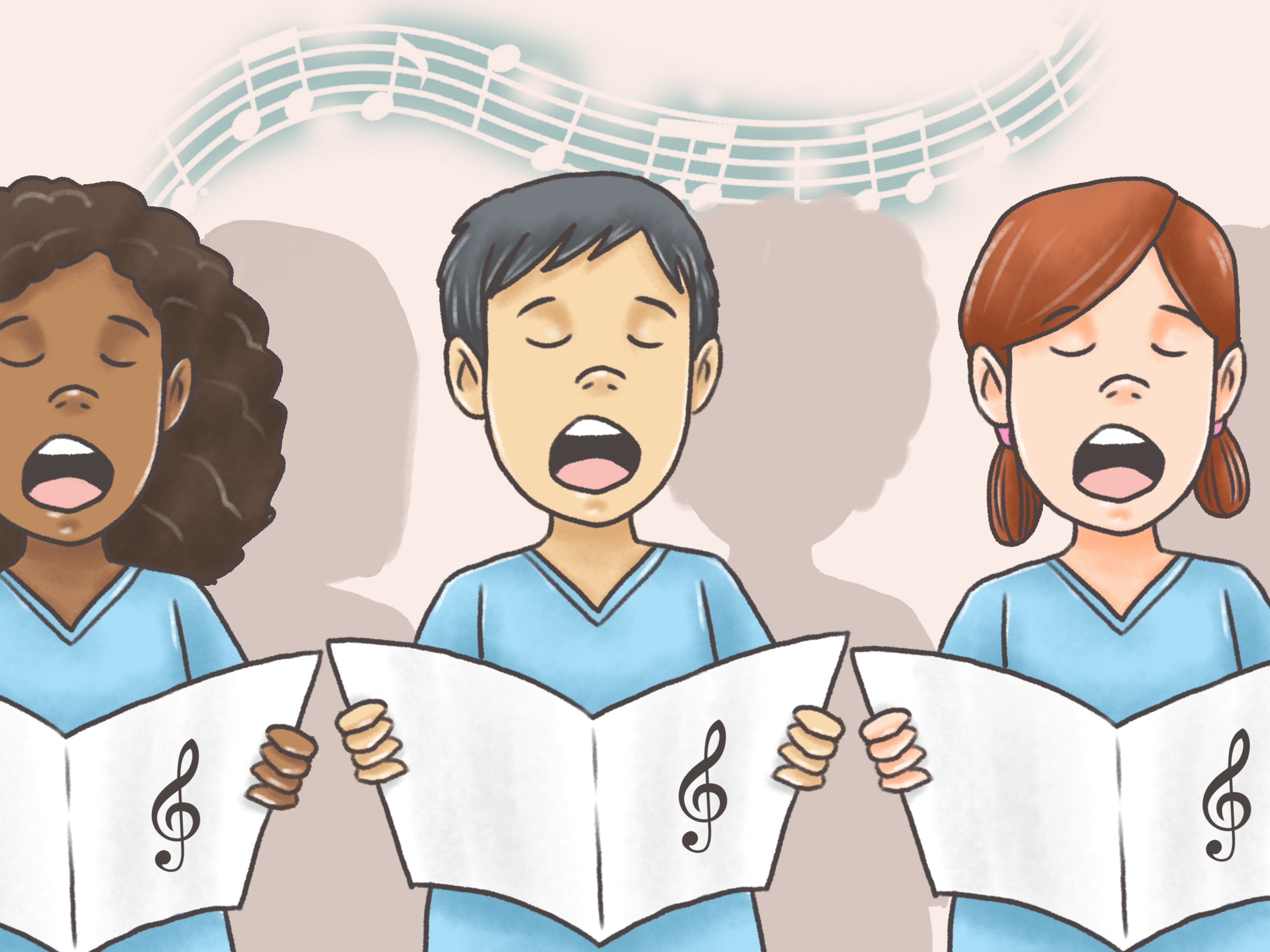
Teaching a child to sing is not about turning the living room into a tiny conservatory or demanding a perfect high note before snack time. It is about helping a young singer explore pitch, rhythm, breathing, words, emotion, and confidence without placing unnecessary pressure on a developing voice.
Children are natural musical experimenters. They hum while drawing, invent songs about the family dog, and repeat commercial jingles with suspicious accuracy. Good singing instruction builds on that curiosity. Instead of beginning with complicated vocal terminology, effective teachers use imitation, movement, stories, games, short exercises, and age-appropriate songs.
The following 14 steps explain how to teach children to sing safely and enjoyably. They can be used by parents, classroom teachers, choir directors, and beginning private instructors. No glitter-covered conductor’s baton is required, although children may strongly disagree.
1. Create a Safe and Playful Singing Environment
A child will rarely sing freely when worried about being laughed at, corrected every five seconds, or compared with another singer. Before teaching vocal technique, establish a space in which experimentation is welcome.
Tell children that unusual sounds, missed notes, and voice cracks are normal parts of learning. Participate in the activities yourself so singing does not feel like a test. A teacher who is willing to make a silly owl sound or sing a deliberately dramatic “hello” communicates that vocal exploration is safe.
Use encouraging language
Replace broad criticism such as “That was wrong” with useful guidance:
- “Let’s listen to the first note again.”
- “Try making that phrase a little lighter.”
- “Your rhythm was steady. Now let’s match the ending pitch.”
Praise effort, careful listening, clear words, expressive choices, and improvement. Confidence is not a decorative extra in children’s singing lessons. It is part of the instrument.
2. Help the Child Find a Comfortable Posture
Healthy singing begins with a body that is alert but not rigid. Ask the child to stand with the feet comfortably apart, knees flexible, shoulders relaxed, and head balanced over the spine. Avoid military-style instructions that make the singer stiff enough to resemble a coat rack.
A quick posture game can make the lesson memorable. First, ask the child to become a “sleepy noodle,” then an “overly proud superhero,” and finally a “ready singer.” Discuss which position makes breathing and sound production easiest.
Good posture should also continue while sitting. The child can sit near the front of the chair with both feet supported and the torso comfortably tall.
3. Begin With Gentle Body and Vocal Warm-Ups
Children should not jump directly from silence into loud, demanding singing. Begin with two or three minutes of simple physical movement. Shoulder rolls, gentle stretches, arm circles, and a pretend rag-doll shake can release unnecessary tension.
Move next to easy vocal sounds:
- Hum softly as though smelling warm cookies.
- Make lip trills that sound like a tiny motorboat.
- Slide from low to high on “oo” like a friendly ghost.
- Create gentle sirens without forcing the highest or lowest notes.
- Sing short five-note patterns on “mee,” “moo,” or “noo.”
Warm-ups should feel comfortable. Loudness, extreme range, and long repetitions are unnecessary, especially with young beginners.
4. Teach Relaxed, Low Breathing
Children often interpret “take a big breath” as “raise your shoulders to your ears and prepare for liftoff.” Demonstrate a quieter, more efficient breath in which the lower ribs and abdomen expand naturally while the shoulders remain relaxed.
Try the balloon exercise
Ask the child to imagine a balloon around the waist. As air enters, the imaginary balloon expands. As the child sings or hisses, it slowly becomes smaller. The purpose is not to push the stomach outward or hold the body rigid. It is to notice comfortable expansion and controlled release.
Breathing games can include:
- Hissing like a snake for four, six, and eight counts.
- Pretending to cool a spoonful of hot soup.
- Keeping an imaginary feather floating with a steady stream of air.
- Singing one short phrase without gasping in the middle.
Teach breath management gradually. A six-year-old does not need a lecture on respiratory anatomy before singing “Row, Row, Row Your Boat.”
5. Explore the Difference Between Speaking and Singing
Some children use a speaking voice when asked to sing, particularly if they have not yet discovered their upper register. Help them explore several kinds of vocal sound without labeling one as “bad.”
Say a short sentence, whisper it, call it across the room without shouting, and then sing it. Ask the child what changes. Use playful sounds such as an owl’s “hoo,” a puppy’s whimper, or a floating “woo” to encourage a lighter singing quality.
This step can be especially useful for children who habitually sing every song loudly and low. Gentle slides and echo patterns often reveal notes that ordinary conversation does not use.
6. Start With Call-and-Response Singing
Call-and-response is one of the simplest ways to teach pitch, rhythm, diction, and musical memory. Sing a short pattern and ask the child to echo it. Begin with only two or three notes.
For example:
- Teacher: “Hello, Mia.”
- Child: “Hello, teacher.”
- Teacher: “Can you sing this?”
- Child: “Yes, I can sing this.”
Keep the phrases short enough for immediate success. Once the child can echo basic patterns, vary the rhythm, starting note, vowel, and expression. Let the child become the leader, too. Children become remarkably attentive when adults must copy their musical instructions.
7. Develop Pitch Matching One Note at a Time
A child who does not immediately match pitch should not be called tone-deaf. Pitch matching combines hearing, memory, coordination, attention, and control of the vocal mechanism. These skills can improve with patient practice.
Play or sing one comfortable note and ask the child to reproduce it. When that is difficult, begin with the sound the child naturally makes and match it yourself. Then move together slightly higher or lower.
Use visual movement
Move a hand upward when the melody rises and downward when it falls. Draw simple melodic hills and valleys. Let the child move a toy car along the contour while singing. These visual and physical cues help connect the idea of pitch direction to what the voice is doing.
Avoid repeating the same failed note ten times. Change the activity, return later, and keep frustration out of the lesson.
8. Teach Rhythm Through Movement
Before correcting every sung pitch, make sure the child understands the beat and rhythm. Clap the words, tap a drum, march around the room, or pass a beanbag on the steady beat.
Start with the difference between beat and rhythm. The beat is the steady pulse. The rhythm follows the pattern of the words and notes. A child can walk the beat while clapping the rhythm, although doing both at once may initially produce a dance that looks like a confused penguin. That is perfectly acceptable.
Use familiar names and phrases to create rhythmic patterns. Clap “straw-ber-ry,” “wa-ter-mel-on,” or the names of family members. Then transfer those patterns into a song.
9. Choose Songs That Fit the Child’s Age and Voice
A suitable children’s song has an accessible range, clear melodic patterns, manageable lyrics, and an age-appropriate theme. A song may be popular without being appropriate for a beginner’s voice.
Choose music that:
- Stays mainly within the child’s comfortable range.
- Does not require prolonged shouting, growling, or heavy belting.
- Contains phrases short enough to sing with relaxed breathing.
- Uses lyrics the child can understand and pronounce.
- Matches the child’s interests and personality.
Test different starting keys rather than forcing the original recording’s key. A song written for an adult recording artist may sit awkwardly for a child, even when the child knows every lyric and several dance moves.
10. Teach Songs in Small Sections
Trying to learn an entire song at once can overload attention and memory. Break the piece into short phrases. First speak the words, then clap the rhythm, listen to the melody, echo it, and finally connect it with the next phrase.
Follow a simple teaching sequence
- Listen to the teacher perform the phrase.
- Speak the lyrics clearly.
- Clap or tap the rhythm.
- Sing the melody on a neutral syllable such as “loo.”
- Add the original words.
- Connect two phrases.
This layered method prevents the child from trying to solve pitch, rhythm, breathing, pronunciation, and expression simultaneously. Even grown-ups become suspicious when handed five problems disguised as one instruction.
11. Improve Diction Without Creating Jaw Tension
Clear lyrics help listeners understand the story, but diction should not become exaggerated to the point of stiffness. Ask the child to speak the text naturally, noticing beginning and ending consonants. Then transfer the same clarity into singing.
Use tongue twisters and rhythmic speech:
- “Red leather, yellow leather.”
- “Unique New York.”
- “Toy boat.”
Practice slowly before increasing speed. Encourage a relaxed jaw and active lips. A mirror can help a child observe whether the mouth opens comfortably on vowels.
Do not demand one identical mouth shape for every sound. Vowels require different shapes, and natural expression should remain visible.
12. Introduce Solfège and Basic Music Reading
Once the child is comfortable imitating melodies, introduce simple solfège syllables such as do, re, mi, sol, and la. Hand signs can give each pitch a visual and physical identity.
Begin with small patterns:
- Sol-mi
- Sol-mi-la
- Do-re-mi
- Mi-re-do
Connect written symbols with sounds gradually. Show whether notes move upward, downward, or repeat before discussing every detail of notation. Rhythm cards, colored notes, and floor markers can turn sight-singing into a game.
The goal is not to race through theory. It is to help the child hear a pattern internally, understand its shape, and reproduce it with growing independence.
13. Add Expression, Storytelling, and Performance Skills
Accurate notes are only part of singing. Ask what the song is about, who is speaking, and how the character feels. A child may sing the same phrase as excited, nervous, sleepy, proud, or mischievous. This develops dynamics, phrasing, tone color, and imagination.
Encourage natural facial expression and comfortable eye focus. Practice performing first for a stuffed-animal audience, then for one trusted family member, and eventually for a small group.
Do not require a shy child to perform solo without preparation. Gradual exposure builds confidence more effectively than surprising the child with, “Great news! You are singing for everyone right now.”
Before a performance, rehearse practical details: where to stand, when the accompaniment begins, what to do between verses, and how to recover after a mistake. Preparation reduces uncertainty and allows the child to focus on the music.
14. Protect the Child’s Developing Voice
Healthy singing should not hurt. Encourage regular water intake, sensible practice periods, and breaks between demanding activities. Discourage repeated yelling, forceful imitation, extreme vocal effects, and prolonged whispering.
Keep practice sessions appropriate for the child’s age and concentration. Ten focused minutes may accomplish more than forty minutes of tired repetition. End before the child’s posture collapses, attention disappears, and every exercise mysteriously turns into a song about pizza.
Watch for warning signs
Stop singing when the child experiences pain, burning, persistent coughing, unusual vocal fatigue, sudden loss of range, or worsening hoarseness. A child should not be encouraged to “sing through” discomfort.
Hoarseness associated with a brief illness may improve as the child recovers. However, a persistent or recurring voice change should be discussed with a pediatrician. Evaluation may involve an ear, nose, and throat physician or a speech-language pathologist with pediatric voice expertise.
Adolescents also need flexibility during voice change. Their comfortable range may shift, notes may become unpredictable, and previously easy repertoire may no longer fit. Adjust the key and vocal part rather than treating normal development as a failure.
A Simple 20-Minute Singing Lesson for Children
The following structure keeps a beginning lesson organized without making it feel rigid:
- Two minutes: Movement, posture, and relaxation.
- Three minutes: Humming, lip trills, sirens, and easy patterns.
- Three minutes: Breathing or rhythm game.
- Four minutes: Call-and-response and pitch matching.
- Six minutes: Learn or review a song in small sections.
- Two minutes: Perform the favorite section and celebrate progress.
Adapt the timing to the child. Preschoolers may need a new activity every few minutes, while older children can spend longer refining a phrase. Consistency matters more than completing every item during every lesson.
Experiences From Teaching Children to Sing
One of the most useful lessons from working with young singers is that the apparent problem is not always the real problem. A child who misses notes may need a better starting key rather than more volume. Another child may know the melody perfectly but become confused when the accompaniment is loud. A third may sing accurately while playing alone and suddenly switch to a speaking voice when an adult starts listening.
For example, consider an eight-year-old who repeatedly sang below the target pitch. Asking her to sing louder only increased the strain. The breakthrough came from abandoning the song temporarily and using a tiny “woo” sound like a cartoon owl. She easily followed the sound upward. After several gentle slides, the melody was reintroduced in a higher, more comfortable key. The notes appearednot because anyone pushed harder, but because the exercise helped her discover another part of her voice.
Another common experience involves children who rush. A teacher may explain tempo several times while the child continues racing toward the final note as though a trophy is waiting there. Physical movement often works better than another explanation. Walking the beat, bouncing a soft ball, or tapping alternating knees gives the pulse a visible shape. When the child returns to singing, the rhythm frequently becomes steadier without a lengthy speech.
Song choice can also transform a lesson. A technically appropriate song may fail when the child has no connection to its story. A slightly simpler song about animals, friendship, adventure, or a favorite season may produce clearer words, stronger memory, and far more expressive singing. Motivation is not separate from technique. Interested children listen more closely and repeat an exercise more willingly.
Group instruction offers another valuable lesson: children learn by observing one another, but comparison must be handled carefully. A confident singer can model a phrase, yet the teacher should not declare that child the permanent example everyone must copy. Rotate leadership so each student can contribute a sound, movement, rhythm, or interpretation. The quiet child may have the best rhythmic idea in the room.
Recording can be helpful when introduced gently. Instead of announcing that the teacher is documenting mistakes, record one short phrase and ask the child to identify something successful. Perhaps the words were clear or the ending was held steadily. Then choose one improvement for the second recording. This teaches self-evaluation without turning the phone into a tiny courtroom.
Parents also influence progress. The most productive home support is usually brief and positive: sing the song together, play the starting note, review one difficult phrase, and stop before frustration arrives. Correcting every sound during breakfast, homework, and car rides can make singing feel like unfinished housework.
Finally, progress is rarely a straight line. Children may sing beautifully one week and struggle after illness, poor sleep, rapid growth, a stressful school day, or an unfamiliar performance setting. Effective teaching responds to the voice and child present that day. The long-term goal is not one flawless recital. It is a healthy, curious singer who knows how to listen, practice, communicate, and enjoy making music.
Conclusion
Learning how to teach children to sing begins with respecting both the developing voice and the developing person. Build trust, use playful warm-ups, teach breathing without tension, practice call-and-response, and choose songs that fit the child rather than forcing the child to fit the song.
Short, consistent practice produces better results than exhausting rehearsals. Pitch, rhythm, diction, music reading, and performance skills can all improve gradually when instruction remains specific and encouraging. Most importantly, children should finish a singing lesson feeling curious about what their voices can do next.
Note: This article provides general educational information and is not a substitute for medical care. Persistent hoarseness, pain, breathing difficulty, or recurring voice loss should be evaluated by an appropriate healthcare professional.