

An embedded clause is like the helpful friend who leans into your sentence and whispers, “Wait, give them one more detail.” Used well, it makes your writing clearer, smarter, and more polished. Used badly, it can turn a perfectly innocent sentence into a grammatical lasagna with too many layers and not enough sauce.
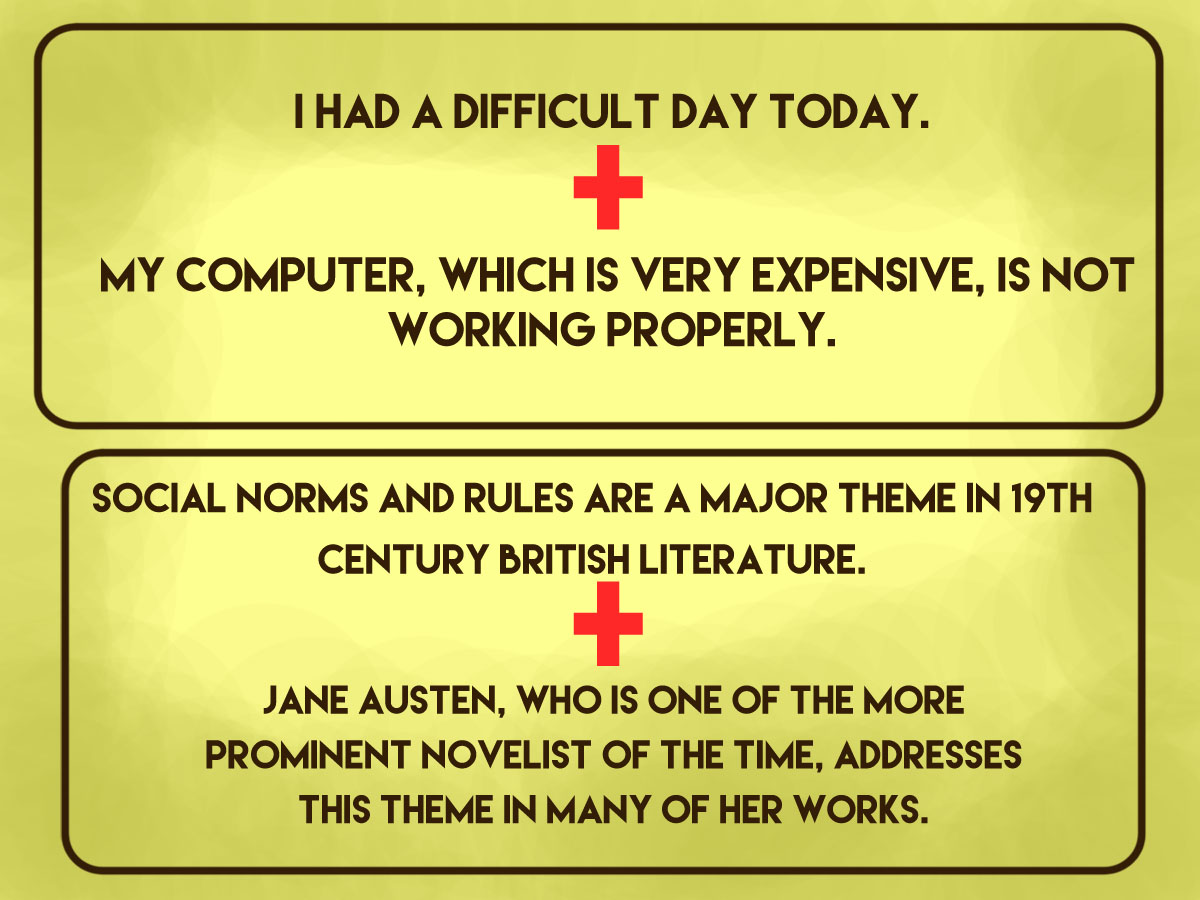
In plain English, an embedded clause is a clause placed inside another clause or sentence. It usually adds information about a noun, explains an idea, reports what someone said or thought, or gives context that helps the reader understand the main point. For example: The teacher, who had read every draft twice, gave helpful feedback. The words who had read every draft twice form an embedded clause. The sentence still has its main idea: The teacher gave helpful feedback. The embedded clause simply adds more information.
Learning how to use an embedded clause is especially useful for students, bloggers, professional writers, editors, and anyone who wants sentences that do more than stand there wearing plain socks. Embedded clauses help combine ideas, avoid choppy writing, and create a natural rhythm. The trick is knowing where to place them, which words to use, and when commas are required.
What Is an Embedded Clause?
An embedded clause is a dependent clause inserted into a larger sentence. It contains a subject and a verb, but it usually cannot stand alone as a complete sentence because it depends on the main clause for full meaning.
Look at this example:
The laptop that I bought last year still works perfectly.
The main clause is The laptop still works perfectly. The embedded clause is that I bought last year. It tells us which laptop we are talking about. Without that detail, the sentence is still grammatical, but less specific.
Many embedded clauses are relative clauses, which often begin with words such as who, whom, whose, which, that, where, or when. Others may be noun clauses or content clauses, as in She believes that the plan will work. In that sentence, that the plan will work is embedded inside the larger sentence as the object of believes.
Why Embedded Clauses Matter
Embedded clauses matter because they help you write with precision. Instead of stacking several short sentences like bricks, you can combine related information into one smooth sentence.
Choppy version: My neighbor owns a dog. The dog barks at squirrels. The squirrels seem personally offended.
Smoother version: My neighbor’s dog, which barks at squirrels, has created a tiny neighborhood drama.
The second version is more compact and more entertaining. It gives the reader the main point while slipping in extra detail. That is the magic of an embedded clause: it lets a sentence carry more information without sounding like a grocery receipt.
How to Use an Embedded Clause: 7 Steps
Step 1: Start With a Complete Main Clause
Before adding an embedded clause, write a complete main clause. A main clause has a subject and a verb and can stand alone as a sentence.
The student passed the exam.
This sentence is simple, clear, and complete. Now you can add detail. Maybe the student studied every night. Maybe the exam was unusually difficult. Maybe the teacher wrote questions that looked like they escaped from a puzzle book. Whatever the detail is, the main clause gives you a strong base.
With an embedded clause:
The student, who studied every night, passed the exam.
The embedded clause who studied every night adds information about the student. The main idea remains easy to find: The student passed the exam.
Step 2: Decide Whether the Extra Information Is Essential
This is the most important decision. Ask yourself: Does the reader need this clause to identify the person, place, thing, or idea? If yes, the clause is essential. If no, it is extra.
Essential embedded clause:
The book that explains embedded clauses is on my desk.
Here, that explains embedded clauses identifies which book. Without it, the sentence becomes vague. Which book? The cookbook? The mystery novel? The suspiciously heavy grammar handbook? We need the embedded clause.
Nonessential embedded clause:
My grammar book, which explains embedded clauses, is on my desk.
Here, which explains embedded clauses adds extra information. The phrase my grammar book already identifies the noun clearly. The embedded clause gives bonus detail, so commas are needed.
Step 3: Choose the Right Introductory Word
Most embedded relative clauses begin with a relative pronoun or relative adverb. Choosing the right one keeps your sentence accurate and natural.
Use who for people:
The editor who reviewed my article found three comma errors.
Use whom when the person receives the action, especially in formal writing:
The consultant whom we hired improved the report.
Use whose to show possession:
The writer whose draft won the contest celebrated with pancakes.
Use that for essential information about people, animals, things, or groups:
The app that tracks my deadlines is my digital babysitter.
Use which for nonessential information, especially about things or ideas:
The app, which sends loud reminders, has saved me from many disasters.
Use where for places and when for times:
The café where I wrote my essay has excellent coffee.
The day when I understood embedded clauses felt oddly heroic.
Step 4: Place the Embedded Clause Close to What It Describes
An embedded clause should sit close to the noun, phrase, or idea it modifies. If it wanders too far away, your reader may attach it to the wrong thing. Grammar, like a toddler in a supermarket, needs supervision.
Confusing:
I gave the notes to my classmate that explained the homework.
This sounds as if the classmate explained the homework, but maybe the notes did. A clearer version is:
I gave my classmate the notes that explained the homework.
Now the embedded clause that explained the homework clearly describes notes.
Another example:
Confusing: Maria showed me a photo of her dog that was on her phone.
Clearer: Maria showed me a photo, which was on her phone, of her dog.
Even better: Maria showed me a photo of her dog on her phone.
Sometimes the best embedded clause is no embedded clause at all. Clear writing beats fancy writing every time.
Step 5: Use Commas for Nonessential Embedded Clauses
Commas are not decorative confetti. They signal meaning. When an embedded clause adds extra, nonessential information, place commas around it.
My brother, who hates alarm clocks, still wakes up before sunrise.
The clause who hates alarm clocks is extra. The sentence still makes sense without it: My brother still wakes up before sunrise. Because the embedded clause is nonessential, it needs commas.
When the embedded clause is essential, do not use commas:
People who ignore deadlines often meet panic face-to-face.
The clause who ignore deadlines identifies which people. Removing it changes the meaning. Therefore, no commas are used.
Compare these two sentences:
The students who finished early left the room.
The students, who finished early, left the room.
The first sentence means only the students who finished early left. The second sentence means all the students finished early, and all of them left. One pair of commas changes the meaning completely. Tiny punctuation, big attitude.
Step 6: Avoid Overloading the Sentence
Embedded clauses are useful, but too many can make a sentence collapse under its own ambition.
Overloaded:
The professor, who taught the course that covered the theory that influenced the research that changed the field, assigned a paper.
This sentence technically works, but it feels like walking down a hallway where every door opens into another hallway. A better version breaks the ideas apart:
The professor assigned a paper on the theory that changed the field. She had taught the course that introduced the research behind it.
One embedded clause is often elegant. Two can work if the sentence remains clear. Three or more can make readers reach for snacks and emotional support. If a sentence becomes too long, divide it.
Step 7: Test the Sentence by Removing the Embedded Clause
A simple editing trick is to remove the embedded clause and read the main sentence by itself.
The movie, which my friends recommended, was surprisingly good.
Remove the embedded clause:
The movie was surprisingly good.
The sentence still works. That tells you the embedded clause is extra, so commas are correct.
Now try this:
The movie that my friends recommended was surprisingly good.
Remove the embedded clause:
The movie was surprisingly good.
The sentence is grammatical, but the meaning changes because we no longer know which movie. That tells you the clause is essential, so commas are not used.
Common Types of Embedded Clauses
Relative Embedded Clauses
Relative embedded clauses describe nouns. They are the most common type people think of when learning embedded clauses.
The chef who made the soup refused to reveal the recipe.
The soup, which smelled amazing, disappeared in five minutes.
Noun Embedded Clauses
A noun embedded clause acts like a noun in the sentence. It may function as a subject, object, or complement.
What she wrote surprised everyone.
I believe that the final draft is stronger.
The problem is that we forgot the introduction.
Embedded Questions
An embedded question appears inside a statement or another question. It does not use normal question word order.
Direct question: Where is the library?
Embedded question: Do you know where the library is?
Notice that where the library is uses statement word order, not where is the library. This is a common mistake in English writing and speech.
Embedded Clause Examples for Everyday Writing
Here are practical examples you can adapt for essays, blog posts, emails, and stories:
The article that explains the rule includes several examples.
My coworker, who organizes every file by color, found the missing contract.
The restaurant where we celebrated my birthday closed last year.
The reason why the sentence sounds awkward is the misplaced clause.
I learned that strong sentences often depend on small grammar choices.
The paragraph, which originally felt flat, improved after I added one clear embedded clause.
Common Mistakes to Avoid
Mistake 1: Using Commas With Every Embedded Clause
Do not automatically add commas. First decide whether the embedded clause is essential or nonessential.
Incorrect: The laptop, that I use for work, needs a new battery.
Correct: The laptop that I use for work needs a new battery.
Mistake 2: Using “That” in a Nonessential Clause
In standard American English, that is usually used for essential clauses, while which is used for nonessential clauses.
Incorrect: My car, that is parked outside, needs gas.
Correct: My car, which is parked outside, needs gas.
Mistake 3: Placing the Clause Too Far From Its Noun
Keep the embedded clause near the word it describes.
Awkward: She gave a speech to the committee that lasted ten minutes.
Clear: She gave a speech that lasted ten minutes to the committee.
Even clearer: She gave the committee a ten-minute speech.
Mistake 4: Forgetting Subject-Verb Agreement
The verb in the main clause must agree with the main subject, not with a noun inside the embedded clause.
Incorrect: The list of books that are on the table are missing a title.
Correct: The list of books that are on the table is missing a title.
The main subject is list, which is singular, so the verb should be is.
How Embedded Clauses Improve SEO Writing
For SEO content, embedded clauses help explain ideas naturally without repeating keywords like a robot trying to win a spelling bee. Instead of writing embedded clause over and over, you can use related terms such as relative clause, dependent clause, subordinate clause, main clause, comma rules, and sentence structure.
For example, a sentence like Writers who understand embedded clauses can create smoother sentences includes the main keyword naturally. It also gives readers a clear benefit. Search engines favor helpful, readable content, and readers favor sentences that do not make them feel trapped in a grammar maze.
Embedded clauses also improve user experience by making explanations more compact. A blog post about grammar should be easy to scan, but it should also provide depth. Well-placed embedded clauses allow you to add examples, qualifications, and context without turning every paragraph into a pile of tiny disconnected sentences.
Practice: Build Your Own Embedded Clauses
Try combining each pair of sentences into one sentence with an embedded clause.
1. The woman teaches history. She lives next door.
Combined: The woman who lives next door teaches history.
2. The phone keeps freezing. I bought it last month.
Combined: The phone that I bought last month keeps freezing.
3. My uncle grows tomatoes. He once hated gardening.
Combined: My uncle, who once hated gardening, grows tomatoes.
4. The café serves blueberry pie. We met there.
Combined: The café where we met serves blueberry pie.
5. The lesson was useful. It explained comma placement.
Combined: The lesson, which explained comma placement, was useful.
Experience Notes: What Writing With Embedded Clauses Teaches You
After working with embedded clauses in real writing, you start noticing something funny: grammar rules are not just rules. They are tools for controlling attention. When I edit a sentence, I often ask, “What should the reader notice first?” If the main idea is important, I keep it in the main clause. If a detail is helpful but secondary, I tuck it into an embedded clause. That simple habit can rescue a sentence from confusion.
For example, imagine writing a blog post about a product, a recipe, or a study habit. You might begin with a plain sentence: The planner helps students manage deadlines. That is clear, but it is not very lively. Add an embedded clause and it becomes: The planner, which includes weekly review pages, helps students manage deadlines. Now the reader gets the main benefit and a useful feature in one sentence. The clause adds value without stealing the spotlight.
In essays, embedded clauses are especially helpful because they let you connect evidence to analysis. A student might write: The novel explores memory. That is a start, but it is thin. A stronger version could be: The novel, which moves between past and present, explores how memory shapes identity. The embedded clause gives context, and the main clause delivers the argument. Suddenly the sentence has a spine.
In professional emails, embedded clauses can make writing sound polished without becoming stiff. Compare: I reviewed the proposal. You sent it yesterday. It looks strong. That is understandable, but choppy. A smoother version is: The proposal that you sent yesterday looks strong after my review. It is shorter, cleaner, and more natural. Nobody wants an email that sounds as if it was assembled with refrigerator magnets.
Still, experience also teaches restraint. New writers sometimes fall in love with embedded clauses and begin stuffing them everywhere. The result is a sentence that technically works but feels exhausting. If a sentence has too many interruptions, the reader loses the main idea. My favorite test is the “breath test.” If I cannot read the sentence aloud comfortably, it probably needs editing. Break it apart. Move the clause. Delete the clause. Let the sentence breathe.
Another practical lesson is that punctuation carries meaning. Commas around an embedded clause tell the reader, “This is extra.” No commas tell the reader, “You need this information.” Once you understand that difference, comma placement stops feeling random. It becomes a choice, not a guessing game.
The best writers use embedded clauses with purpose. They add detail where it helps, remove detail where it distracts, and keep the main idea easy to find. That is the real skill. An embedded clause is not there to impress your English teacher, your editor, or the tiny grammar goblin who lives in your laptop. It is there to help the reader understand more with less effort.
Conclusion
Using an embedded clause is one of the easiest ways to make your writing more specific, fluent, and mature. Start with a complete main clause, decide whether the added information is essential, choose the right introductory word, place the clause carefully, punctuate it correctly, avoid overload, and test the sentence for clarity.
When you master embedded clauses, your sentences become more flexible. You can add detail without creating clutter. You can explain relationships between ideas without writing five separate sentences. You can sound polished without sounding like you swallowed a grammar textbook. In short, embedded clauses help your writing do what good writing should always do: guide the reader smoothly from one idea to the next.