

Editorial note: This article is based on current product-direction references and U.S. pest-management guidance. Product packaging directions should always take priority if they differ.
Research basis:
Few things can ruin a peaceful afternoon faster than a fly performing aggressive helicopter maneuvers around your kitchen. You swat. You miss. The fly circles back, apparently encouraged by your lack of hand-eye coordination.
That is where a Raid Fly Ribbon can help. This simple sticky fly trap is designed to catch flies and other small flying insects without sprays, fumes, plugs, batteries, or a tiny insect exterminator hiding in your pantry. It is low-tech, inexpensive, and surprisingly effective when you place it correctly.
Still, a fly ribbon is not magic wallpaper for bugs. It works best as part of a larger fly-control plan: remove food scraps, close garbage lids, repair screens, and stop giving flies a five-star all-inclusive resort in your home. Used properly, Raid Fly Ribbon can quietly reduce the number of adult flies buzzing around your living space while helping you identify where the problem is worst.
Note: This guide describes the standard U.S. Raid Fly Ribbon setup. Always read the carton before using the product because packaging, placement guidance, and precaution statements can change over time.
What Is Raid Fly Ribbon?
Raid Fly Ribbon is a sticky hanging trap for small flying insects. The ribbon is typically stored inside a cardboard tube and coated with an adhesive that captures flies when they land on it. Many versions are marketed as odorless, pre-baited, and free of insecticides, making them useful in spots where you would rather not use aerosol sprays.
The ribbon does not chase flies around the room, release vapor, or eliminate the source of an infestation. Instead, it catches adult flies that land on its sticky surface. Think of it as a very patient bouncer: it does not argue, it does not negotiate, and once a fly checks in, it is not checking out.
Sticky fly ribbons tend to work best for ordinary house flies in enclosed or semi-enclosed spaces. They may also catch gnats, moths, and other small flying insects, but the results depend on the species, the room, light conditions, drafts, and nearby competing food odors.
Before You Start: A Quick Fly Ribbon Checklist
Before opening the tube, choose a location with enough room for the ribbon to hang without brushing your hair, clothing, curtains, cabinets, or unsuspecting visitors. The adhesive is meant for flies, not for your favorite sweater or the family dog’s tail.
- Keep the ribbon out of reach of children and pets.
- Do not hang it directly above food-preparation areas, dishes, dining tables, or open food.
- Avoid doorways, narrow hallways, and places where people walk through frequently.
- Use a secure mounting spot so the ribbon cannot fall.
- Keep a little soap and water nearby in case adhesive gets on your hands.
- Check for nearby open windows, garbage bins, fruit bowls, pet-food areas, or other fly hotspots.
Fly ribbons work better when you give them a sensible job. Hanging one in the middle of a spotless, dark basement and expecting it to solve a kitchen-fly problem is like putting a fishing pole in a bathtub and blaming the fish for not cooperating.
How to Use Raid Fly Ribbon: 7 Steps
Step 1: Read the Carton and Inspect the Tube
Start by reading the directions and precaution statements printed on the Raid Fly Ribbon carton. This may sound obvious, but it prevents common mistakes, especially if you have a different package size or a newer product version.
Check that the cardboard tube is intact and that the red hanging loop and thumbtack are present. Do not open the ribbon over food, upholstered furniture, bedding, or a freshly painted wall. The adhesive is sticky by design, and once it meets a surface it likes, it can become emotionally attached.
If the ribbon tube looks crushed, wet, badly damaged, or unusually difficult to handle, use another ribbon rather than forcing it open.
Step 2: Pick a Smart Placement Area
Choose a location where flies regularly gather but people and pets do not. Good options may include a utility room, garage, enclosed porch, laundry area, near a covered trash can, or near a sunny window where flies tend to rest.
In kitchens, use extra care. Place the ribbon away from food-prep zones and far enough from counters that it cannot swing into dishes, utensils, towels, or uncovered food. A spot near a window or a contained garbage area may work better than directly over the counter.
Flies respond to light, temperature, humidity, air movement, and food odors. That means there is no universally perfect spot. The best placement is usually where you already notice the most fly activity.
Step 3: Warm the Tube if the Ribbon Is Cold
If the room is chilly or the ribbon has been stored in a cold garage, warm the tube gently in your hands for a short time. This can make the ribbon easier to pull from the tube without tearing or sticking to itself.
Do not place the tube in a microwave, oven, hot water, direct flame, or on a heating appliance. The goal is simply to take the chill off, not prepare the ribbon for a spa day.
Once the tube feels closer to room temperature, you are ready to remove the thumbtack and extend the ribbon.
Step 4: Remove the Thumbtack and Set It Aside Safely
Carefully remove the included thumbtack from the tube. Set it somewhere secure where it will not roll away, get stepped on, or become a surprise snack for a curious pet. The tack will be used to hang the ribbon through its red loop.
A small dish, countertop corner, or closed drawer can work as a temporary holding spot. Avoid balancing the tack on top of the refrigerator, where it may vanish into the mysterious appliance wilderness.
Keep children and pets away while setting up the ribbon. Even though the trap may be insecticide-free, the adhesive and sharp tack are still not toys.
Step 5: Pull the Ribbon Out Slowly With a Gentle Twisting Motion
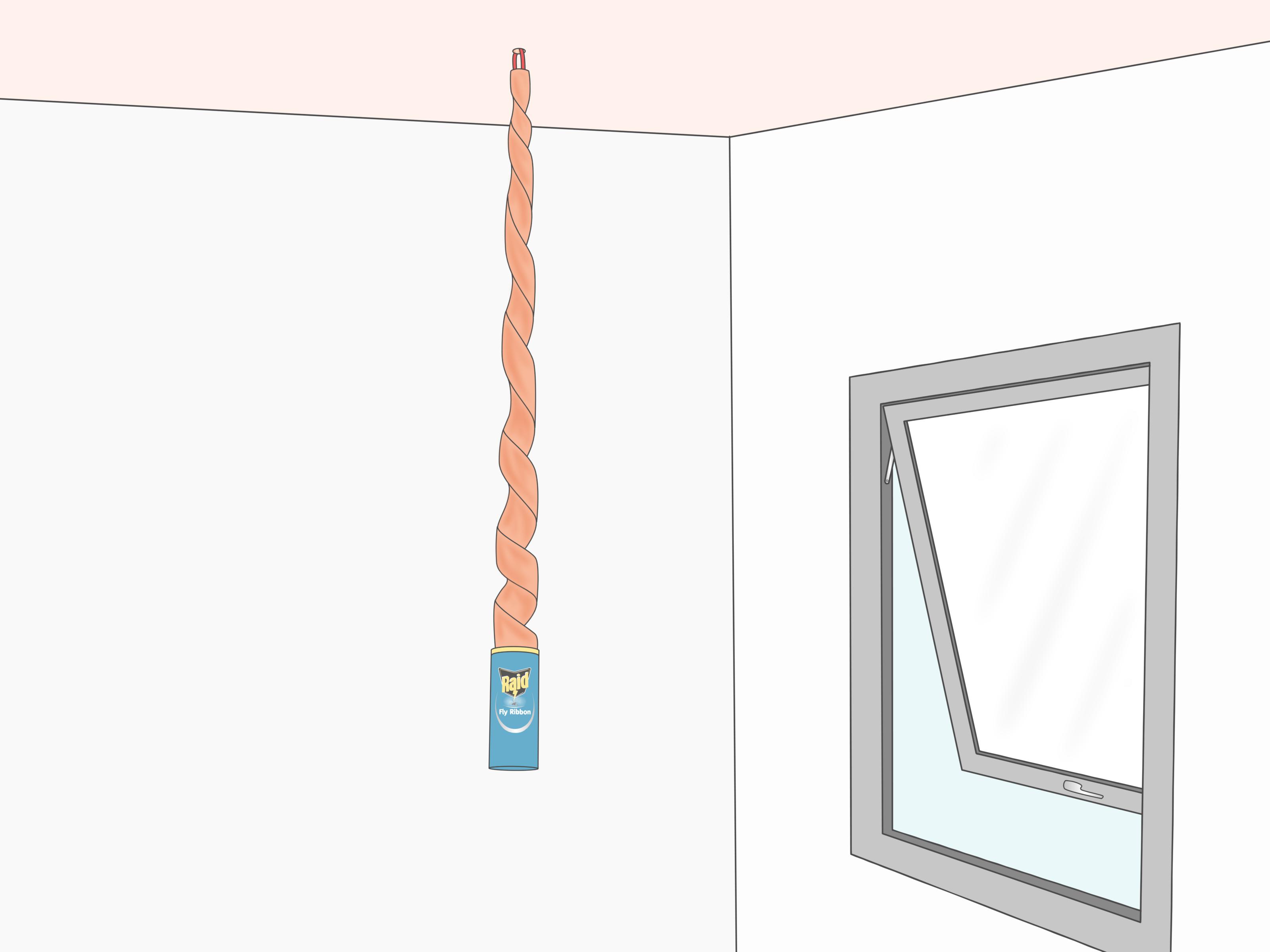
Hold the red loop at the top of the ribbon. Slowly pull the cardboard tube downward while using a gentle twirling or twisting motion. This helps the sticky strip slide out gradually instead of bunching, snapping, or attaching itself to your hand before you have even begun.
Take your time. Pulling too quickly can make the ribbon stretch, fold over, or tear. If it starts sticking to itself, pause and carefully separate it without yanking. Slow and steady wins this particular fly-catching race.
Continue until the ribbon is fully exposed. Try not to touch the sticky section more than necessary. Excess fingerprints, dust, lint, and pet hair can reduce the usable sticky area.
Step 6: Hang the Ribbon Securely
Place the thumbtack through the red loop and secure it to the selected mounting point. Make sure the ribbon hangs vertically and has clearance on all sides. It should not touch walls, cabinets, hanging towels, shelves, light fixtures, or curtains.
Keep the ribbon high enough that children and pets cannot reach it. If you have cats that enjoy vertical acrobatics or dogs with Olympic-level jumping skills, choose an even more protected location.
For outdoor or semi-outdoor use, choose a sheltered area. Strong wind, blowing dust, rain, and debris can cover the adhesive quickly and make the trap less effective. A covered porch, shed entrance, or protected garage corner is often a better choice than an exposed outdoor wall.
Step 7: Monitor, Reposition, and Dispose of the Ribbon Properly
Check the ribbon after two or three days. If it has caught flies, congratulations: the trap is doing its quiet, sticky work. If it has not caught anything, move it closer to or farther from a window, garbage area, fruit bowl, or another location where flies are active.
Replace the ribbon when it is full of insects, heavily coated with dust, has lost tackiness, or has become visually unpleasant enough to make your guests ask questions. The exact replacement timing depends on how many flies are present and how dusty the area is.
When disposing of the ribbon, carefully wrap it in paper, newspaper, or a plastic bag before placing it in the trash. This keeps the adhesive from sticking to the bin, other garbage, or the person taking out the trash. Wash your hands with soap and water afterward.
Where Should You Hang a Fly Ribbon?
Placement can make a bigger difference than buying more ribbons. Flies often gather where they find warmth, light, food odors, moisture, or easy entry points. The best location is usually close to activity without being directly over food or in a busy walkway.
Good Raid Fly Ribbon Locations
- Near sunny windows where flies collect.
- In garages, sheds, mudrooms, or enclosed porches.
- Near covered trash cans, but not above food or recycling you handle frequently.
- In laundry rooms, utility rooms, and pet areas with fly activity.
- Near exterior doors that are opened often, provided the ribbon is not in the traffic path.
- In a protected area near a fruit bowl or compost container, while keeping proper distance from food-prep surfaces.
Places to Avoid
- Above kitchen counters, stoves, dining tables, or open food.
- Near ceiling fans, vents, or strong drafts.
- In doorways, stairwells, or narrow paths.
- Where curtains, plants, towels, or decorations can brush against it.
- Within reach of children, pets, or wildlife.
- Outside in exposed rain, wind, or dusty conditions.
Why Your Raid Fly Ribbon Is Not Catching Flies
A fly ribbon that stays empty is not always defective. It may simply be in the wrong place. Flies are influenced by light, moisture, warmth, food sources, and air currents, so even moving the ribbon a few feet can change the result.
Try moving the trap closer to a window, a covered garbage can, or the room where you see the most activity. Avoid placing it directly in a draft from an air conditioner, fan, or open door. A ribbon that twists constantly in moving air is less likely to become an attractive landing spot.
Also consider whether you are dealing with the right pest. A traditional fly ribbon may catch house flies well, but it is not a complete answer for drain flies, fungus gnats, fruit flies, or flies breeding in outdoor trash, animal waste, or decaying material. Each type has different habits and may require a different source-control strategy.
How to Get Better Results From Fly Ribbon
The most effective fly-control plan does not rely on one sticky strip alone. Use the ribbon as part of a practical clean-and-block routine.
- Empty indoor trash regularly and keep lids closed.
- Rinse recyclable cans and bottles before storing them.
- Clean spills, crumbs, and sticky drink residue promptly.
- Cover fruit, baked goods, pet food, and compost containers.
- Repair torn window screens and use door sweeps where needed.
- Pick up pet waste promptly outdoors.
- Remove decaying plant material, food waste, and standing organic debris around the home.
- Keep exterior garbage containers clean and positioned away from doors when possible.
Sticky traps can help reduce adult flies, but they cannot stop new flies from appearing if there is an ongoing breeding source nearby. If flies keep returning in large numbers, inspect trash areas, pet-waste zones, drains, compost, outdoor bins, and entry gaps around doors and windows.
Safety Tips for Using Raid Fly Ribbon
Raid Fly Ribbon is generally a lower-chemical option compared with insecticide sprays, but it still needs careful placement. The main concern is the adhesive. It can stick to skin, hair, fabric, furniture, and small animals if it is placed carelessly.
Keep the product and its packaging away from children and pets. Do not allow animals to sniff, lick, chew, or become tangled in the ribbon. If adhesive gets on your hands, wash with soap and water. For adhesive in the eyes, on skin that becomes irritated, or after accidental ingestion, follow the product label and contact a poison-control service or health professional for guidance.
Never hang a ribbon where it could trap birds, bats, pollinators, or other non-target animals. Indoors and in sheltered spaces are usually the easiest places to control access and avoid accidental wildlife contact.
Frequently Asked Questions About Raid Fly Ribbon
Can you use Raid Fly Ribbon indoors?
Yes, Raid Fly Ribbon is commonly used indoors in areas where flies are a nuisance. Keep it away from food, food-preparation surfaces, children, pets, and busy walkways.
Can Raid Fly Ribbon be used outdoors?
It may be used in protected outdoor or semi-outdoor areas when the label permits. A covered porch, garage, shed, or screened patio is usually better than a fully exposed location because wind, rain, and dust can reduce the ribbon’s effectiveness.
How long does Raid Fly Ribbon last?
It lasts until the adhesive becomes covered with flies, dust, lint, or debris, or until it no longer catches insects effectively. A ribbon in a clean, low-fly area may last much longer than one near a busy trash or garage area.
Does Raid Fly Ribbon kill flies instantly?
No. The ribbon traps flies with adhesive when they land on it. It is not an instant knockdown spray, so give it time and combine it with sanitation and entry-point control.
Can a fly ribbon solve a major fly infestation?
Not by itself. Fly ribbons are best for catching adult flies and monitoring activity. A large or recurring problem usually means there is a source nearby, such as trash, pet waste, decaying organic matter, open food, damaged screens, or a drain issue.
Real-World Experiences Using Raid Fly Ribbon
People often buy a fly ribbon when they are already annoyed enough to consider negotiating with the flies. The usual moment is familiar: a few house flies appear near the kitchen window, then suddenly every sunny afternoon feels like an unpaid audition for a nature documentary.
One of the first lessons many users learn is that placement matters more than enthusiasm. Hanging a ribbon in the center of a room may feel logical because it is visible, but flies do not care about your interior design logic. They tend to gather near windows, doors, trash cans, fruit, pet-food areas, and warm spots where light hits the wall. Moving the ribbon from “somewhere in the kitchen” to “near the window where flies keep landing” can make a noticeable difference.
Another common experience is underestimating how sticky the ribbon is. The cardboard tube looks harmless. Then the strip comes out, catches a little breeze, and suddenly it is trying to introduce itself to your sleeve, countertop, and haircut. Pulling slowly with a gentle twisting motion is not just a manufacturer suggestion; it is the difference between a clean setup and a tiny adhesive disaster.
Users also tend to appreciate the lack of spray odor. In a laundry room, garage, porch, or enclosed utility space, a fly ribbon can quietly work in the background without filling the air with insecticide mist. That makes it especially useful when you want to avoid spraying near food storage, pets, or frequently used living spaces.
Of course, there is a visual tradeoff. A fresh ribbon is not exactly a chandelier. A ribbon with several trapped flies is even less likely to appear in a home-decor magazine. Many people reserve it for practical areas such as garages, screened porches, sheds, trash zones, and back entrances. In those places, effectiveness tends to matter more than whether the trap matches the throw pillows.
Another useful takeaway is that fly ribbons reveal patterns. If one ribbon fills quickly near a back door while another stays empty near the kitchen, that tells you something. Perhaps the back door is left open often. Maybe an outdoor trash container is too close. Maybe a damaged screen is giving flies VIP access. The ribbon becomes more than a trap; it becomes a clue.
People who get the best long-term results usually pair the ribbon with a cleanup routine. They rinse cans before tossing them in recycling, empty trash more often, keep fruit covered, clean up pet-food residue, and check windows and door seals. The fly ribbon catches the adults that slipped inside, while the cleanup removes the invitation.
In other words, Raid Fly Ribbon works best when it is treated as one tool in a smarter plan. It will catch flies. It will not take out the trash, wash sticky counters, repair screens, or explain to your roommates why leaving an open smoothie on the counter overnight was a terrible idea. But when you place it well and remove what attracts flies, it can make your home a much less exciting destination for uninvited winged guests.
Final Thoughts
Using Raid Fly Ribbon is simple: choose a safe location, extend the strip slowly, hang it securely, monitor the results, and dispose of it carefully. The real secret is placement and prevention. Catching a few flies is useful, but removing the food, moisture, waste, and entry points that attract them is what helps keep the problem from returning.