

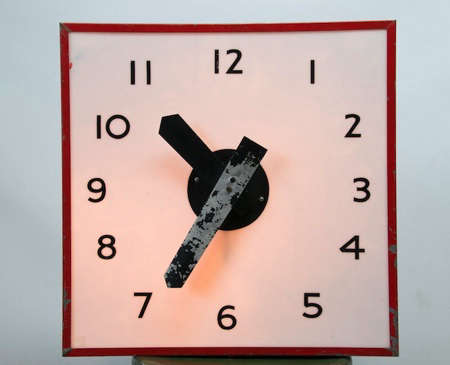
A huge 1950’s illuminated clock is not just a way to tell time. It is part sculpture, part sign, part mood lighting, and part full-blown personality test. You either look at one and think, “That is magnificent,” or you wonder why a wall clock is trying harder than most modern apartments. Either way, it wins. These oversized glowing timepieces carry the visual swagger of postwar America: bold scale, optimistic design, electric color, and the belief that even something as ordinary as a clock should have a little showbiz in its soul.
That is exactly why these clocks still fascinate collectors, decorators, vintage lovers, and anyone who has ever wanted a room to feel less “nice” and more “remembered forever.” A huge illuminated clock from the 1950s fits into a sweet spot where utility meets spectacle. It tells you the time, yes, but it also tells a story about diners, motels, jewelry stores, soda counters, roadside Americana, atomic-age optimism, and the era when a glow around the dial felt like the future had arrived early.
The Postwar Glow That Made These Clocks Possible
To understand the appeal of a huge 1950’s illuminated clock, you have to understand the mood of the decade that produced it. The 1950s loved convenience, technology, and visual excitement. American homes and businesses were embracing streamlined forms, cleaner lines, brighter materials, and the energetic style we now call mid-century modern. Designers leaned into functionality, but they did not believe function had to be boring. On the contrary, the postwar years gave everyday objects a glamorous new job: look efficient, look modern, and preferably look fantastic while doing it.
Clocks were perfect candidates for this transformation. Electric clock technology had already pushed timekeeping into a more modern era, and illuminated dials made even more sense in busy commercial settings. If you owned a diner, lounge, appliance shop, tavern, or roadside business, a large glowing clock was more than decoration. It made the space feel active. It reassured customers that your place was up to date. It kept the room visually alive after dark. In a decade obsessed with movement and visibility, a giant lit clock was basically a wall-mounted pep talk.
The illuminated look also fit beautifully into the broader visual culture of the period. Neon signs, glowing motel marquees, chrome-trimmed counters, and vivid commercial displays all helped define the era’s sense of excitement. A big lit clock borrowed from that same language. Even when it was technically simple, it felt theatrical. That matters. People do not remember a room because it was practical. They remember it because it had presence.
What Makes a Huge 1950’s Illuminated Clock So Special?
1. Scale That Refuses to Apologize
The first thing that sets these clocks apart is size. A huge illuminated clock was designed to be seen across a room, through a storefront window, or from a diner booth while someone argued about pie. Oversized proportions gave the clock authority. It was not tucked politely onto a shelf. It claimed wall space like it paid rent.
2. Light as Atmosphere, Not Just Function
The glow is the magic. Some examples use neon rings, some use backlit dials, and some create a softer halo effect that makes the numerals seem to float. That illumination changes the whole emotional temperature of a room. A regular vintage clock is handsome. An illuminated one becomes cinematic. It turns time into ambiance.
3. Materials That Speak Mid-Century Fluently
Many of these clocks combine glass, painted metal, chrome accents, molded housings, and bold graphic numerals. The best examples balance hard industrial materials with playful styling. The dial might be crisp and legible, but the glow gives it warmth. It is exactly the sort of contradiction mid-century design handled so well: machine-age confidence with human-friendly charm.
4. The Wonderful Mix of Restraint and Showmanship
A huge 1950’s illuminated clock is flashy, but not chaotic. The geometry is usually disciplined. The graphics are readable. The design feels intentional. Even the more colorful models tend to avoid visual mess. That blend of order and showmanship is what keeps them looking stylish instead of gimmicky. They know how to make an entrance without screaming for help.
Where These Clocks Shined in Their Glory Days
Large illuminated clocks were especially at home in public-facing American spaces. Think diners with stainless steel trim and polished counters. Think taverns where the bar mirror, the beer sign, and the glowing clock all competed for attention like siblings at a holiday dinner. Think roadside motels, soda fountains, bowling alleys, repair shops, jewelry stores, and neighborhood businesses that wanted to project modernity after sunset.
That commercial connection matters because it explains why these clocks feel bigger than life even now. They were often made to sell an atmosphere as much as a product. A glowing clock in a business told customers the place was current, open, electric, and worth noticing. In a roadside culture built on visibility, illumination was a form of advertising. The clock was part of the welcome sign, part of the rhythm of the room, and part of the memory customers carried away.
That is also why collectors love them. They do not just represent timekeeping history. They carry a full environment with them. When you hang one today, you are not merely decorating a wall. You are importing a little piece of American visual culture from the age of drive-ins, chrome stools, and the glorious belief that every night should have its own glow.
How to Recognize a Great One
Not every old lighted clock deserves dramatic music and a pedestal. Some are wonderful originals, some are later reproductions, and some have been restored so heavily that they are basically vintage in spirit only. That does not mean reproductions are bad. It just means buyers should know what they are looking at.
A strong example usually gets several things right. The case feels proportionate and substantial. The dial graphics look period-correct rather than oddly modern. The illumination complements the face instead of overpowering it. The aging makes sense. Light wear can be charming; random distress that looks like it was applied by a committee usually is not. If a clock has been restored, the best restorations are honest about it. Good restoration preserves character. Bad restoration turns history into cosplay.
Electrical condition matters too. This is where romance should take a short coffee break and let common sense sit down. A vintage illuminated clock may have aging wiring, brittle insulation, worn switches, or outdated internal components. That does not make it undesirable. It just means you should treat it like an old electrified object, not like a toaster you grabbed yesterday. Rewiring or professional inspection is often the smart move, especially if you plan to use the clock regularly rather than admire it like a glamorous fossil.
Why a Huge 1950’s Illuminated Clock Works So Well in Modern Interiors
The reason these clocks still look incredible today is simple: modern interiors often benefit from one strong, memorable object. A huge illuminated clock does that job beautifully. In a minimalist room, it adds warmth and character. In an eclectic room, it becomes the anchor piece that keeps everything else from drifting into random thrift-store chaos. In an industrial space, it looks perfectly at home among brick, steel, and worn wood. In a kitchen or home bar, it instantly makes the room feel more social.
It also solves a problem many decorative objects never quite manage to solve: it is useful without feeling utilitarian. Art is lovely, but art does not remind you that you are late. A giant illuminated clock gives you function and visual drama in one hit. That combination is why it works in lofts, studios, retail spaces, restaurants, garages, game rooms, and offices where people want some style without losing practicality.
There is also a strong emotional layer to these clocks. They evoke nostalgia without being delicate. They feel American without becoming cliché. They are retro, but they do not beg for a themed room. One good clock can nod to mid-century design, neon culture, roadside architecture, and classic commercial interiors without requiring you to buy a jukebox, a checkerboard floor, and a milkshake machine. Your wallet may send a thank-you note.
Collector Appeal: Why Demand Has Stayed Strong
Collectors are drawn to huge 1950’s illuminated clocks because these pieces sit at the crossroads of several worlds. Clock collectors appreciate the movement and dial design. Advertising collectors love branded or commercial examples. Mid-century fans chase the form. Neon enthusiasts fall for the glow. Interior designers want the scale. That overlap gives the best pieces unusually broad appeal.
They also carry what many modern decorative objects lack: earned character. An original illuminated clock may have spent decades watching over late-night coffee, slow afternoons in a shop, or the nightly hum of a neighborhood bar. That history becomes part of the object’s value. You are not just buying a look. You are buying endurance, memory, and a little bit of the era’s optimism still shining through the face.
Living With a Huge 1950’s Illuminated Clock: The Experience
Owning a huge 1950’s illuminated clock is different from owning almost any other piece of vintage decor because the relationship changes depending on the time of day. In the morning, it feels graphic and sculptural. You notice the lines, the proportions, the painted glass, the shape of the hands, the way the case holds itself against the wall. It behaves like an object of design. But at night, the minute it lights up, it stops being merely decorative and becomes atmospheric. The room softens around it. A corner that felt ordinary at noon suddenly feels like the set of a very stylish old movie.
That shift is part of the charm. A lot of vintage items are static. They look old, they look nice, and that is the end of the conversation. A lit clock keeps participating. It glows during dinner. It keeps watch over late-night work. It turns a quiet kitchen into a place with a pulse. Even the faint hum or slight imperfection that sometimes comes with an older piece can add to the experience, because it reminds you that this object was built for real use, not for posing on social media like an overachieving throw pillow.
There is also something deeply comforting about a big illuminated clock in a lived-in room. It creates a sense of rhythm. You glance at it without thinking. Friends comment on it immediately. Nobody ignores it. Some people will ask where you found it. Others will tell you it reminds them of a diner from childhood, an old repair shop, a grandparent’s basement rec room, or a long-closed local place they have not thought about in years. That kind of reaction is rare. Most decor gets a polite nod. A huge glowing clock starts conversations.
The best part may be the balance between nostalgia and freshness. Even though the clock comes from another era, it does not feel trapped there. It still looks bold. It still feels modern in its own way. Good mid-century design has that trick built in. It belongs to history, but it never entirely leaves the present. A huge illuminated clock can make a brand-new room feel less anonymous and make an old room feel more alive.
And yes, there is a tiny daily thrill in flipping the switch and watching it come to life. It is a small ceremony, but a satisfying one. The dial brightens, the numbers become clearer, and the whole room gets a little more personality. You may tell yourself you bought it because you appreciate design history, electric clock culture, or vintage Americana. All valid. But after a while, the honest answer is simpler: you love how it makes the room feel. It makes ordinary time look better. That is not a bad trick for a wall clock.
Conclusion
A huge 1950’s illuminated clock endures because it does more than mark the hours. It captures a distinctly American moment when design embraced optimism, technology, and theatrical charm. It reflects the glow of diners, storefronts, motels, and mid-century interiors that wanted to be efficient but never dull. Whether you collect vintage electric clocks, style retro-inspired rooms, or just want one unforgettable object on your wall, this kind of clock delivers something rare: function with soul. It is timekeeping with charisma, nostalgia with backbone, and proof that the right light can make history feel wonderfully present.