

Note: Clean, publication-ready HTML body content only.
Literature history is not just a long parade of serious people in dusty portraits looking like they misplaced their tea. It is full of anonymous publications, censorship scandals, accidental breakthroughs, books that flopped before becoming masterpieces, and writers who changed the rules simply by refusing to sound like everyone else. That is exactly why digging into literature history facts feels less like homework and more like opening a treasure chest that also contains a few family secrets.
So I rolled up my sleeves, dusted off the metaphorical archive shelves, and compiled 28 fascinating facts from literature history that show how stories travel, survive, mutate, and occasionally kick the door off its hinges. From Beowulf and The Tale of Genji to Shakespeare, Dickinson, Hughes, Brooks, and Morrison, these moments reveal that literature has always been lively, rebellious, and a little dramatic. Honestly, if books could gossip, they would never stop.
Ancient Roots and the Big Storytelling Revolutions
1. Beowulf is the rock star of Old English literature.
When people think of early English literature, Beowulf usually stomps onto the stage first. It remains the best-known example of Old English writing, which means one very old monster-fighting poem still gets top billing after all these centuries. Not bad for a text from the early medieval world.
2. Old English literature still echoes through modern fantasy.
The wild thing about literary history is that it refuses to stay in the past. Themes, names, and heroic patterns from Anglo-Saxon literature helped shape the imaginative worlds later popularized by writers such as J. R. R. Tolkien, and that influence still ripples through modern fantasy storytelling today.
3. The Tale of Genji is often called one of the world’s first novels.
Long before the modern bookstore existed, Murasaki Shikibu was already doing sophisticated character work around the year 1000. The Tale of Genji is frequently described as one of the earliest novels, and many readers also praise it as an early psychological novel because of how deeply it explores emotion, memory, desire, and court life.
4. Don Quixote helped define what a novel could be.
Cervantes did not just write a famous book about a man tilting at windmills. Don Quixote became a model for prose fiction itself, helping establish the novel as a major literary form. In other words, the modern novel owes a very large thank-you note to one gloriously deluded knight.
5. Gutenberg’s press changed literature by changing access.
Johannes Gutenberg had a printing machine ready for commercial use by about 1450, and that mattered enormously. Once books could be produced more efficiently, literature stopped being quite so exclusive. Stories, ideas, and arguments could move farther, faster, and into many more hands.
6. The Renaissance was also a literary comeback tour.
People often picture the Renaissance as paintings, statues, and impressive ceiling work, but literature was part of the revival too. The period was driven by a renewed interest in classical learning, which meant old texts were not just admired; they were studied, copied, debated, and woven into new writing.
Shakespeare, Censorship, and Stories With Sharp Elbows
7. Shakespeare’s work once ran straight into political censorship.
Literary censorship is not some modern invention cooked up by nervous committees. In 1601, a politically sensitive performance of Richard II became tangled up with rebellion against Queen Elizabeth I, and the play’s depiction of a ruler being deposed became dangerous territory. Literature has always had the power to make authority sweat.
8. Shakespeare’s First Folio arrived seven years after his death.
The First Folio, published in 1623, was the first collected edition of Shakespeare’s plays. That means one of the most important books in literary history was assembled after the playwright was gone, thanks to colleagues who understood that preserving the work mattered more than letting it scatter into theatrical dust.
9. The First Folio helped organize Shakespeare for future readers.
It did more than gather the plays in one place. The Folio grouped them into comedies, histories, and tragedies, which sounds normal now but was a big organizational move at the time. A filing system may not sound glamorous, yet literary history loves a good table of contents.
10. Without the First Folio, some Shakespeare plays might have disappeared.
That is not dramatic exaggeration. Several plays that are now central to the canon, including Macbeth and The Tempest, likely would have been lost without the Folio. Imagine literary history without those titles. Frankly, no thank you.
11. Only a small number of First Folios survive.
Roughly 235 First Folios are known to exist today. For a book now treated like literary royalty, that is a surprisingly tiny surviving population. It is one more reminder that the classics we treat as permanent were often only a few accidents away from vanishing.
12. Jane Austen entered print anonymously.
Sense and Sensibility was published in 1811 without Austen’s name on the cover. Most readers only knew the book was written “by a Lady.” Few openings in literary history are more elegant or more quietly savage than becoming a legend after being introduced like a mysterious plus-one.
13. The Brothers Grimm were not trying to make bedtime cozy.
The Grimm brothers collected tales to preserve oral tradition, not to produce a nursery shelf of sugar-coated stories. Their earliest versions were harsher, stranger, and far less child-friendly than the polished versions many people know now. Fairy tales originally had more thorns than glitter.
14. Frankenstein was first published anonymously.
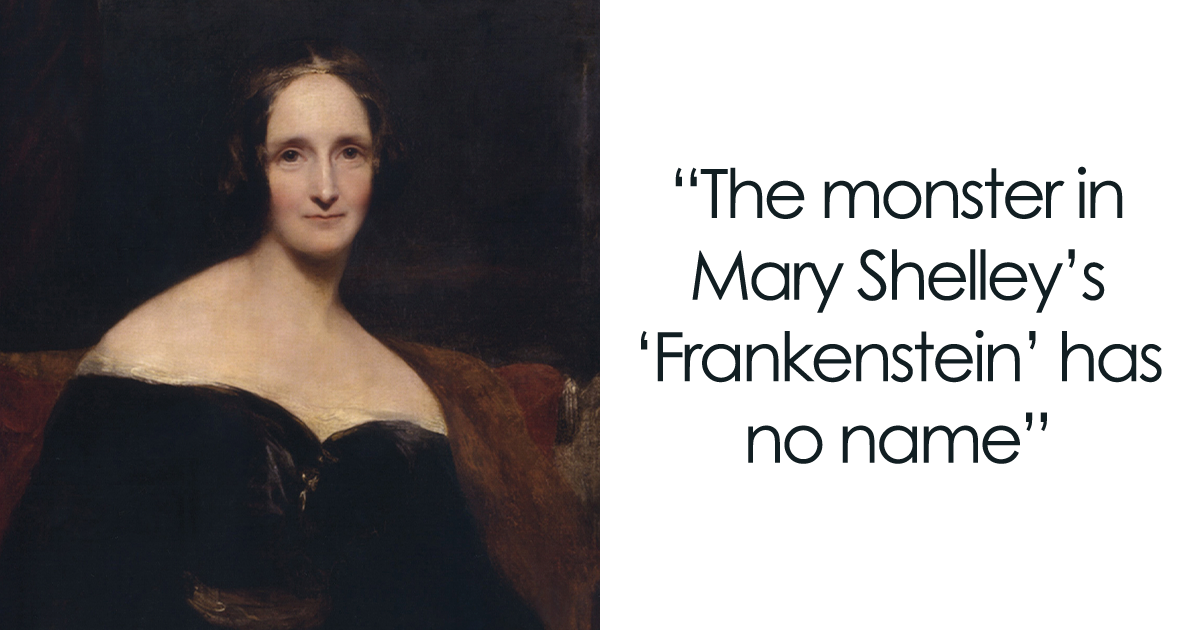
Mary Shelley’s now-iconic novel entered the world without her name attached to it. That anonymous beginning has become one of the most memorable publication stories in literature history, especially since the book went on to shape horror, science fiction, and the cultural image of the misunderstood monster.
Poets, Paper, and the Rise of Modern Literary Voices
15. Anne Bradstreet was the first poet published in colonial America.
Bradstreet holds a remarkable place in American literary history. Her poems were first published in London in 1650, making her the first poet to be published in colonial America. She proved early on that literature in the American story did not begin with a male chorus line.
16. Wordsworth pushed poetry closer to everyday speech.
One reason Romantic poetry still feels fresh is that Wordsworth championed the language of ordinary people. That move sounds simple, but it helped shift poetry away from ornate performance and toward a voice that felt more intimate, direct, and human. Literature became less powdered wig, more actual heartbeat.
17. Charles Dickens mastered the art of the literary cliffhanger.
A Tale of Two Cities first rolled out in 31 weekly installments in 1859. Dickens understood the power of suspense long before streaming platforms started bullying us with “next episode in 5 seconds.” Serial publication turned reading into an event, a conversation, and sometimes a national obsession.
18. Edgar Allan Poe had an international afterlife that reshaped literature.
Poe was not just the patron saint of ravens, gloom, and superb dramatic eyebrows. His stories and poems deeply influenced the French Symbolists, and through them he helped alter the course of modern literature. Sometimes literary influence travels in beautifully strange loops.
19. Walt Whitman launched Leaves of Grass in 1855.
Whitman did not merely publish a poetry collection; he kicked open a new American voice. Leaves of Grass became one of the most important landmarks in U.S. literature, and its expansive style still feels bold, roomy, and rebellious in the best possible way.
20. Whitman’s Washington years changed his literary life.
After coming to Washington to care for his wounded brother during the Civil War, Whitman stayed for about eleven years and worked in hospitals. That experience placed him close to suffering, democracy, bodies, grief, and the daily messiness of history, all of which deepened the force of his writing.
21. Emily Dickinson wrote nearly 1,800 poems, but most stayed unpublished while she lived.
This fact never stops being astonishing. Dickinson produced an enormous body of work, yet with only a few exceptions, her poems remained unpublished until after her death. Literature history is packed with delayed applause, but this may be one of its loudest examples.
22. Poetry magazine has been changing literary history since 1912.
Founded in Chicago, Poetry is the oldest monthly magazine devoted to verse in the English-speaking world. That kind of longevity matters because magazines often serve as launchpads, laboratories, and occasional fireworks shows for emerging literary movements.
23. T. S. Eliot wrote “Prufrock” while still a college student.
Yes, that “Do I dare?” masterpiece came from a young Eliot before the rest of us have even figured out how to organize a desk drawer. Poetry magazine published “The Love Song of J. Alfred Prufrock,” helping introduce a poem that would become a major marker of modern literature.
American Literature Grows Louder, Wider, and Harder to Ignore
24. Moby-Dick was not always treated like a giant masterpiece.
Today Herman Melville’s whale-sized novel feels untouchably canonical, but that status came later. It was not until the early twentieth century that Moby-Dick was fully recognized as a literary masterpiece and a cornerstone of American literature. Even classics sometimes need a second chance.
25. Paul Laurence Dunbar broke a historic barrier.
Dunbar became the first African American to be widely accepted and acclaimed within literary fields in the United States. His achievement was not just personal; it helped lay foundations for later generations and opened space for a broader American literary future.
26. Langston Hughes became one of the defining voices of the Harlem Renaissance.
Hughes was not simply present during the Harlem Renaissance; he helped define its sound and spirit. His work carried the rhythms of everyday life, blues, and jazz into literature, proving that poetry could swing, sing, and still land with intellectual force.
27. Gwendolyn Brooks made Pulitzer history in 1950.
When Brooks won the Pulitzer Prize for Poetry for Annie Allen, she became the first African American to receive that honor. It was a milestone that matters not only because awards carry prestige, but because they can redraw the map of who the culture is prepared to recognize.
28. Toni Morrison changed the global literary conversation.
Morrison became the first Black woman to receive the Nobel Prize in Literature, and that milestone belongs in any serious list of literature history facts. Her work did not just earn honors; it transformed the moral, historical, and artistic vocabulary of American fiction.
Why These Literature History Facts Still Matter
What makes these moments so interesting is not just their trivia value. They show that literature history is really the history of survival: stories surviving censorship, surviving anonymity, surviving bad first reviews, surviving the fragile technology of paper, and surviving the very human tendency to underestimate what will matter later. The canon was not dropped from the heavens in a velvet box. It was assembled through accidents, arguments, rediscoveries, advocacy, and stubborn readers who refused to let great work disappear.
And maybe that is the best part. Literature history is never finished. Every generation rereads old books, questions old gatekeepers, recovers overlooked writers, and expands the conversation. The shelf keeps changing, and that is a sign of life, not chaos. Or, to put it less politely, the book party is still going and the guest list keeps improving.
My Experience Compiling These Literature-History Facts
Compiling these 28 facts felt a little like wandering through a massive literary house where every room had its own mood, its own scandal, and its own smell of old paper. One minute I was in the medieval world with heroic poetry and monster fights, and the next I was staring at the modern age of magazines, prizes, and cultural arguments over who gets remembered. What struck me most was how often literature history turns out to be less tidy than the classroom version. The famous books are still there, of course, but around them are publishing gambles, anonymous releases, arguments over respectability, and long stretches of time when brilliant work simply sat waiting for readers to catch up.
I also came away with a stronger appreciation for how fragile literary fame really is. We tend to talk about classics as though they were always classics, as if a book enters the world wrapped in glowing light while a choir softly hums in the background. In reality, plenty of now-revered works had awkward beginnings. Some were anonymous. Some were ignored. Some were misunderstood. Some needed editors, friends, librarians, archivists, or later generations of critics to keep them alive. That makes literature history feel less like a museum and more like an ongoing rescue mission.
Another thing I noticed is how often literary progress depends on someone pushing against the accepted rules. Wordsworth challenged what poetic language should sound like. Whitman stretched the American poetic line until it felt huge and democratic. Dickinson wrote with a strangeness that the literary culture around her barely knew what to do with. Hughes brought music, community, and everyday Black life into the center of literary expression. Morrison rewired the emotional and historical circuitry of the novel. None of these writers waited politely for literature to become ready for them. They made it ready.
There was also something genuinely moving about seeing how literary history is built not only by authors, but by preservation. The First Folio survives because people gathered texts and cared enough to print them. Whitman’s papers matter because collections were saved. Dickinson’s poems matter because family members and editors brought them forward after her death. Even a single archive or magazine issue can become the hinge on which later literary history swings. It is a useful reminder that reading culture is not automatic. People maintain it. People protect it. People pass it along.
Most of all, this topic reminded me that literature history is fun in the deepest sense of the word. Not frivolous, but alive. It is full of conflict, reinvention, weird timing, delayed recognition, and human ambition. It contains beauty, ego, heartbreak, invention, and the occasional administrative miracle. That combination is exactly why I enjoyed compiling these facts so much. The story of literature is really the story of people trying to make meaning with language while the world keeps changing around them. And somehow, against all odds, the best sentences keep surviving.
Conclusion
If you were looking for proof that books have always led dramatic lives, there it is. These 28 interesting facts from literature history show that the written word has survived censorship, anonymity, neglect, rediscovery, and the occasional wildly unfair first impression. Literature is not just a record of culture. It is one of the engines that keeps culture moving.
So the next time someone makes literary history sound dry, politely ignore them and hand them this list. Then watch their face when they realize that the path from Beowulf to Toni Morrison is not a straight line at all. It is a thrilling, messy, unforgettable plot.