

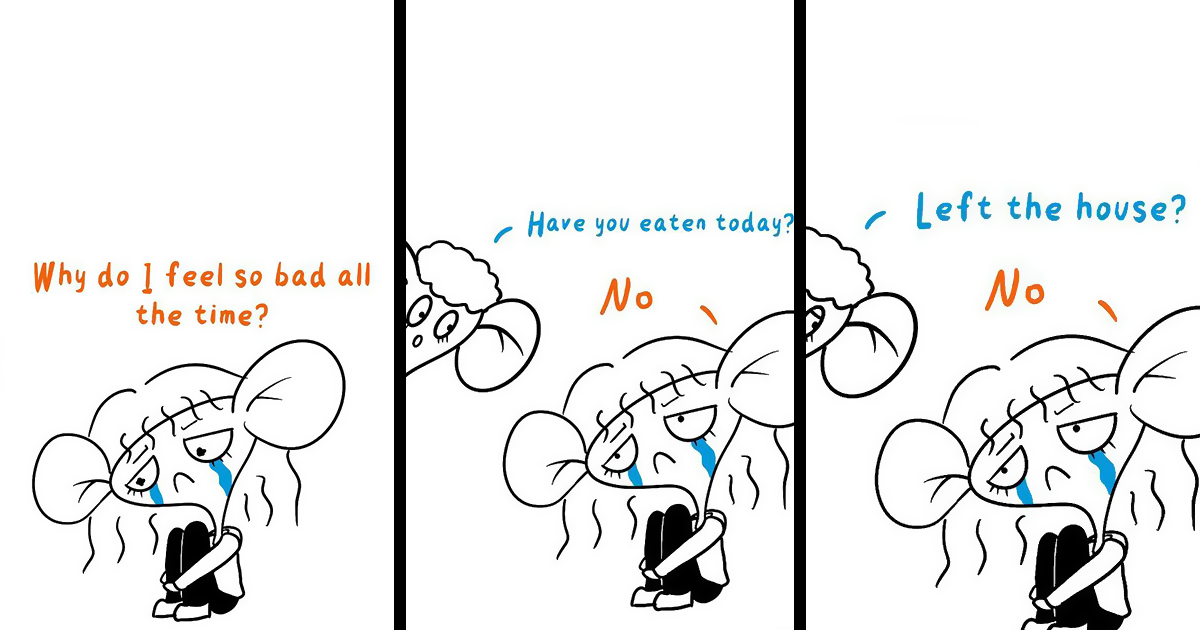
You know that feeling when you walk into a room and instantly forget why you’re therelike your brain just hit “Esc”
on your own existence? That’s not just a moment. That’s a comic.
Relatable comics don’t need superheroes, epic lore, or a 47-part cinematic universe (though your laundry pile has
excellent lore, if we’re being honest). They just need one thing: the tiny chaos of everyday life, captured in a way
that makes people say, “Wait… are you spying on me?”
In this article, we’ll break down why everyday life comics connect so hard, what makes a short comic actually funny
(and not just “a journal entry with drawings”), and how you can turn ordinary momentsawkward, adorable, annoying,
and absurdinto 30 “pics” worth scrolling, saving, and sending to group chats with way too many emojis.
Why Relatable Comics Hit So Hard
They turn micro-annoyances into micro-therapy
Everyday life is full of small frustrations: autocorrect changing your heartfelt message into nonsense, your phone
dying at 12% because it “felt like it,” and the eternal mystery of where all the clean spoons go. Relatable humor
works because it reframes these moments. It gives your brain a quick reset: “Oh, it’s not just me. I’m normal.
The world is weird.”
That’s the emotional superpower of slice-of-life webcomics: they validate, then they release tension with a laugh.
Not every comic needs a deep lesson, but the best ones often leave behind a tiny afterglow of relief.
They’re short, shareable, and don’t require homework
A great relatable comic is basically a snack. You don’t need to know Season 1 backstory. You don’t need to “start
from the beginning.” You can read it in three seconds while waiting for your coffeethen immediately send it to a
friend like, “THIS IS YOU.”
That low barrier is why funny webcomics thrive online: each strip can stand alone, while still building a recognizable
voice over time.
They’re honest in a world that’s overly curated
The internet can feel like a highlight reel: perfect meals, perfect bodies, perfect lives. Meanwhile you’re over
here eating cereal out of a mug because all the bowls are “in a mysterious relationship” with the sink. Relatable
comics cut through the performance. They’re the opposite of polished perfectionmore like, “Here’s me, being a
human pancake today.”
What Makes an Everyday-Life Comic Actually Funny
It’s not the topicit’s the turn
“Doing dishes” isn’t inherently hilarious. The comedy comes from the shift: the moment the comic
pivots from what we expect to what actually happens. That pivot can be an exaggeration (“This sponge is older than
my will to live”) or a surprise (“Why is there a fork in the bathroom?”), but it needs a clear turn.
The setup–build–punch pattern (aka: comedy physics)
Many of the most satisfying short comics work like a compressed story structure:
- Panel 1: Setup (normal world)
- Panel 2: Build (tension, confusion, escalation)
- Panel 3: Punchline (the turn, the reveal, the truth)
- Optional Panel 4: Tag (an extra twist, a quiet reaction, a “yup” moment)
This format is especially perfect for relatable comics because everyday life already has built-in setups (we all
know what “opening the fridge” means) and built-in twists (it’s empty except for one lemon that looks judgmental).
Specificity beats “random” every time
“I’m tired” is a statement. “I sat down to rest and woke up three hours later holding my phone with a shopping cart
full of things I don’t remember choosing” is a comic.
The more specific the moment, the more universal it feels. That sounds backwards, but it’s true: tiny details create
recognition. And recognition is the engine of relatable humor.
How to Find Relatable Comic Ideas in Daily Life
Collect “tiny dramas” instead of waiting for inspiration
Inspiration is famously unreliable. It shows up late, doesn’t text back, and sometimes leaves you on read.
A better system is to collect tiny dramas:
- Moments of mild embarrassment (the human condition’s favorite hobby)
- Small victories (finding a parking spot, not dropping your keys)
- Social misunderstandings (“I said ‘you too’ to the waiter again”)
- Internal monologues you’d never say out loud (because society)
Keep a note on your phone. Write down one funny moment a day. Most won’t become comicsbut the habit trains your
brain to notice material everywhere.
Use exaggeration, but keep the emotional truth
A relatable comic often exaggerates the surface (the cat looks like a villain, the laundry pile becomes sentient),
while staying honest about the feeling underneath (overwhelm, affection, awkwardness). That’s the sweet spot:
cartoon logic on top, real emotion underneath.
Make your “main character” simple and expressive
Many successful everyday life comics use a simplified avatar: a small human, a blob, a stick figure with feelings,
or an animal with suspiciously human problems. Simple characters let readers project themselves into the strip.
Plus, they’re faster to drawbecause your life is already busy enough without rendering individual eyelashes.
30 “Pics” People Can Relate To
Below are 30 ready-to-draw comic momentsthink of them as “caption + scene” prompts. Each one is designed to be a
single post (or a quick 3–4 panel strip) that readers instantly recognize.
- Pic 1: The “One More Episode” Contract. Character: “One more episode.” Next panel: sunrise. Caption: “We have signed an agreement.”
- Pic 2: The Fridge Audit. Fridge opens: light shines on emptiness. Caption: “Ah yes, my favorite meal: condiments.”
- Pic 3: Autocorrect Betrayal. Text bubble: “Congrats!” becomes “Cones!” Reaction face. Caption: “Technology is a prank.”
- Pic 4: The “You Too” Incident. Worker: “Enjoy your meal.” Character: “You too.” Caption: “I am fluent in panic.”
- Pic 5: Sock Dimension Portal. Laundry basket labeled “socks.” Only one sock emerges. Caption: “My dryer has a side hustle.”
- Pic 6: The Phone at 12%. Phone: “Low battery.” Character: “We were just getting close.” Caption: “It’s an emotional vampire.”
- Pic 7: The Group Chat Spiral. One message: “Hey.” Next: 173 unread. Caption: “I blinked.”
- Pic 8: Decision Fatigue Dinner. Person staring at fridge. Thought bubble: “Eat? Cook? Become plant?” Caption: “Choices are exhausting.”
- Pic 9: The ‘Quick Errand’ Myth. Sign: “Just one thing.” Next panel: 6 bags, 2 receipts, emotional damage. Caption: “A legend.”
- Pic 10: The Password Renaissance. Password rules list longer than a novel. Caption: “My password is now a poem.”
- Pic 11: Social Battery Indicator. Battery icon labeled “social.” It hits 1% mid-conversation. Caption: “I must return to my cave.”
- Pic 12: The “I’ll Remember” Lie. Sticky note: “IMPORTANT.” Next panel: sticky note becomes wallpaper. Caption: “I will not remember.”
- Pic 13: The Microwave Countdown. Character stops microwave at 0:01 like defusing a bomb. Caption: “We don’t let it beep.”
- Pic 14: Online Shopping Confidence. “Add to cart” at 2 a.m. Morning: “Who bought this?” Caption: “Night me has money.”
- Pic 15: The ‘Clean Desk’ Illusion. Desk cleared. Next panel: one paper appears. Then another. Caption: “Entropy is working overtime.”
- Pic 16: The Doorway Memory Wipe. Character enters room. Thought bubble disappears. Caption: “This doorway is cursed.”
- Pic 17: The ‘Just Stretch’ Injury. Person stretching. Pop! Caption: “I have pulled my youth.”
- Pic 18: Calendar vs Reality. Planner: “Self-care.” Reality: staring into space. Caption: “I scheduled an existential moment.”
- Pic 19: The ‘I’ll Be Productive’ Outfit. Wearing “productive clothes.” Still on couch. Caption: “The uniform is not magic.”
- Pic 20: The Email Draft Saga. “Quick reply” becomes a 45-minute rewrite. Caption: “I’m fighting for my tone.”
- Pic 21: The ‘Background Task’ Trap. Opens phone to check weather. Ends up deep in recipes. Caption: “I have traveled.”
- Pic 22: The Cat as Middle Manager. Cat sits on keyboard. Caption: “Performance review: you are done working.”
- Pic 23: The ‘Relaxing Bath’ Setup. Candle lit, bath ready. Next panel: phone falls in water. Caption: “Tragedy with bubbles.”
- Pic 24: The “I’ll Start Monday” Carousel. Calendar flipping like a slot machine. Caption: “Monday is a concept, not a plan.”
- Pic 25: The ‘Healthy Snack’ Detour. Opens fridge for fruit. Leaves with cheese. Caption: “Close enough.”
- Pic 26: The Two-Moods Morning. Mood A: “New day!” Mood B: “Why day?” Caption: “I contain multitudes.”
- Pic 27: The “Listen, I Have a System.” System is 12 open tabs and one forgotten notebook. Caption: “This is architecture.”
- Pic 28: The Notification Jump-Scare. Phone buzzes. Character leaps. Caption: “My nervous system has subscriptions.”
- Pic 29: The ‘Small Talk’ Autopilot. “How are you?” “Good.” Inside: screaming. Caption: “We are polite creatures.”
- Pic 30: The Bedtime Negotiation. Brain: “Let’s review every embarrassing moment since 2009.” Caption: “Ah yes. The bedtime documentary.”
How to Post Relatable Comics Online and Build a Real Audience
Consistency beats intensity
You don’t need to post daily forever. You need a rhythm you can keep without resenting your own hobby. A simple
schedule (one comic a week, or two a month) builds trust with readers and protects your creative energy.
Make each comic understandable in under three seconds
Online, clarity is kindness. Use big readable text, clean panel flow, and visuals that support the joke. Readers
shouldn’t need to squint or decode the scene like it’s a treasure map.
Use captions and titles strategically
A short caption can help search engines and humans: “Relatable comic about social battery,” or “Everyday life comic:
autocorrect betrayal.” That’s not keyword stuffingit’s labeling the shelf so people can find your work.
Invite community without turning into a content robot
Ask simple questions: “Which one are you?” “What would you call this mood?” Readers love participating because it
feels like recognition, not marketing. The best communities form around shared “me too” moments.
Keep It Funny Without Getting Mean
Relatable humor is strongest when it targets universal experiences, not vulnerable people. Punch up at systems,
awkwardness, technology, your own habits, or the general chaos of adulthood. When you keep the tone warm, people
feel safe sharing your comicsbecause nobody wants to forward something that makes them look like a villain.
Conclusion: The Secret Ingredient Is Not TalentIt’s Attention
The world hands you comic material constantly. The trick is learning to notice it, then shaping it into a clean,
quick story: setup, turn, release. If you can capture a true feelingfrustration, delight, embarrassment,
comfortyour audience will meet you there.
So the next time your headphones tangle into a knot that violates multiple laws of physics, don’t just suffer.
Take notes. That’s content. That’s art. That’s Pic 31.
Extra: of Real-World Comic-Making Experiences (Creator & Reader Perspectives)
People who make everyday life comics often describe the process as a strange mix of observation, editing, and
emotional sorting. The day happens at full speedmessages, errands, awkward interactions, chores that multiply like
gremlins after midnightand later you replay it, not to judge yourself, but to find the “shape” of the moment.
What was the setup? Where did reality swerve? What did your face do when it happened? (Faces are excellent liars
in conversation and excellent truth-tellers in comics.)
A common experience is realizing that the funniest moments don’t always feel funny in real time. In real time,
you’re just standing there holding a grocery bag that ripped open, watching an orange roll away like it has dreams
of freedom. Later, the distance makes it usable. You can exaggerate the runaway orange into a full Olympic sprint,
and suddenly you’re not reliving embarrassmentyou’re converting it into a shared laugh. That conversion can feel
oddly healing, like turning a paper cut into a sticker.
Many creators also talk about how simplifying their drawing style unlocked consistency. When your character is a
minimal avatarsimple hair, simple eyes, expressive eyebrowsyou can draw faster, iterate more, and focus on timing.
The “voice” becomes the brand, not the rendering. That’s also why relatable webcomics do so well on social platforms:
the art is readable on small screens, the joke lands quickly, and the emotion is big even when the lines are simple.
On the reader side, the experience is often described as quick comfort. People scroll during breaks, between tasks,
or at the end of a long day, and a tiny comic can work like a pressure valve. It’s not just laughterit’s recognition.
“Other people also feel weird about phone calls.” “Other people also have a complicated relationship with leftovers.”
That sense of shared humanity can be grounding, especially when life feels isolating.
The most memorable everyday life comics tend to build a gentle archive of modern living: the way we negotiate with
ourselves, the way we pretend we’re fine, the way we celebrate small wins. Over time, making these comics can change
how you experience daily life. You start noticing patterns: your stress tells predictable jokes, your habits have
recurring punchlines, your emotions arrive with repeatable cues. In a way, cartooning becomes a practice of paying
attentionthen offering that attention back to others in a form that says, “Hey. Same.”