

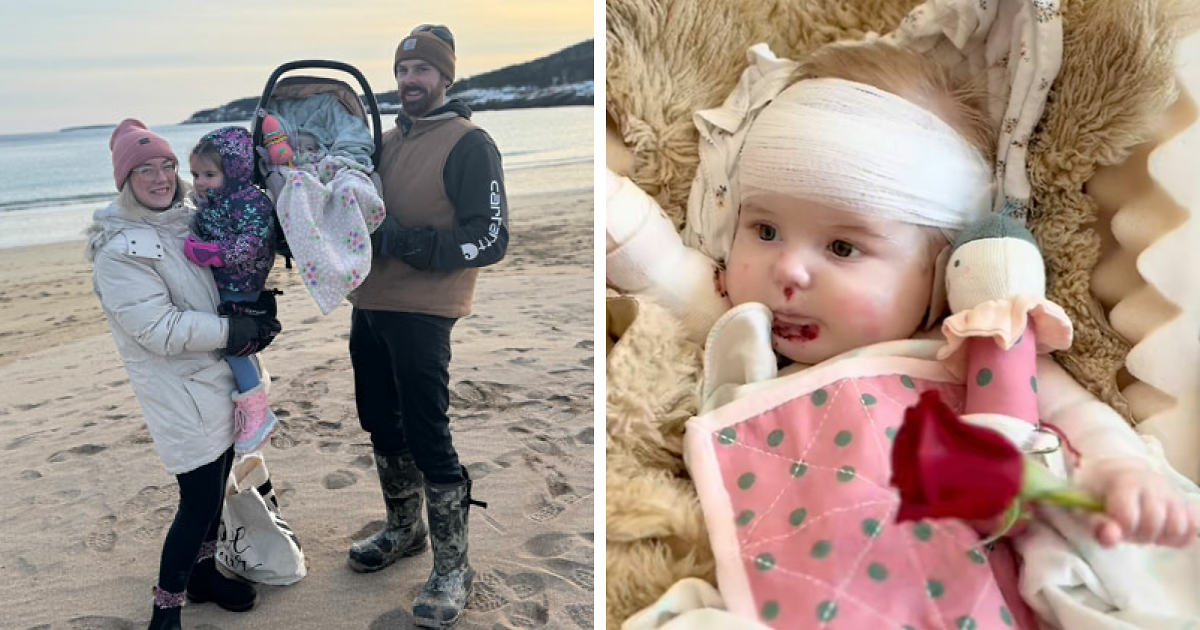
Some stories move quickly across social media because they are shocking. Others stay with people because they are painfully human. The death of Elliana Rose Campbell, the 10-month-old daughter of TikTok creator Hannah Campbell, belongs to the second category. Her story was not a viral moment in the usual internet sense. It was a family’s grief unfolding in public, a rare disease being explained one tender update at a time, and a baby girl whose short life introduced hundreds of thousands of people to epidermolysis bullosa, often called EB.
Hannah Campbell announced in April 2025 that her daughter Elliana had died after living with junctional epidermolysis bullosa, a severe form of a rare genetic skin disorder. In her heartbreaking message, Campbell wrote that she was “heartbroken” and “angry,” words that resonated because they held two truths at once: the unbearable sadness of losing a child and the frustration that a disease so devastating still has limited treatment options.
This article looks at who Elliana Rose was, what junctional epidermolysis bullosa is, why her story touched so many people, and what families, followers, and advocates can learn from a loss that should never be reduced to a headline.
Who Was Elliana Rose Campbell?
Elliana Rose Campbell, affectionately called Ellie by her family and supporters, was the baby daughter of influencer Hannah Campbell and her husband, Jacob. Through TikTok updates, Hannah shared Elliana’s day-to-day life with a large online community that grew to more than 700,000 followers. Many people came for information about a rare condition they had never heard of. Many stayed because they fell in love with Elliana’s bright eyes, soft expressions, and the obvious devotion surrounding her.
For families facing rare diseases, social media can become a strange kind of living room. It is not private, exactly, but it can feel intimate. Campbell’s videos showed more than medical challenges. They showed family outings, careful caregiving, emotional updates, and the small moments that matter when time feels fragile. In one post, the family described making every moment an adventure, knowing each one was a gift. That sentence now reads differently, like a keepsake pressed between pages.
Elliana’s story also reached beyond typical influencer news because it centered on a condition that many people know only vaguely, if at all. EB is sometimes described with the phrase “butterfly skin” because the skin can be as delicate as a butterfly’s wings. It sounds poetic until you understand the reality: fragile skin, painful wounds, constant care, and in severe forms, life-threatening complications.
What Happened to Hannah Campbell’s Daughter?
In early April 2025, Hannah Campbell shared that Elliana Rose had died at 10 months old. Public reports said Elliana passed away peacefully, surrounded by love, after months of living with junctional epidermolysis bullosa. Campbell’s announcement was brief, raw, and impossible to read without feeling the weight behind it. She expressed heartbreak, anger, and a desire to fight for a cure so other families would not have to experience the same loss.
Before Elliana’s death, Campbell had documented the progression of her daughter’s condition. She shared updates about Elliana’s care, including wound care, special medical supplies, adaptive equipment, and methods used to keep her as comfortable as possible. For parents of medically complex children, these details are not side notes. They are the architecture of daily life. Bandages, feeding routines, humidifiers, medications, appointments, and sleepless nights become part of the family schedule. There is no “off” button, no quick errand, no simple diaper change.
In the days before Elliana died, Campbell posted emotional updates indicating that her daughter’s body was slowing down. Her community responded with prayers, messages of love, and support. After Elliana’s passing, followers mourned with the family, not because they personally knew her, but because Hannah had allowed them to witness a life full of pain, courage, tenderness, and fierce love.
What Is Junctional Epidermolysis Bullosa?
Junctional epidermolysis bullosa, or JEB, is one of the major forms of epidermolysis bullosa. EB refers to a group of rare genetic disorders that cause the skin to blister, tear, or form wounds from minor friction, rubbing, scratching, or heat. In severe cases, blistering and sores can also occur inside the body, including the mouth, esophagus, stomach, intestines, and upper airway.
JEB happens when genetic changes affect proteins that normally help anchor the layers of skin together. When those proteins are missing or do not work properly, the skin separates more easily. Something as gentle as clothing rubbing against the body can create painful wounds. For infants, the condition can affect feeding, breathing, movement, and overall development.
There are different types and severities of JEB. Some forms are less severe but still involve lifelong pain and wound management. Severe junctional EB can be fatal in infancy or early childhood because the condition may affect not only the skin but also mucous membranes and internal tissues. That is why stories like Elliana’s are so devastating: they show how a disease can turn ordinary babyhood into a constant medical battle.
Why EB Is Often Called “Butterfly Skin”
The term “butterfly skin” is commonly used in EB awareness campaigns because the skin of someone with EB can be extremely delicate. The nickname is memorable, which helps awareness efforts, but it can also soften the reality too much. EB is not simply sensitive skin. It is a serious genetic disorder that can cause chronic wounds, infection risk, pain, scarring, nutritional challenges, and emotional strain for families.
Imagine trying to comfort a crying baby when even touch must be careful. Imagine dressing wounds every day while knowing the bandage itself may cause trauma if removed too quickly. Imagine wanting to scoop your child up without hesitation, then having to remember that love must move slowly. That is the daily math of EB caregiving: comfort plus caution, affection plus technique, hope plus realism.
Why Elliana’s Story Touched So Many People
The internet can be loud, chaotic, and occasionally allergic to nuance. Yet Elliana’s story cut through the noise because it was deeply personal. People watched a mother love her child through an impossible diagnosis. They saw the difference between “raising awareness” as a slogan and raising awareness as an exhausting, emotional, daily act.
Hannah Campbell did not simply tell viewers that EB was painful. She showed what it looked like to manage it: the careful handling, the medical supplies, the routines, the updates, the quiet fear, and the determination to give Elliana joyful experiences despite the disease. Those posts helped many viewers understand that rare diseases are not abstract medical terms. They are families rearranging their lives around care.
There is also something powerful about seeing parental love in action. Elliana’s parents did not present her life as only tragic. They shared the beauty too: family moments, gentle smiles, outdoor adventures, and the personality of a baby who was more than her diagnosis. That matters. Children with rare diseases are not symbols first. They are children first. They deserve to be seen in full color, not reduced to symptoms.
How Hannah Campbell Turned Grief Into Awareness
After Elliana’s diagnosis, Hannah Campbell used her platform to educate viewers about epidermolysis bullosa and the needs of families living with it. She helped bring attention to the reality that rare diseases often come with limited treatment options, high care demands, and emotional isolation. For many families, awareness is not a vanity project. It is a survival tool.
Campbell also supported fundraising efforts connected to EB research and care. Elliana’s Hope for Healing was created to help support Elliana and other babies facing similar health conditions, while also contributing to the broader goal of advancing research. Rare disease fundraising can be difficult because many conditions affect small populations, which means less public recognition and sometimes fewer commercial incentives for drug development. Advocacy helps close that gap.
The phrase “fight for a cure” can sound simple, but in rare disease communities, it represents years of science, funding, clinical trials, patient registries, specialist care, and public pressure. Families like the Campbells often become educators by necessity. They learn medical terminology they never wanted to know, then translate it for everyone else while carrying grief on their backs.
Current Treatment Reality for EB
There is currently no universal cure for epidermolysis bullosa. Treatment depends on the type and severity of the disease and often focuses on wound care, pain management, infection prevention, nutrition support, and reducing friction that can trigger new blisters. Some newer therapies have been approved for specific forms of EB or certain wound types, offering important progress, but access, eligibility, and effectiveness can vary.
For junctional EB, care is often complex and requires a coordinated medical team. Dermatologists, pediatricians, nutrition specialists, wound care experts, pain management teams, and sometimes palliative care specialists may all be involved. The goal is not only to extend life when possible but also to reduce suffering and improve comfort. That distinction matters. In severe rare diseases, good care is not measured only in lab numbers or dates on a calendar. It is measured in less pain, safer feeding, fewer infections, and more peaceful moments.
Elliana’s story arrived at a time when EB research has been advancing, but families are still waiting for broader, more effective solutions. That gap between scientific hope and present-day suffering is part of what makes Campbell’s anger so understandable. Hope is real. So is the pain of knowing hope did not arrive in time for one beloved child.
How to Support Parents After the Loss of a Baby
When a child dies, people often freeze. They worry about saying the wrong thing, so they say nothing. But silence can make grieving parents feel even more alone. Support does not need to be perfect; it needs to be compassionate, steady, and free of clichés that accidentally minimize the loss.
Helpful words are often simple: “I am so sorry.” “I love you.” “I remember your baby.” “I am here, and I will keep showing up.” Less helpful are phrases like “everything happens for a reason” or “at least she is not suffering.” Even when meant kindly, those words can land like a brick through a window. Grieving parents do not need their pain explained away. They need it witnessed.
Practical help matters too. Friends and relatives can offer meals, help with older children, handle errands, contribute to memorial expenses, or simply sit with the family without demanding conversation. If the parents have shared their child publicly, followers can support them by respecting boundaries, avoiding speculation, and remembering that grief does not follow a posting schedule. Nobody owes the internet a tidy update after losing a baby.
What Not to Do When a Family Is Grieving Publicly
Public grief can attract public support, but it can also attract intrusive behavior. Followers should avoid asking for private medical details, questioning treatment decisions, or turning a family’s loss into debate content. The comment section is not a courtroom. It is also not the place to play amateur doctor with a tragic ending.
It is natural to want answers. It is human to ask, “Could something have been done?” But rare diseases are complicated, and outsiders rarely know the full medical picture. In cases like Elliana’s, the most respectful response is to honor the child, support the family, and learn about the condition without assigning blame.
People should also avoid comparing grief. Losing a child is not a contest, and no parent should have to prove the depth of their sorrow. Whether a family posts daily, disappears for months, starts a foundation, or never speaks publicly again, grief remains grief. It is not made more authentic by visibility or less real by silence.
The Bigger Picture: Rare Disease Awareness
Elliana’s death highlights a larger issue: rare diseases often remain invisible until a family is brave enough, or desperate enough, to share their story. According to medical organizations, EB is rare, inherited, and often begins at birth or in infancy. Severe forms can create life-threatening complications. Yet many people first learn about it through social media, not school, public health campaigns, or mainstream news.
That is why awareness can matter. Awareness can lead to earlier recognition, stronger support networks, more donations, better research funding, and more empathy for families navigating medical complexity. Of course, awareness alone does not cure disease. A hashtag is not a treatment plan. But awareness can move people toward action, and action can support science.
Elliana’s story also reminds readers that rare disease families often need more than sympathy. They need specialized medical access, insurance navigation, caregiver support, mental health resources, and research investment. They need systems that do not make exhausted parents fight for every supply, appointment, or explanation. Compassion is beautiful. Infrastructure is better. Ideally, families get both.
Experiences and Reflections: When a Family’s Loss Becomes a Community’s Lesson
Stories like Elliana’s leave people with a difficult question: what do we do with heartbreak that is not ours, but still affects us? Many followers never met Elliana. They never held her, never changed a bandage, never sat awake listening to her breathing. And yet they felt something real when she died. That feeling can be confusing, especially in the age of social media, where strangers can become familiar through a screen.
One experience many people share after following a medically fragile child online is a new awareness of how ordinary life can be a luxury. A simple bath, a snug onesie, a car ride, a family walk, a kiss on the cheekthese can be complicated when a child has fragile skin. Elliana’s journey made many viewers pause and reconsider what comfort means. For most families, comfort is a soft blanket. For an EB family, comfort may require special dressings, temperature control, careful positioning, pain management, and constant vigilance. It is love with a medical supply cabinet attached.
Another lesson is that grief and anger can exist together without canceling each other out. Campbell’s words resonated because they refused to make grief polite. Anger after child loss is not a failure of faith, gratitude, or strength. It is often a natural response to the unfairness of watching a child suffer. Parents may feel angry at the disease, the limits of medicine, the randomness of genetics, or the world for continuing to spin when theirs has stopped. That anger deserves care, not judgment.
For readers who have experienced infant loss or rare disease caregiving, Elliana’s story may bring up personal memories. Some may remember hospital rooms, monitors, feeding tubes, bandage changes, specialist visits, or the strange quiet after a medical crisis ends. Others may remember the loneliness of trying to explain a diagnosis that even well-meaning friends did not understand. In that sense, public stories can help people feel less isolated. They say, “Someone else knows the shape of this pain.”
For those who want to help, the most meaningful response is usually specific and sustained. Instead of saying, “Let me know if you need anything,” offer something concrete: a meal on Tuesday, help with laundry, a ride to an appointment, childcare for a sibling, or a donation to a reputable rare disease organization. After a loss, support should not disappear after the funeral. Many grieving parents say the hardest weeks come later, when the world assumes they are “getting back to normal.” There is no old normal after a child dies. There is only a new life that must be learned slowly.
Elliana’s legacy is not only that she raised awareness of EB. It is that she reminded people how powerful a short life can be. Ten months is not enough time; no loving person would pretend otherwise. But in those 10 months, Elliana was loved deeply, seen widely, and remembered by people who now know more about a rare disease than they did before. That does not erase the loss. Nothing does. But it gives the grief a direction: toward compassion, research, and better support for the next family who hears the words “junctional epidermolysis bullosa” and feels the floor vanish beneath them.
Conclusion
The death of Elliana Rose Campbell is a heartbreaking reminder that behind every rare disease statistic is a child, a family, and a story that deserves tenderness. Hannah Campbell’s grief, expressed through the words “I’m heartbroken, and I’m angry,” captured what many parents facing devastating diagnoses already know: love can be fierce, grief can be furious, and hope can survive even in the aftermath of loss.
Elliana’s life brought attention to junctional epidermolysis bullosa, a rare and serious genetic disorder that causes fragile skin, painful blistering, and in severe cases, life-threatening complications. Her story also showed the emotional and practical reality of caregiving, the importance of rare disease research, and the need for communities to support grieving families with patience, respect, and action.
For readers, the takeaway is not simply sadness. It is awareness. Learn the name of the disease. Respect the family’s grief. Support reputable research and patient organizations when possible. And remember Elliana not only for what EB took from her, but for what her life gave to others: knowledge, empathy, and a reason to keep fighting for children who deserve a future without pain.
Editorial note: This article is based on public reporting and reputable medical information about epidermolysis bullosa. It is intended for informational and editorial purposes only and should not replace professional medical advice.