

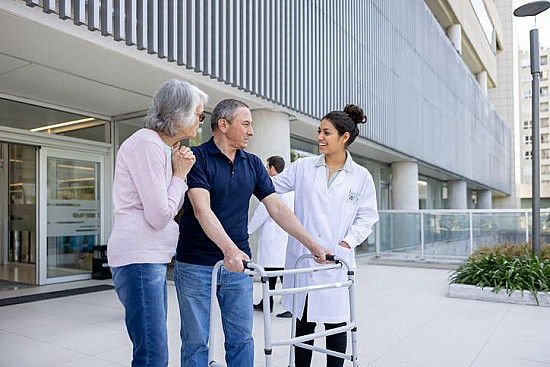
Going home after an ICU stay should feel like a victory lap. Instead, for many people, it feels more like being dropped into the final level of a video game with half a battery, blurry vision, and socks that somehow still betray them. That is the uncomfortable truth behind the recent Harvard Health headline: people who have been critically ill may face a surprisingly high risk of falling and getting hurt once they return home.
This is not just a matter of being “a little weak.” ICU recovery can involve muscle loss, poor balance, fatigue, dizziness, sleep problems, medication side effects, brain fog, and the kind of confidence mismatch that makes people say, “I’m fine,” right before the hallway says, “Are you sure?” Add stairs, loose rugs, dark bathrooms, and late-night trips to the toilet, and the home that once felt normal can suddenly behave like an obstacle course with sentimental furniture.
The good news is that this risk is not invisible, mysterious, or impossible to reduce. Families, caregivers, and patients can do a lot before and after discharge to make recovery safer. The key is understanding why falls happen after intensive care, who is most vulnerable, and what practical steps can lower the odds of a bad landing.
Why the risk of falls jumps after an ICU stay
An ICU stay can change the body fast. When someone is critically ill, especially if they need mechanical ventilation or spend days in bed, muscle strength often drops quickly. Standing up, walking to the bathroom, getting out of a low chair, or turning too fast can suddenly feel much harder than it used to. Even basic movements may require more energy, coordination, and concentration than expected.
Then there is the brain. Many ICU survivors deal with what clinicians often describe under the umbrella of post-intensive care syndrome, or PICS. That can include attention problems, slowed thinking, poor concentration, anxiety, low mood, trouble sleeping, and lingering delirium-related effects. None of those issues are great companions for navigating a dim hallway at 2 a.m. while carrying a water glass and insisting you do not need help.
Medications can make things even trickier. After discharge, patients may be sent home with pain medicines, sleep aids, blood pressure drugs, antidepressants, sedatives, or other medications that can cause dizziness, confusion, or unsteadiness. The more medications involved, the easier it is for a body to feel like it is running three operating systems at once.
And recovery is rarely neat and linear. One hour, a person may feel strong enough to shower alone. The next, fatigue hits like a dropped piano. Appetite can be poor. Blood pressure can dip when standing. Vision may be off. Bathroom urgency can trigger rushing. Even well-meaning determination can backfire when someone tries to “push through” before their body is ready.
What the Harvard Health report highlights
The Harvard Health piece drew attention to a study of ICU survivors that deserves more than a passing glance. Researchers followed adults who had experienced serious critical illness and found that falls after discharge were not a small side issue. They were common, clustered early, and often tied to modifiable factors.
In that study, many participants fell within the first year after leaving the hospital, and the risk was especially high in the first three months. That timing matters. It suggests the danger zone starts immediately after returning home, not six months later when everyone has already stopped asking how recovery is going. In other words, the front end of the recovery period is when practical prevention matters most.
The study also identified several factors linked with greater fall risk at discharge: more medical comorbidities, more discharge medications, worse balance, and weaker muscle strength. Translation: if someone leaves the hospital weaker, wobblier, and carrying a pharmacy bag that could qualify as checked luggage, the risk is not theoretical.
That finding fits a larger pattern seen in older adults and recently hospitalized patients more broadly. Falls become more likely when illness, deconditioning, medication burden, and an unsafe environment all team up like the least charming superhero squad ever assembled.
Who is most at risk when returning home?
Not every ICU survivor faces the same level of danger. Some people bounce back faster, especially if they were relatively strong and independent before hospitalization. Others need a much more cautious plan.
Higher-risk patients often include:
Older adults, especially those over 65; people who already had trouble with balance or walking; patients with a prior fall history; people taking multiple medications; those with low vision, dizziness, or blood pressure swings; and anyone with new weakness after hospitalization. A person can also be higher risk if they live alone, have cluttered walkways, or need to manage stairs right away.
Patients with cognitive issues are another important group. If memory, attention, or judgment has changed after critical illness, that can show up in subtle ways: forgetting to use the walker, standing up too fast, wandering without help, or underestimating fatigue. Families often notice this before the patient does.
Bathroom trips are a major problem zone too. People who are weak, sleepy, or taking diuretics may rush to the toilet. That is a perfect setup for slips, especially on tile floors or in low light. Recovery may be heroic, but bathroom urgency is still undefeated.
What to do before discharge: build a fall-prevention plan, not just a ride home
One of the biggest mistakes families make is treating discharge like a transportation event instead of a safety transition. “When can we leave?” is important, sure. But the better question is, “What exactly needs to be in place before home is safe?”
Ask for a real mobility check
Before discharge, ask the care team how the patient is walking, transferring, and getting to the bathroom. Can they safely get in and out of bed? Can they manage stairs? Do they need hands-on help or just supervision? A patient who can take six determined steps in a hospital hallway is not automatically ready to navigate a real house with throw pillows, pets, and mysterious floor transitions.
Request physical and occupational therapy input
Physical therapists help assess gait, strength, endurance, and safe mobility. Occupational therapists focus on everyday function: bathing, dressing, bathroom safety, kitchen setup, and home routines. Together, they can spot risks that patients and relatives often miss. If home health services are appropriate, ask how quickly they can start.
Review medications like your floor depends on it
Because it might. Ask a doctor or pharmacist to explain which medications may cause dizziness, sedation, low blood pressure, confusion, or urgency to urinate. Confirm the correct doses, timing, and purpose of each drug. If something makes the patient too groggy or unsteady, the care team needs to know quickly.
Get the right equipment before it becomes an emergency
That may include a walker, cane, bedside commode, shower chair, raised toilet seat, grab bars, handrails, or non-slip bath supports. The goal is to reduce risky improvisation. Nobody wants the “we used the towel rack as a grab bar” chapter in the family story.
Plan for help during the first week
The first days home can be the hardest. If possible, arrange supervision for walking, bathing, meals, and medication management. The research on post-discharge falls in older adults suggests the earliest window after returning home can be especially risky, so even short-term help can make a big difference.
How to make the home safer right away
You do not need to renovate the entire house into a spaceship-grade recovery pod. But a few changes can dramatically reduce risk.
Bedroom
Keep a lamp, phone, water, eyeglasses, and any mobility aid within easy reach. Add a night-light between the bed and bathroom. Make sure the bed is easy to get in and out of without a dramatic flop or a mini rock-climbing move.
Bathroom
This is the fall capital of the home. Use grab bars, non-slip mats, and a shower chair if needed. Keep the floor dry. Consider a raised toilet seat or bedside commode if walking to the bathroom is difficult at night.
Living areas
Remove loose rugs, cords, clutter, unstable footstools, and decorative items that are somehow always exactly where a recovering foot needs to be. Make sure chairs are sturdy and easy to stand up from. Improve lighting, especially in corners and near steps.
Kitchen
Move commonly used dishes, snacks, and utensils to waist level. Avoid reaching overhead or crouching for heavy items. If standing is tiring, prepare food while seated. Recovery is not the time to audition for a home version of Ninja Warrior.
Stairs and entryways
Check railings, lighting, and surface grip. If stairs are unavoidable, make sure the patient has been specifically cleared to manage them. If possible, set up sleeping and toileting on one floor during early recovery.
How to rebuild strength without overdoing it
Fall prevention is not only about avoiding hazards. It is also about restoring the body. Regular movement, when medically appropriate, helps improve strength, balance, endurance, and confidence. That may include a formal home exercise plan, supervised walking, sit-to-stand practice, light strengthening, or balance exercises tailored by a therapist.
The emphasis should be steady and realistic. Too little activity can worsen weakness. Too much too soon can trigger exhaustion, dizziness, or another trip to the hospital. The sweet spot is structured progress, not random bursts of bravery. Think less “I feel amazing, let’s reorganize the garage,” and more “I will do the plan my therapist gave me and live to tell the tale.”
Patients should also mention symptoms that interfere with safe movement, such as shortness of breath, severe fatigue, chest pain, palpitations, faintness, or major pain. If something feels off, it probably deserves a pause and a phone call.
Warning signs that should not be shrugged off
Call the care team promptly if the patient has repeated near-falls, new dizziness, fainting, worsening confusion, extreme sleepiness, trouble using a walker or cane correctly, medication mix-ups, or sudden difficulty getting out of bed or a chair. A fall itself should never be dismissed as “just clumsy,” especially after a recent ICU stay.
Head injuries need special attention, particularly if the person is taking blood thinners. Even when someone seems okay at first, a hit to the head can become serious. New weakness, slurred speech, or one-sided symptoms deserve emergency evaluation.
Why families matter so much in this stage
Caregivers often become the unofficial safety department, medication department, scheduling department, and emotional support department all at once. That is a lot. But their role is crucial, because they are usually the first to notice that the patient is not moving safely, is skipping meals, is too groggy after a pill, or is getting up alone when they should not.
The best caregiver approach is not constant scolding. Nobody enjoys being followed around by a loving hall monitor. Instead, it helps to normalize safety tools and build routines: use the walker every time, turn on lights before standing, keep the phone nearby, sit for showers, and ask for help with stairs. Quiet consistency beats dramatic speeches.
The bigger lesson: home is part of recovery, not just the place after it
The Harvard Health headline matters because it reminds us that discharge is not the end of critical illness. It is the beginning of a new phase, one where the hospital’s alarms are gone but the risks have not magically vanished. ICU survivors may look “better” compared with their sickest days, yet still be physically and cognitively vulnerable.
That means recovery at home deserves planning, equipment, supervision, exercise, medication review, and patience. It also means patients should not feel embarrassed if they need help with walking, showering, or getting up from a chair for a while. That is not failure. That is recovery doing what recovery does: moving forward, but not always in a straight line.
If there is one takeaway worth taping to the refrigerator, it is this: after intensive care, fall prevention is not overprotective. It is smart, temporary, and often the difference between healing at home and heading right back to the emergency room.
Experiences after ICU: what recovery can really feel like at home
For many patients, the strangest part of going home is discovering that the familiar no longer feels easy. The same hallway they walked for years now seems longer. The bathroom feels farther away at night. A low couch becomes suspicious. A single front step turns into a negotiation. People often expect relief after discharge, and there is relief, but it is mixed with surprise. “Why am I this tired?” is one of the most common questions in early recovery.
One common experience is the mismatch between appearance and function. Friends may say, “You look great,” while the patient is secretly planning how to conserve enough energy to brush their teeth and make it back to bed. ICU survivors often look better before they feel better. That gap can create pressure to do more than they should, especially if they are used to being independent.
Another common experience is fear. Some patients become scared of walking alone after one near-fall. Others develop the opposite problem and feel determined to prove they are back to normal, which can lead them to skip the walker or refuse help. Both reactions make sense. Critical illness can change a person’s relationship with their body. It can be hard to trust balance, strength, memory, or stamina when all of them have recently betrayed you.
Family members go through their own version of this. They may hover, worry, and interpret every wobble like a breaking news event. They may sleep lightly so they can hear nighttime movement. They may become experts in pill boxes, shower benches, and phrases like “Please wait for me before you stand up.” This can be exhausting, but it is also deeply human. Critical illness rarely ends with one patient. It leaves an imprint on the whole household.
Many people also describe frustration with the pace of improvement. Recovery is rarely a smooth upward line. A patient may walk farther on Monday, sleep badly on Tuesday, feel dizzy on Wednesday, and need an afternoon nap on Thursday that somehow lasts until dinner. Progress can be real and messy at the same time. That is why routines matter so much: slow rising from bed, scheduled meals, hydration, medication checks, supervised walks, and consistent use of assistive devices.
There are encouraging experiences too. Patients often regain confidence once the home is adapted and the first week passes without a fall. A grab bar that seemed depressing on day one can feel like freedom by day ten. A walker that looked like surrender can become the thing that gets someone safely to the porch for morning air. Small wins count: standing up without pulling on furniture, showering safely, making coffee, walking to the mailbox, or sleeping through the night without a risky sprint to the bathroom.
Over time, many survivors and families say the turning point comes when they stop measuring recovery against the person’s pre-ICU self every hour of the day. Instead, they start noticing practical improvements: fewer dizzy spells, steadier steps, better sleep, less confusion, and more confidence doing daily tasks. That shift matters. It turns recovery from a daily disappointment contest into a realistic process.
The experience of going home after intensive care can be humbling, inconvenient, emotional, and occasionally ridiculous. But it can also be safer and more successful when expectations are honest and support is strong. Patients do best when they hear this clearly: you are not weak because you need time, equipment, or help. You are recovering from critical illness. That is big. Taking falls seriously is not pessimism. It is one of the smartest ways to protect the progress you fought hard to make.
Conclusion
ICU survivors face a real and often underestimated risk of falls and injuries after returning home. The danger is usually greatest early, when weakness, balance problems, medication effects, and an unsafe home setup can collide. But that risk can be lowered with better discharge planning, medication review, physical and occupational therapy support, smart home modifications, and patient-centered routines. A safer recovery is rarely about one dramatic fix. It is about stacking small, sensible protections until home feels healing again instead of hazardous.