

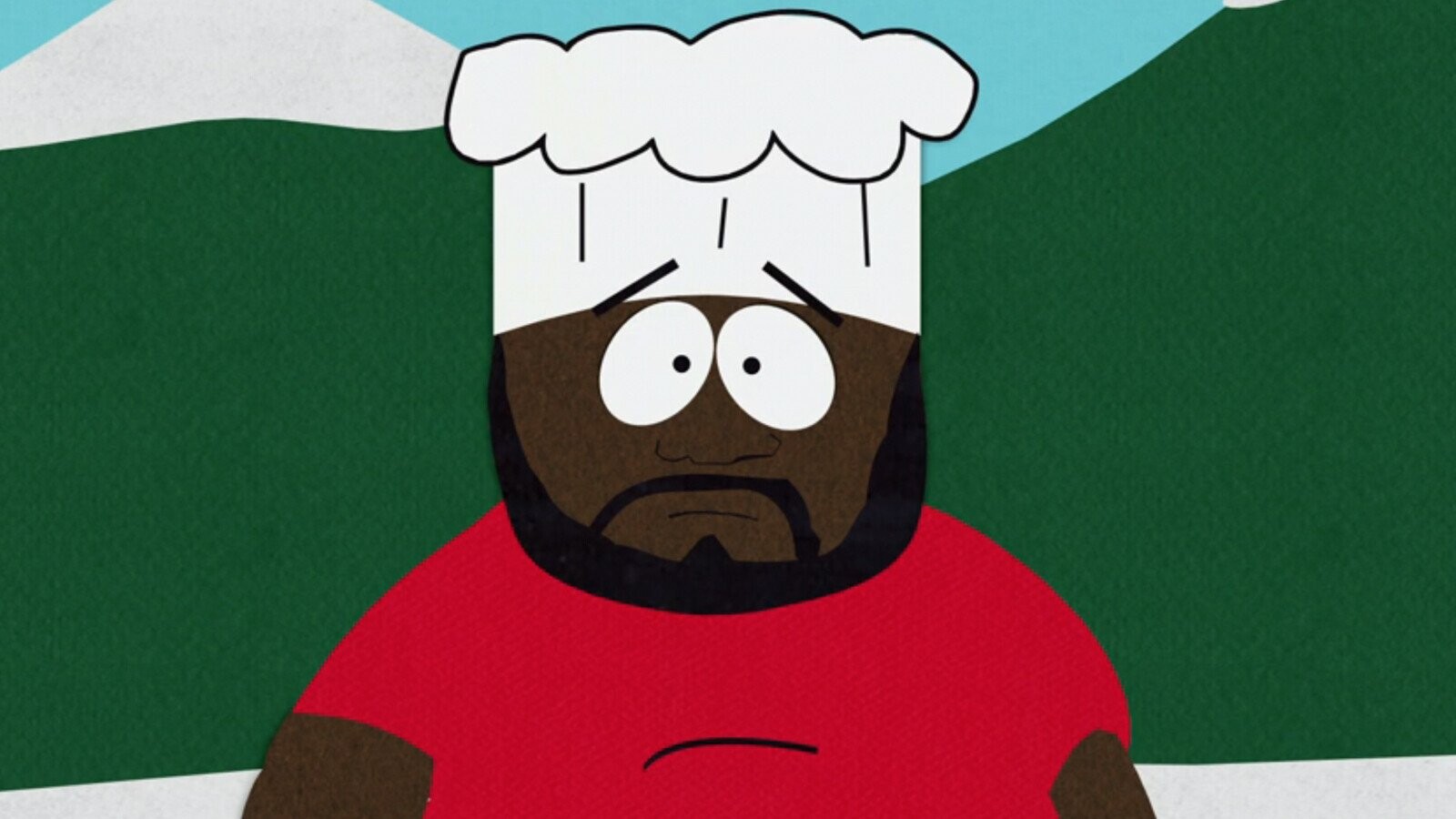
Some casting stories begin with months of planning, careful negotiations, and the kind of polished Hollywood choreography that makes everyone look cooler than they really are. This one, apparently, began with a soul legend walking into a studio and basically asking, “Wait, what exactly is this cartoon?” That is a wonderfully strange opening chapter for one of the funniest and most unlikely partnerships in television history.
The story of Isaac Hayes and South Park is bigger than one hilarious first recording session, of course. It is also about timing, second acts, comic audacity, and the kind of voice you could identify in half a syllable. Long before he was Chef, Hayes was already a giant in American music: a Stax Records architect, a hitmaker with David Porter, a creator of enduring songs like “Soul Man,” and the man who turned the Shaft theme into a cultural monument. Then, in one of pop culture’s most gloriously weird plot twists, he became the silky-voiced school cafeteria cook on a rude little animated series that seemed determined to offend literally everybody before dinner.
And it worked. Not just because Hayes was famous, but because he brought something South Park badly needed in its early years: gravity wrapped in velvet. Chef could deliver filthy jokes, absurd songs, and half-helpful life advice, yet somehow still sound like the only adult in town worth listening to. That contrast made the character sing, sometimes quite literally.
The day a soul icon collided with a chaotic cartoon
By Trey Parker and Matt Stone’s later telling, they had wanted Isaac Hayes for Chef from the start. That part makes perfect sense. Chef was built around a smooth, deep, instantly recognizable presence. He needed to sound worldly, musical, slightly seductive, and impossibly calm while absolute nonsense unfolded around him. In other words, the part was practically wearing gold chains and dark sunglasses before Hayes ever stepped into a booth.
What makes the story so good is that the creators seem to have been far more prepared for Isaac Hayes than Isaac Hayes was for South Park. In the recollection relayed years later, Parker and Stone flew out thinking they were about to record a dream guest star, only to discover that Hayes himself had not really been briefed on what the show was. That is not just funny; it is the sort of entertainment-industry comedy that practically writes itself. Imagine trying to explain South Park in a hurry to a man whose career already included Stax, Oscars, and international music legend status. “So, there are four foul-mouthed kids, a tiny Colorado town, and a school cook who sings about sex” is not a sentence most people deliver with confidence.
And yet, once the premise was explained, Hayes reportedly locked in fast. That quick pivot matters. It suggests that even if he arrived unfamiliar with the show, he immediately recognized the rhythm of the joke, the musicality of the part, and the comic room it gave him. Some performers need weeks to find a character. Hayes, by all accounts, needed a few minutes and a microphone.
Why Chef was perfect for South Park from the beginning
Chef was not just another side character in the early seasons. He was the show’s secret structural support. The boys had teachers, parents, and authority figures all around them, but most of those adults were clueless, panicky, self-righteous, or deeply unqualified to supervise a goldfish, let alone children. Chef was different. He was the one grown-up the boys trusted. He gave advice. He explained things nobody else would explain. Granted, his explanations often veered into wildly inappropriate territory, but in the moral ecosystem of South Park, that still counted as emotional availability.
That role fit Hayes surprisingly well. He had charisma without needing to chase it. He sounded authoritative without sounding stiff. He could make a ridiculous line funnier simply by delivering it like it belonged in a late-night soul ballad. A lesser performer might have turned Chef into a one-note joke. Hayes made him feel like an actual person who just happened to live inside one of television’s least stable universes.
There was also the matter of musical credibility. South Park has always loved songs, but Chef made musical comedy feel central to the show’s identity. The character could turn an awkward conversation into a seduction anthem before anyone in the room had time to regret the setup. That mattered because Parker and Stone were not just writing jokes; they were building a comic language. Chef helped create it.
The voice that gave the joke weight
A lot of television comedy depends on contrast, and Hayes supplied a brilliant one. The animation was rough around the edges. The humor was juvenile by design. The town was ridiculous. Then out came that voice: rich, steady, and experienced. It was like watching someone uncork expensive bourbon at a food fight. The elegance made the nonsense funnier.
That contrast also expanded the show’s appeal. Hayes was not merely some celebrity cameo designed to grab headlines for a week. He gave the series legitimacy beyond shock value. Suddenly, this crude animated satire had a performer whose résumé included landmark soul records, film scoring history, and massive influence on later generations of musicians. That does not make South Park respectable, exactly. But it does make it harder to dismiss as a passing gross-out gimmick.
From confusion to comic chemistry
The best part of the first-session anecdote is what happened next. Hayes did not reportedly recoil. He did not storm out. He did not say the concept was beneath him. Instead, he embraced it. That tells you a lot about both the performer and the show.
Hayes clearly had a sense of humor about his own image. He understood that part of the fun was the gap between his grand, unmistakable cool and the gloriously inappropriate material he was being asked to deliver. He was not just lending his name; he was participating in the joke. That is a different level of commitment, and fans could hear it.
It also helps explain why Chef never felt like stunt casting. Hayes was not standing outside the role, pointing at it and reminding the audience he was Isaac Hayes. He slid into the character so naturally that Chef came off less like a guest-star novelty and more like a resident force of nature. One minute the boys were confused children. The next minute Chef was singing them through puberty, panic, or some bizarre town emergency. It felt absurd, but it also felt inevitable.
That easy fit helps make the first-session story even better in hindsight. The idea that Hayes initially did not know what South Park was makes his eventual success in it look even more impressive. It was not the product of fandom. It was performance instinct. He heard the tone, recognized the bit, and turned it into gold.
Chef’s golden era: swagger, songs, and a very weird pop-culture second act
If you only know Isaac Hayes from “Theme From Shaft,” his run on South Park can seem like a left-field career detour. In reality, it was something more interesting: a second act that connected his musical past to a whole new generation of viewers who may not have been alive when Hot Buttered Soul changed the shape of soul music.
Chef became one of the show’s emotional anchors, but he also became one of its musical engines. The most famous example, naturally, is “Chocolate Salty Balls,” which sounds like the kind of joke that should have existed for one episode and then politely disappeared into the cartoon ether. Instead, it escaped containment. It became a real-world hit and one of the strangest success stories of late-1990s pop culture.
That was the genius of Hayes in the role. He could sell a joke song with the same seriousness other singers brought to heartbreak, protest, or seduction. He did not wink too much. He committed. And commitment is often the difference between a throwaway gag and a piece of comedy people still quote decades later.
For Hayes, that mattered beyond laughs. His son would later describe South Park as giving him a second fan base, and that rings true. To younger audiences, Chef was not a trivia footnote attached to an older music legend. He was their first encounter with Isaac Hayes. Then, if they were curious, they followed the trail backward and discovered Stax, “Soul Man,” Shaft, and the rest of a huge career. That is not a bad legacy for a cartoon school cook.
The ending got complicated, fast
No discussion of Isaac Hayes and South Park is complete without addressing the messy final chapter. In January 2006, Hayes told The A.V. Club that although he did not agree with the show’s portrayal of Scientology, he understood what Parker and Stone were doing. That interview matters because it shows a more relaxed, joking, and tolerant posture than the sharper public break that followed.
Then came the controversy around “Trapped in the Closet,” the Season 9 episode that skewered Scientology and celebrity culture. A public statement released in Hayes’ name in March 2006 said the show had crossed from satire into intolerance. Matt Stone responded bluntly, arguing that the issue only became intolerable once Scientology itself was the target. It was an ugly public split, and it quickly turned into one of the show’s most discussed off-screen dramas.
But the story did not stay simple. Fox News reporting at the time raised doubts about whether Hayes had personally made that decision while recovering from a stroke. Years later, Isaac Hayes III said even more directly that his father would not have quit the show willingly and that people around him made those decisions on his behalf while he was in no condition to do so. That later account has reshaped how many fans understand the breakup.
The result is that the end of Hayes’ South Park era now reads less like a clean moral standoff and more like a sad, disputed collision of illness, religion, public controversy, and a show that was never going to handle any of that quietly. The first-season miracle had been spontaneous and funny. The ending was neither.
Why the first-session story still matters
The anecdote about Hayes not knowing what South Park was until that first recording session survives because it explains something essential about how pop culture actually works. Great creative partnerships do not always begin with carefully aligned visions. Sometimes they begin with confusion, a rushed explanation, and a performer who is talented enough to turn uncertainty into chemistry.
It also says something flattering about Hayes. He was not trapped by prestige. He did not need every project to arrive wrapped in solemn importance. He could recognize a joke worth telling and a character worth playing, even when the package was a crude animated satire that probably sounded unhinged on paper.
And it says something about South Park, too. For all the show’s noise, vulgarity, and appetite for outrage, it has always depended on performance craft. Chef was proof. Without Isaac Hayes, the character might have been funny. With Isaac Hayes, the character became unforgettable.
Additional perspective: what the experience around this story feels like now
Revisiting this story today is a little like opening an old time capsule and finding it full of dynamite, vinyl records, cafeteria trays, and one immaculate baritone. On paper, Isaac Hayes becoming Chef should have felt like a novelty. In practice, it felt like one of those rare cultural accidents that instantly made sense after it happened. That is part of why the first-session anecdote lands so well. It reminds us that even iconic television moments can start in total uncertainty.
Think about the experience from every angle. For Parker and Stone, it must have been surreal. They had a young show, a ridiculous premise, and a dream piece of casting. Then they reportedly got to the session and realized the dream casting had not really been told what the dream was. That is the kind of moment that usually ends in panic, apologies, and maybe a backup plan. Instead, it became origin myth material.
From Hayes’ side, the experience is just as fascinating. Here was a musician who had already lived several careers’ worth of artistic life. He had written classics, changed soul music, scored films, and become part of American music history. Then he walked into a recording session for a cartoon and, in essence, had to be introduced to the universe on the spot. A lot of stars would have treated that like an insult. Hayes seems to have treated it like work: explain the role, find the rhythm, let’s go.
That practical instinct is probably why Chef worked so well. Hayes did not over-intellectualize the character. He appears to have understood the immediate emotional math of it. Chef was funny because he was serious. He was helpful, but not exactly helpful. He was smooth, but in a town full of chaos that smoothness became absurd in the best way. You can almost hear the gears click into place as Hayes realizes the joke is not just the dialogue; it is him saying it.
For fans, the experience of Chef was also different from the average animated side character. Plenty of cartoons have funny adults. Very few have adults who sound like they could headline a soul revue after school lunch. Watching early South Park, you felt Chef arrive before you fully processed the line. That voice was the setup, the punchline, and the afterglow all at once. He did not need a lot of screen time to dominate a scene. He just needed a sentence and maybe a piano in the background.
There is also something oddly touching in the idea that South Park introduced Hayes to younger viewers who might never have found him otherwise. For one group, he was already Black Moses, the voice of Stax grandeur, the architect of “Theme From Shaft.” For another, he was the school cook who sang wildly inappropriate songs with total confidence. Those audiences met in the middle, and that middle was pop culture doing one of the few things it still does beautifully: letting generations discover each other by accident.
That is why the first-recording-session story is more than a funny industry anecdote. It captures the entire weird magic of the Hayes-South Park relationship. Confusion walked into the room. Chemistry walked out. And somewhere between those two moments, television got one of its strangest, funniest, and most memorable supporting performances.
Conclusion
Isaac Hayes not knowing what South Park was until that first recording session sounds like the setup to a joke. In a way, it was. But it was also the beginning of a genuine creative match. Hayes gave Chef soul, authority, and comic elegance. South Park gave Hayes a fresh audience and an unexpected new chapter. The partnership began with uncertainty, thrived on contrast, and ended in controversy, but its legacy remains easy to hear. The moment Hayes found the voice of Chef, a cartoon bit turned into television history.