

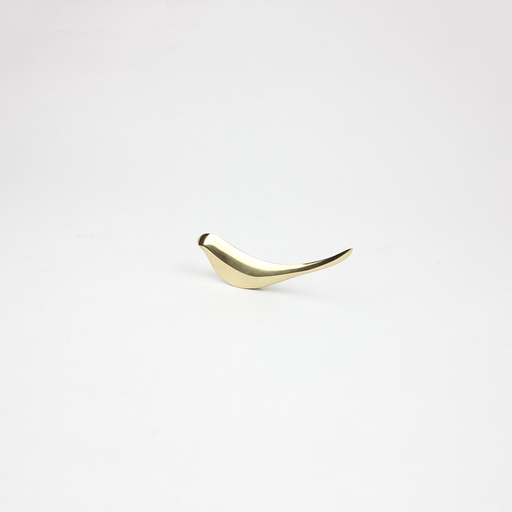
A letter opener is one of those “adult” purchases you don’t realize you need until you’re hunbling through an envelope like a raccoon in a recycling bin. Enter the Japanese Birdie paper knife letter opener: a tiny, bird-shaped desk tool that somehow manages to be useful, cute, and quietly fancyall without trying too hard.
Birdie isn’t a novelty blade pretending to be a katana (fun, but not exactly “open the electric bill without panic”). It’s a modern paper knifealso called a letter openerdesigned to perch on your desk like a minimalist sculpture. When the mail arrives, Birdie uses its raised tail to slit envelopes cleanly, so you can get to the good stuff (or, realistically, to the “we’ve been trying to reach you about your car’s extended warranty” stuff).
What Is a “Birdie Paper Knife,” Exactly?
“Birdie” is a Japanese-designed paper knife/letter opener created under the +d design line, commonly associated with h concept (also known as Ash Concept). The form is simple: a bird’s body you hold in your hand, and a slightly sharpened tail that opens envelopes with a smooth, controlled motion. It’s intentionally compactmore “desk companion” than “drawer weapon.”
Depending on the version, Birdie is typically offered in a lightweight, colorful resin model and a more premium metal (often brass) model. The resin edition is known for bright color choices and a featherlight feel, while the brass edition leans into “gift-worthy heirloom energy,” often arriving in a small wooden presentation box.
Why a Japanese Letter Opener Feels…Different
Japanese stationery culture has a reputation for turning everyday actions into tiny rituals: writing, wrapping, labeling, even stapling can feel oddly satisfying when the tools are thoughtfully designed. Birdie fits that mindset. It’s not trying to “optimize productivity” in the loud, neon way. It’s trying to make opening a letter feel calm and intentionallike a small reset between tasks.
And yes, there’s a little humor baked in: Birdie is a bird that “eats” your mail. A polite bird. A well-behaved bird. A bird that doesn’t judge you for still getting paper statements in 2026.
Design Details That Make Birdie More Than Desk Decor
1) The tail does the work (and keeps your fingers out of trouble)
The tail is the functional edge. You guide it along the envelope seam with gentle pressure. Because you’re not sawing or tearing, you’re less likely to shred the contentsor decorate your thumb with a surprise papercut. This is especially handy for thick envelopes, wedding invites, and anything stuffed with extra inserts.
2) It balances upright, so you’ll actually keep it out
A lot of letter openers live in a drawer until you’re mid-envelope and already committed to chaos. Birdie’s “perching” design encourages visibility: it sits on the desk like a small sculpture, which means it’s there when you need it (and not hiding under a pile of sticky notes and guilt).
3) Ergonomics by understatement
Birdie’s body is shaped to sit comfortably in your hand. You don’t need a chunky handle or a tactical grip. You just pinch and guide. It’s the stationery equivalent of a quiet nod that says, “I’ve got this.”
Materials Matter: Resin vs Brass (Which Birdie Are You?)
The PBT resin version
Many Birdie paper knives are made from PBT resin (polybutylene terephthalate), a durable engineering plastic that stays lightweight and holds shape well. This version is usually offered in multiple colors and is designed to be an everyday desk tool: practical, cheerful, and easy to replace if your coworker “borrows” it forever.
- Best for: daily mail, home offices, dorm desks, design lovers on a budget
- Vibe: playful Japanese desk accessory
- Bonus: the lighter weight makes it feel approachablenot intimidating
The brass (and plated metal) version
The premium Birdie is often described as brass or chrome-plated brass, typically in gold or silver tones. This is the version that gets called a “gift” in product descriptions because it looks like one. It may arrive in a small wooden box that feels like a display case (and yes, it’s hard not to call it a tiny birdhouse).
- Best for: gifting, executive desks, collectors, people who say “I appreciate craftsmanship” and mean it
- Vibe: minimalist luxury letter opener
- Bonus: weightier feel, more “ceremonial” when you open mail
How to Use a Birdie Paper Knife Without Turning Your Mail Into Confetti
Birdie is easy to use, but there’s a small technique upgrade that separates “clean slice” from “why is there a rip shaped like Florida?”
- Tap the envelope on your desk to shift the contents away from the edge you plan to cut.
- Choose a seamusually the side or top edge works best.
- Place Birdie’s tail at the seam and glide it forward with light, steady pressure.
- Open slowly if the envelope is thick or stuffed (catalogs love surprise staples).
Pro tip: if you like saving envelopes (receipts, return addresses, sentimental notes), a paper knife tends to be gentler than ripping the flap. It’s the difference between “opened” and “survived.”
Paper Knife vs Letter Opener: Aren’t They the Same Thing?
Today, people often use the terms interchangeably. Historically, a paper knife could also refer to tools used to separate uncut pages in older printed books, while a letter opener is specifically for envelopes. Over time, the everyday meaning blurred, and modern desk tools (like Birdie) comfortably live in both categoriesespecially because Birdie’s tail is more “precise opener” than “kitchen knife impersonation.”
Who Designed Birdie? Meet Yohei Oki (Without the Boring Biography)
Birdie is credited to Japanese designer Yohei Oki, known for practical objects with clean forms and a subtle playful twist. Birdie reflects that approach: it’s basically a tiny sculpture that happens to open mailrather than a blade that happens to look like a bird.
If you love the intersection of Japanese design and daily toolswhere “useful” and “delightful” are not mutually exclusiveBirdie is a classic example. It’s also the kind of product that earns design-award attention because the idea is simple but thoughtfully executed.
Why Birdie Became a Cult Desk Accessory
Birdie shows up in the same conversations as other “small but mighty” desk accessories: good pens, well-made notebooks, and that one stapler you refuse to share. Its popularity makes sense for a few reasons:
- It’s functional even if you only open a few envelopes a week.
- It’s display-friendly, so it doesn’t disappear into drawer limbo.
- It’s giftableespecially the brass versionwithout being generic.
- It adds personality to a workspace without screaming for attention.
Buying Guide: How to Choose the Right Japanese Birdie Letter Opener
Decide what role Birdie plays on your desk
If you want a daily-use tool that feels cheerful and light, go for the resin Birdie. If you want a statement piecesomething that feels like it belongs next to a nice fountain pen or a leather blottergo brass.
Check the dimensions and desk footprint
Birdie is compact, which is part of the charm. If you prefer a longer letter opener, Birdie may feel “petite” at first. But that small size is also why it perches neatly and doesn’t hog desk space like an overconfident paperweight.
Shop smart to avoid lookalikes
Because Birdie has a recognizable silhouette, similar bird-shaped openers exist. If authenticity matters to you, look for clear product details such as the +d/h concept branding, “Made in Japan,” and the designer credit to Yohei Oki.
Care, Safety, and Keeping Birdie Looking Sharp
Birdie is a small tool, but it still has a functional edge. Basic care goes a long way:
- Keep it dry: don’t leave it wet on the sink edge like it’s a spoon.
- Avoid abrasives: harsh scrubbing can scratch finishes and dull the working edge.
- Store responsibly: especially if kids are aroundBirdie is cute, but it’s not a toy.
- Brass tip: if you prefer a bright shine, polish gently; if you like patina, let it age naturally.
Conclusion: A Tiny Bird That Makes Mail Weirdly Enjoyable
The Japanese Birdie paper knife letter opener is proof that a practical tool can also be a little piece of design joy. Whether you pick the colorful resin version for everyday mail or the brass edition for that “I have my life together” energy, Birdie earns its spot on your desk by being both charming and genuinely useful.
And if nothing else, Birdie turns the act of opening mail into a moment that feels less like a chore and more like a tiny ceremony. Even when the envelope contains nothing but disappointment and a coupon for something you didn’t ask for.
Real-World Desk Stories: Experiences With Japanese Birdie Paper Knife Letter Openers
Picture a normal weekday: coffee cooling, inbox multiplying, and a stack of envelopes that somehow appeared overnight like mushrooms after rain. This is where Birdie shinesnot as a dramatic “tool reveal,” but as a quiet desk sidekick. Because Birdie sits out in the open, you don’t have to hunt for it. It’s already perched, watching your decisions. (Not judging. Just… observing.)
The first experience most people remember is the unboxing moment. With the resin Birdie, it’s a “wow, this is smaller than I expected” surprisefollowed by “oh, that’s actually perfect.” It doesn’t dominate your workspace; it blends into it, like a tiny design wink. With the brass version, the experience is more “gift ceremony”: the weight, the finish, the presentation box that makes you feel like you’re adopting a fancy little bird with a job title.
Then comes the oddly satisfying part: the first clean slice. If you’ve been a long-time envelope ripper, the difference is immediate. Instead of tearing a jagged edge and tugging the letter out like you’re starting a lawnmower, Birdie gives you a controlled, neat opening. That matters more than you’d thinkespecially for invitations, handwritten notes, and anything where the paper inside feels important. The tool doesn’t rush you. You glide the tail along the seam and it’s done. Small action, big “ahhh” energy.
Birdie also has a habit of becoming a conversation starter. Someone sees it on your desk and asks, “Is that a tiny bird?” And you get to say, “Yes. It opens mail.” That’s it. That’s the entire pitch. It’s the kind of object that makes your workspace look intentional without screaming “I watched three hours of desk-setup videos.” (No shade. We’ve all been there.)
Over time, Birdie tends to shape habits. People report opening mail more carefully, saving envelopes more often, or even writing more letters because the “tools for the job” are right there. It’s a tiny nudge toward analog life. Not in a preachy waymore like, “Hey, remember when paper felt nice?” Even if you only use it on a couple of envelopes a week, it pays rent as a desk object: minimal, friendly, and just functional enough to avoid the dreaded label of “clutter.”
And yes, there are practical realities. The resin version is so lightweight you might accidentally scoot it across the desk while rearranging things (Birdie is not a gym bro). The brass version can pick up fingerprints or patina depending on your preferences. But those quirks are part of the experience: it’s a real object you interact with, not an app icon you ignore. In a world where most “mail” arrives as notifications, Birdie makes the physical kind feel a little more speciallike a tiny reminder that not everything has to be optimized to be enjoyable.