

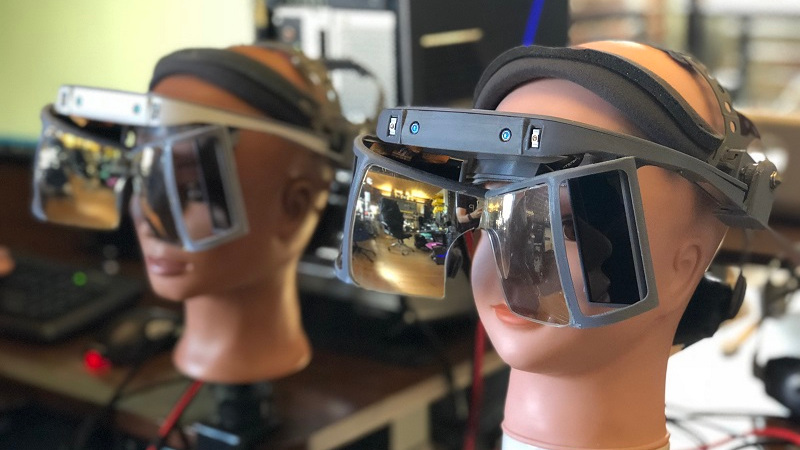
Note: This article is written for web publishing in standard American English and is based on real trends in AR optics, open-source smart glasses, waveguide research, birdbath optics, and maker-friendly hardware.
Introduction: The Tiny Lens Problem With a Giant Price Tag
DIY augmented reality has always sounded like the kind of project that should be possible in a garage. After all, makers can buy micro-OLED displays, Raspberry Pi boards, IMUs, tiny cameras, batteries, 3D printers, and enough sensors to make a toaster question its life choices. Yet one part has stubbornly remained out of reach: the optics. More specifically, the lenses, combiners, waveguides, mirrors, and coatings that let digital images appear in front of your eyes while the real world remains visible.
That is why the idea that lenses for DIY augmented reality may become a bit less unobtainable matters. It is not just a small supply-chain footnote for optical engineers in lab coats. It could be the difference between a weekend tinkerer building a clunky heads-up display and a serious hobbyist developing a wearable AR prototype that actually feels useful. The display can be bright. The processor can be clever. The code can be beautiful. But if the optical path looks like a ghost trapped in a dirty fishbowl, the magic collapses quickly.
For years, consumer AR has been split between expensive polished devices and homemade experiments that look charmingly cyberpunk, often with visible wires, 3D-printed brackets, and a prayer holding the alignment together. But the market is changing. Waveguide manufacturing is improving, birdbath optics are appearing in more affordable glasses, smart glasses companies are pushing smaller display modules, and open-source hardware communities are proving that developers want accessnot just glossy demos.
Why AR Lenses Are So Hard to Get Right
Augmented reality lenses have a deceptively simple job: show digital content while still letting you see the real world. That sounds straightforward until physics enters the room, drops a 900-page optics textbook on the desk, and asks everyone to behave.
Unlike virtual reality headsets, which can block the outside world and place screens directly in front of your eyes, transparent AR glasses need an optical combiner. This combiner takes an image from a tiny display and redirects it into the user’s eye. At the same time, it must allow light from the environment to pass through. The result should be bright, sharp, aligned, comfortable, and not make the wearer feel like they are looking through a haunted windshield.
Waveguides: Thin, Elegant, and Painfully Difficult
Waveguides are often considered the dream option for true smart glasses. They can move the display engine to the side of the frame and guide light through a thin transparent lens using internal reflections and microscopic structures. In a polished product, waveguide AR glasses can look much closer to normal eyewear than older headset designs.
The problem is that waveguides are hard to manufacture. They require precise materials, coatings, gratings, alignment, and optical engineering. Small flaws can create dim images, rainbow artifacts, blurry edges, color shifts, or tiny visual disasters that make the user wonder whether the future needs glasses.
This is why waveguide lenses have historically been nearly impossible for DIY builders to source. A hobbyist can buy a microcontroller in minutes, but buying a high-quality transparent waveguide suitable for AR development has often felt like trying to order a spaceship part from a vending machine.
Birdbath Optics: Bulkier, But More Maker-Friendly
Birdbath optics are less elegant but often more accessible. In a typical birdbath design, light from a display is reflected through a beam splitter and curved mirror so the virtual image appears in the user’s field of view. This approach is used in many video-display glasses because it can produce a bright, sharp image at a lower cost than advanced waveguide systems.
The tradeoff is size. Birdbath optics usually make glasses thicker and more visor-like. They can be excellent for watching movies, mirroring a laptop screen, gaming, or prototyping interface ideas, but they do not always deliver the featherweight “regular glasses” dream. Still, for DIY augmented reality, birdbath lenses and semi-transparent combiners can be a practical bridge between homemade experiments and fully custom optics.
What Is Making DIY AR Lenses More Obtainable?
The phrase “less unobtainable” is important. Nobody should expect premium AR waveguides to become as cheap and common as phone chargers overnight. However, several trends are pushing the market in a friendlier direction for developers, hobbyists, educators, and small hardware startups.
1. Smart Glasses Are Becoming a Real Product Category
AR and AI smart glasses are no longer just trade-show mythology. Companies are shipping or demonstrating glasses with micro-OLED displays, cameras, microphones, speakers, sensors, and lightweight frames. Some are focused on full augmented reality, while others are closer to heads-up displays or wearable AI assistants. Either way, the more companies build smart glasses, the more demand grows for smaller display engines and optical components.
That matters because component availability usually improves when a category matures. The early days are expensive and secretive. Later, suppliers start selling modules, reference designs, development kits, replacement parts, and manufacturing services. DIY builders rarely get first access, but they often benefit from the second wave.
2. Open-Source AR Projects Keep Pressure on the Market
Open-source augmented reality projects have shown that makers are not waiting politely for trillion-dollar companies to finish arguing with physics. Project North Star, originally released by Leap Motion, proved that a community could build a wide-field transparent AR headset using documented designs, 3D-printed parts, custom reflectors, and available electronics. It was not pocketable, but it was inspiring.
Brilliant Labs also helped push the idea that AR hardware can be more open and developer-friendly. Devices such as Monocle and Frame gave programmers compact near-eye displays that could be hacked, scripted, and experimented with. These products do not solve every optical challenge, but they make AR prototyping feel less like sneaking into a secret military lab and more like joining a hardware community.
3. Micro-OLED Displays Are Easier to Find
Near-eye AR depends heavily on tiny, bright displays. Micro-OLED panels are attractive because they can be compact, high contrast, and sharp enough for readable text. As these displays appear in camera viewfinders, smart glasses, and wearable devices, makers have more chances to source display modules suitable for experiments.
Of course, a display alone is not enough. A tiny screen placed near your eye is just a tiny screen placed near your eyebasically a recipe for squinting heroically. The optics must focus that image at a comfortable virtual distance and align it with the user’s view. Still, broader micro-display availability makes the full DIY AR stack less intimidating.
4. Research Into Lower-Cost Waveguides Is Moving Forward
Researchers continue to explore new ways to build waveguides for augmented reality, including approaches that use lower-cost fabrication techniques, liquid optical waveguides, diffractive structures, holographic methods, and polymer-based designs. These developments are not all ready for hobbyist shopping carts, but they point in a useful direction: AR optics are becoming a manufacturing problem, not just a science-fiction problem.
Once fabrication methods become simpler and more repeatable, smaller labs and specialized suppliers can enter the market. That could eventually lead to more affordable development lenses, educational kits, and optical modules designed for experimentation rather than luxury consumer products.
The DIY Builder’s Reality Check
Even if AR lenses become easier to source, building DIY augmented reality glasses will not suddenly become as simple as assembling a mechanical keyboard. The optics are only one part of the stack. A useful AR headset needs display control, power management, thermal design, sensors, tracking, software, calibration, ergonomics, and a frame that does not make the wearer look like they lost a fight with a webcam.
Field of View Is Still a Tough Compromise
Field of view is one of the biggest challenges in AR. A narrow field of view can make digital elements feel like they live inside a tiny floating postage stamp. A wide field of view is far more immersive, but it demands better optics, more display area, stronger brightness, and tighter alignment.
DIY builders often need to choose between a compact design with limited visuals and a larger design with more satisfying immersion. This is why some projects use simple heads-up displays for notifications, navigation prompts, or sensor readings, while others accept bulky optics in exchange for richer interaction.
Brightness Is Not Optional
AR glasses must compete with the real world, and the real world is rude. Sunlight, office lighting, reflections, and changing environments can wash out virtual images. A display that looks crisp indoors may vanish outdoors like a shy ghost. Optical efficiency matters because every reflection, coating, and beam splitter can reduce brightness.
For DIY augmented reality, this means lens choice directly affects usability. A cheap combiner may be fine for a dim workshop demo but frustrating in daily use. A better optical component can make text readable, colors clearer, and the whole prototype feel dramatically more serious.
Calibration Can Make or Break the Experience
AR is not only about showing pixels. It is about placing pixels where the brain expects them to be. If the left and right images are misaligned, if the focal distance feels wrong, or if virtual objects drift strangely, the experience becomes uncomfortable fast.
This is especially tricky for DIY projects because every wearer’s face is different. Interpupillary distance, eye relief, prescription needs, nose shape, and frame position all affect alignment. Professional AR glasses deal with these issues through careful optical design and calibration. Makers must often solve them with adjustable mounts, software offsets, and patiencethe most underrated component in any hardware build.
Practical DIY AR Lens Options Today
If you want to build DIY augmented reality glasses today, you have several possible paths. None are perfect, but each has a role depending on your goal.
Option 1: Use a Ready-Made AR Display Module
The easiest path is to buy a small heads-up display or AR module that already includes optics. This reduces the optical design burden and lets you focus on software, interaction, and enclosure design. The downside is limited flexibility. You are working within the module’s field of view, brightness, resolution, and form factor.
Option 2: Build With Birdbath Optics
Birdbath optics can be a good choice for makers who want a larger virtual screen and can tolerate bulkier hardware. You may use a micro-display, beam splitter, curved reflector, and 3D-printed structure. This route is more complex than buying a module but more accessible than fabricating a waveguide.
Option 3: Experiment With Beam Splitters and Simple Combiners
For basic heads-up displays, a semi-transparent mirror or beam splitter can work surprisingly well. This is the classic maker approach: place a small display outside the main line of sight and reflect it into view. It is not the future of sleek AR eyewear, but it is a fantastic way to understand optical paths, focal distance, image brightness, and alignment.
Option 4: Wait for Affordable Waveguide Kits
This is the path many developers want. Affordable waveguide kits would let makers build thinner, more glasses-like AR prototypes without reinventing advanced optics. The market is not fully there yet, but the direction is promising. As manufacturers pursue consumer smart glasses and researchers explore cheaper fabrication, waveguide components may become more accessible to small teams.
What This Means for the Future of Maker AR
The biggest impact of more obtainable AR lenses will not be that everyone suddenly builds perfect smart glasses at home. Instead, it will expand the number of people who can prototype useful ideas. That is how hardware categories grow. First, the components become available. Then builders make strange, brilliant, occasionally alarming things. Some fail. Some become products. All of them teach the market what people actually want.
Imagine a mechanic wearing DIY AR glasses that show torque specs while repairing an engine. Picture a gardener seeing plant care reminders while walking through a greenhouse. Think of a musician viewing chord charts without looking down, a cyclist receiving simple navigation prompts, or a student seeing lab instructions while keeping both hands free. These do not require Hollywood holograms. They require readable, comfortable, lightweight overlaysand that begins with optics.
DIY augmented reality does not need to beat premium commercial AR on day one. It only needs to become useful enough for creators to experiment. Once lenses, displays, and developer-friendly boards become easier to access, the maker community will do what it always does: build prototypes nobody asked for, accidentally invent something useful, and document the whole thing with slightly blurry photos.
The Business Side: Why Suppliers May Finally Care About DIY AR
For a long time, AR optics were aimed at large companies, enterprise headsets, military systems, and well-funded startups. That made sense. Precision optics are expensive, and suppliers prefer customers who order in volume. A hobbyist asking for two waveguides and a dream is not exactly a procurement department’s favorite email.
But the smart glasses market is becoming broader. AI glasses, display glasses, sport glasses, industrial wearables, accessibility tools, and developer devices all need optical components. As demand spreads across more product types, suppliers have more reason to create modular parts and smaller-quantity offerings. Educational institutions, research labs, design studios, and hardware startups may become a meaningful middle market between lone hobbyists and giant consumer electronics brands.
This is where DIY AR benefits indirectly. Makers may not always buy the same components used in flagship glasses, but they can benefit from surplus parts, evaluation kits, open documentation, and cheaper manufacturing processes. The same pattern happened with drones, 3D printers, single-board computers, and machine vision cameras. What starts as specialized hardware eventually becomes something a determined person can buy, break, fix, and improve.
Experience Section: What Building With DIY AR Lenses Actually Feels Like
Working on DIY augmented reality is a humbling experience, mostly because the project looks easy for the first 20 minutes. You hold a tiny display in one hand, a lens in the other, and think, “How hard can this be?” Then you spend three hours chasing a reflection across your desk like a cat chasing a laser pointer. Suddenly, you understand why optical engineers deserve snacks, respect, and possibly a small parade.
The first lesson is that alignment is everything. In ordinary electronics, a wire either connects or it does not. In AR optics, a lens can be technically “in place” and still be wrong enough to ruin the image. Move the display a few millimeters, and the text sharpens. Tilt the mirror slightly, and the image climbs into the ceiling. Shift the frame on your nose, and the virtual menu decides to live somewhere near your left eyebrow. It is funny until you realize the prototype must work on an actual human face, not just on the noble foam head you bought online.
The second lesson is that brightness has a personality. Indoors, a prototype may look crisp and futuristic. Under a window, it may become faint. Outside, it may disappear completely, leaving you wearing electronics that now function mainly as a conversation starter. This is where better lenses and combiners make a huge difference. Good optics preserve more usable light, reduce distracting reflections, and make the experience feel intentional rather than improvised.
The third lesson is that comfort arrives late. Early DIY AR builds often begin as bench experiments, where comfort does not matter because the device is held together by clamps, tape, and optimism. But once the prototype moves onto your face, weight distribution becomes brutally important. A few extra grams at the front can feel like a small bird sitting on your nose. Cable routing matters. Heat matters. Nose pads matter. Even the temple arms matter, because ears are less forgiving than CAD software.
The fourth lesson is that simple use cases are the best starting point. Do not begin by trying to build a full spatial computing platform with hand tracking, object recognition, holographic widgets, and a virtual assistant named something dramatic. Start with a clock, a notification, a compass heading, a teleprompter, or a sensor readout. These small overlays teach the core problems: readability, placement, brightness, latency, and user attention. A clean floating checklist that works reliably is more impressive than a glitchy dragon that appears once and then crashes the system.
The most encouraging part is that every improvement in lens availability changes the emotional tone of the project. When optics are impossible to source, DIY AR feels like a locked door. When decent lenses, combiners, or modules become available, the work becomes a puzzle. Still hard, yes, but solvable. That shift matters. It invites more builders into the field, and more builders mean more experiments, better documentation, smarter software, and cheaper designs.
DIY augmented reality will probably remain messy for a while. There will be crooked frames, dim displays, weird reflections, and prototypes that look like a pair of safety glasses married a science fair volcano. But that is how serious maker movements begin. The arrival of more obtainable AR lenses does not mean the future is finished. It means more people finally get to help build it.
Conclusion: Less Unobtainable Is Still Progress
Lenses for DIY augmented reality are not suddenly easy, cheap, or universally available. But they are becoming less mysterious and less unreachable. Better smart glasses components, open-source AR projects, micro-OLED availability, birdbath optical systems, and ongoing waveguide research are all nudging the field forward.
For makers, this is good news. It means the hardest part of DIY AR may slowly move from “Where do I even get the lenses?” to “How do I make this design useful, comfortable, and not embarrassing to wear in public?” That is a much better problem. It is still difficult, but it is the kind of difficulty builders can attack with tools, code, iteration, and a healthy tolerance for looking mildly ridiculous during testing.
The future of augmented reality will not be built only by giant companies. It will also be shaped by developers, students, artists, hardware hackers, researchers, and curious people who look at a pair of glasses and think, “What if this could do more?” As AR lenses become a bit less unobtainable, that question gets easier to answer.