

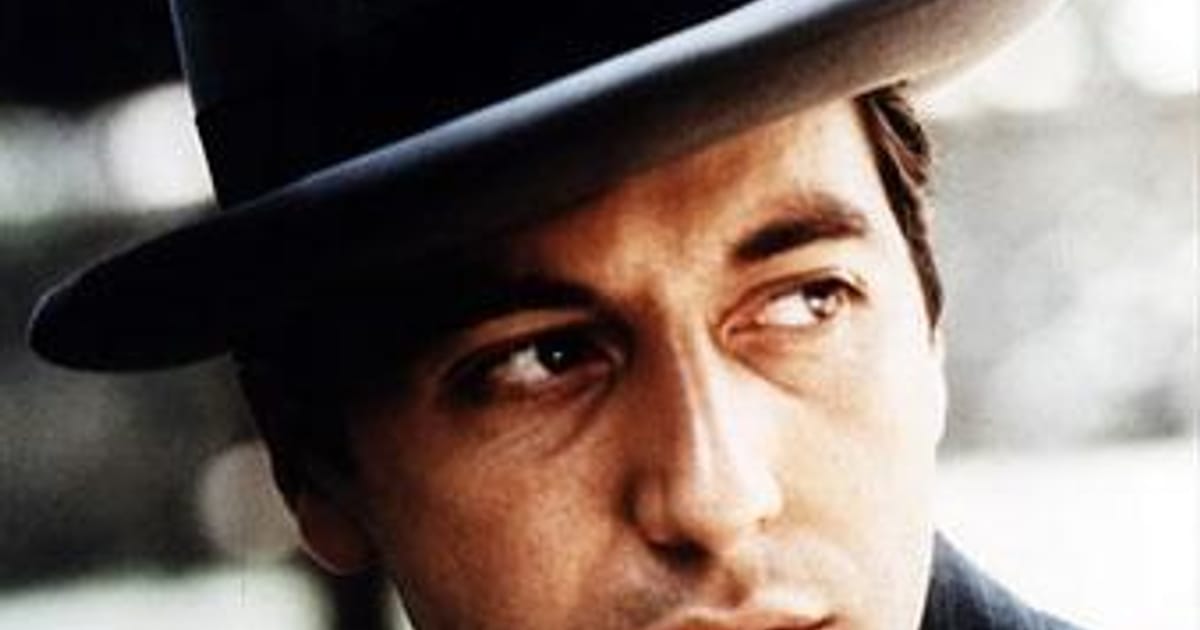
Quick spoiler note: this article talks openly about key moments across The Godfather trilogy. If you’re saving the films for a rainy weekend, consider this your polite knock on the door before it swings open.
Some characters are “iconic” because they have cool lines. Michael Corleone is iconic because he has consequences. The more you watch him, the more your ranking of him changessometimes within the same sitting. One minute you’re thinking, “That’s the smartest move possible,” and the next you’re thinking, “Sir, this is why your family doesn’t sit together at Thanksgiving.”
So let’s do what the internet loves most: rank a complicated person while holding two opinions at once. We’ll look at Michael Corleone as a strategist, a leader, a moral caution sign, and a character whose arc still sets the bar for “slow-burn transformation” in American cinema.
Who Michael Corleone Is (And Why He’s So Hard to Rank)
Michael starts out as the Corleone who seems most “outside” the family business: educated, disciplined, and associated with legitimate American identity. Then life (and loyalty, and violence, and opportunity) drags him toward the center. What makes him fascinating isn’t that he changeslots of characters change. It’s that his change feels both inevitable and avoidable, like watching someone walk toward a cliff while insisting they’re simply “taking a scenic route.”
That tension is why audiences keep re-ranking him. Depending on what you valuefamily, competence, morality, ambition, self-controlMichael can land anywhere from “tragic hero” to “textbook villain” to “a CEO who just happened to run a crime empire.”
The Only “Official” Ranking That Really Matters
If you want a real-world benchmark, Michael has one that’s surprisingly blunt: the American Film Institute placed Michael Corleone on its 100 Years…100 Heroes & Villains list as the #11 villain (for The Godfather Part II). That placement is a big deal because AFI’s villain definition isn’t “someone who twirls a mustache.” It’s about selfishness, will to power, and the kind of wickedness that can be masked by nobility.
Translation: Michael ranks high not because he’s loud, but because he’s effectiveand because his choices shrink the human parts of him as his power expands.
My Ranking System: Five Lenses That Keep Us Honest
To rank Michael without turning him into a meme, we need consistent criteria. Here are the five lenses that make debates about him more interesting than “he’s cool” vs. “he’s terrible”:
- Strategic Intelligence: planning, leverage, timing, and risk management.
- Leadership: decision-making under pressure and the ability to command loyalty (or fear).
- Moral Gravity: the harm his choices cause, including the harm he normalizes.
- Emotional Cost: what he loses internallylove, trust, peacewhile “winning” externally.
- Legacy: what he leaves behind for the family and the world around him.
Now we can rank him in a way that matches how people actually talk about Michael: as a bundle of brilliance, damage, and tragic momentum.
Michael Corleone Rankings: Where He Lands (And Why)
1) As a Strategist: 9.5/10 (Near-Generational)
Michael’s mind is his sharpest weapon. He’s patient where others are impulsive. He waits, watches, and chooses moments that convert uncertainty into control. He also understands that power isn’t just violenceit’s optics, alliances, and making sure your enemies can’t even agree on what happened.
But why not a 10/10? Because sometimes his strategy becomes self-justifying. He starts to treat “I can” as proof that “I should,” and that’s how smart people end up building cages they can’t unlock.
2) As a Don: 8.5/10 (Elite… and emotionally expensive)
Michael’s version of leadership is clean, controlled, and terrifyingly organized. He is decisive under fire, and he can project calm even when the situation is chaos. This is why he fits the role so well: he can be rational when everyone else is emotional.
The tradeoff is that his leadership style becomes isolating. Where Vito’s authority often feels relationalbuilt on favors, community ties, and a kind of paternal charmMichael’s authority trends procedural. Efficient, yes. Warm, no. It’s hard to build a family when everyone feels like staff.
3) As a Villain: 8/10 (AFI says “yes,” and it’s hard to argue)
Villains are often defined by what they’re willing to do to get what they want. Michael’s willingness expands over time. He doesn’t just commit violence; he systematizes it. He doesn’t just lie; he weaponizes trust. And the most chilling part: he can look like the most reasonable person in the room while doing the most unreasonable things imaginable.
Still, he’s not a cartoon. He has love in himreal lovewhich is what makes his villainy feel tragic rather than theatrical.
4) As a Tragic Hero: 9/10 (The blueprint for “the fall”)
Michael’s story has the bones of tragedy: a gifted person pulled toward a role he doesn’t initially want, then reshaped by loyalty, fear, pride, and the intoxicating logic of control. He thinks he can protect the family by absorbing the darkness himself. The tragedy is that he doesn’t just absorb ithe becomes it.
By the time the consequences arrive, it’s not a twist. It’s a receipt.
5) As a Pop-Culture Character: 10/10 (Permanent)
Whether you love him, hate him, or nervously respect him from a safe distance, Michael Corleone is one of the defining characters of American film. The performance is studied, the arc is discussed, and the character functions like a mirror: people see what they prioritize reflected back at them.
Ranking the Moments That Define Michael
Instead of ranking every single scene (we’d be here until the next baptism), here are the moments that most dramatically shift how people judge Michael. These aren’t just “cool scenes.” They’re moral turning points.
- The decision to step in: the moment Michael stops being adjacent to the family business and starts being responsible for it.
- The first irreversible act: when “I’m doing this once” turns into “I guess this is who I am now.”
- The consolidation of power: the point where Michael’s leadership stops being reactive and becomes architecturalhe’s building a system.
- The family fractures: when control at work spills into control at home, and love becomes conditional.
- The loneliness at the end: Michael “wins” in the way tragedy always warns you about: by being left with everything except what mattered.
If your opinion of Michael changes every time you rewatch, it’s often because you notice a new detail in one of these pivot pointsan expression, a pause, the way he listens. The character is built not only on actions, but on the chilling calm that precedes them.
Michael vs. Vito: Two Styles of Power, Two Kinds of Damage
One of the most enduring debates is whether Michael is simply doing what Vito taught himor whether he’s something sharper and colder. Vito is often remembered as charismatic and “principled” (in the strange internal code of the Corleone world). Michael is remembered as clinical.
That contrast is part of why the story hits so hard: it’s not just a gangster saga; it’s a father-son transfer of power that feels intimate even while discussing horrifying things. In the most tender moments, you can still feel the machinery of the organization turning underneath the conversation.
Here’s the uncomfortable takeaway: Vito’s world makes Michael possible, but Michael’s world makes Vito look almost gentle by comparison. It’s not that one is “good.” It’s that one feels human in a way the other gradually refuses to be.
Why Opinions Split: Three Competing Reads of Michael
Opinion A: “Michael Is a Monster (Just a Quiet One)”
This view ranks Michael as villain first, period. It emphasizes how he learns to use violence and betrayal as tools of administration. He doesn’t just commit sins; he institutionalizes them. Under this lens, his calm isn’t dignityit’s detachment.
Opinion B: “Michael Is a Tragic Protector”
This view doesn’t excuse him, but it explains him. Michael is seen as someone who believes he can take on the ugliness to shield the family. He becomes ruthless partly because the world around him is ruthless, and partly because he starts believing that control is the only safe emotion.
Opinion C: “Michael Is the Dark Side of the American Dream”
This is the most interesting read for modern audiences. Michael tries to convert a legacy of crime into legitimacy, and he does it the way ambitious people often do: by telling himself the end goal will cleanse the means. The story arguesagain and againthat this is a fantasy. The means don’t vanish. They follow you home.
How the Third Film (and “Coda”) Reframes Michael
By the time the story reaches its later chapter, Michael’s internal conflict is no longer subtle. The focus shifts toward consequence, regret, and the aching desire for redemption. It’s less about climbing and more about what it costs to come down.
Some viewers see the final installment as a flawed but crucial epilogueone that emphasizes spiritual and emotional fallout, not just plot mechanics. Others believe its biggest contribution is making the earlier films feel even more tragic in retrospect: the “rise” was never separate from the fall; we just didn’t want to admit it yet.
However you rank it, the late-stage Michael is an important reminder: you can outsmart enemies, outlast rivals, and still lose the only things you can’t replace.
So… Where Should Michael Corleone Rank Overall?
If we combine the five lenses, Michael’s overall ranking depends on what kind of list you’re making:
- Best film characters: top-tier, easy Hall of Fame.
- Most effective crime leaders (in fiction): near the top.
- Most morally destructive protagonists: also near the top (and that’s the point).
- Most “misunderstood” characters: high, because people confuse competence with virtue.
My final take: Michael Corleone is a top-10 character in American film history and a top-tier villain in slow motion. The tragedy isn’t that he becomes powerful. The tragedy is that he becomes powerful enough to believe he can control the falloutand then learns he can’t.
of Experiences: How Michael Corleone Hits Different in Real Life
People don’t just watch Michael Corleonethey keep meeting him, at different ages and in different moods. A first-time viewer often comes away dazzled by the craft: the quiet tension, the formal suits, the chess-like pacing, the feeling that every conversation has a hidden blade taped underneath the table. In that first encounter, Michael can look like the cool-headed solution to everyone else’s chaos. You may even catch yourself rooting for him in the same way you root for a skilled driver weaving through traffic: you’re impressed, even if you’re not sure it’s wise to cheer.
Then comes the group-watch experience, which is basically a live comment section with snacks. Someone inevitably labels Michael “the smartest one,” someone else calls him “the scariest one,” and one brave soul announces, “Honestly? Vito had better vibes.” The debates get oddly personal. Viewers argue about loyalty, betrayal, and family obligation as if they’re discussing their own relatives. That’s the trick of the character: Michael’s story is extreme, but the emotional logicpressure, duty, ambition, resentmentfeels recognizable enough to spark real opinions.
Film students (and the happily nerdy among us) tend to experience Michael as a masterclass in transformation. On rewatch, they focus less on the “big moments” and more on the micro-shifts: how Michael listens, how he pauses before answering, how his stillness becomes a form of dominance. The experience becomes less “What happened?” and more “When did he decide?” That question can haunt you, because the answer is rarely a single scene. It’s a slow accumulationtiny choices stacking into a new identity.
There’s also the experience of watching the trilogy years apart. What once felt like a story about power can start to feel like a story about loneliness. What once looked like strength can start to look like fear with better posture. Viewers who’ve lived a little longerthrough family fractures, career compromises, or the creeping realization that “success” doesn’t automatically make you okayoften rank Michael differently. They still respect the intelligence, but they notice the emptiness sooner. They feel the cost more vividly.
And maybe the most common experience is the post-movie silence: the moment when the credits roll and nobody wants to talk for a minute. Not because the movie is confusing, but because it’s clarifying. Michael Corleone leaves you with an uncomfortable thought: sometimes the scariest thing about power is that it can look like competence, sound like reason, and still break everything you meant to protect.